Level designer and writer Robert Yang has written up a fascinating “People’s History of the FPS” as a three part series at Rock, Paper, Shotgun. In it, Yang posits that first-person gaming and first-person-shooters are not, as we tend to think of them, just an industry-dominated gorefest with a linear evolution, but rather, have always been influenced highly by the communities that play them.
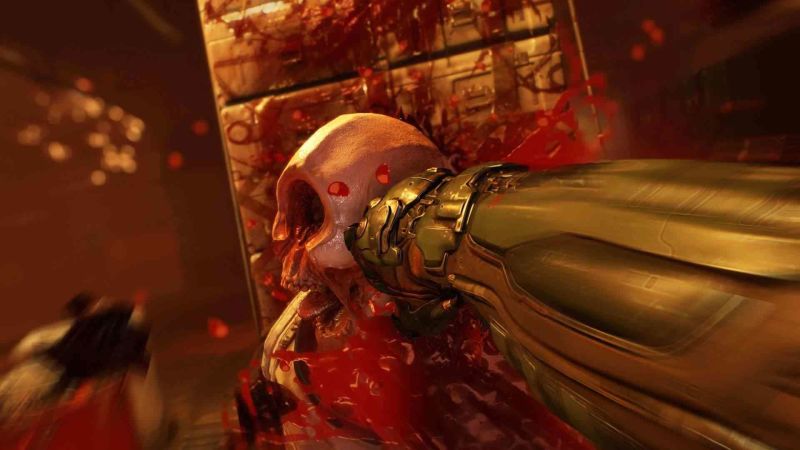
It starts with a look at how the first-person perspective became a hit in gaming, with Myst‘s successful 1993 launch almost immediately being overshadowed by Doom‘s release three months later. But it wasn’t just the guns and combat that made Doom so overwhelmingly popular, Yang argues: it was the very file structure itself. The ability for players—amateurs—to easily mod Doom and games that came after influenced how the games were made, who was making them, and how fans engaged with them.
While at one point, Yang explains, players modded “because modding meant you could quit modding, and gain entry into AAA development”, the current scene is much more fragmented. Game mods are designed as criticism or as art, or taking the form of maps and servers with specific configurations. The line between amateur and professional has blurred, and the process has become ever more granular and modular.
And where is the current wave of modding zeitgeist taking us? Even Yang doesn’t know, but looks forward to finding out: “I’m just trying to emphasize that we’re on the brink of something different and fantastic here, a place where we’re thinking of games less as fixed products / spaces that ‘gamers’ and players consume, but instead as a conversation with everyone all at once that expands if people want it to. … Doesn’t that sound pretty?”
Yes. Yes it does.
A People’s History Of The FPS, Part 1: The WAD [Rock, Paper, Shotgun]
A People’s History Of The FPS, Part 2: The Mod [Rock, Paper, Shotgun]
A People’s History Of The FPS, Part 3: The Postmod [Rock, Paper, Shotgun]
(Top image: Rock Paper Shotgun)