A little bit of P.T. mixed in with The Stanley Parable, Asemblance is a video game experience that totally messed with my head.
What Asemblance does really well is ambiguity: you will spend most of your time wondering if aspects that the game presents are actually real. But let’s back up for a second here.
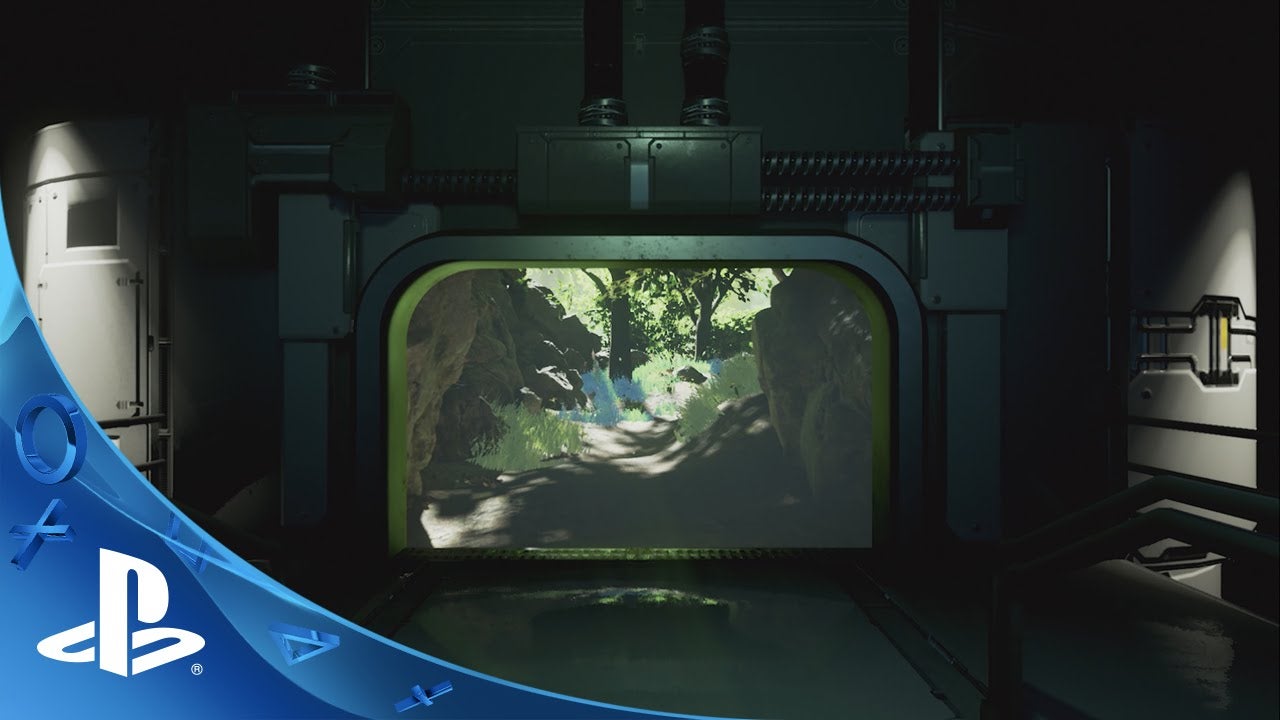
At first, you wake up a test chamber, but you have no idea who you are or why you got there. In front of you, there is a console…
From there, you can interface with an AI who walks you through a series of recollections, some happy, and some, well, let’s just say they are repressed for a reason. Throughout it all, you can walk around holographic renditions of your memories, examining different objects while the AI comments on everything around you.
Without spoiling too much, the more you explore these memories, the more you realize that things aren’t what they seem. I’ve spent a couple of hours in the game, and I still can’t even concretely tell you who you’re actually playing as, nor am I 100% on the events leading up to the game. This mindfuckery is appropriate when you consider that the game is influenced by things like Black Mirror and The Twilight Zone.
Getting to an ending in Asemblance doesn’t take much time, but really, the act of playing it is only a part of the whole thing. There is also a whole ARG component outside of Asemblance, and it involves going to websites, sending emails, and watching videos. “Parts of Asemblance are intentionally designed around the idea of social interaction and cooperative puzzle solving,” said Niles Sankey, a developer who worked on Asemblance. Sankey and the rest of Nilo studio, the folks behind Asemblance, are industry veterans: Sankey used to work at Bungie, and other staffers hail from Visceral Games.
“First person games often struggle with identity of the player, and we know that first hand from Halo and Destiny, so we just wanted to experiment with that and see how far people might go to define themselves given a variety of context clues,” Sankey said. “The fiction is set up to work for a number of correct interpretations, but that is all up to the player to string together. In the end it’s something of a commentary on memory and truth. Sometimes we base our truths on interpretations of what we believe we remember.
“Over its development parts of the game also became a commentary on subjectivity vs. objectivity. Which is why Asemblance Labs (the fictional company in the game) has the slogan “In Pursuit of Objectivity.” Fictionally Asemblance Labs was built to seek truths free of subjective interpretations. The human mind is awesome in that way, far too susceptible to outside influences, be them true or not.”
Reaching an end in Asemblance also does not concretely give you answers: for that, you’ll likely have to seek out some of the online community talking about the game. Or, if you’re like me, you’ll probably end up replaying segments of the game over and over again, in the hopes of finding something new. In this way, Asemblance mirrors its subject matter well: memories become malleable, unreliable, discrete prisons that, if you’re not careful, can easily trap you.
Asemblance is out on PS4 and PC for $9.99, with more entries in the anthology dropping sometime in the future. “Each episode will have its own self contained plot but there will be deeper connections linking all episodes together,” Sankey said. “There are actually clues buried in the current release that hint on the next plot and setting.” Oh shit!