Super Nintendo’s Mode 7 (SNES, 1990-2000)
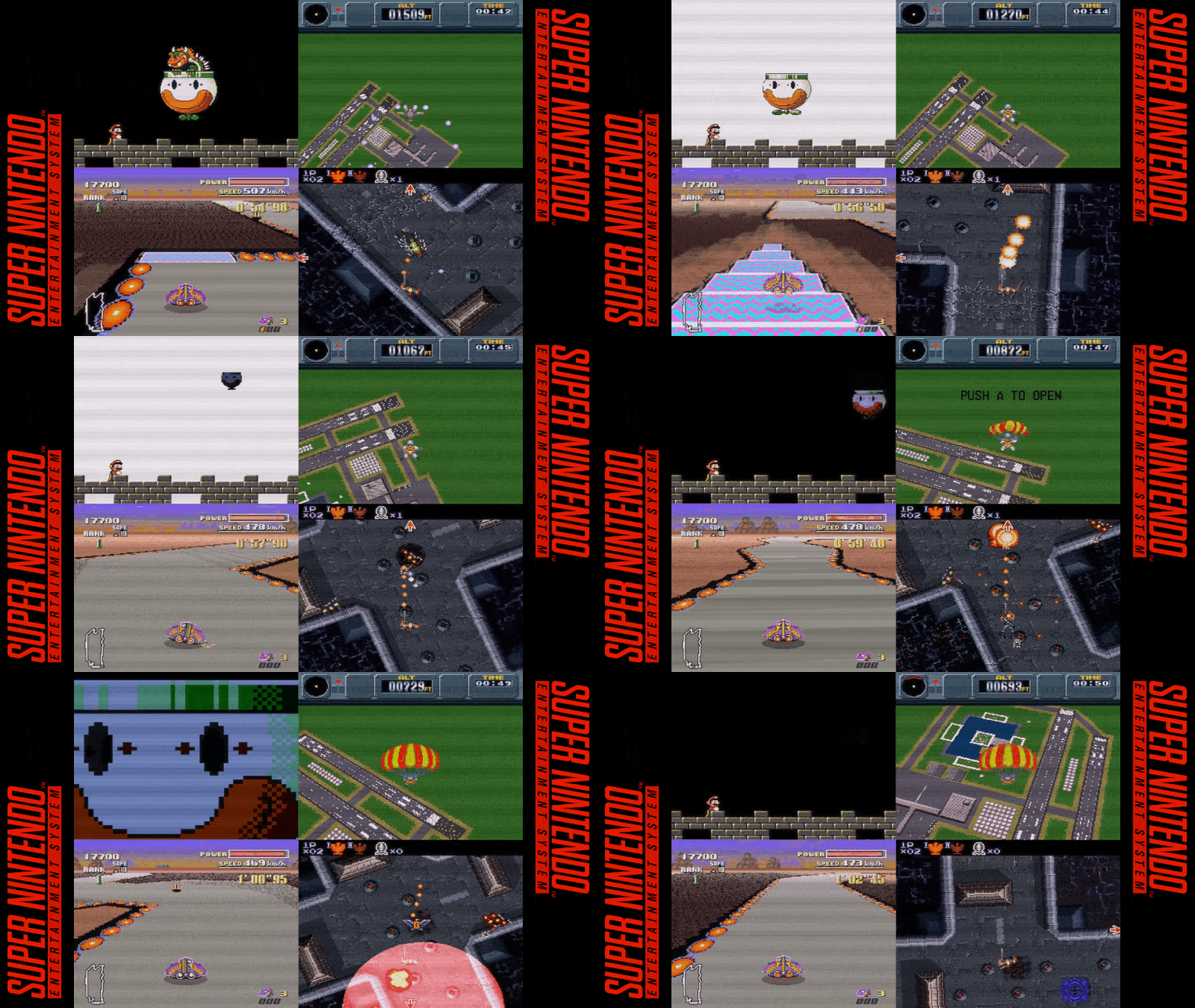
SNES was late to the party. Nintendo had coasted on the success of the Famicom / NES, and by the time it rolled out the Super Famicom in November 1990, next-gen competition like NEC’s PC Engine (TurboGrafx-16) and Sega’s Mega Drive (Genesis) had been on the market for years. SNES didn’t have a particularly fast CPU, so it needed some tricks to set itself apart from the stiff competition.
One of its most distinctive came in a special graphics mode, labeled “mode 7,” that let it smoothly scale and rotate an image, much like in fancy arcade games. Without hardware support these effects were very CPU-intensive, but with mode 7 the SNES could make an object appear to zoom out of or into the screen. In truth, mode 7 was very limited, in that it could not actually scale or rotate sprites; just a single background layer. But that was enough. Clever developers routinely used that spinnable, zoomable background to create the appearance of smooth, 3D motion in both landscapes and (single, fake) sprites, in a way that was difficult for competing consoles to replicate.
Mode 7 wizardry was front and center in Nintendo’s SNES launch line-up, with the stunningly fast futuristic racing game F-Zero, the convincingly 3D flying game Pilotwings (which actually required an additional math processing chip in its cartridge), and even some faux-3D trickery in Super Mario World. The effect became a mainstay of the system, and what’s odd to me is that even when later systems like Sega’s 1991 Mega CD got their own, ostensibly more capable sprite scaling and rotation features, they almost never looked as smooth, as high-framerate, as mode 7 on the SNES. Algorithms, man. — Alexandra Hall