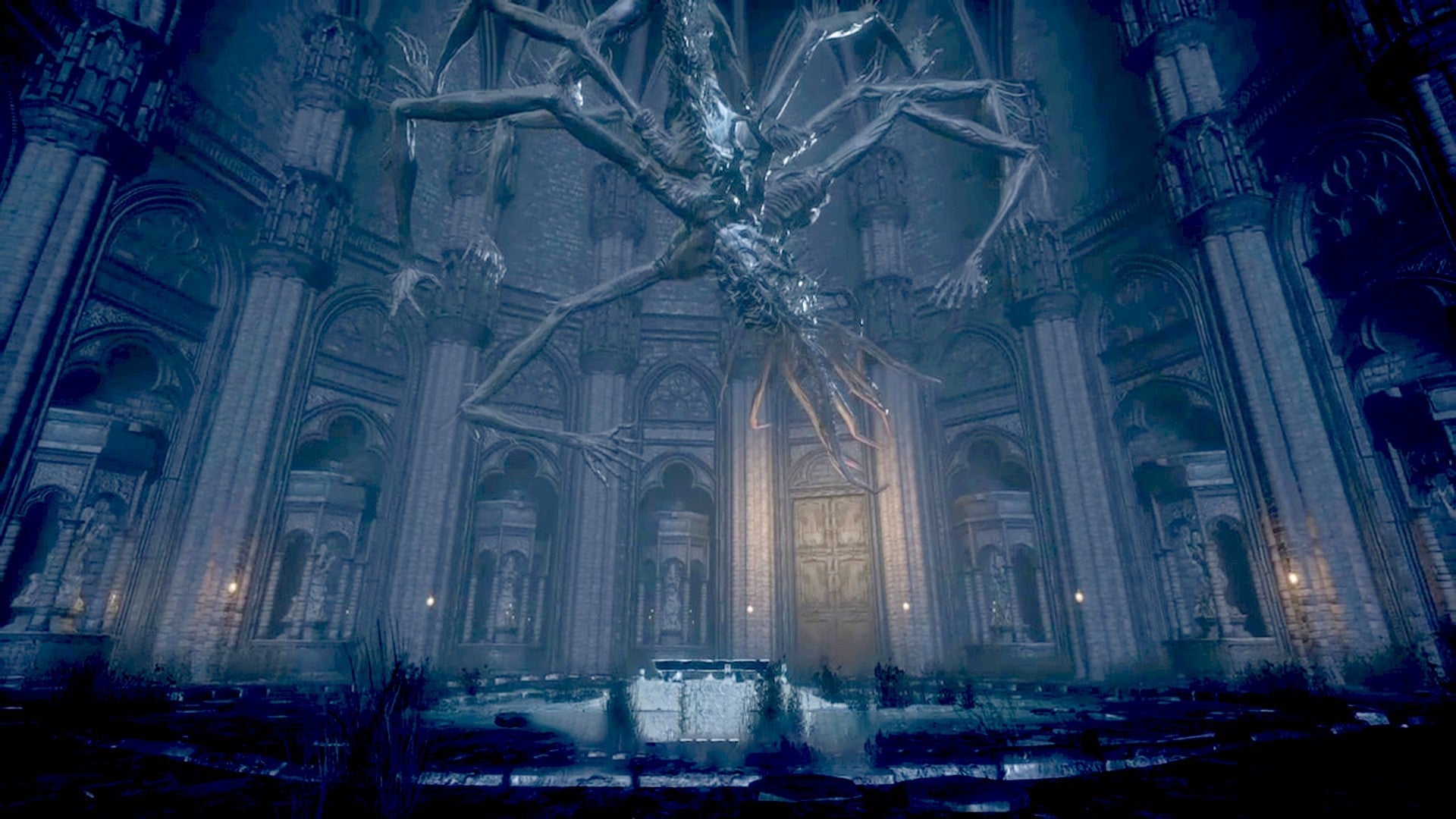
Bloodborne has always given me goosebumps. It’s one of those games that, whenever I see its name or hear it in conversation, makes me shudder. Every facet of FromSoftware’s Lovecraftian homage, from the ominous soundtrack to the horrific bosses, sends shivers down my spine. But nothing in the game is more frightening than the Amygdala, a multi-armed, spidery-looking enemy that only reveals itself to those brave—or mad—enough to look for it. I was one of those poor bastards who fucked around and found out in my initial playthrough of the gothic nightmare in 2015, and the Amygdala has haunted me ever since.
Released in March 2015, Bloodborne—FromSoftware’s unsettling riff on the works of horror writers such as Bram Stoker and H. P. Lovecraft—is easily one of the developer’s most memorable games for a multitude of reasons. Alongside prompting you to adapt your playstyle, forcing you to go into the game with a more aggressive approach to combat rather than the reserved tactics encouraged by Dark Souls before it, the game was praised for its atmospheric world design and intense level of difficulty. The score is a particular highlight, filled with somber strings and guttural horns that would sound just perfect in an indie horror film. Seriously, talk to just about any FromSoft fan and they’ll probably tell you that Bloodborne is their favorite of the Japanese developer’s catalog. It’s so beloved, in fact, that stans keep pestering daddy Sony for a remake or a remaster. Something. Anything.
Read More:False Bloodborne Remastered Rumor Spreads Like Wildfire On Twitter
But what truly makes Bloodborne so memorable for so many (myself included), aside from the daunting and impressive boss designs, is the Insight mechanic. A stat that’s easy to increase throughout a playthrough by coming into contact with bosses and discovering mysterious in-game forces, Insight is a form of knowledge, an enlightening window into the depths of Bloodborne’s decay and madness. Insight makes you privy to the game’s secrets. You can’t level up without it. The more you have, the more vulnerable you are to effects, like the damage-altering frenzy status, as if the more you’re exposed to horrifying truths human beings weren’t meant to comprehend, the more susceptible you are to madness.
You can’t even access some merchants in the Hunter’s Dream hub world once you’re low on it. But when you accrue enough—99 is the max Insight you can hold and one is the minimum you need—Yharnam’s nightmares begin to unravel before you. With Insight, you perceive what was always there but hidden under the veil of ignorance. Or maybe fear. Enemies gain new attacks and varying animations. The Hunter’s Dream undergoes changes, such as the instrumental music gaining vocals. And it’s Insight, this revelation of the underlying horrors that have befallen Yharnam, that allows you to see the Amygdala: towering, Kaiju-sized creatures with limbs longer than Wilt from Foster’s Home for Imaginary Friends. These monstrous, spidery abnormalities are frightening.
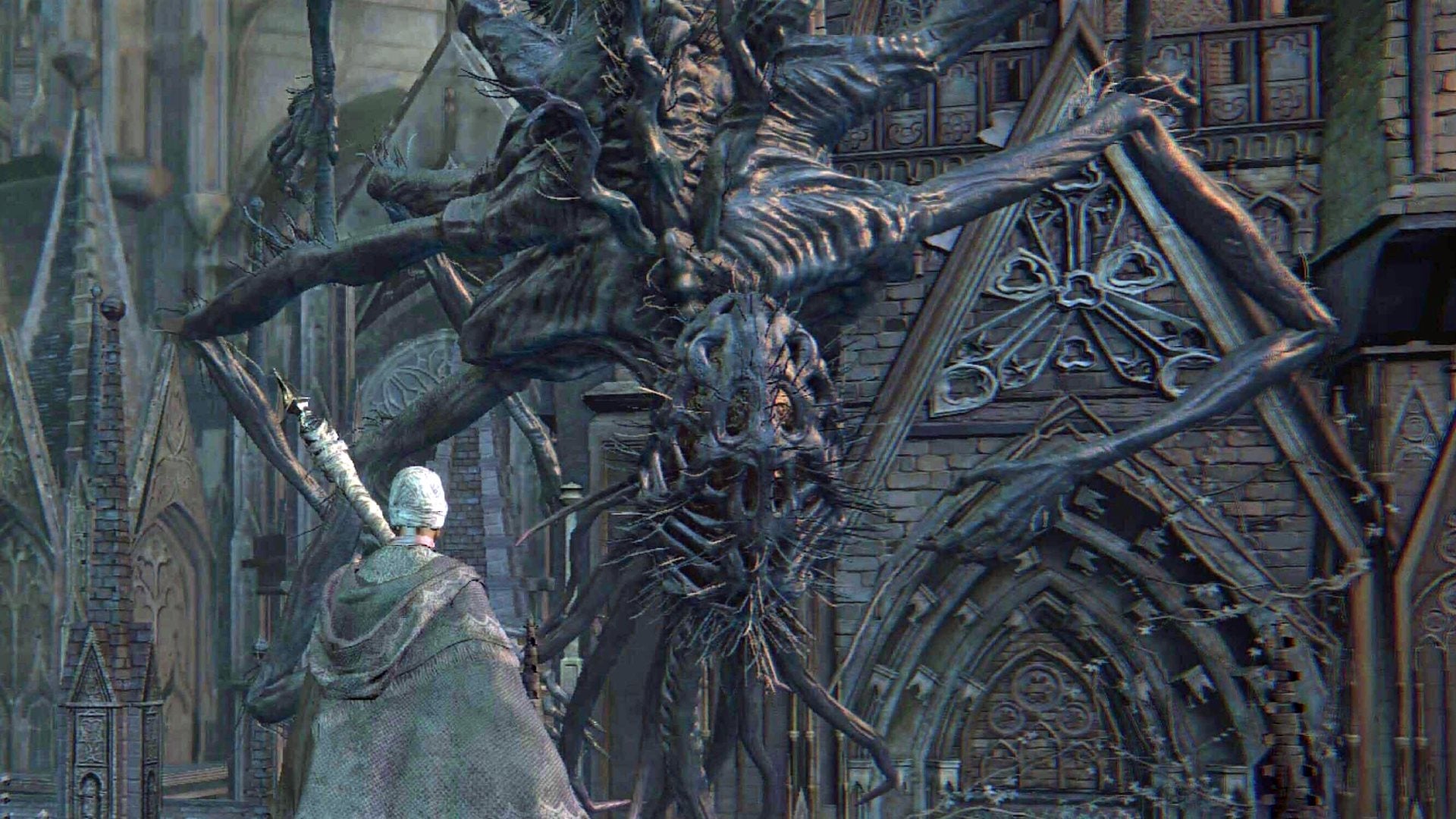
You first encounter what the game dubs the Lesser Amygdala in the Cathedral Ward, a grim district populated with Victorian-era architecture and a couple of bosses to get killed by. As you explore the region, you’ll come across a few different graveyards in front of some massive, multi-room churches. Stand in a particular area of these graveyards long enough and you’ll notice a vortex suddenly hurling toward you. Get got by the vortex and you’ll get crushed before being teleported to a different part of the Cathedral Ward. You can chalk it up to a freak mystery, a harrowing nightmare you never wanna experience again if you don’t have enough Insight. Have more than 40 points of Insight, though, and you’ll perceive the truth of what happened. That vortex? It’s actually the Lesser Amygdala’s hand, pulling you into its grasp to inflict frenzy on you.
Where did you go when you got grabbed and transported back to the Cathedral Ward? With the launch of The Old Hunters DLC in November 2015, these Lesser Amygdala teleport you to The Hunter’s Nightmare, a location introduced in the DLC, once you meet certain requirements. Once you’re grabbed, there’s no escape. You lose health and become afflicted with frenzy. And no, you can’t kill them. They serve as intimidating obstacles that are always watching, and that’s what makes them so haunting. You couldn’t see them before, but thanks to the illumination of Insight, these freakish monstrosities, lanky and grotesque, become perceptible so you can bask in their alien design.
Their heads are bulbous, with hella tentacles protruding out and hella eyeballs sunken in. Atop their head is a fleshy cage, functioning like a skull to prevent their eyes from falling out. They’re slender, bones poking through the skin, with flesh so grey it blends into the ghastly structures they cling to. The Lesser Amygdala are chilling creatures, appearing like a distant relative to Lovecraft’s cosmic entity Cthulhu. And they just hang in wait, watching as Hunters like you and me descend into madness while roaming Yharnam looking for the truth. There are things this world doesn’t want us to know. The Amygdala, first invisible before acquiring the requisite 40 Insight, are one of many.
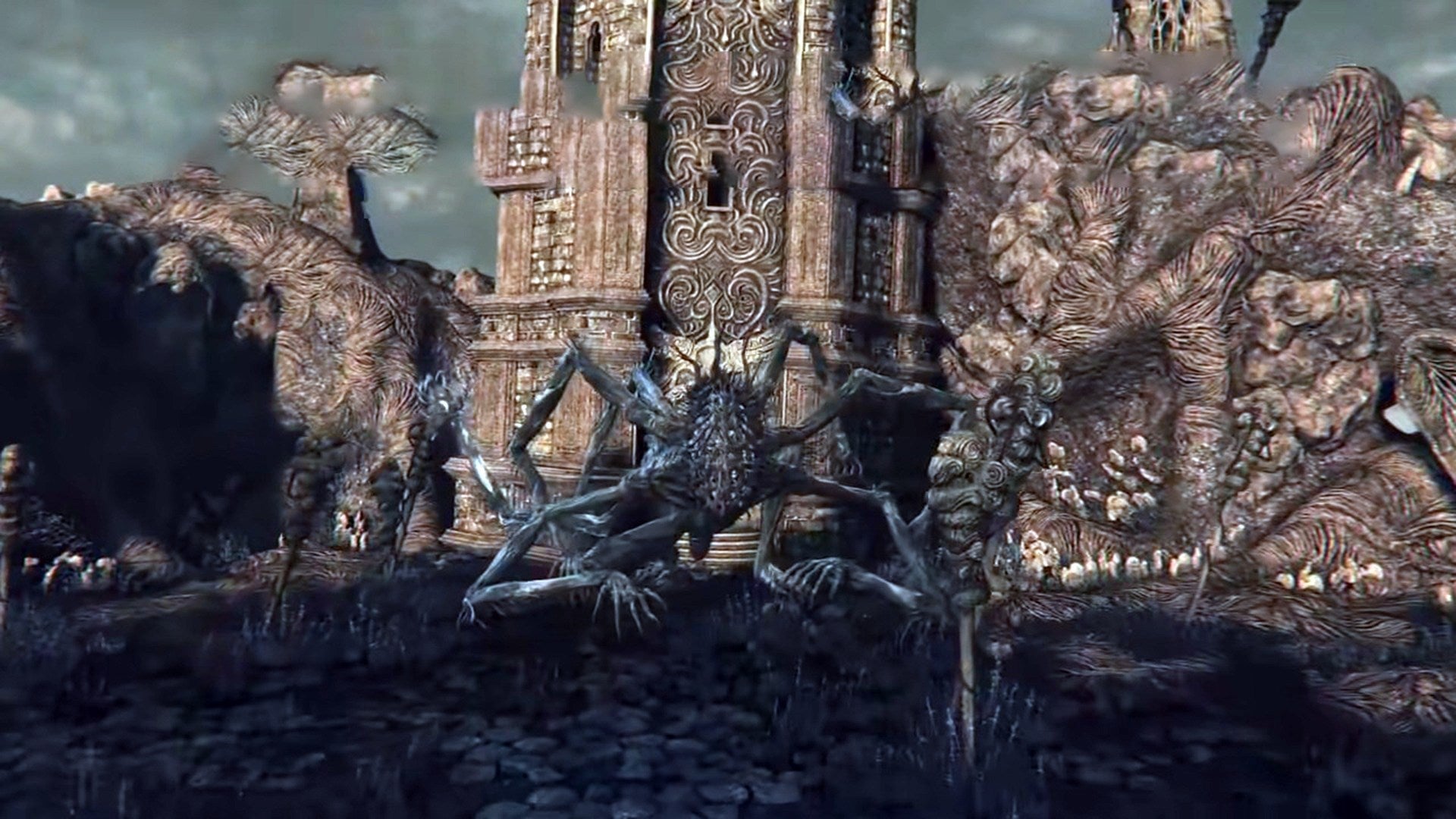
The Lesser Amygdala may be slightly docile, but you don’t have to imagine how troublesome they’d be in a fight. The Amygdala, an optional boss found in the dilapidated Nightmare Frontier area located far away from the Cathedral Ward, is the aggressive sister to its nonviolent sibling. This enemy is just as towering but far more intimidating because of the sheer fact that it’s there, in front of you, screeching from the pit of its damned and deformed figure while attacking you with lasers. It’s got a lotta health, hits like a train, and uses its six elongated arms to control the arena.
The Amygdala can be a frustrating fight. If you go in ill-prepared or fearful, it’ll surely kill you. But with the right tactics—baiting its attacks and striking the head during its wind down animations—the Amygdala can be bested in a matter of minutes. Despite the simplicity in exploiting its attack pattern, the Amygdala serves as a memorable boss encounter, with eerie stringed instruments that give way to crescendoing horns. It’s like battling a giant Xenomorph, and I really hate those things.
The most ironic aspect of Bloodborne’s Amygdala is the double entendre of its name. The actual amygdala, derived from the Greek word amygdale for “almond,” is a brown, almond-shaped mass of grey matter nestled in the middle of the brain. Part of the limbic system, the amygdala is responsible for processing emotions, particularly those related to anger and fear. According to the National Library of Medicine, fearful stimuli—such as scary faces and imagery—activate the amygdala, sending signals to the body to engage the fight-flight-freeze response. And what do you know: The in-game Amygdala is scary as shit! It’s no wonder it terrifies me. FromSoftware, knowing that the amygdala is integral in our understanding of and enacting on fear, used that knowledge in the creation of one of the most frightening enemies in the entire game
Read More:11 Gruesome Horror Games, Ranked By How Much They Made Us Scream
The Amygdala is also the reason why I’ll never return to Yharnam. Once was enough. Getting grabbed by some unknown force, being crushed and teleported without my consent, already put me on edge as I journeyed through the rest of Bloodborne. But knowing what they look like, with the awareness of the amygdala’s function in human anatomy, makes me all the warier. I still remember the first time it grabbed me. I’d rather not go through that again. Playing the game is like willingly subjecting yourself to a hellish nightmare, and the Amygdala forever haunts me.