In the autumn of 2006 the game designer Brenda Romero suffered what she describes as a severe assault. In the weeks following the attack she lay numb in bed.
(Warning: This story includes some brief references to sexual assault.)
“I chain-watched Grey’s Anatomy because I couldn’t think,” she said during a talk titled ‘The Prototyping of Tragedy’ delivered at the 2011 Game Developer’s Conference, the only time that she has spoken publicly, albeit in brief, about the attack.
Her mind, she recalled, was immobile in the shadow of one unanswerable question: “Why the fuck would someone like that do something like this to someone like me?”
After a while of lying with the pain and confusion, she began to tackle the question in the only way that she knew how: through game design. “I didn’t want to live with this thing in me, so I started to explore pain and evil as a system,” she said. “I started designing a video game level in my head. I thought maybe this would help me to understand.”
Romero: “If I were a musician I might write a song…But I am a game designer: I have to process systemically.”
That Romero would try to make sense of her trauma within the framework of a game is, she says today, entirely understandable. “When you join the games industry at the age of fifteen it’s the way that you make sense of the world. If I were a musician I might write a song. If I was a writer I might write an article. But I am a game designer: I have to process systemically.”
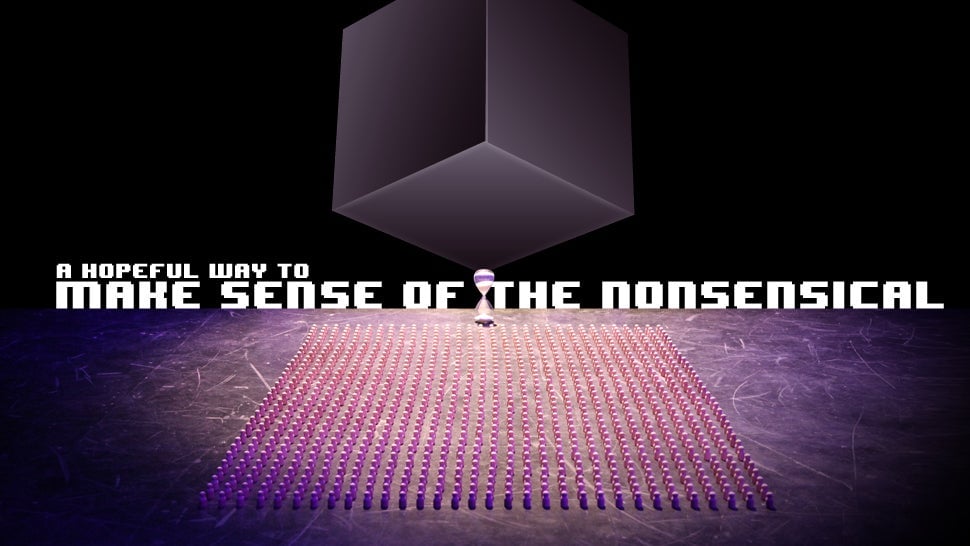
As the weeks passed, more games began to come to Romero, games that sought to explain the systems that drove the world’s tragedies and injustices both contemporary and historical: the slave trade, the Cromwellian invasion of Ireland and that most imponderable of all humanity’s great blights: the Holocaust. Her suffering seeded in her a new approach to game design, a hopeful way to make sense of the nonsensical.
Then, in 2009, she played The Path, a psychological horror game inspired in part by the Little Red Riding Hood fairy-tale. “There’s a part in the woods when a guy walks up to you,” she recalls. “The only thing I could think was: ‘fuck I am going to get raped.'” It was a feeling that Romero had not experienced in a video game before.”It was a painful and repellent trigger,” she says now, “but for reasons I don’t recall, I didn’t shut down and shut out. For some reason, I stayed there and felt through it … and felt some kind of relief, some kind of peace.” That moment helped her see a new power in games. As she declared in her 2011 talk, “They are a magic medium.”
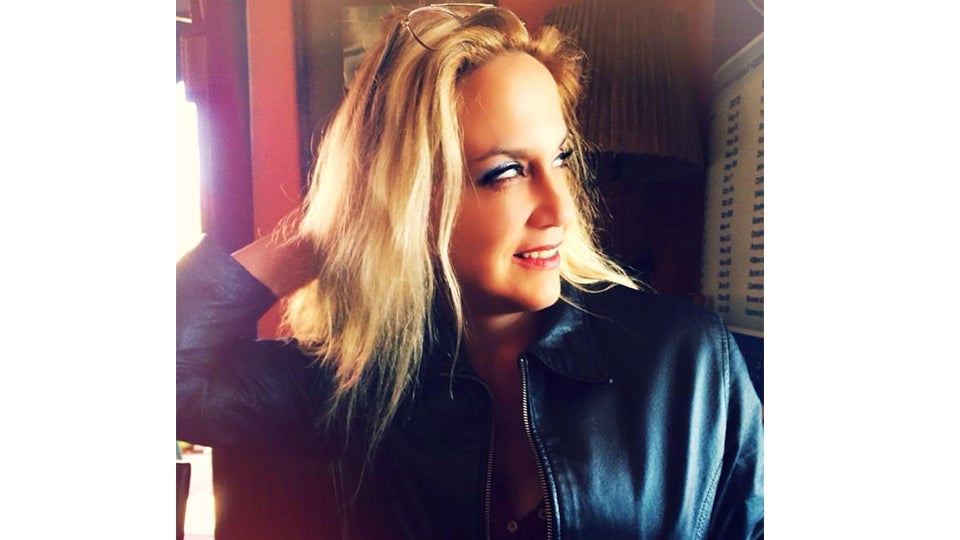 Just one year before the attack Romero was working on a crass Playboy game. A few years later Train, one of the games to come out of her epiphany was celebrated by a Rabbi as a work of Torah, a part of the canon of Jewish teaching and culture. She has become game designer in residence at the University of California, Santa Cruz’s Center for Games and Playable Media. Today after she returns home from her day job at the social game company Loot Drop, which she co-founded with her husband, the game designer John Romero in 2010, she works on Black Box. “It’s the game with which I wanted to first understand evil systems and the bad things that happen to us”, she says, a “Ground Zero” game, from which all of the others have sprung.
Her trajectory through game design has been, in some ways, chaotic and in others, wholly logical. After all, it also began with a question, the answer to which would change everything.
 On Tuesday, 6th October 1981 the farming town of Ogdensburg, upstate New York was hushed with snow. Fifteen-year-old Brenda Romero–née Garno—holed up in her high-school bathroom with a warming cigarette. Minutes later, a shivering girl walked though the door. “The other girls were all smoking menthols,” Romero recalls. “So I offered her one of mine.” The two young women struck up a conversation. “She asked me whether I’d ever heard of a video game called ‘Wizardry‘,” she says. “When I said ‘no’ she asked whether I had ever played Dungeons and Dragons.”
Not only had Romero heard of Dungeons and Dragons, but she’d been playing as a dungeon master, leading her friends through fantastical adventures, for three years.
She’d even re-written the rules for a game called Rolemaster, for her and her friends to use. “It started out as a fix for the ‘encumbrance’ rule which dictates how much weight a character can carry,” she recalls. “It always felt so complicated, like balancing the chequebook. We didn’t want to do all that shit.” Romero’s fix broke some of the game’s other finely balanced systems. “It was very much my first lesson in design,” she says. “You change something in a game then you’ll break something else.” She proceeded to redesign everything from the ground up. “I was very serious about it”. The young girl’s friends “were into it” and the group dubbed the changes “Brenda Law.”
Yes, Romero told the girl in the bathroom: she had played Dungeons and Dragons.
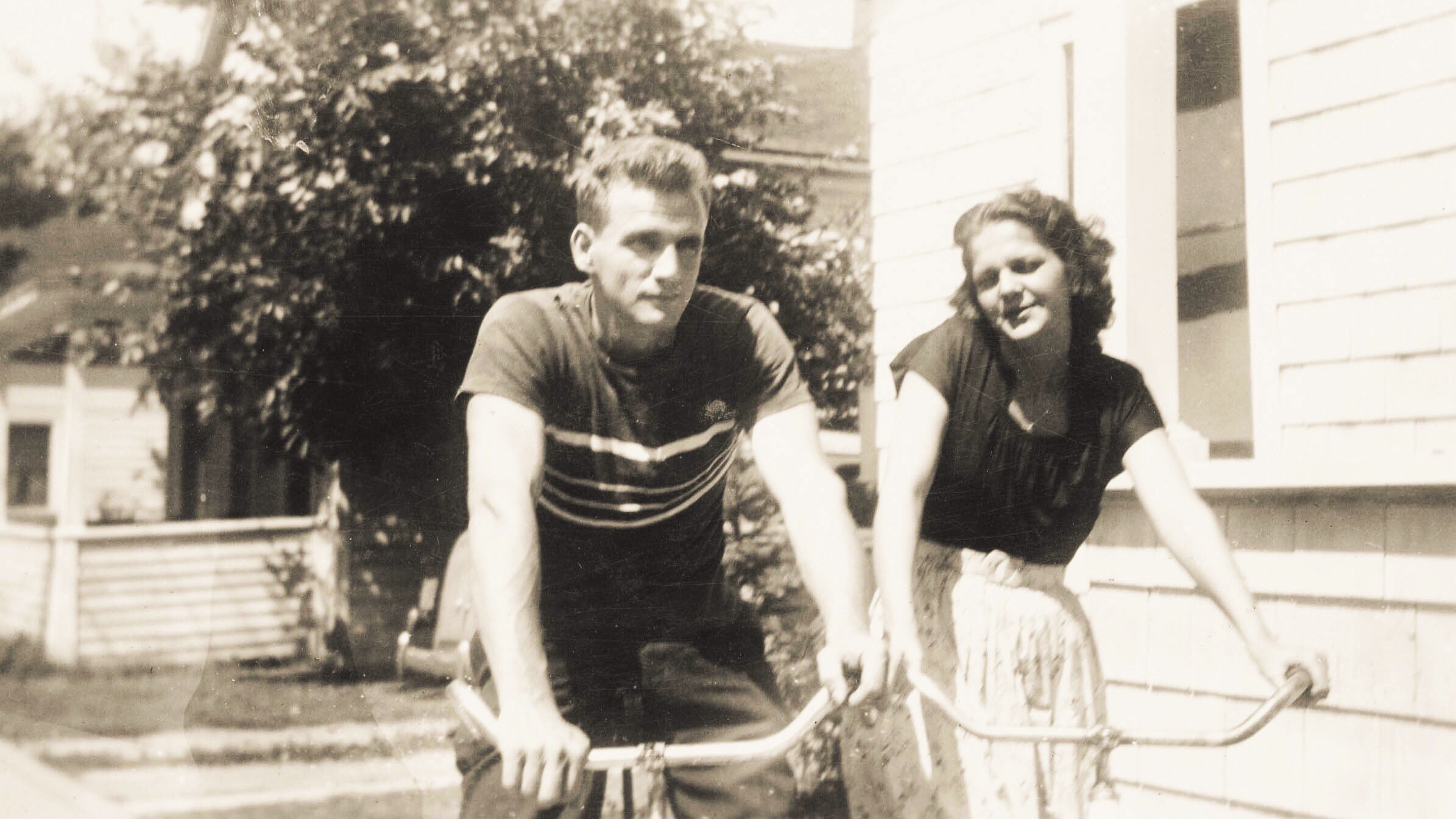 Ogdensburg is a small dairy town on the outskirts of New York (“There are literally more cows there than people”) where Romero’s parents (pictured above) led a simple, rural existence. Her father was a World War II veteran, a five times decorated Marine who fought in the Guadalcanal Campaign. He worked at a local power plant, shovelling coal. Romero’s mother was a homemaker.
The family was too poor to buy new board games. Instead, her mother would buy old board games with missing pieces for a few cents at neighbours’ yard sales. “I would take the pieces and design games with them,” she says. “I don’t have a clear memory of a time in my life when I wasn’t making games either with Lego or bits of old boardgame.”
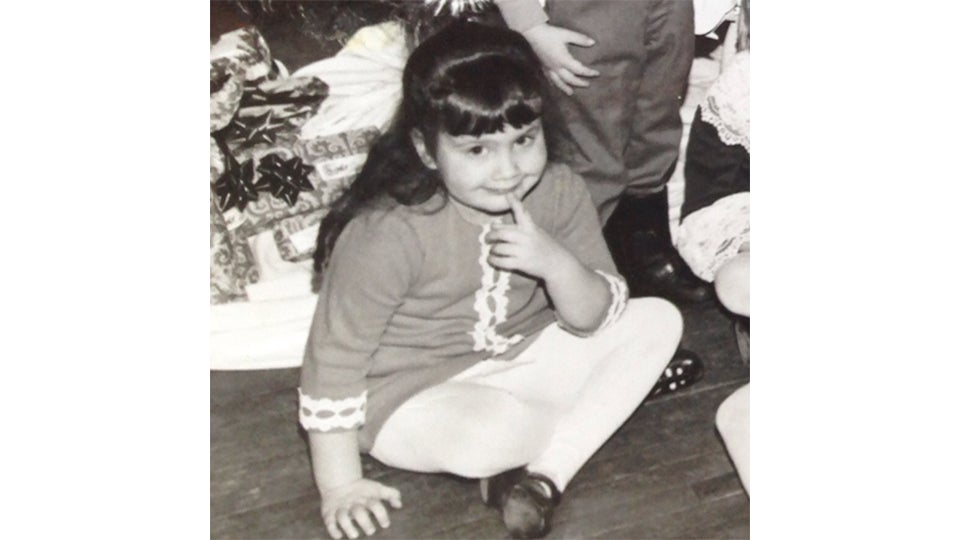 The young Romero was drawn to numbers. She wanted to become an accountant and, as a result, took a class at school in which she learned to write BASIC on a Tandy TRS80. “I became obsessed with programming,” she says. “It was like a drug to me.”
Improbably, Ogdensburg was also home to Sir Tech, a diminutive video game developer that, in 1981, released a computer game version of D&D titled Wizardry: Proving Grounds of the Mad Overlord. The girl in the bathroom, also 15 at the time, worked at Sir Tech. She would answer calls from players who were stuck on the game and provide tips and advice. The girl’s next question changed the course of Romero’s life: “Would you like my job?”
Romero spent the next twenty years at Sir Tech. In 1987 she met John Romero, the co-creator of the seminal first person shooter Doom and the man who, twenty-five years later, she would marry. Her trajectory from a working class family in an isolated dairy town to the upper echelons of contemporary game development seems unlikely, a story that hinged on a bummed cigarette. But providence was a bit part in her success, some way behind toil and focus.
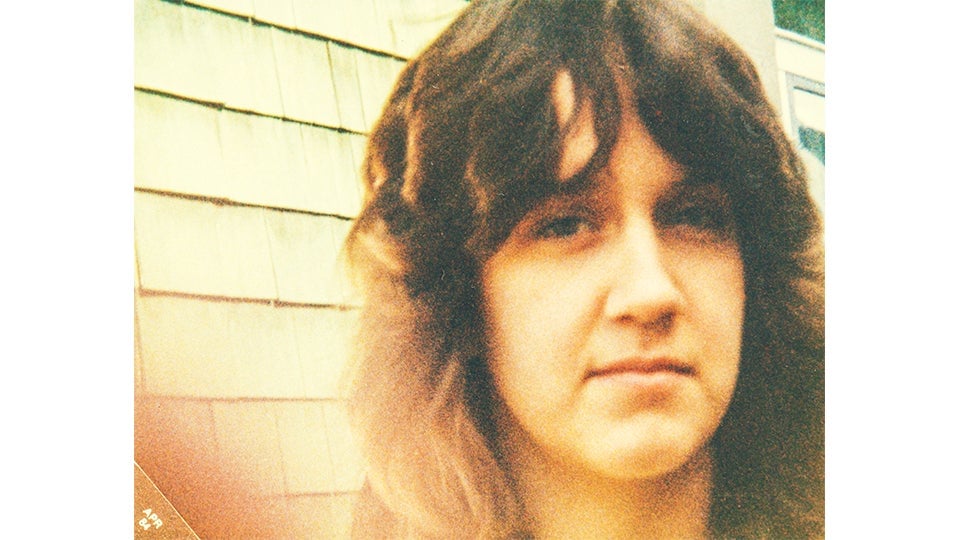 At Sir Tech, the fifteen-year-old Romero, bewildered by her apparent good fortune, worked beyond what was required of her. She learned Wizardry inside and out and changed her classes so that she could sign out of school early and work from 2pm through to ten in the evening every night. “I was obsessed,” she says, boasting that she never took a call that she was unable to answer. Romero’s mother was supportive of the job because it exposed her daughter to technology that the family could not afford otherwise.
In time, Romero’s role at the company began to expand. Designers would ask her to research certain types of arcane weaponry to put into the next Wizardry game. “It was a magical time,” she says. “Because of where I lived I was egregiously isolated; there were no other game designers here. There were no game stores here. The only way I’d get to play a computer game was if it came to me through Sir Tech, or if I typed in the code for one from the back of a magazine.”
Romero: “I said: ‘I think I want to keep making games.’ That was that. I didn’t even ask for a raise.”
Romero continued her studies and, at some point, decided that she would like to become a technical writer, rather than an accountant. “The people at Sir Tech knew that my job there was only ever going to be a temporary thing for me,” she says, “They understood when I told them I was going for an interview with IBM.” Romero took a plane to Atlanta for the job interview. But during the interview, when IBM disclosed that her job would be to revise and update DOS manuals, Romero had an epiphany. “They offered me $20,000 more than I earned at Sir Tech, but I thought: ‘No, this isn’t the job for me.'”
Romero took the plane back to New York and walked into the VP of Sir Tech’s office. “It was a profound moment that at the time lacked any gravity,” she says. “He asked me how it went, and I said: ‘I think I want to keep making games.’ That was that. I didn’t even ask for a raise. I was just happy to be working on games.”
Her decision was inspired by some advice that Romero’s brother, Theo Garneau, gave her. Garneau, a professional jazz guitarist who lives in Hawaii and has played with Ben E King, Ray Charles and other greats, said: “Do what you love, and the money will follow.” Romero describes her brother as someone who “firmly believed that he had a quartz and not a diamond” in terms of his talent. “He would practise for eight hours a day and polish his quartz. I believe there are diamonds in the games industry. I also have a quartz. And I’m also going to polish the fuck out of the quartz and do whatever I have to do.”
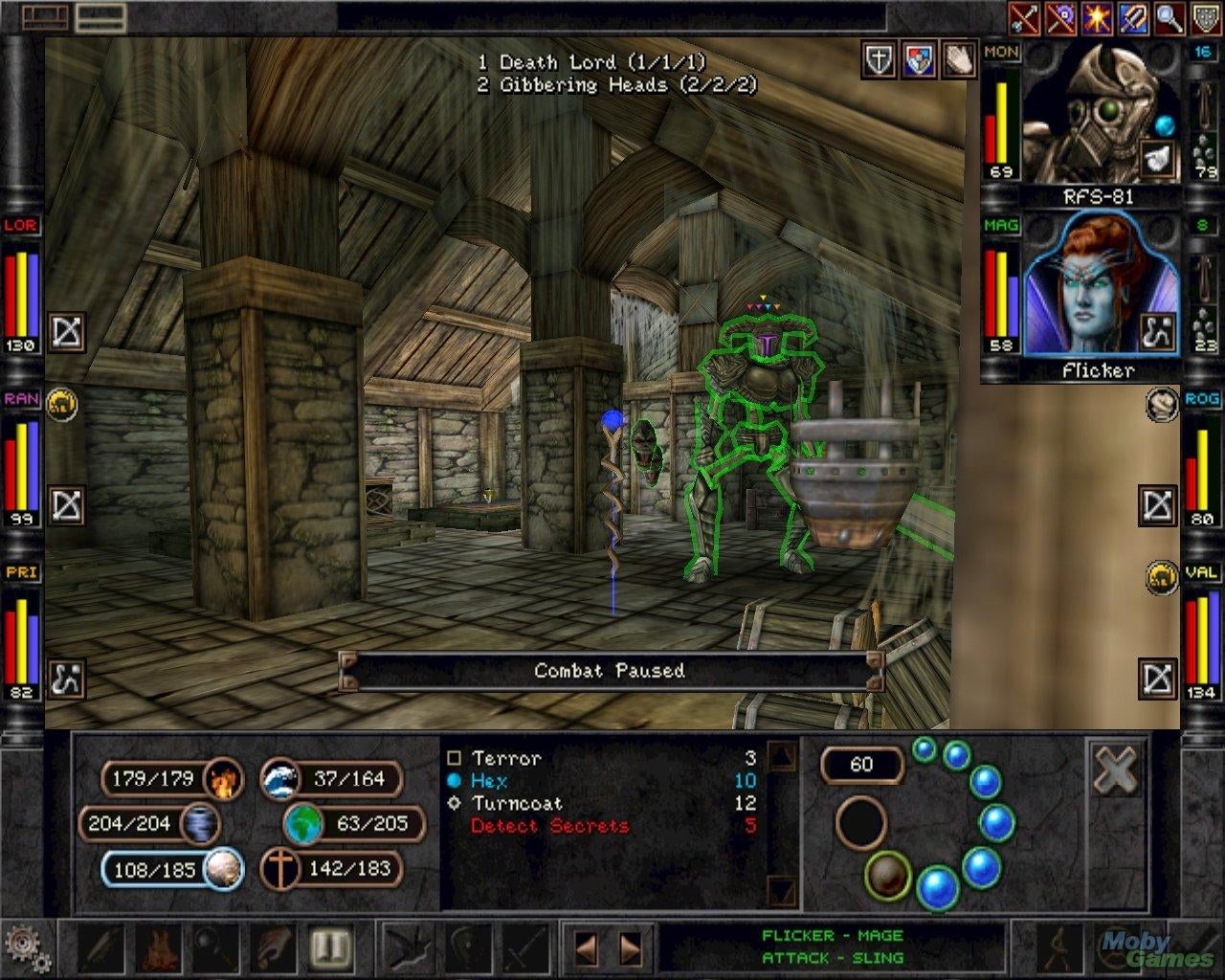 Romero recalls her life at Sir Tech with “great fondness”. She moved from the phone-lines into design and production and would use the Wizardry editor to create entire D&D games “for fun”. She still has a red 5½-inch floppy disc with her original Wizardry characters stored at her home in California. Then came another unlikely career move. “I’d been working on D&D games with swords for two decade and I was eager to work on something different,” she says. “I needed something to intellectually stimulate.”
 The designer’s choice to work on Playboy The Mansion in 2005 seems curious, but at the time at which she joined the team, the game was a magazine publishing simulator. “It turns out that this is not the kind of Playboy game that people are interested in,” she says. “Nobody wants to take over Hugh Hefner’s life so that they can publish a magazine.”
Today Romero is an advocate for gender equality and a vocal (if “reluctant”) critic of sexism and misogyny in the games industry. Whenever she takes a stand in the way, Romero’s critics draw attention the fact that she worked on a Playboy game. “Whenever I go to the lines I know that I am pouring gasoline on myself,” she says. “There will always be people who say: ‘You made Playboy‘ as if it’s some kind of gotcha.”
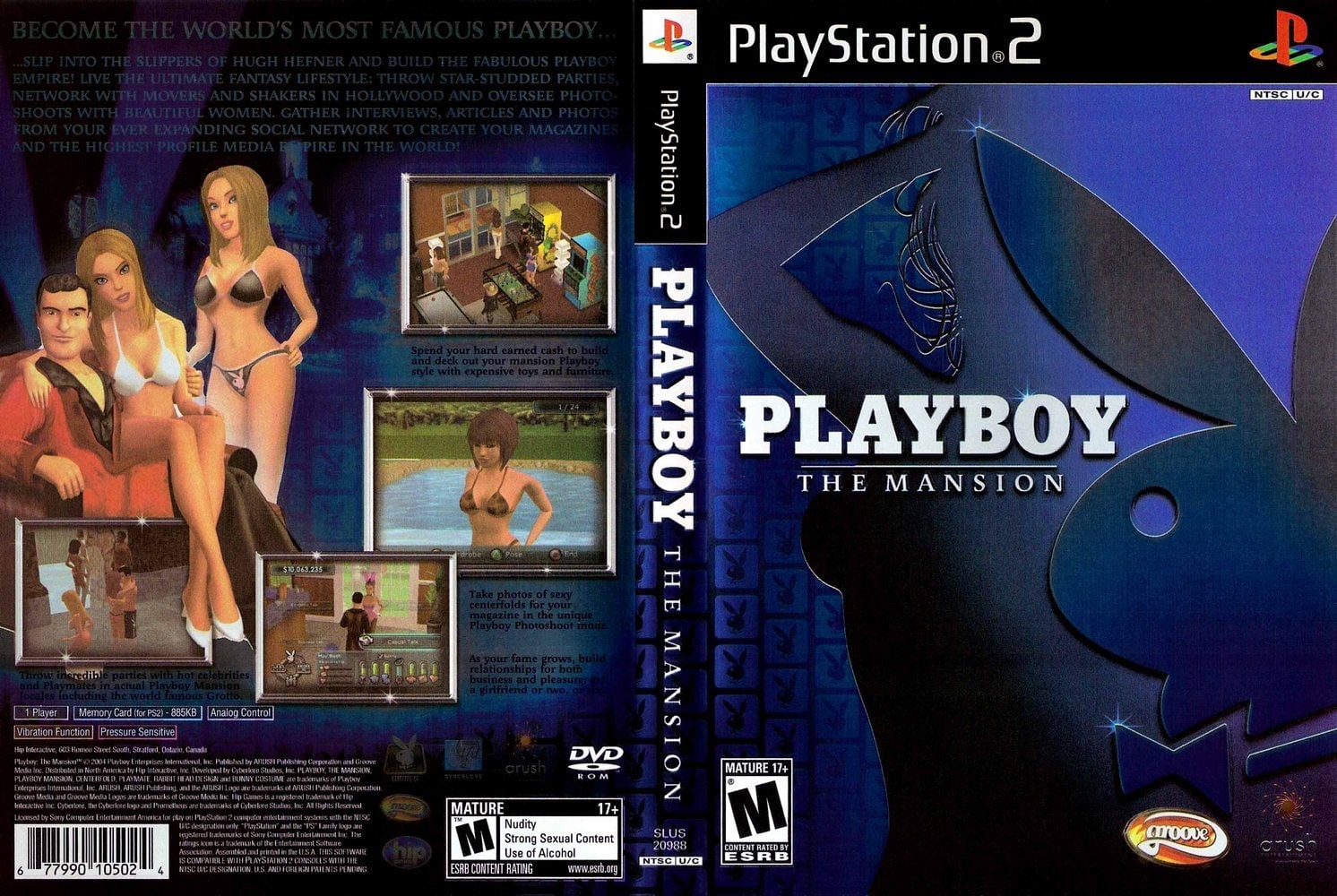 Romero doesn’t believe that the project undermines her current position (“The people who pull that stuff out are not going to be convinced otherwise”). But she nevertheless regrets her choice.
“The person I am now would not make that game,” she says. “We change. I understand that posing the human body to capture its beauty can be beautiful. But that’s quite different to reducing an entire gender into an ornament for pleasure. So today I apologise for that game for two reasons: firstly it wasn’t a good game and secondly, it’s not something that I would make today. I don’t believe it was something that I needed to make in order to reach this realisation.”
Romero: “The person I am now would not make that game,” she says. “We change.”
She believes her current position in the industry allows her to speak as an advocate for people in the industry who don’t have the voice, platform or security that she enjoys. “Every time I speak at game conferences I meet women who would come up to me and share their stories at their game companies,” she says. “They tell me that they don’t speak up for fear of being labelled as ‘that woman’ in their company. They’re afraid that it will affect their chances of being hired. I am my own boss so I don’t have to worry about being fired. There need to be women and men who speak out because they are at a place in their career where they feel able to do so. But there are always going to be ugly incidents.”
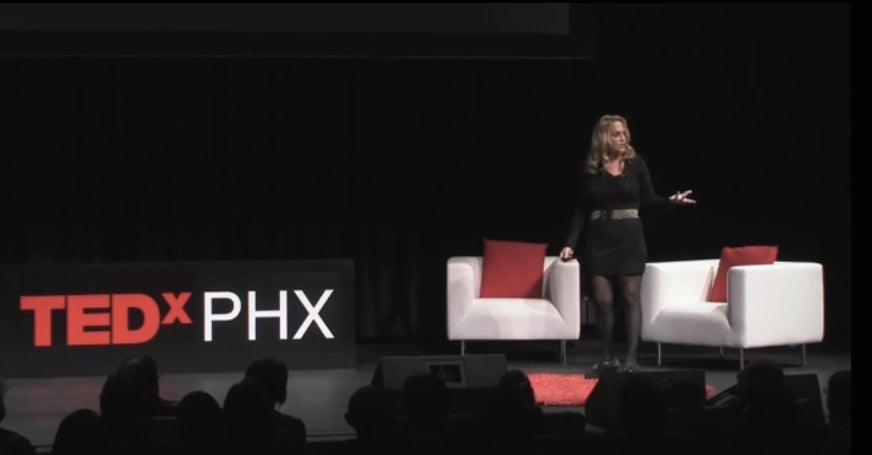 Indeed, Romero’s relatively privileged position in the industry hasn’t protected her from experiencing sexism. At the Game Developer’s Conference this year she gave a talk titled ‘Nobody Wants Your Cock‘ in which she recounted her experience being approached by another “well-known” male game designer at the conference a number of years ago.
“I was having a conversation with this guy about a book I’d written on sex in games,” she says. “There was nothing between us but, midway through the conversation he moved his coat to the side and there was… a bit of wood there.” The man pointed to his erection and asked Romero what he should do with it.
The encounter had a confounding effect on Romero. “I didn’t know what to do or say,” she says. “I knew I was safe and nothing was going to happen but nothing had prepared me for this. He was an important person in the industry.”
During the talk Romero withheld the identity of the game designer who revealed himself to her. I ask why she decided to preserve his anonymity. “Other people have told me that I should say the guy’s name,” she says. “But if I make it personal in that way it becomes about me rather than about the experience.”
Some might accuse Romero of protecting someone who does not deserve to be protected, or even that, by leaving out this key detail, there are fewer ramifications for them both. But she maintains that this was the correct thing to do because it made the anecdote more approachable and relatable. “This sounds like a crazy metaphor but it’s similar to how Alcoholics Anonymous works,” she says. “You tell your story in a general way, so that others can see their own story within.”
 This approach to storytelling has also defined Romero’s six deeply personal games, which she groups together under the title ‘The Mechanic Is The Message‘. Each of the games is a physical creation, something between a boardgame and an art installation, and in each case the player is provided with a framing narrative, but free to draw their own conclusions, or to project.
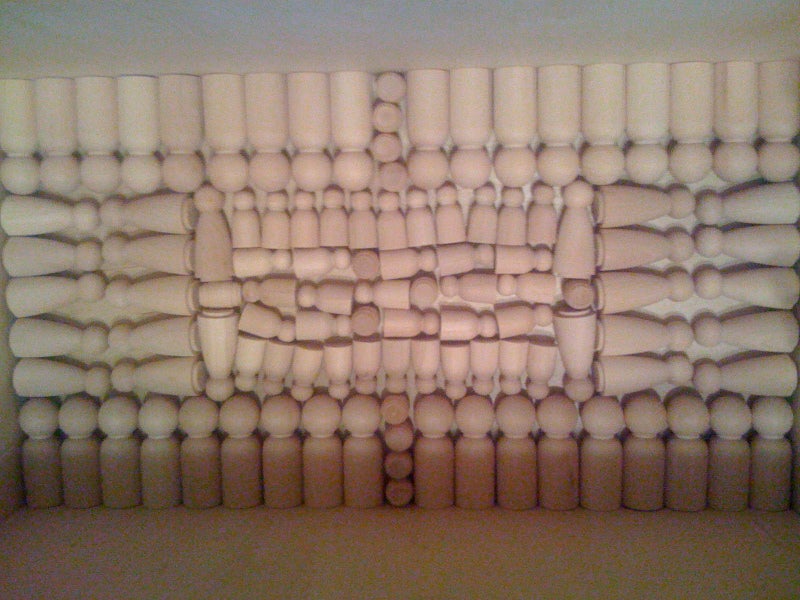 To date three have been made public: The New World, a game about slavery, created in 2008 and pictured above, Síochán leat (Gaelic for Peace Be With You), released in 2009 about Oliver Cromwell’s invasion of Ireland, and, most famously, Train, the boardgame about the Holocaust.
In Train the player is presented with a set of miniature train tracks and sixty small yellow pegs that represent people. The player is asked to efficiently load those people onto the trains. You can follow the rules, if you wish, but maybe you don’t have to. At the point at which the player successfully completes the game they overturn a card that reveals the train’s destination: Auschwitz. The high of winning is immediately punctured with the stark realisation that they have been complicit in loading Jews onto box cars (one yellow peg represents 100,000 Jews) en route to the infamous concentration camp where 1.1 million were killed in the gas showers or burned in the ovens during World War II.
Romero researched the Holocaust extensively. Each day during the nine months that it took to design Train, she stared at a picture of two boys wearing the Star of David that the Nazis required that Jews wear for identification. She imagined that she was the boys’ mother. She’d mentally straighten their clothes. She’d project.
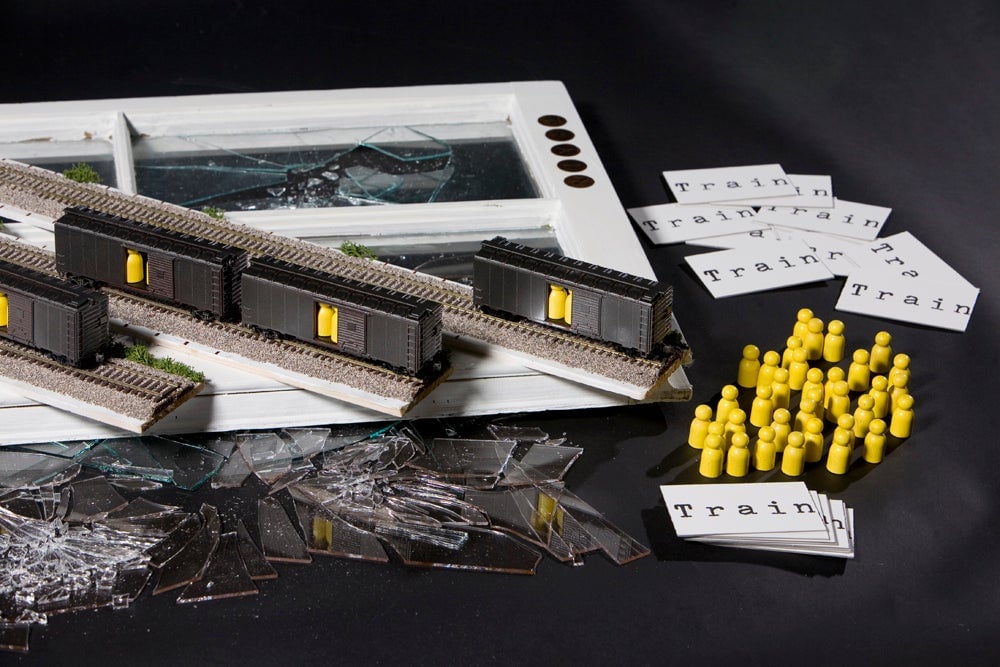 Most feel shame when they play the game. Some hide, some cry, some attempt to subvert the rules. Holocaust survivors have played Train. For Romero, post-2006, tragic subject matter is not taboo.
“You can’t have human tragedy at any scale without a system,” she says. “And if you give me a system, I can make you a game.” Some have not shared her point of view. “I had people telling me I should fucking leave the games industry,” she says, “or that I should be punched in the face, or that they hope they realise how much pain I’ve brought to people.” Many others, including the Rabbi, responded more positively. The game was featured in museums, lauded by educators and given a Vanguard award at the IndieCade festival for “pushing the boundaries of game design and showing us what games can do.”
 Having explored human tragedy at the macro scale now, at last, Romero is circling Black Box, the most “difficult” game in the series and the most localised and personal. It’s a game designed to be played one time, by one player. Romero intends to be that player. Once the game has been played, it cannot be played again, although others will be able to view the endgame state. “Black Box’s about the worst experience of my life,” she says. “I am not going to talk about what the game is about; that’s why it’s in a black box. When I finish the game I may invite several of my friends and explain what it’s about.”
Romero: “It’s the game with which I wanted to first understand evil systems and the bad things that happen to us.”
For Romero, these are the games that she has to birth into the world, to get them out of her. Black Box has cost more than a thousand dollars to make and it’s something that cannot be sold. It’s played inside a two by two foot black Plexiglas cube. It sits on a platform and is subtly lit from underneath. “When you look inside you can see forty figures,” she explains. “In the centre of these figures is a smaller one. On top of the black box is an adding machine. The adding machine says 1, 4, 5, 10, 10, 10 then it says 40 and repeats that number endlessly on the paper as it spills down to the floor.”
Romero’s kitchen is currently littered with inch-tall figures, tokens which will be used in the game, the debris of her memory, slowly being ordered and arranged into game form. It seems to be a way to, if not make sense of evil, then at least to place it within a system where it can be controlled and mastered. This is, for many, the great appeal of all games: to experience a reality that runs on unflinching logic and justice, where the rules are never broken, where the capricious and random can be contained and tamed. For Romero, this essence of a game can be used to promote understanding. And maybe, just maybe, healing.
Simon Parkin is an award-winning writer and journalist. He regularly contributes to The New Yorker, The Guardian and many others, especially writing on video games, the people who make them and the stories around them.
Photo credits: Images of Brenda Romero and her family provided by her. Wizardry screenshot via MobyGames. TedX photo from Romero’s November 2011 talk Games for Understanding. Lead illustration by Jim Cooke.