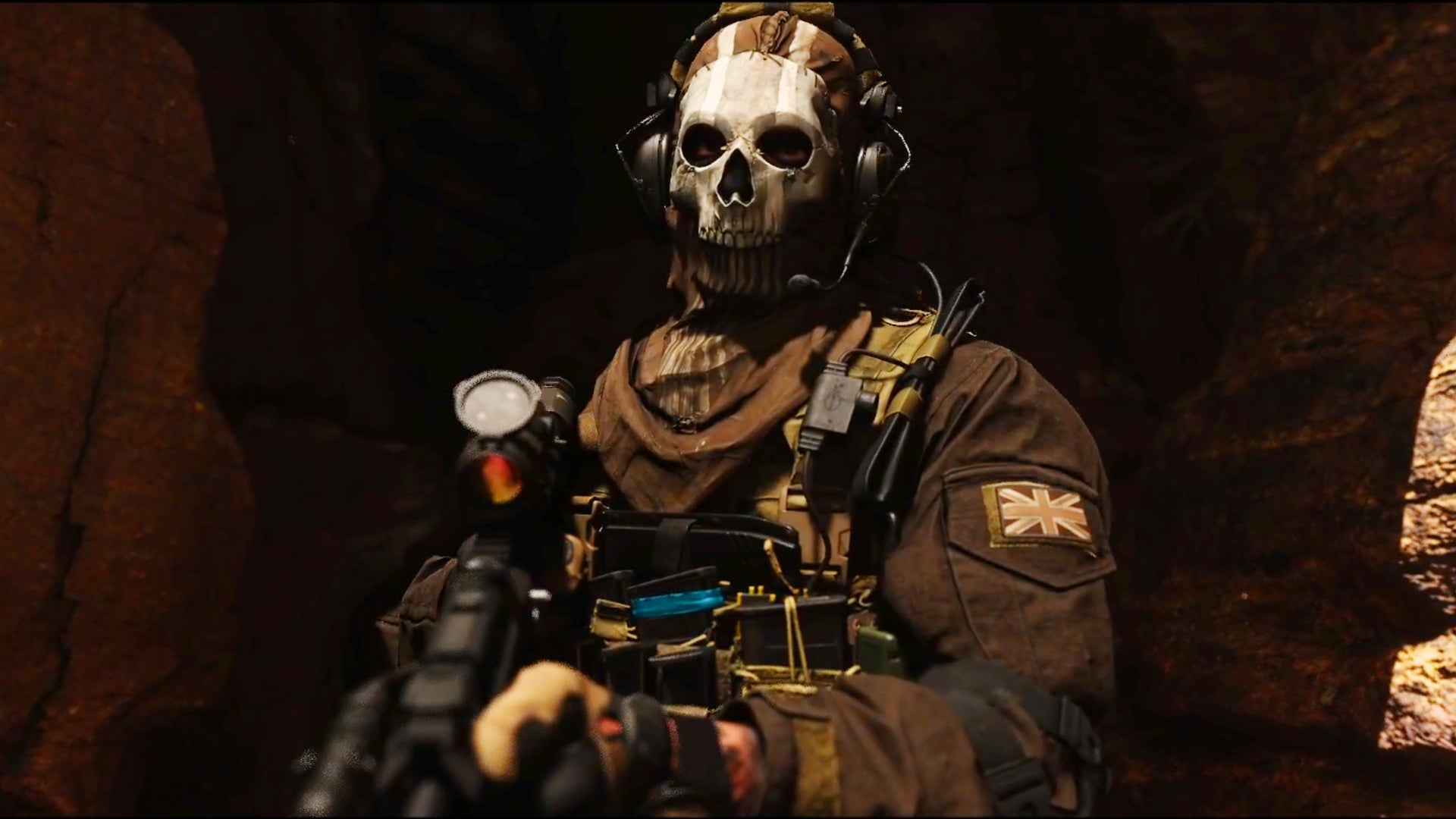
There’s a good game buried in Call Of Duty: Modern Warfare II. But the “good parts” come after a miserably slow, hand-hold-athon of railroaded levels dotted with moments of violence that feel uncomfortable at best and morally questionable at worst. The story follows a paint-by-numbers trip across the world to prevent someone from doing something with weapons we’re pretty sure they have hidden somewhere (that never turns out badly). By the second half of the 17-mission campaign, however, the game gets mildly interesting and somewhat fun. That said, Modern Warfare II is likely to drain your patience too fast for you to enjoy its better moments.
Call of Duty: Modern Warfare II is a new game with an old name. The game features an entirely different campaign from 2009’s Call of Duty: Modern Warfare 2 and stands as a sequel to 2019’s Call of Duty: Modern Warfare (distinct from 2007’s Call of Duty 4: Modern Warfare. I know…). The single-player experience, available early through preorders (for 70 friggin’ dollars) is filled with your standard CoD balance of a mil sim with an arcadey-vibe. It ain’t no Arma, but it’s typically more lethal and grounded than other, more fantastical first-person shooters.
Modern Warfare II follows a cast of characters familiar to the franchise. Captain Price, Soap, Ghost, and others find themselves wrapped up in a pro-war, pro-military intervention narrative about preventing a terrorist from striking cities with missiles. It deserves a bit of credit for being a touch more nuanced than that premise alone, however. The game portrays international politics as a kicked-hornet’s nest of prior events that, while still holding up special forces troops as the good guys, appears to acknowledge, at least, that the United States is not some innocent actor who must save the world from the bad guys who don’t speak English. But before we get into the narrative, with some spoilery territory, I need to address the gameplay.
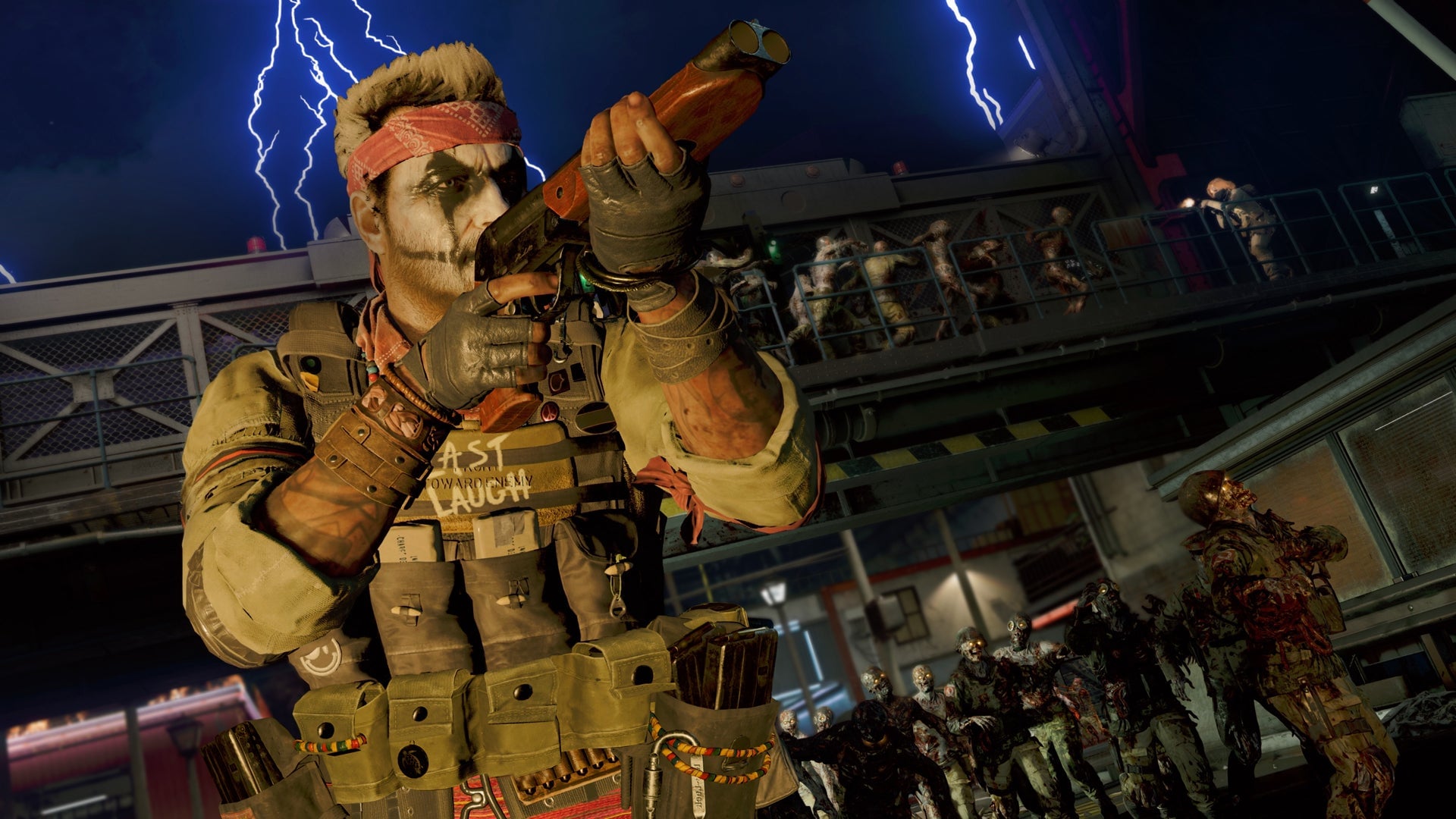
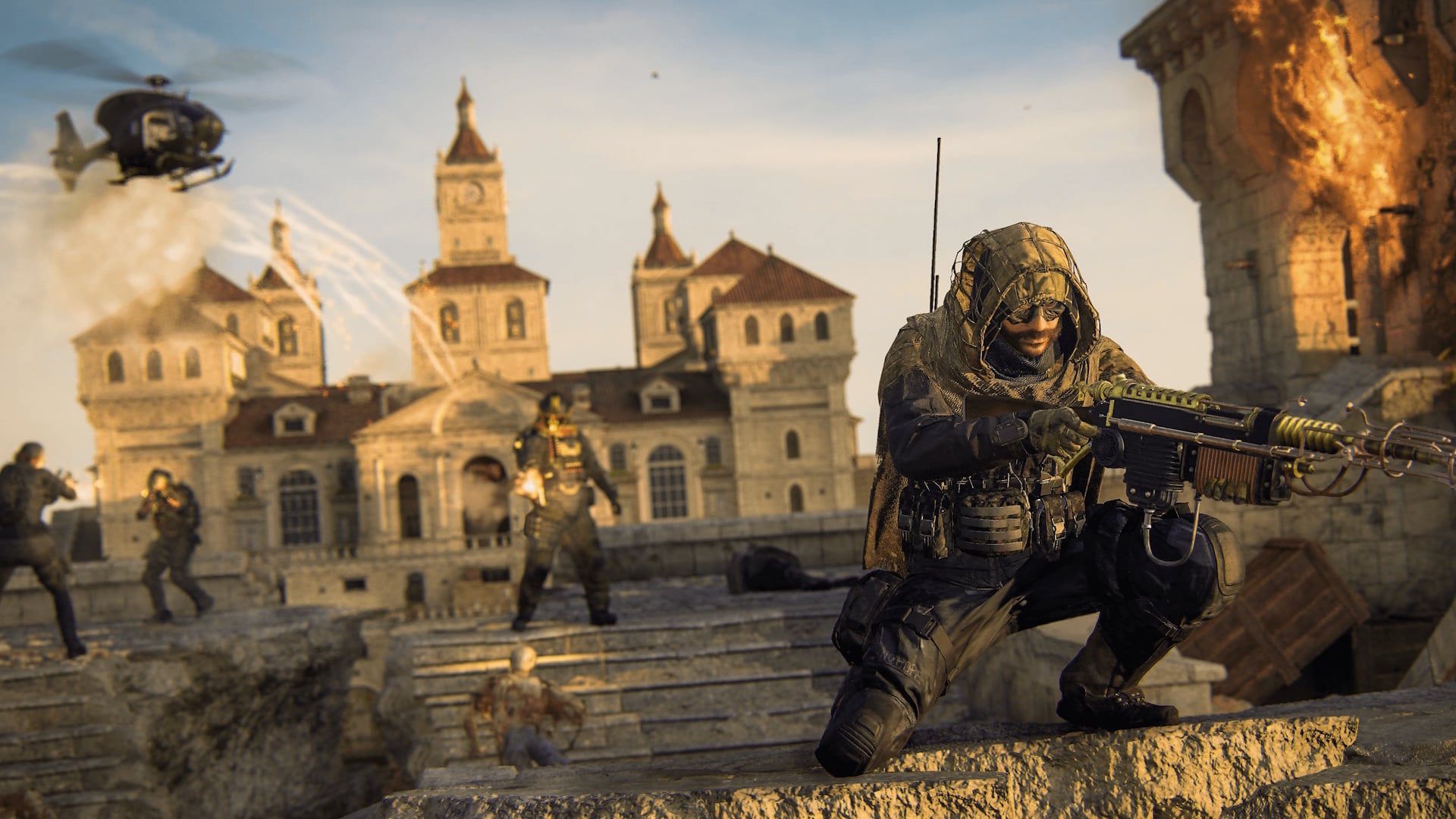
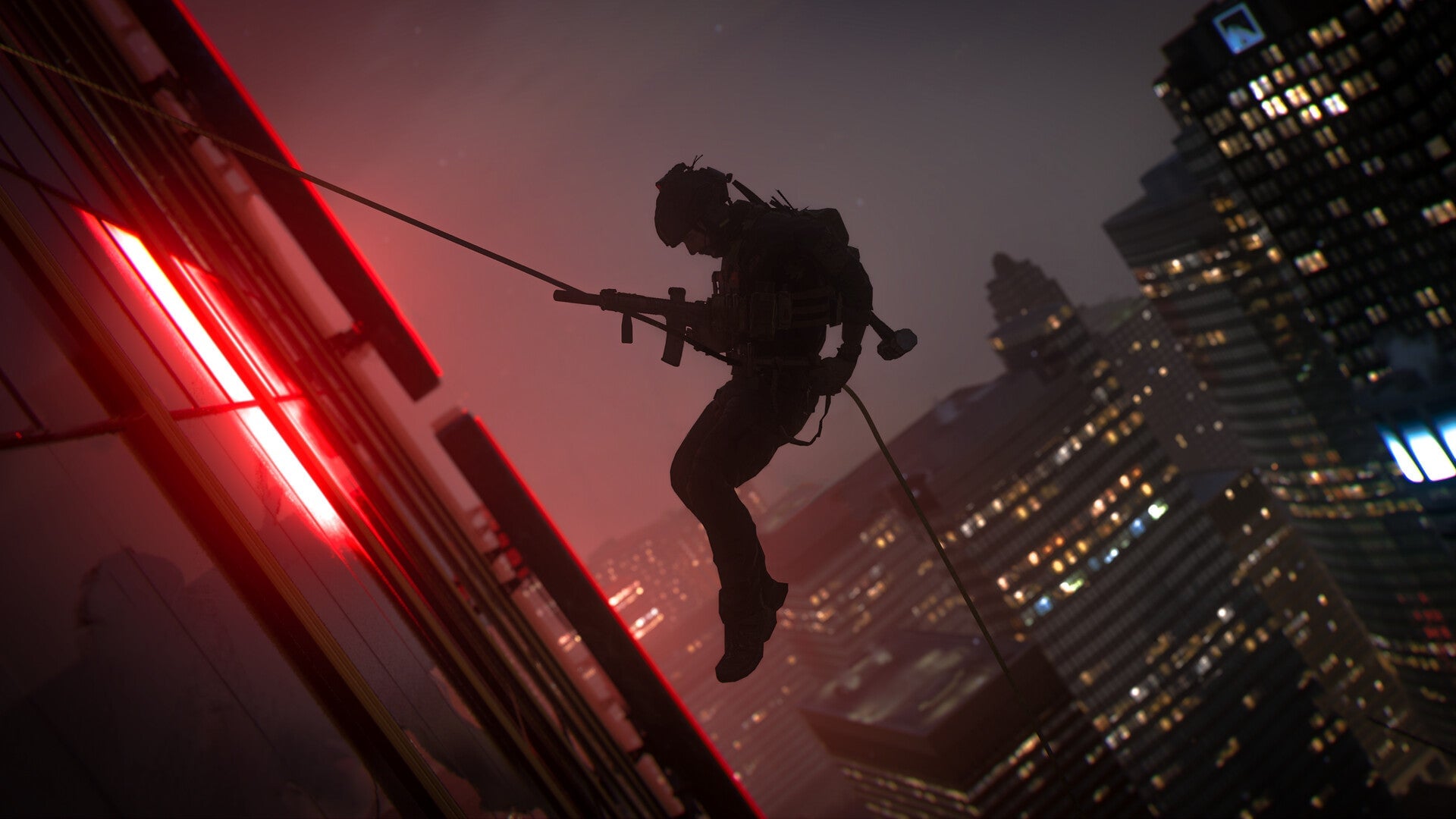
There’s no denying that Modern Warfare II, at its core, is a slick, well-polished first-person shooter with very good graphics. The problem, however, is that the game doesn’t want you to have too much fun with its toys or explore much of its environments. And it’s buggy around the edges in a way that’s even more unfun. The first nine-or-so missions are so rigid, so glued to specific scenarios the game wants you to engage in, that I felt an instinctive impulse to slot a quarter into my PC somewhere after dying. Some levels offer a couple of different outcomes, but it seems the power fantasy here is doing as you’re told.
Granted, this opens up by the time you get to the 10th level (though level nine has a bit of freedom of its own). I had fun in the second half of the game and wanted more of Modern Warfare II’s gunplay, but holy hell was I bored to death for quite a few hours before the fun kicked in. The game should ship with a pillow. At the very least, I think it managed to help me take a bite out of my insomnia, because I literally found the first half of the game boring enough to wind me down late in the evening. I am not exaggerating.
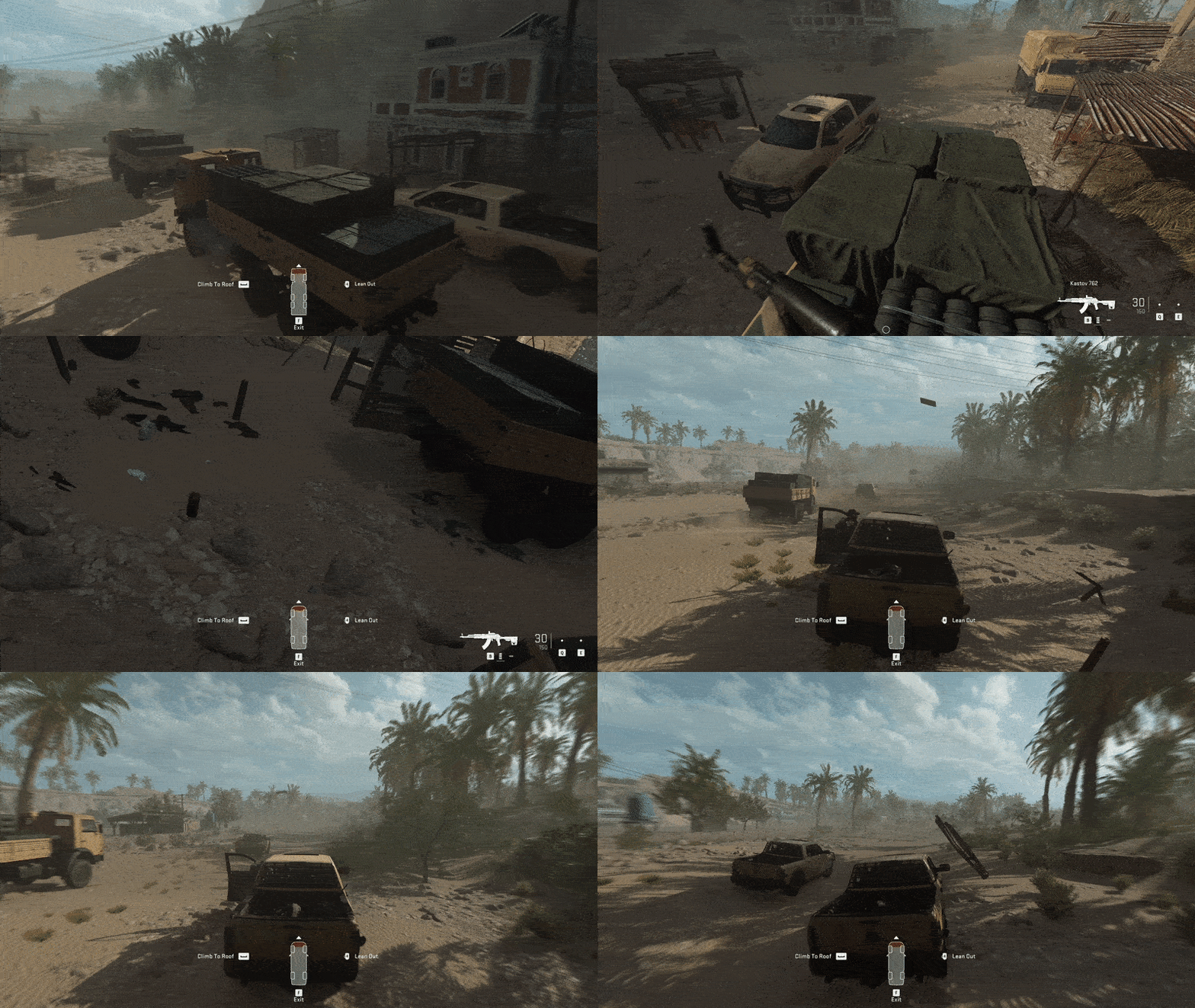
But when the game does get fun, it’s not necessarily due to any ingenuity of its own. In fact, it’s quite derivative. Things open up in the 10th mission, “Violence and Timing,” which is basically a greatest hits of all the car-chase sequences from Uncharted. Seriously, you hijack cars, climb on top and hop to new ones when they’re too damaged. And it actually works. It’s a fun enough challenge in first-person with a decent risk-reward element to it.
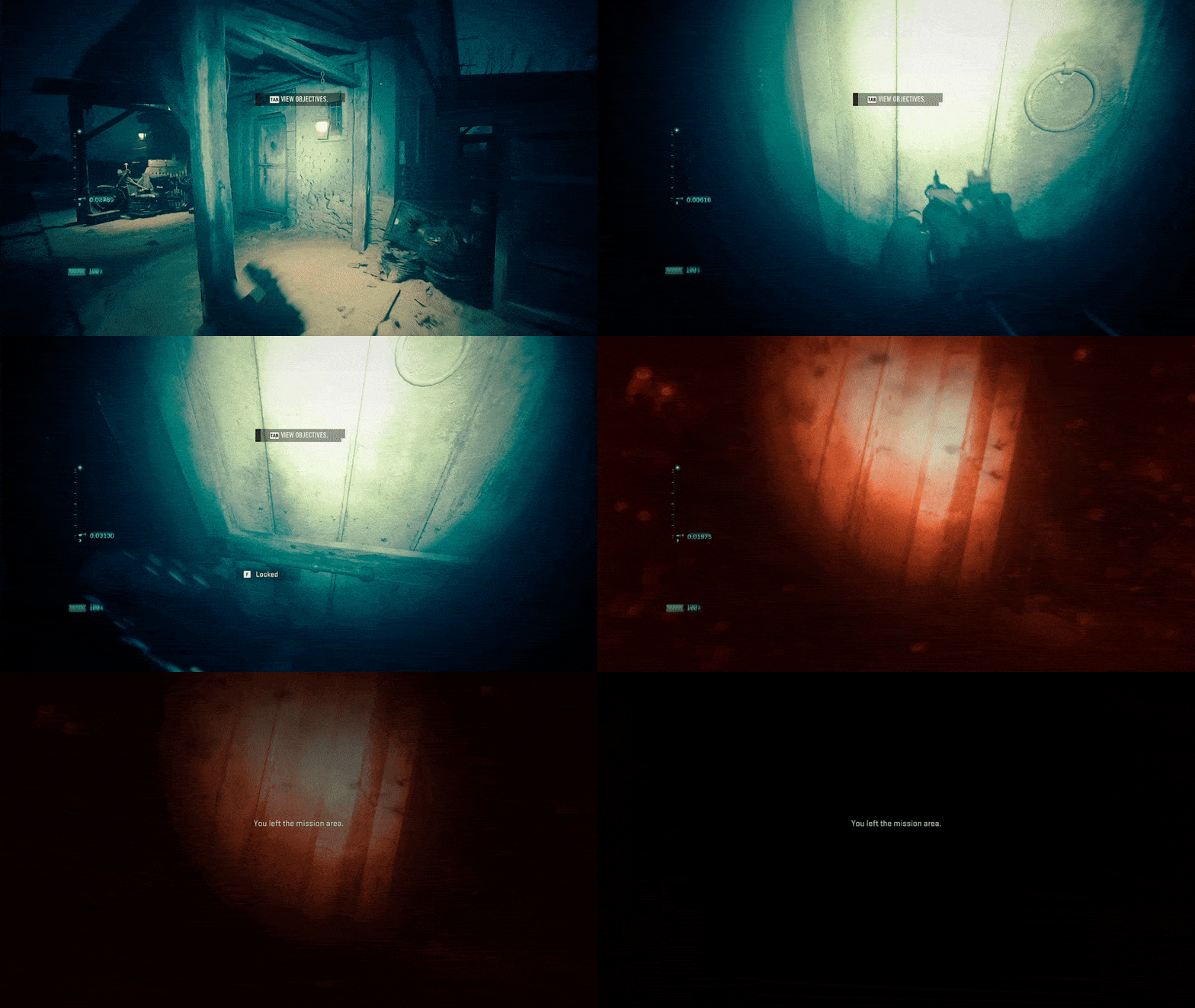
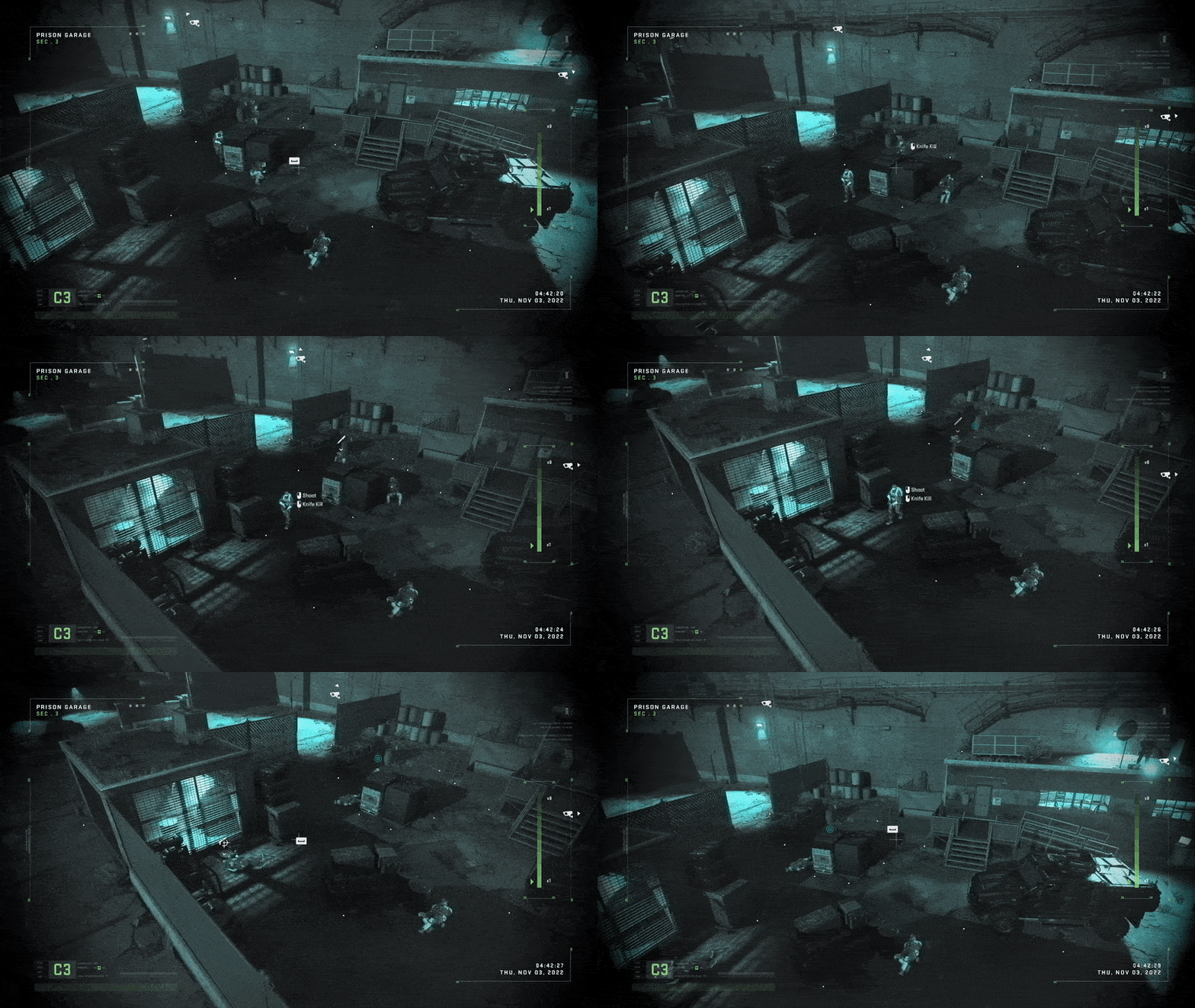
A few levels after is a sequence that, funnily enough, is reminiscent of The Last of Us, where you have to sneak around and gather materials to craft into weapons and tools to pry open doors and containers. There’s also a very nice prison-break level where at one point you have to, Watch Dogs-style, bounce around through different security cameras while directing Ghost to sneak around, sabotage equipment, and kill enemies. It’s actually a cool command-based stealth sequence that I want more of. Hell, give me a game of just this.
If this game took its second half, doubled it, and squashed bugs that make grenades disappear through floors and sees enemy forces walk through walls, this would be a hell of a lot of fun. On top of that, the game reminded me how much I prefer discrete levels to open world games. I just wish more of these levels would actually let me have some damn fun. I also wish the story didn’t make me feel so gross.
 The plot’s cynicism of the United States military and private military companies (which emerges in the second half of the game) at the very least makes the story feel less dry and a little smarter than I assumed it would be. Though any merit it could’ve earned by suggesting the very obvious fact that the military industrial complex is prone to making the world a worse place is dashed when you’re engaging in violent behavior that feels uncomfortable even for a game where the whole point is to make blood pour out of little holes in your enemies.
The difficult, questionable levels of violence begin early on. The game’s second mission, “Kill or Capture,” requires you to not only clear out a building full of wounded soldiers who can barely raise a gun at you, but it also tasks you with murdering someone grieving over the body of a person your forces just killed. And no, you can’t just walk away. Though they grab a weapon themselves and fire at you, they are clearly cowering in a bathroom and are not dressed in military garb. Yet you have to kill them for the level to continue through to the next sequence. I was physically uncomfortable playing this scenario.
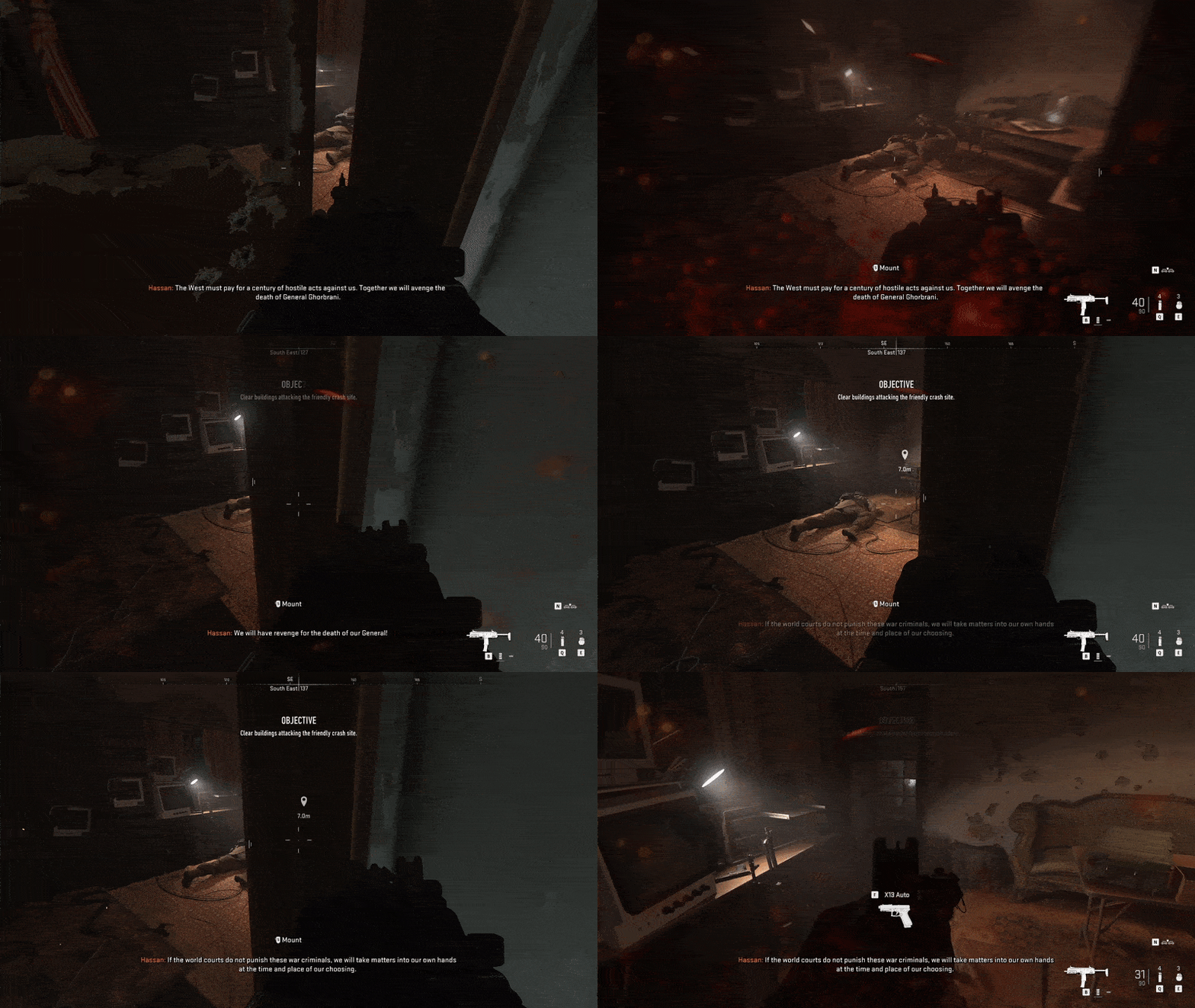
That’s not all. A later mission has you literally shooting people climbing the United States border wall in Texas. Here, you’re playing as Mexican special forces tracking down cartel members who are wrapped up in the overarching narrative. These are, technically, the “bad guys” you’re shooting, but the gross imagery is still there. You are shooting at people climbing a border wall. And the United States-Mexican border wall of all places. How anyone thought, regardless of the narrative wrapping, this is in good taste is beyond me.
This Texas level, “Borderline,” doesn’t stop there. Not only does the game literally ask you to “de-escalate” potential standoffs with armed American civilians by raising weapons at them. You do end up having to kill civilians who are armed and think they stand a chance against fully suited special forces. Then, when the cops show up to racially profile you (a cop in a cowboy hat literally says to Mexican special forces “it’s hard to tell you boys apart from the cartel”), if you shoot them, it’s game over: fade to black with a warning that “friendly fire will not be tolerated.” Mhmm.
finishing war crime simulator later, been an insane journey, def learned a lot pic.twitter.com/poAPv9dh6V
— hasanabi (@hasanthehun) October 24, 2022
As I said, eventually the game’s tone changes a touch. The private military company you’re working with early on is, surprise surprise, run by an asshole who has the support of a US military dude who’s trying to cover up his own illegal behaviors and your crew is double-crossed. That second half features both the game’s best gameplay moments as well as the story’s most entertaining and interesting beats. It manages to make a cast of characters, who otherwise do little more than gruffly say words like “actual,” “contact,” and “negatory,” somewhat memorable. The excellent facial animation and visual fidelity of the cutscenes also stand out.
After finishing the campaign, I found myself itching for more of the game’s combat. But sadly, all I was left with was a boring-as-hell opening set of levels that are only loosely made up for with level structures lifted from other AAA games later on. And I have little desire to play through the sequences where I’m shooting people who don’t feel like a threat. I guess there’s the multiplayer to look forward to, but this campaign is a wildly missed opportunity for those who enjoy military-themed first-person shooters.