In a culture so infused with irony, the appreciation of campy works – outrageous movies, terrible art, worse music – is absolutely mainstream. Does it apply to games? Can games strive to be campy? Or are they already so?
Michael Clarkson, writing on his blog Discount Thoughts, considers games like House of the Dead: Overkill, whether deliberately or not, to embody campiness. The on-rails shooter is an entire camp genre, he argues, given that the mode of play is so outdated. And that there are even true examples of camp in the video game genre is something of an achievement, considering the expense of acquiring a game and the effort involved in experiencing it is many multiples of what it takes to watch a B movie or purchase tacky furniture.
But on some level, Clarkson reasons, all games are campy whether they intend to or not. The excesses of violence combined with threadbare plots and overdone visuals are three fundamentals of a campy game. But they depend on a fourth quality – ease of play. It’s why the best example of a campy game isn’t something like Bayonetta, he says, but instead is God of War II.
Camp [Discount Thoughts, March 10, 2010.]
A certain Camp spirit pervades almost all of gaming culture. Consumers seem to desire, and reviewers love to extoll, games that embrace a certain degree of outrageous excess. Gamers love “Over the top!” action, characters that live “On the edge!”, art direction that’s “Out of this world!”, and storylines that are “Epic!” Don’t forget the exclamation marks, please. Video games rarely show any sense of restraint or refined sensibility; those that do rarely receive praise for it.
The hallmark of camp is the spirit of extravagance. – Susan Sontag
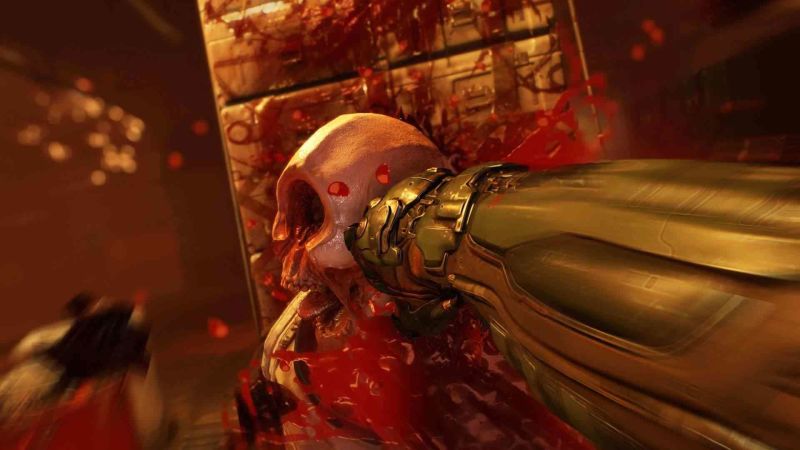
As Overkill so cleverly displays, the great extravagance of the video game is violence. The game rewards the player for stringing together kills with extra points, using a combo meter that calls its highest level a “goregasm”. Of course, excessive violence is such a pervasive feature of games that it alone cannot qualify a game as Camp. However, certain genres play towards excessive violence in particular ways that may be seen as campy. The so-called “stylish action” genre, for instance, including the Devil May Cry series and the more recent Bayonetta, reward killing enemies in unusual ways and stringing together combos. These games are also campy in other respects, particularly in regard to their storylines and their character designs. What prevents these games from being truly campy is their historical tendency to be fiendishly difficult.
In this sense, God of War II may be the best example of video game Camp. Its half-naked hero Kratos, bedecked in war paint, tears through wave after wave of mythology-inspired monsters using giant swords that have been chained to his arms. Provided he weakens his enemies enough before killing them, Kratos can also perform elaborately brutal finishing moves that frequently involve dismemberment or decapitation (he yanks the heads off of Gorgons, for instance). Yet all of this requires little skill on the part of the player; even the most hapless button-masher can muddle his way through the combat, and the keys to the finishing moves are always displayed prominently on screen.
Most importantly, God of War II lacks the moral core of its predecessor. The first game in the series began with Kratos committing suicide, and concerned his quest for vengeance against Ares, who drove Kratos mad and caused him to kill his wife and child. In the final battle, the player is forced to become part of this memory, fighting an army of Kratos clones while intermittently hugging the wife and daughter to restore their health. The player becomes involved in the tragedy, and to some extent, the story succeeds emotionally. In the sequel, Kratos is out to change his fate and prove he’s the bigger man (God?) than Zeus. The gravitas of the original, such as it was, is dispensed with in favor of a story about, essentially, a cosmic bar fight. The sequel takes itself no less seriously than the original, but it fails to truly be serious.
Camp is art that proposes itself seriously, but cannot be taken altogether seriously because it is “too much”. -Sontag
With this archetype in mind, other exemplars can be identified, starting most obviously with God of War clones such as Dante’s Inferno. One could argue that the similarly intense Resident Evil 4 is even campier. Gears of War and its sequel also likely qualify. Camp arising from violence is not limited to games, of course; many of the fight scenes in Kill Bill, for example, though posed in absolutely serious fashion, become comic in their bloody excess.
One might argue that I have betrayed my purpose; now I’m arguing that good games are campy. Well, they are good games, but they’re bad stories, filled with flat characters doing stupid things in service of a plot that’s incomprehensible at best and insulting at worst. The content of these games regularly contextualizes the player’s action as violence and destruction – the more outrageous and disgusting, the better. We praise this behavior: here I’ve praised Overkill, and [Jim] Sterling has praised Deadly Premonition. Many of the games I’ve mentioned have been rewarded with stellar sales. So the fact that we continue to receive games that offer this kind of content is no accident. The problem for most games isn’t that they inadvertently find themselves becoming campy. The problem is that they aspire to Camp, to achieve no better fate than to be loved for their excess, and to let ironic appreciation smooth over their faults.
Weekend Reader is Kotaku’s look at the critical thinking in, and of video games. It appears Sundays at 11 a.m. Mountain time. Please take the time to read the full article cited before getting involved in the debate here.
Have you read something thought-provoking? Share it with us. Tip Weekend Reader by sending a link to [email protected] with “Weekend Reader” in the subject header.