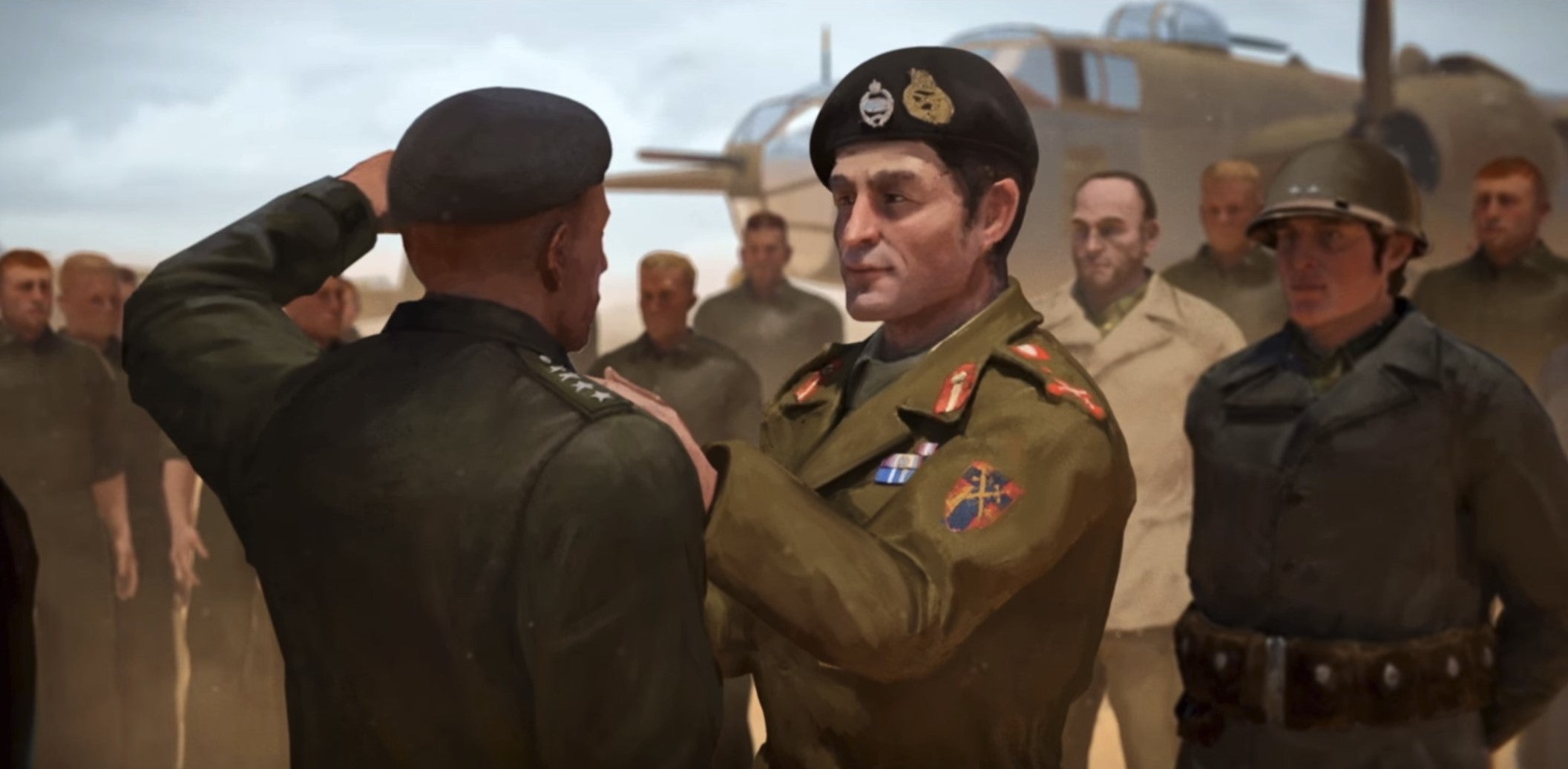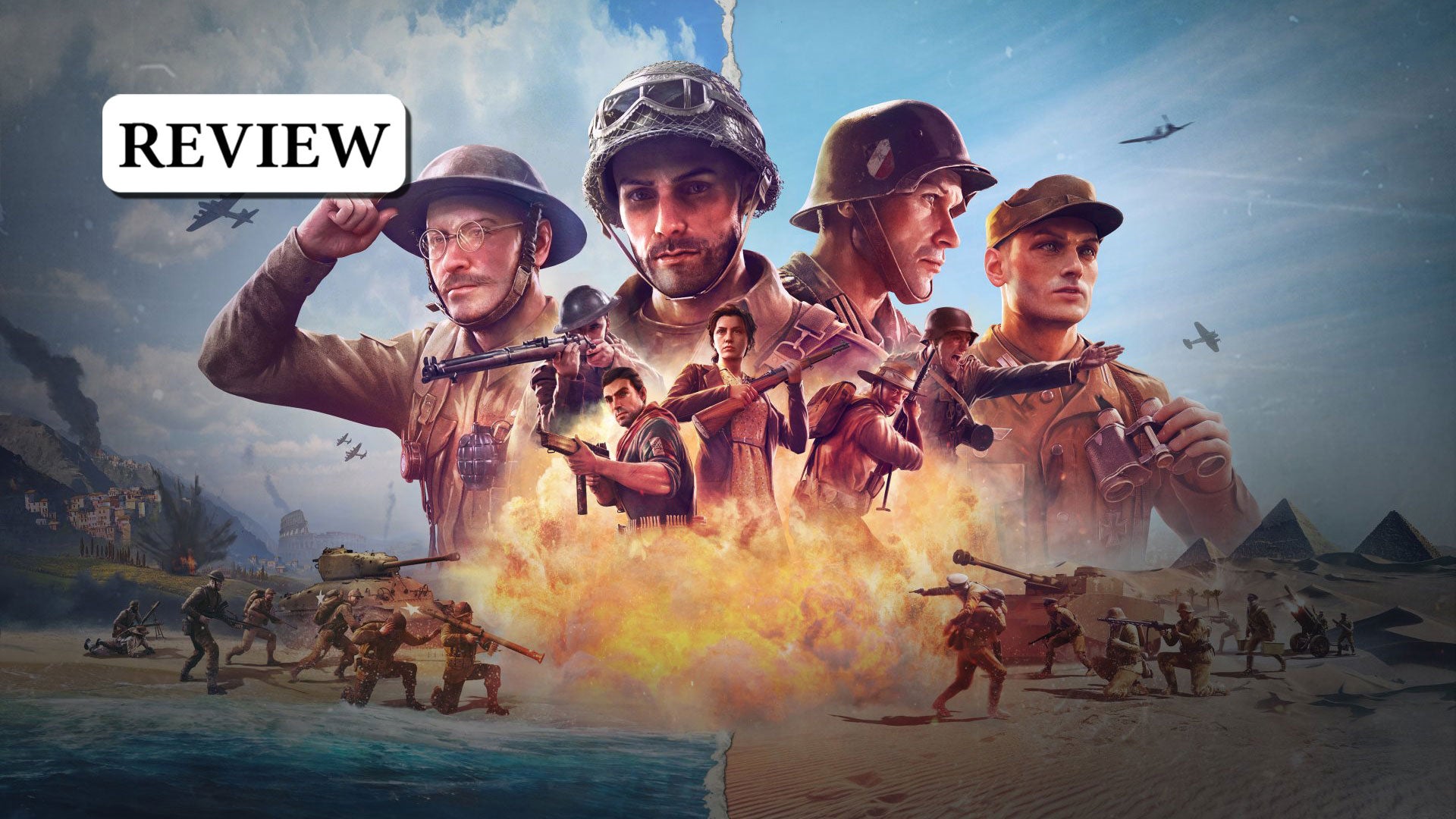
My love for the original Company of Heroes knows no bounds. Indeed I’ve gone so far as to call it the perfect RTS, a blend of tactics, cover and terrain so meticulously-honed that for 17 years it has remained, undefeated, as the finest example of the genre.
Even Company of Heroes’ own sequel fell short of the benchmark set by its predecessor, so when I talk about how good that game was, I am not fucking around. Indeed that disappointing sequel’s fate gave me enormous misgivings when a third game was announced a couple of years back; if one successor pivoted slightly from perfection and suffered as a result, surely a third would do the same?
I’m here to say that my misgivings were for naught. This game rules.
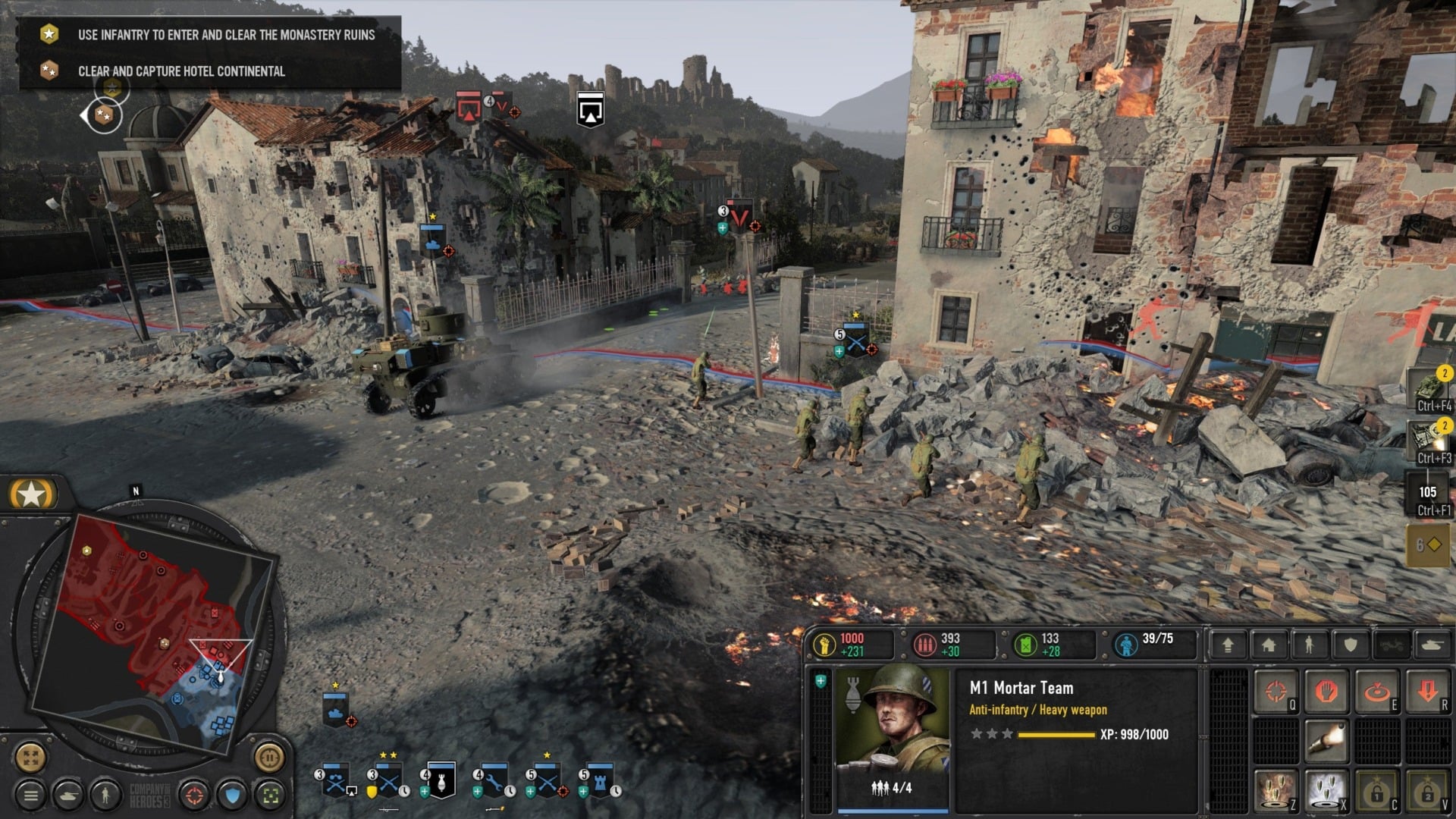
Company of Heroes succeeded because it took ideas about cover that Relic had learned from Dawn of War and—I’m sorry to keep re-using the term but I have to—perfected them. You didn’t just have to worry about whether your infantry were in cover or not, but what type of cover. Your tanks were more vulnerable from the sides and rear than the front, so you had to look after them, not just send them blindly into the fray. And your armies were always relatively small, so every soldier was precious, and you had to manage everyone’s placement meticulously.
It was basically an elaborate puzzle game playing out on a diorama crawling with toy soldiers. The complexity of the game’s terrain, full of hedgerows and villages and stone bridges, as well as the opportunities they afforded for cover and flanking made every single encounter with the enemy a challenge you had to solve. Company of Heroes 2 went backwards with its dull storyline and less interesting maps, so it’s wonderful seeing Company of Heroes 3 return to the series’ roots, and instead of trying to iterate on perfection, iterate around it.
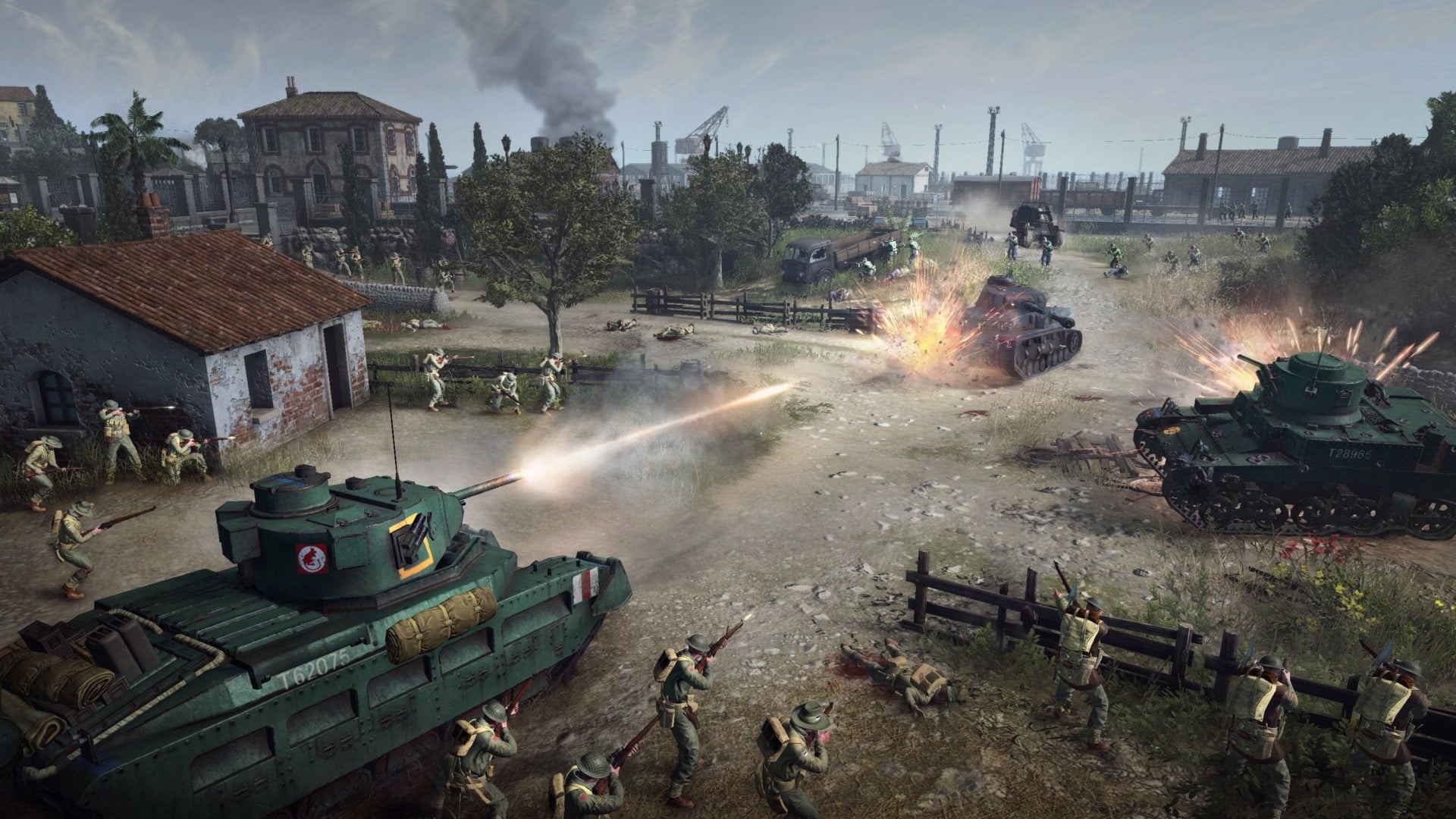
Company of Heroes 3 knows what worked so well about the first game and keeps pretty much all of it. Those busy French villages have been replaced with even busier Italian ones, cheery little British infantry replaced with a fresh set of cheery little British infantry. The core of the game’s tactical experience remains almost untouched; cover, facing, supply, capturing control points, upgrading units, this is 2007’s game replicated in 2023 to the point where if you’ve played the original you probably won’t even need to play this game’s tutorial.
So why should Relic have bothered with a sequel at all? While its real-time systems themselves are familiar, everything else around them has been updated, for better and worse. Company of Heroes was a linear campaign that also had great maps (and AI) for skirmishes and multiplayer. Company of Heroes 3 has both of these things, but also something else: the heart of the game is its dynamic singleplayer campaign, set during the Allied invasion of Italy in 1943.
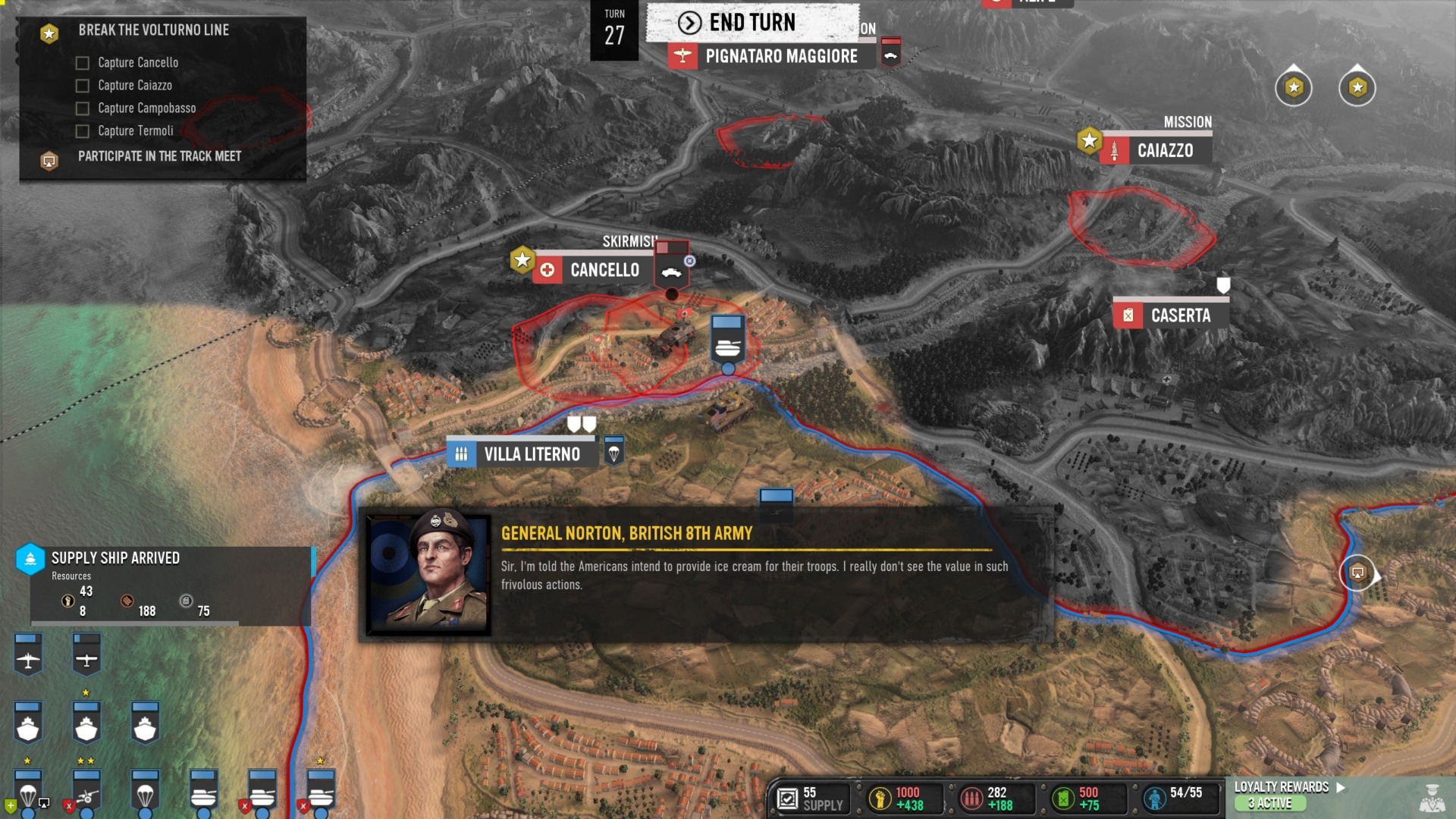
Rather than just marching you straight from mission to mission like the first two games (or this game’s other campaign, set in North Africa, more on that later), the Italian campaign has looked over Creative Assembly’s shoulder and stolen Total War’s strategic gameplay, giving players a map of Italy and asking them to move units around capturing cities and, when they bump into each other (or cities occupied by Germans), kicking off tactical battles.
DYNAMIC DISASTER
Know that the implementation of this dynamic campaign is woeful. Like, it’s barely functional. There’s a lack of critical information, loads of bugs (some of the with big impacts on your campaign, like my paratrooper company that spawned underwater and couldn’t be moved), weird performance dips and the ever-present sensation that the whole thing feels like it’s about to fall over at any given moment. It’s bad! Honestly I’m shocked the game is even releasing with such a seemingly important element in this poor state.
And yet…I didn’t really care that much? Which sounds absurd, that I can excuse one of this game’s main selling points as being fundamentally terrible, but the strategic layer is so superficially-implemented, and so poor that, unlike Total War, how it works and how you play it doesn’t have a meaningful impact on your tactical battles. And the tactical battles are—like I justified back with Company of Heroes 2 at the time—what I was here for anyway. As broken as it is, the dynamic campaign exists to serve the player a succession of RTS engagements, it does that, and those RTS engagements are wonderful.
The dynamic campaign gives you two types of real-time battles. The first are generated for you on the fly, both sides spawned into a random map with a random set of objectives. Like the game’s traditional skirmish mode, but in the middle of a campaign. These can sometimes be a little easy, but they’re still a blast—I played skirmishes in the original game for years after I’d rinsed its campaigns—and so every chance I got to play one of these side missions I did, which I definitely cannot say about Total War.
The other type are the scripted missions, the meat of the campaign, the ones focused on important historical events. Think the Anzio landings, or Monte Cassino (where, if you’re fast enough, you can change history and capture it before it gets bombed into dust). It’s here, on big maps with varying terrain and shifting objectives, that Company of Heroes 3 really shines.
A MATCH MADE IN HEAVEN
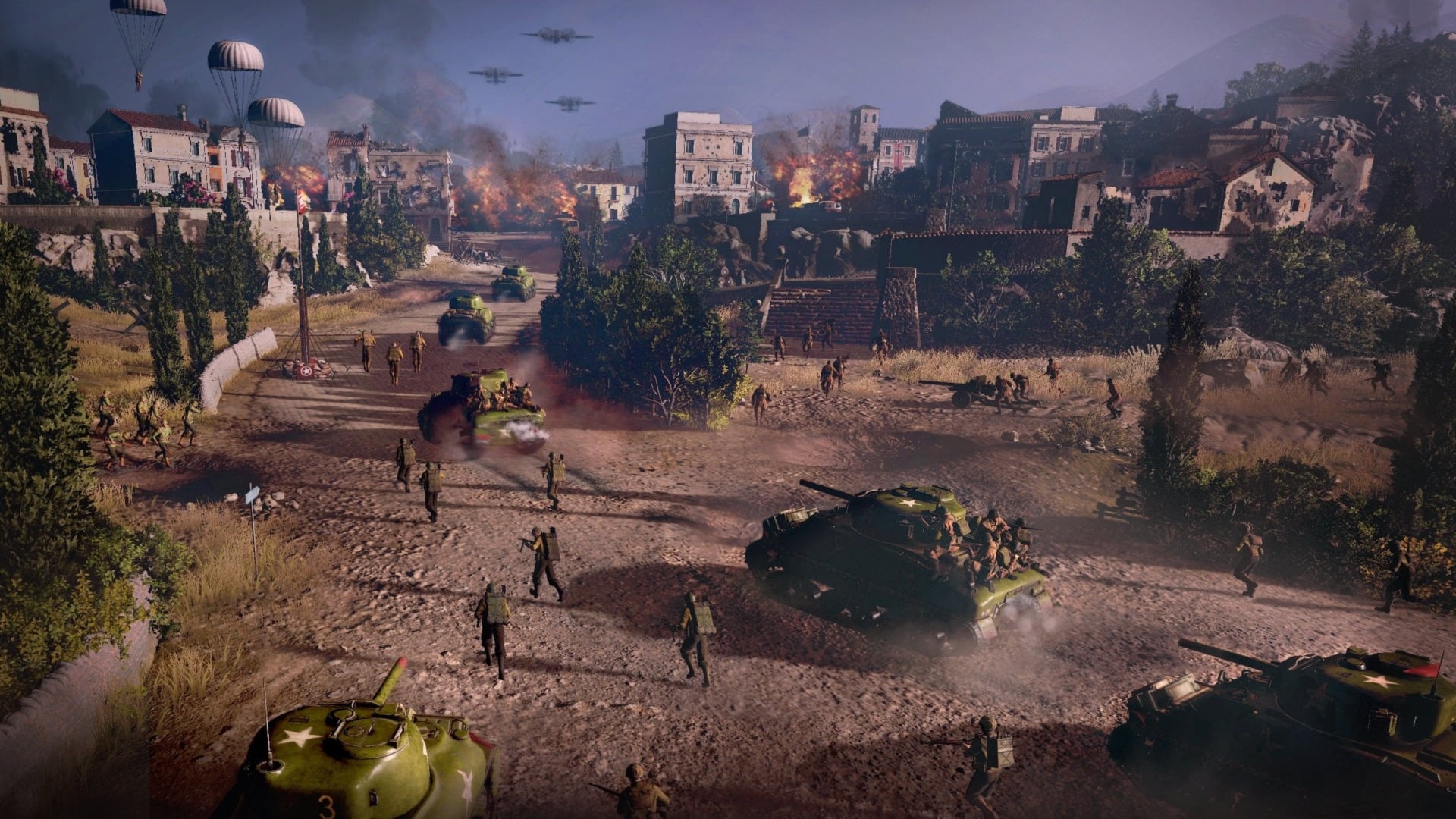
I can dismiss the campaign map’s problems because every second I wasn’t battling with its wonkiness, and was instead at ground-level commanding my troops on the field, I was in heaven. I couldn’t wait to start another RTS battle, then fight another one, and another. Company of Heroes 3’s tactical showdowns might be even better than the original’s, as while the first game flourished in the Normandy countryside, the decision to move the action to the Mediterranean has proved a masterstroke. In Italy the series has found an even better match between setting and gameplay.
Company of Heroes 2 always felt weird because it was trying to be an intimate strategy game on the broadest, busiest battlefield in human history. Shifting the spotlight to Italy has proven an inspiring choice. That front wasn’t settled with cataclysmic tank battles and enormous advances. It was a dogfight, a methodical slog up the peninsula, with mountainous terrain and dense urban centres the perfect platform for a German defence that had to be unseated using the full weight of the Allies’ combined arms operations.
That’s exactly how Relic has always wanted you to play Company of Heroes. Not by rushing, but taking your time and using every weapon at your disposal at the exact moment it’s needed. Inching your way towards Rome (the campaign’s final objective) involves fighting a series of major battles that play out as a succession of fascinating little challenges. You move some infantry to cover, then you flank with other infantry, and ah, now use a tank, then some artillery support, and everything working together manages to clear half a street. You’re playing chess, only the pieces have chipper little accents.
There are missions in this game that ask you to move from town to village on the same map, each settlement built upon wildly varying levels of terrain, with stone walls and staircases and old churches and crooked little streets. The defenders are dug in so well, and the tools at my disposal were so vast, that I honestly don’t think I’ve enjoyed an RTS challenge more in my life. The genre’s tired “rock paper scissors” engagement rules go out the window here when you have to overcome an MG nest, sniper, anti-tank gun and infantry bunker all at the same time, and all in the same town square.
Company Of Heroes 3
-
BACK OF THE BOX QUOTE
[German accent] "Ah shit here, we go again"
-
TYPE OF GAME
Real-Time Strategy
-
LIKED
Still the best real-time combat in all of video games
-
DISLIKED
The Dynamic campaign, supposedly a key selling point, sucks
-
DEVELOPER
Relic
-
RELEASE DATE
February 23, 2023
-
PLAYED
Completed both singleplayer campaigns, messed around in skirmish mode
-
PLATFORMS
PC (Played), PS5, Xbox Series X|S
Is it innovative in a tactical sense? After all, it’s been 17 years since the first game. And the answer is, not really. It didn’t have to be! The units and tactics at your disposal are very similar to those from the original game, so it’s not like Relic went and reinvented the wheel when it came to the series’ core gameplay. And why would they? Like I’ve said repeatedly, it was already perfect. Now we just get that perfection served up more often in a more scenic location, in more varied and interesting ways.
The game’s other singleplayer campaign, set in North Africa, is an odd thing. The game didn’t need it for longevity’s sake, since the Italian campaign is huge and can be replayed. It’s narrated through the perspective of Libyan Jews but has you playing as the Germans, quipping jaunty little one-liners as you blast your way through the desert. And its missions are stingier, and nowhere near as memorable as the Italian campaign’s centrepiece battles. I’m not really sure why it exists! It does feature Australians though, which is nice.
I cannot believe I had doubts about this game. Sure, the dynamic campaign is a broken mess, but the fact I can so easily overlook one of the game’s central pillars shows just how strong the others—mostly its RTS engagements—are. On the battlefield itself this is still Company of Heroes, as good as it ever was and in some ways, even better
It may have taken 17 years and one disappointing sequel along the way, but Relic are to be commended here for somehow managing to take tactical perfection and redefining it not just for old veterans, but for a whole new generation of armchair generals as well.