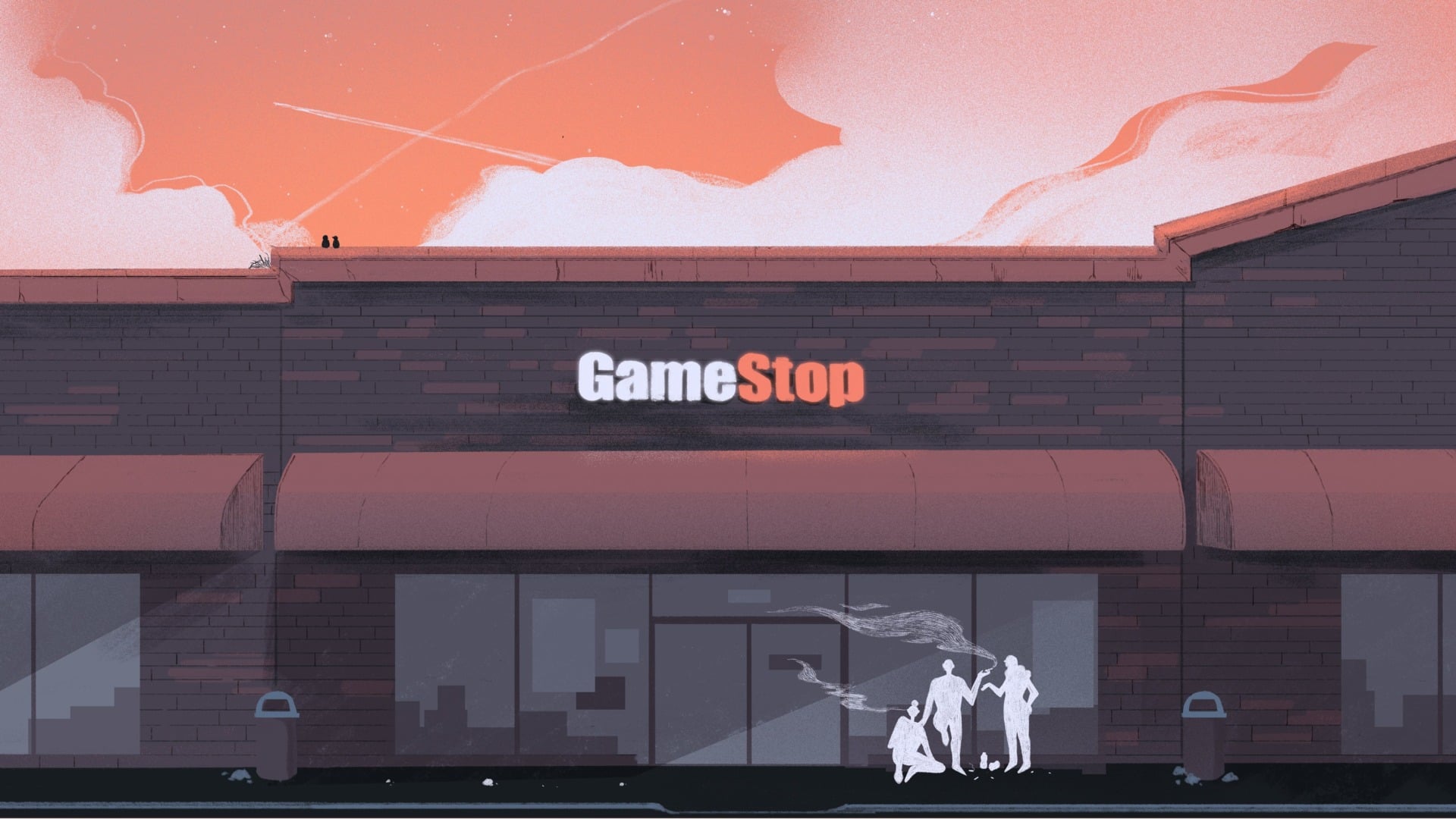
Everybody at the strip was convinced that Caleb had stolen the cash. We were leaned back in uncomfortable metal chairs that left dents in our legs, sitting around a table littered with menthol cigarette butts. “The strip” was a strip mall, sterile and unexceptional, home to a Starbucks, a Cold Stone, a Chipotle, a GameStop. We were doing some amateur detective work. Twenty minutes prior, Caleb had been complaining that he was broke. Now, he had returned from behind the strip mall, stoned and in possession. Also, $20 was missing from my purse. Hmm
It was 2007, I was 16, and it was the first time someone had stolen from me, at least to my knowledge. I couldn’t wrap my head around the fact that big, smelly, broke Caleb would turn out to be such a fucking sneak. He denied it, of course. Someone said I should fight Caleb, punch him in his pudding-white stomach. I don’t remember whether I did, but I do remember feeling overwhelmed and wandering off into the GameStop to watch the employees do inventory as they closed the store for the day.
Once a week, I’d enter that GameStop to ask whichever bored employee was manning the place when they’d get Super Smash Bros. Brawl for the Wii, and whether they’d give it to me early. I wanted to play a video game before anybody else, and I wanted it to be Super Smash Bros. Brawl so I could get really good and nobody would ever be able to catch up. Certainly, I felt, GameStop had that power and would be generous with it. Theo, who worked at that GameStop, told me many times: Cecilia, it comes out in December. Each time, I’d fuss, forget what he said, and distract myself with some other game they had pre-installed on the Wii kiosk in the store. Then I’d go in again the next week.
One day, when I was being particularly persistent, Theo offered me the great honor of being the first person in northern Virginia, or maybe he said the central stretch of the East Coast, to get a sneak preview of what Super Mario Galaxy looked like. It was just the third 3D Super Mario game, and one that transformed its Flatlands platforms into spherical ones. In retrospect, it was unlikely that this one strip mall GameStop in Vienna, Virginia had been so special, and not the GameStop over in Falls Church or at the mall.
Theo showed me the Super Mario Galaxy store demo disc and put it into the Wii. I’d already given up on beating Super Mario Sunshine after 12 tortured hours of scavenging for suns in Delfino Plaza. At that time, I was frequently wasting anxious mornings tearing the house apart for lost math homework, keys, or socks. Once the life-to-gameplay resemblance sunk in, I popped the disc out of my GameCube and never returned to the sunny, agonizing plaza. Super Mario Galaxy tortured me, too, but in a different way. Running around a small, round planet with a roving camera made me dizzy, and I had to stop just a few minutes into Theo’s tutorial. Of course I bought it.
Theo treated me well at GameStop. I’d meander in, troll around the aisles and puzzle over why anybody would want to play Leisure Suit Larry or any of the uninspiring games in the “Used” box. He’d entertain me, tease me a little, trade gossip about the kids outside. On and off, Theo had been dating Jules, a dedicated Neopets player and HTML savant whom I’d known since kindergarten. Once, I think to get closer to her, Theo lent me a leftover GameStop employee discount card. Sometimes, when I brandished it to buy some game off an employee I didn’t know, I’d have to lie and say I worked at the GameStop at the mall or in Fairfax. I don’t think Theo meant to give it to me, considering that he asked for it back a few times. I refused and kept in my wallet for years.
Eventually, Super Smash Bros. Brawl came out, but in March and not December, and I got it later than everyone else.
GameStop was reaching ubiquity across American suburbia by the late 2000s. The company and its predecessors fed off corporate cannibalism, a Katamari growing larger as it soaked up the increasing mainstream popularity of gaming among the middle class. The company started out doing business as Babbage’s in 1984. Then it acquired Software Etc., and later, would merge with FuncoLand. In 2005, it acquired Electronics Boutique. As it expanded, the entity absorbed brands and conquered strip malls, opening and closing dozens of stores as the wind blew whichever direction for the burgeoning games industry.
Aside from the occasional find at a second-hand store, there wasn’t anywhere to buy a video game in my town before GameStop. When I was in elementary school, we’d trek one town over to another, larger strip mall with a MicroCenter, a computer retailer that still had a 1980s vibe to it even in the early 2000s. MicroCenter was a labyrinth of greige aisles with trackball mice and clackity keyboards and hardware junk. Trips there were decidedly not fun, but it did have a modest games aisle. One time, as a reward for accompanying him to purchase some soon-obsolescent product, my father bought me Warcraft 2, a game I played obsessively for months but never even once understood.
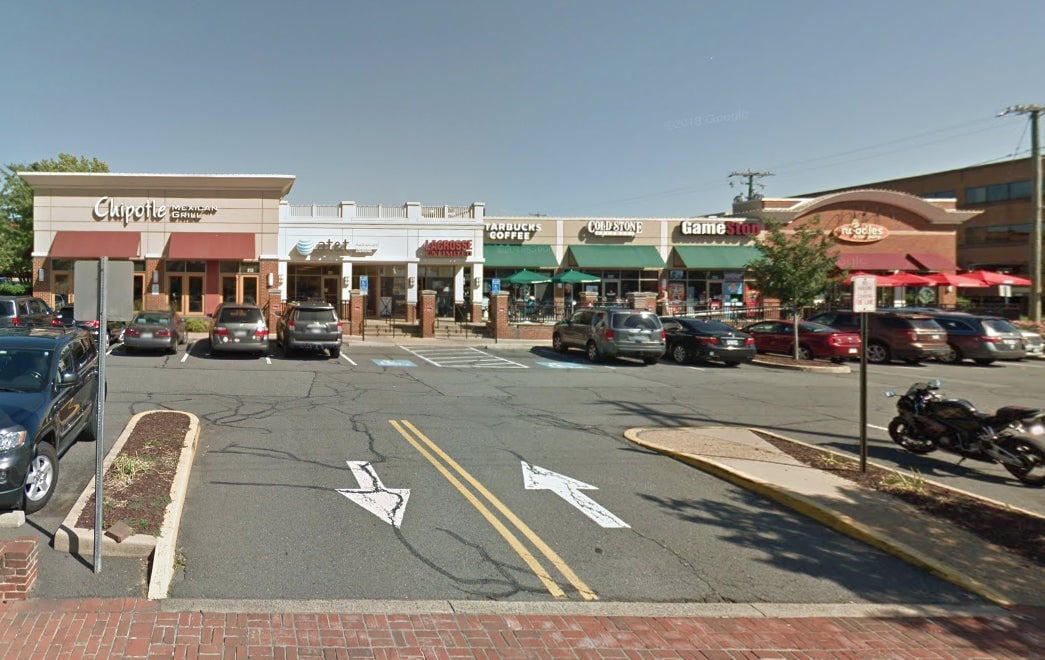
The strip mall that would eventually furnish us with a GameStop was previously a farm supply store called Southern States, with bales of hay pouring out onto the sidewalk out front. In the winter, its parking lot was packed tight with Christmas trees baled up with twine. It was bulldozed in 2002, a spokesperson in a local paper citing the “very poor” agricultural economy. As part of the historical Virginia town’s coming to terms with late-stage capitalism and the easy dominance of brand recognition over local retail, we got at once the Starbucks, the Cold Stone, the Chipotle, and the Electronics Boutique, which was soon purchased by, and rebranded to, GameStop.
The strip was sensational. Middle schoolers whose parents didn’t want to drive them to the mall would ping friends over AIM or leave an “Away Message” saying they were heading there, perhaps above some moody Bright Eyes lyrics. After ordering some indefensible beverage at Starbucks, the girls would all sit outside, shoveling small bits of whipped cream from a vanilla Frappuccino into their mouths with the tips of their straws. I would often excuse myself to go to the GameStop, knowing I didn’t have enough money on hand for a new game or the expertise to choose one for myself, and it always felt like I was looking out from inside a Halloween mask.
As we turned 15 or 16, the gas station across the street became another one of our trade outposts. At the metal tables, we bargained with 18-year-olds to buy us Parliaments or Camels and ferry them over. One day, we followed them over to watch, but seeing us, the attendant denied our friends’ entreaty. We’d had too much Red Bull to just sit around again, so I decided to do something stupid to impress my crush. My best friend at the time would later co-opt my Livejournal to write about it:
All of the sudden, thee crazy kids *cough* Cecilia (also known as cc) decides throwing a Red Bull can at a car would be an ingenious idea. Yah, well things hapen in this order. 1.) Man calls cops. 2.) Cops find us. 3.) Cecilia lies to cops.
To be clear, we were all throwing our cans, and the wind blew all of them back at us. Soon after, across the street, we saw waving and heard yelling at an increasing volume from a man, probably someone’s father, outside the GameStop. We never made out precisely what he was saying, but the mouth-shape for “I CALLED THE COPS” was easy enough to read.
We darted across four lanes of traffic toward the strip. The narc stood watch as police car signals began going off from blocks away. We sprinted three blocks over and into the backside of the town’s new Whole Foods. Out of breath, we helped each other over the chain fence in the back. Only two of us had escaped before the cop cars’ lights turned the dead-end corner. (There were two cars, of course, because it was suburban Virginia and kids throwing Red Bull cans into the street was the most pressing matter on their schedules.)
A feeling I now recognize as adrenaline but what back then seemed more like what the Bible described as “divine possession” had me stepping toward the suburban cops. “What’s going on here?” one of them asked.
“I’m so sorry,” I told the officer, knowing that a full lie would be transparent. “We were drinking Red Bull and the wind blew the cans into the street. Are we in trouble for littering?”
There were exactly zero instances before that moment when somebody had used the word “hero” to describe me.
If I wasn’t at the strip, it’s likely I’d have passed by it at some point on any given day. It was an unavoidable eyesore in the midpoint on one of my town’s two main streets, one littered with slightly different-looking strip malls, the other more quaint with its toy store, church, and clock shop. When my parents drove by the strip on the way to some errand and I was in the passenger’s seat, I felt like my organs were slowly ballooning to the point of fissures. I’d hide, sometimes crouching down in the car. I didn’t want to be seen anywhere I hadn’t meticulously prepared myself to be seen.
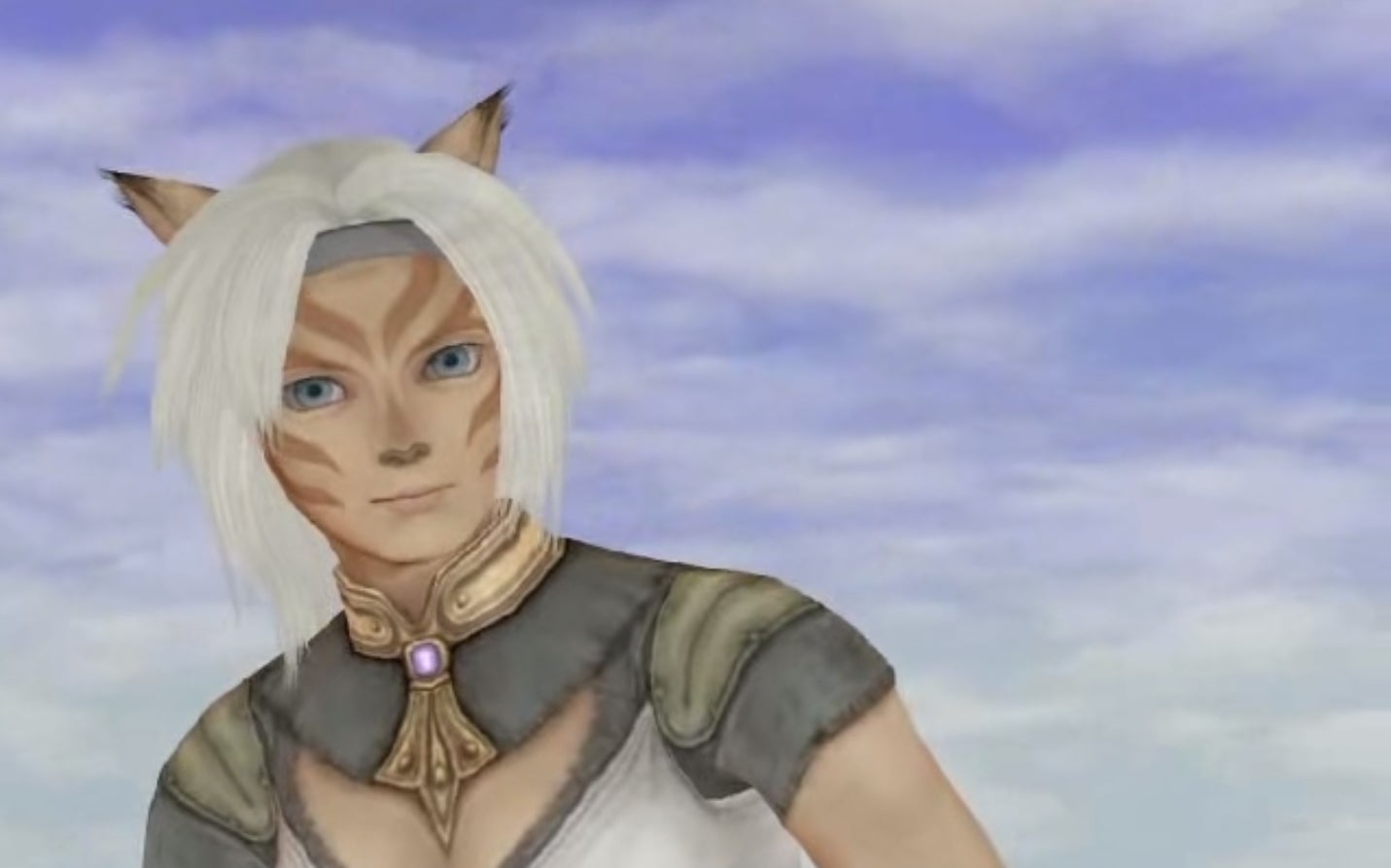
Easily entering and exiting a social situation is one thing an adult might forget they’d ever practiced as a child. I would have forgotten had I not been practicing it elsewhere, diligently and intentionally. A year ago, I had picked the online role-playing game Final Fantasy XI from GameStop at the recommendation of my brother’s best friend. At first, it was tricky to halt my avatar’s running animation a socially acceptable distance from whomever she was meeting, not too far or too close. I discovered how to ease her run into a steady, purposeful walk before halting. Depending on the situation, I’d use the bowing, waving or blowing-a-kiss emotes mapped onto my user interface. These I grafted onto macro buttons on the bottom of my screen, sometimes in elaborate patterns expressing elaborate feelings from a small, anime cat girl.
Back then, I was usually grounded. Each sentence lasted for a week, two weeks, a month, and eventually, it all blurred into an endless, sprawling, dusty-grey dream. My mom theorizes that I’d purposefully do bad teen stuff so she’d ground me. That way I could avoid my increasingly complicated friendships at the strip. Time would spin on there without me: break-ups, fights, pranks, insults. In the world of Final Fantasy XI, I had comrades who needed me. As my dedication to leveling up heightened, so too did my in-game friends’ expectations of me as a community member. A couple times a week, one would reach out to me on a forum, or on Myspace, or eventually even through text message, asking me to log on and help them with some level grinding, some quest.
Then came the emotional labor. As a teenager, I did not have the tools to counsel the cat girl FlameKitty, the avatar of an older man, through his joblessness, his unpaid bills, his loneliness. I could not offer authoritative advice after a married mother of five fell in love with another Final Fantasy XI companion, whose shadowy forum profile picture featured a katana.
Then, there was the human paladin PrinceRoy, who told me about God and Ohio and kidney stones as he escorted me across high-aggro zones in-game. A disastrous high school breakup led me to offer him my number one night. The boundary leap was terrifying and a little thrilling—at least until he started relentlessly texting me through chemistry class, and I was too embarrassed to tell anyone who was so desperately trying to contact me.
Between dungeon runs, I’d refresh the bag of flavored sunflower seeds on my desk and call my real-life girlfriends on the landline from my own little suburban dungeon. As overstimulation slowly became my default—real life has fewer menu options than Final Fantasy XI—hearing the local drama became boring, too. I once found myself half-heartedly listening to my friend Leticia bemoaning her boyfriend Mark’s impassioned gaming habit while I, with my other hand, was casting spells on giant caterpillars alongside Mark’s Final Fantasy XI avatar, a tall elvaan man.
I stopped hanging out at the strip around the same time I stopped playing Final Fantasy XI. As people I met in the game began to infringe on my outside life, it no longer felt like an escape. Likewise, when I wasn’t loitering alongside wastrel personalities, I found I didn’t have much to escape from.
There’s a reason why adults read fiction written for young adults, like The Hunger Games or Twilight, and why we covet television shows set in high schools like Riverdale, Pretty Little Liars, or Gossip Girl. This is when identities are most molten. A decision made by a teen character doesn’t simply describe qualities they already have; it’s them trying on qualities that might describe them into perpetuity.
In the early 2000s, when it was abnormal to talk about goings-on on MySpace, Facebook, or AIM with your friends in real life, there was still the prevalent but false belief that everyone had two separate online and offline identities, and that online, the spirit of experimentation could persist forever into adulthood.
At that particular moment in time, new interfaces like blogs and forums welcomed this experimentation. Adults could partake in this uniquely teenaged pastime, and for teens, these interfaces were inviting stages for method acting. A couple of edgy MySpace poems might have preceded a classmate’s unforeseen debut as a goth one Monday. A dedicated Veronica Mars fan could stuff the entirety of her fandom into one GeoCities website. There would be weddings in Final Fantasy XI and cybersex in World of Warcraft. It all came from the fresh and pure desire to express ourselves with as few consequences as possible.
The belief that all this was separate and without consequence was unrealistic and short-lived. For a lot of people, getting a reaction, or legitimization, would soon trump self-expression for its own sake. The first couple of times a real-life schoolmate commented on some unhinged, manic Xanga post, or one acquaintance messaged another on Last.fm after seeing them listen to their favorite band’s new album, for a lot of people, it was validating and exhilarating. The loop had to close by design. It wasn’t throwing a Red Bull can into the road, drinking the most psychotic possible Starbucks beverage, expressing your allegiance to a particular console in the aisles of GameStop. Online platforms built in mechanisms for instant acknowledgement and satiation.

Once self-expression, validation and the digital sphere became linked in our minds, of course, that connection was easily exploited by social media companies’ web interfaces and brands who designed invisible marketplaces around our budding online identities. Today, these companies condense our identities into profiles easily deciphered by ad companies.
The realization that this freedom of digital identity is farce comes differently to everyone. It was cemented, for me, on my first date.
Trent and I went on exactly one date after “dating” exclusively online for months, despite attending the same school, the same science and shop classes, and living a 20-minute walk from each other. We decided to meet at the strip. Throughout those months, our relationship had matured over AIM, as many middle schoolers’ did back then. He liked that I played games, or at least was open to it, and I liked his dragon shirts and long, shiny hair.
It wasn’t weird that this was how we dated, at least initially. Our online and offline lives hung separately, each sphere itself segmented off into isolated, smaller spheres—Myspace, Livejournal, Final Fantasy XI, AIM; home, school, the strip, the woods. I took as fact that our online and offline identities would always be separate, no one more real than the other.
I was honored when, over AIM, he said I’d like Guild Wars. A personal recommendation, I thought, for me, personally. I bought a copy at GameStop. Walking up to the cashier with my employee discount card, I observed the box, wondering whether I’d finally discover what kind of person he thought I was by understanding everything about Guild Wars, a generic fantasy online role-playing game.
At home, I let him know in an instant message that I was logging on, and would appreciate a tour, envisioning it to be just as opaque and expansive and meaningful to him as Final Fantasy XI was to me. It was, in fact, a generic fantasy role-playing game with warriors, monks, and magic. Trent met me for a moment in the game, then ditched me to go level up in more advanced zones while I got pummeled by monsters.
As time went on, my girlfriends increasingly questioned the legitimacy of the relationship. We’re in high school now, they said, and it’s weird you haven’t, you know, hung out. Close the loop. Making my way toward our first date and listening to the Virgin Suicides soundtrack by AIR, I felt, for the first time, comfortable approaching the strip. I wondered if we’d meet inside the GameStop, where he’d see me concentrating thoughtfully on their PC game selection and looking effortlessly cute. Although we had barely spent an hour together in real life over those months, I felt that I knew him inside and out—his family’s tendency to clean before Buddhist holidays, his favorite programming languages, his affinity for sending friends disgusting websites hyperlinked with words like “kittens!”
The date was terrible. I never came to understand how he felt about me, but did find out later that he’d been in love with Lindsay, who worked at GameStop, the whole time.
The GameStop in the strip closed this past February. A local newspaper reported that next on the chopping block was the nearby Starbucks, the third or fourth that had surfaced in town, like a vanilla-cream-filled zit. An employee the reporter had interviewed inside the store, described as “otherwise empty,” said the rent had gotten too expensive. Yet with these national brands’ ability to elide the personal with the collective, it’s hard to tell whether something happened for any specific reason.
All across the country, GameStop stores are closing. Its stock is tumbling down, in June dropping 30 percent to $5.04, the lowest in a decade. Regional sales supervisors are getting laid off. Used game sales are a fifth of what they were. The brick-and-mortar chain of game retail stores—which has ballooned to 5,800—never solved the problem of how to offer physical products to digitally-minded gamers.
For GameStop, the real world and the virtual have collided and clashed, with the digital market squeezing out the physical one. In this time of optimization and ease, navigating to www.finalfantasyxiv.com and downloading Final Fantasy XIV is a no-brainer compared to lugging your body over to GameStop and being eyed by the bored, catty teens smoking menthols outside.
Like a drug store or a supermarket, GameStop has become more of a utility provider than something a teen might wrap their identity around. Games, too. Playing Fortnite doesn’t furnish a special identity so much as a communion with pop culture at large, eating a tasteless wafer with an image of Ninja pressed into it. The games industry generated $135 billion in 2019, and not purely off the backs of outcasts and idiosyncratics. In 2019, the fact that a person plays video games doesn’t say a lot about them. The escapist tendency is strong in most of us, no stronger in gamers than in those who compulsively use Instagram or comment on New York Times articles. We can’t pretend anymore that the places online we escape to are entirely separate from what we’re escaping from when escapism itself has become an industry optimized to distort these base desires.
Amazon can send me an HDMI cable in a day’s time, and in online stores, I can pick up whichever game I’d like after regular business hours. And if I want to call out into the void and hear another voice yell back, “Super Mario Galaxy is pretty good,” I can do that on Discord or Reddit. Except for party-related emergencies requiring a last-minute accessory purchase, I would not go into a GameStop in 2019 except to feel like the kind of person who would.
Names have been changed.