
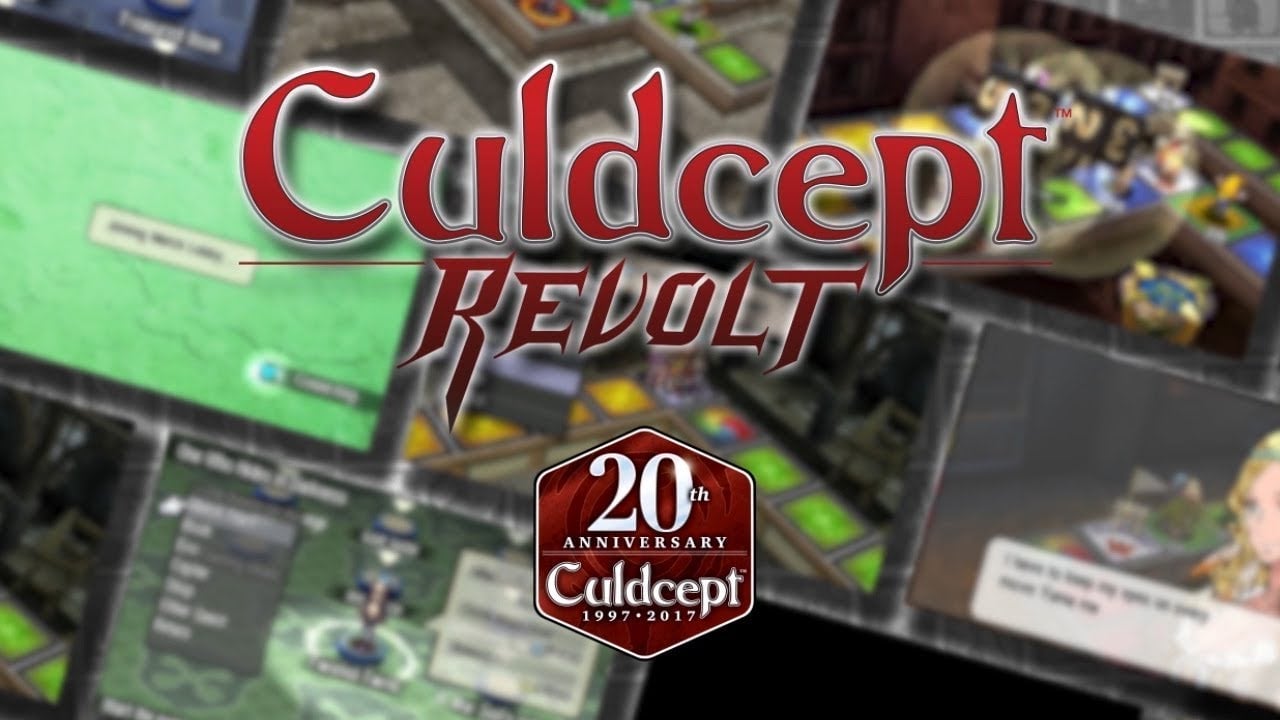
Celebrating its 20th anniversary this month, the Culdcept series is a unique combination of the property grabbing of Monopoly with the card-based monster battles of Magic: The Gathering. The latest installment, Culdcept: Revolt, is a very good reason to root around for your 3DS charger.
My 3DS hasn’t gotten a lot of use since the Nintendo Switch came out, but it has been sitting on my desk, patiently awaiting the release of Culdcept: Revolt. The first game, 1997’s Japan-exclusive Culdcept for the Sega Saturn and original PlayStation, was one of the first non-fighting games I’d ever imported, based solely on the concept of Magic meets Monopoly (or Fortune Street, for those who care about Fortune Street). Since then we’ve seen installments of the game for the Dreamcast, PlayStation 2, Nintendo DS and even an Xbox 360 exclusive called Culdcept Saga.
Culdcept: Revolt, released this week for the 3DS by NIS America, tells the story of a young man named Allen (or whatever you want to name him). Found unconscious on the streets of a sealed-off city ruled over by a tyrannical Count, the amnesiac Allen is taken in by the Free Bats, a group of rebels struggling to free their city from the Count’s iron grip.
Allen doesn’t know who he is or where he comes from, but with the help of the Free Bats he learns that he is a Cepter, one of a select group capable of wielding the cards of Culdcept in battle. Armed with an ever-growing selection of cards and decks, Allen sets off on a quest to discover his past and solve the mystery of the sealed city.
It’s not the most original tale going, but story’s never been the Culdcept series’ strong point. The plot’s just a reason to get the player onto the game board, taking turns possessing colorful squares with magical creatures, attempting to gather more magical power before their opponents.
Players enter battles with a deck consisting of 50 creature, spell and item cards. They roll the dice and move the indicated number of spaces. Should they land on an unoccupied space they can place a creature, claiming the space as their own. This grants the player magical power (which increases if the creature and space share the same element). As the game progresses, players can spend generated magical power on upgrading their occupied lands, further increasing their total magic.
Should a player land on an occupied space, they have two choices. They can either pay the space’s toll, or pit a creature in their hand against the occupying creature in a duel. A defending creature’s hit points are measured against the attacking creature’s strength. Special abilities are applied. Both players can apply an equipment card to the battle, further augmenting their creature’s stats.
Should the occupying player win, the invading player must pay the toll. If the invader wins, they take over the land, adding its magic to their total. The goal of any game is to reach a target amount of total magic and cross one of the board’s “gates” (think Monopoly’s “Go” space) before the other players. It’s about grabbing land, holding land and taking land away from other players whenever possible.
It’s not always an easy task. Winning a game of Culdcept takes equal parts skill and luck. One can be a very savvy player and just not have the cards they need in their hand at the right time. Victory can be just a few shorts spaces away, only to have the enemy cast a spell card that traps you in a battle you can’t win, draining your total magic below the goal and robbing you of your triumph.
I’ve spent most of a 20 minute match carving out a substantial lead, only to fumble a battle on a space with a toll I couldn’t afford, forcing me to sell off some of my occupied spaces to make up the difference. It’s frustrating and humiliating, but also kind of exhilarating.
When not working through the quests in the game’s story mode, earning points to spend on new card packs in the game’s store, players can take their battles online, joining together with other in team-based battles or going it alone. There is nothing like facing off against a wily human opponent with a good deck of cards. Humans don’t make the same silly mistakes AI players make. They make entirely different, more entertaining mistakes.
My sadly-neglect 3DS has gotten quite a lot of love over the past couple of weeks since I started playing Culdcept: Revolt. The game’s depth of strategy and deck-building variety and brilliant moments of good and bad luck have helped Nintendo’s dual-screen handheld secure a place inside my pants pocket once more.