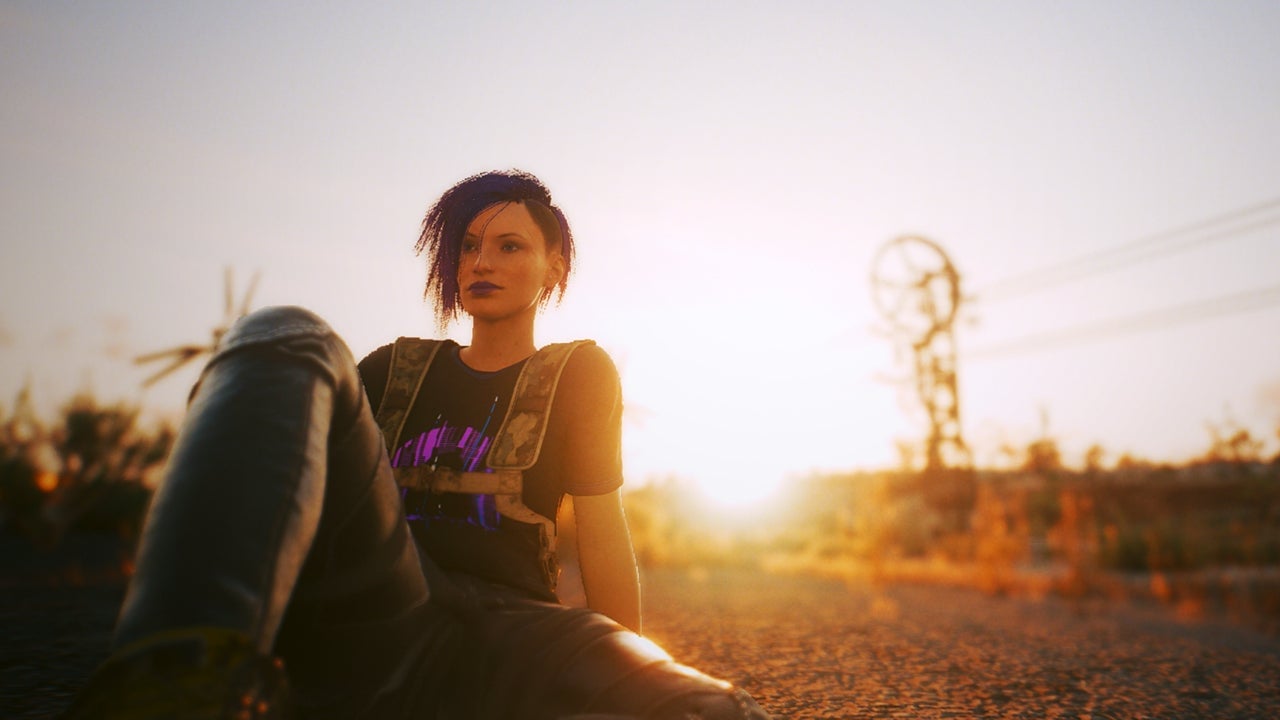
Cyberpunk 2077 launched as a broken game. But as someone who was going through the early work of gender transition during a world-stopping pandemic at the time, it somehow made sense that the big-budget, mega-popular video game everyone was so hyped about was also falling the fuck apart.
Amid the heat of the pandemic, most nights for me would end the same, especially before I started hormone therapy: I’d drink myself to sleep, usually waking up with the sun glaring through the window of my bathroom, where I’d ended up at some point in the evening. I would just lay there, staring at the ceiling before finally pulling myself up to look in the mirror, the pain of which was always a trial.
Peeling myself away from the mirror those mornings (which were often in actuality afternoons, or evenings), I’d mosey over to my computer to play a distracting video game. Cyberpunk’s disastrous launch state was alluring. I had enough of seeing the disaster of myself in the mirror, enough of seeing the disaster of the world outside, so why not go check out something else busted to make me feel a little better about this fucked-up world, and my place in it?

A broken woman playing a broken game
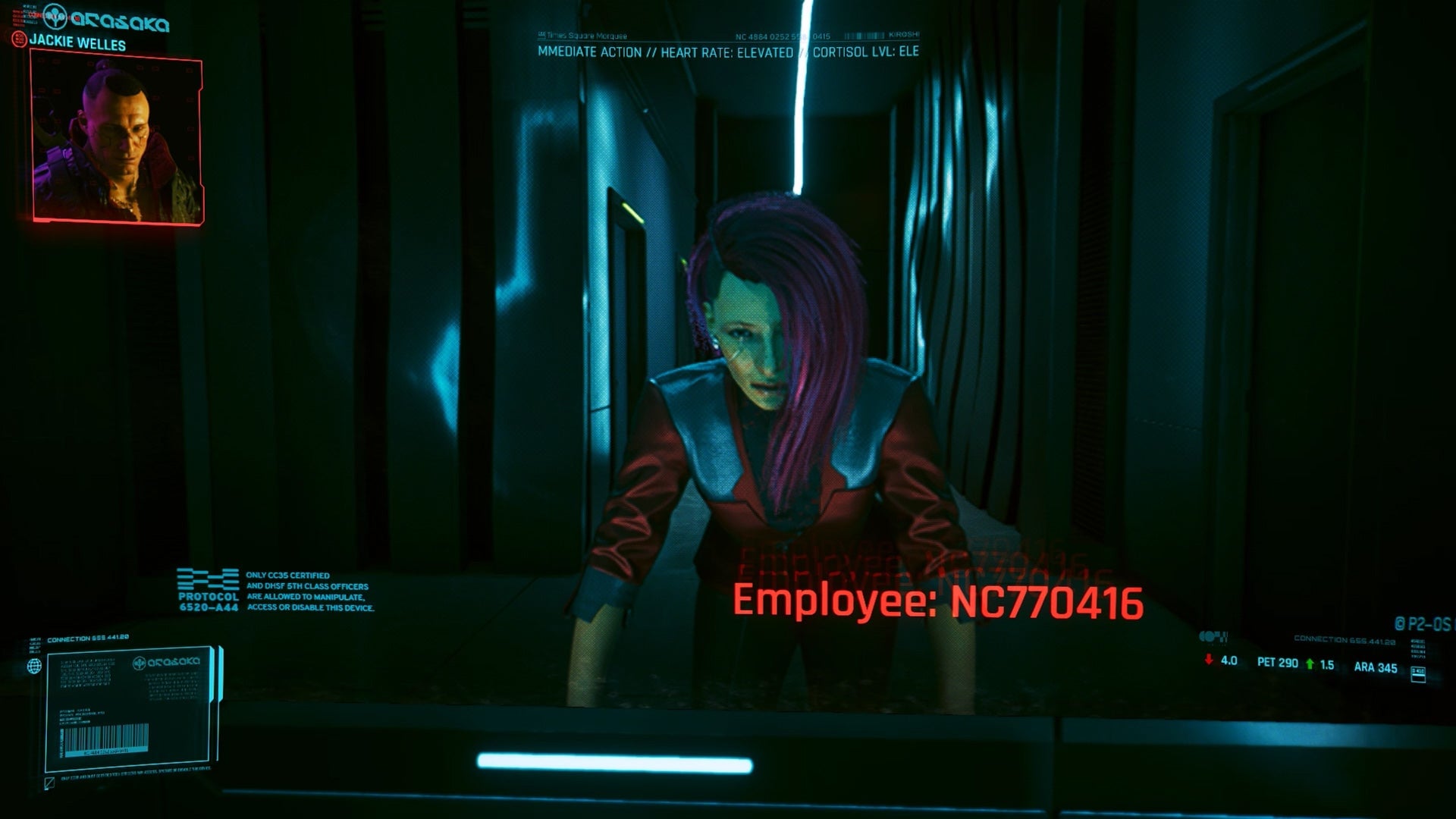
I chose the Corpo lifepath for my first V. You begin that chapter throwing up in a sink before staring at yourself in the mirror…except when I played Cyberpunk in its early, beyond-broken state, myself a broken-down trans woman trying to make this mess of a game run on my poor GTX 1060, it was like staring at my own face in the mirror: a fucking disaster. Half the textures loaded, the game stuttered constantly. This initial opening state, both narratively and technically, was the opposite of escapism. It was a reflection of how loosely held together my life felt.
Playing Cyberpunk 2077 at launch was an experience in harmony with gender dysphoria, which for some trans people is a condition that can spontaneously ebb to the point that it feels like it was never present in the first place. It will lie to you, creating an illusion that the life you’re living is fine, is good enough. Gender dysphoria will shrink until it’s just rough edges of discomfort you can excuse away as something else. You just get used to it. Until you can’t.
Like a violent glitch that suddenly sends your car flying halfway across Night City and buries V into the side of a building, you’ll catch yourself in the mirror or notice something about your body and realize it’s not fine, and that some mixture of the software and hardware that is “you” is not playing well, is crashing to desktop again. Or in my case, the beer-bottle-littered floor.
But for me at least, the game was stable enough, often enough that I could continue to play it—just like I did with my life prior to coming out. I could continue to play it. When the game would do weird shit, like having a strange graphical glitch obscure my vision anytime I exited a car, I could just reboot, or roll back to a previous save that wasn’t too distant. I’d do similar things with my own life before transition: Dysphoria would rear its head and I’d just focus on the times I enjoyed my identity and life. My own reboot process.
An unwanted guest in my head
Somehow Cyberpunk just continued to make it personal, this time with the actual narrative experience I encountered underneath all those glitches in its matrix.
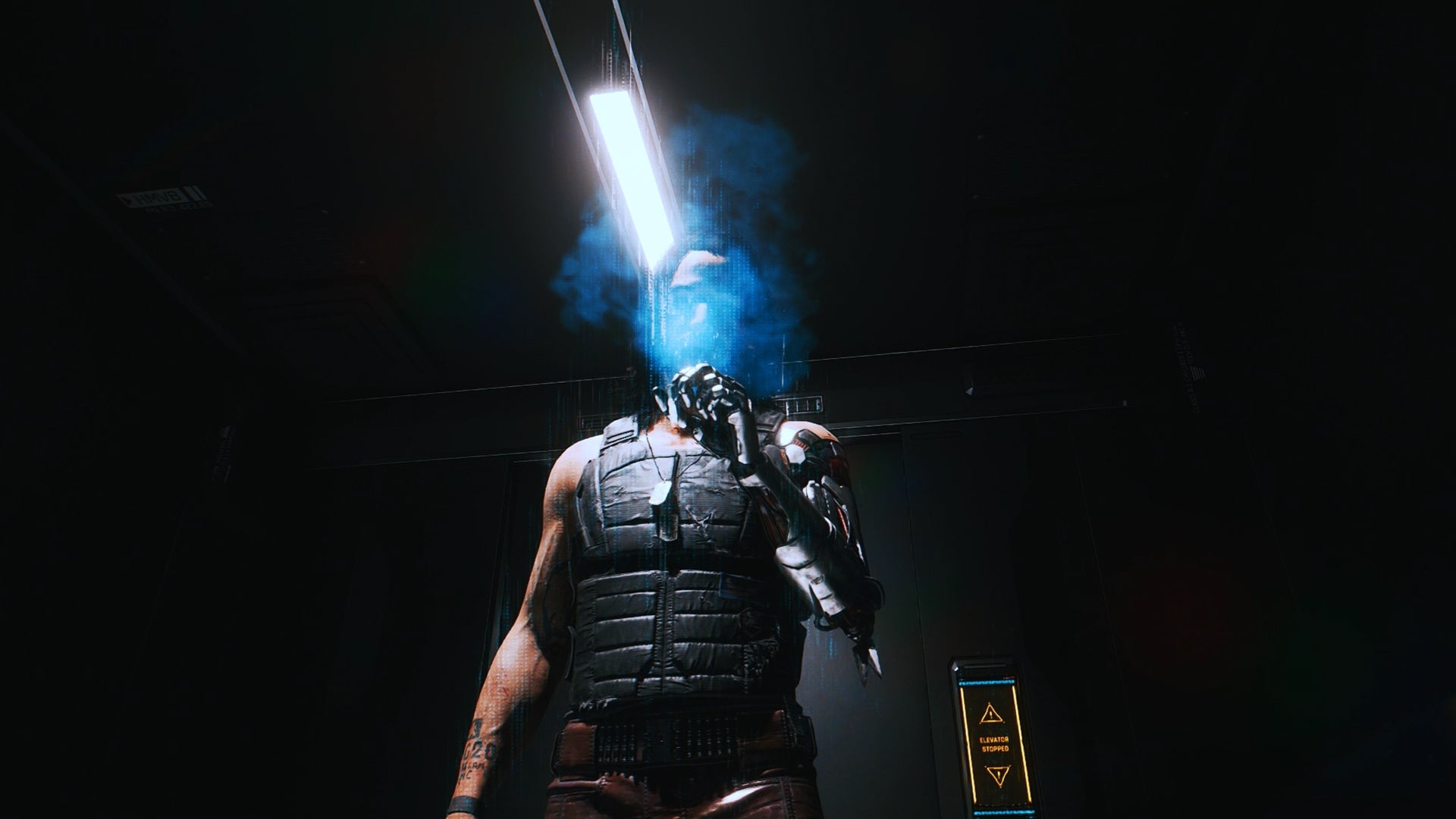
After the early mission “The Heist” kicks things off, the game’s story takes the strangest of turns. Here, V awakens from a mission gone wrong to find out she’s not alone in her head. In Cyberpunk 2077, that additional mental construct is a messed-up former rockstar from whom the world has moved on, zealous in his perspectives on society and completely willing to risk his life for them. It was the kind of person I knew well; it was the kind of person I myself had been before coming out, having traveled the country and other parts of the world playing metal music in venue after venue, night after night.
That extra person, that construct, wanted to take over my brain and push me out, turning me into nothing more than a loud-ass walking stereotype. It was what I had to resist. Am I talking about the game or about how hard it was to finally come out and override my own faux construct? Probably both.
Whenever a friend would ask me what I thought of Cyberpunk 2077, I’d give some variation of the same answer: “It’s a broken game about a broken world where I’m a trans woman with the consciousness of a self-destructive male rockstar stuck in her head and she has to take pills to make him go away.” Anyone to whom I would’ve said this already knew I was trans and knew about my previous life as a touring metal guitarist. There’d usually be a collective moment of silence and an unvoiced, “oh…” in response.
The state of the game and the disastrous situation my V found herself in from the beginning mirrored my life…and then the Johnny Silverhand flashbacks only doubled down on the parallels.
’I’m here to say goodbye to all of you’
The opening moments of “Love Like Fire,” in which you first experience this figure now riding shotgun in your brain through Johnny’s memories of being backstage at a small club before going on, reminded me vividly of countless nights I’d lived through myself, and the way the game framed Johnny’s experience there was essentially how I’d felt for 30 years of my life: that I’m not me. That I’m just going through the motions—the script.
In the first flashback where you “play as” Johnny Silverhand, you know you’re not the person you’re controlling. That’s a heavy part of the narrative: You’re not you. And where are you not you? In the back rooms of a club, the kind of place I’ve been my whole life, particularly during a concentrated number of years in my twenties when it was all but my full-time job to be in such places.
I moved Johnny toward the stage, the same way I moved myself toward one each night in my previous life, when there might as well have been a W key I was pressing. And it was a smaller venue, the kinds I would play on tour—random, no-name places, just a stage with amps, drums, musicians, the smell of booze, cigarettes, weed, loud voices, even louder guitars, and the strangest fucking people you’ll ever meet. I wasn’t just immersed in the game; this was basically a memory from my own life.
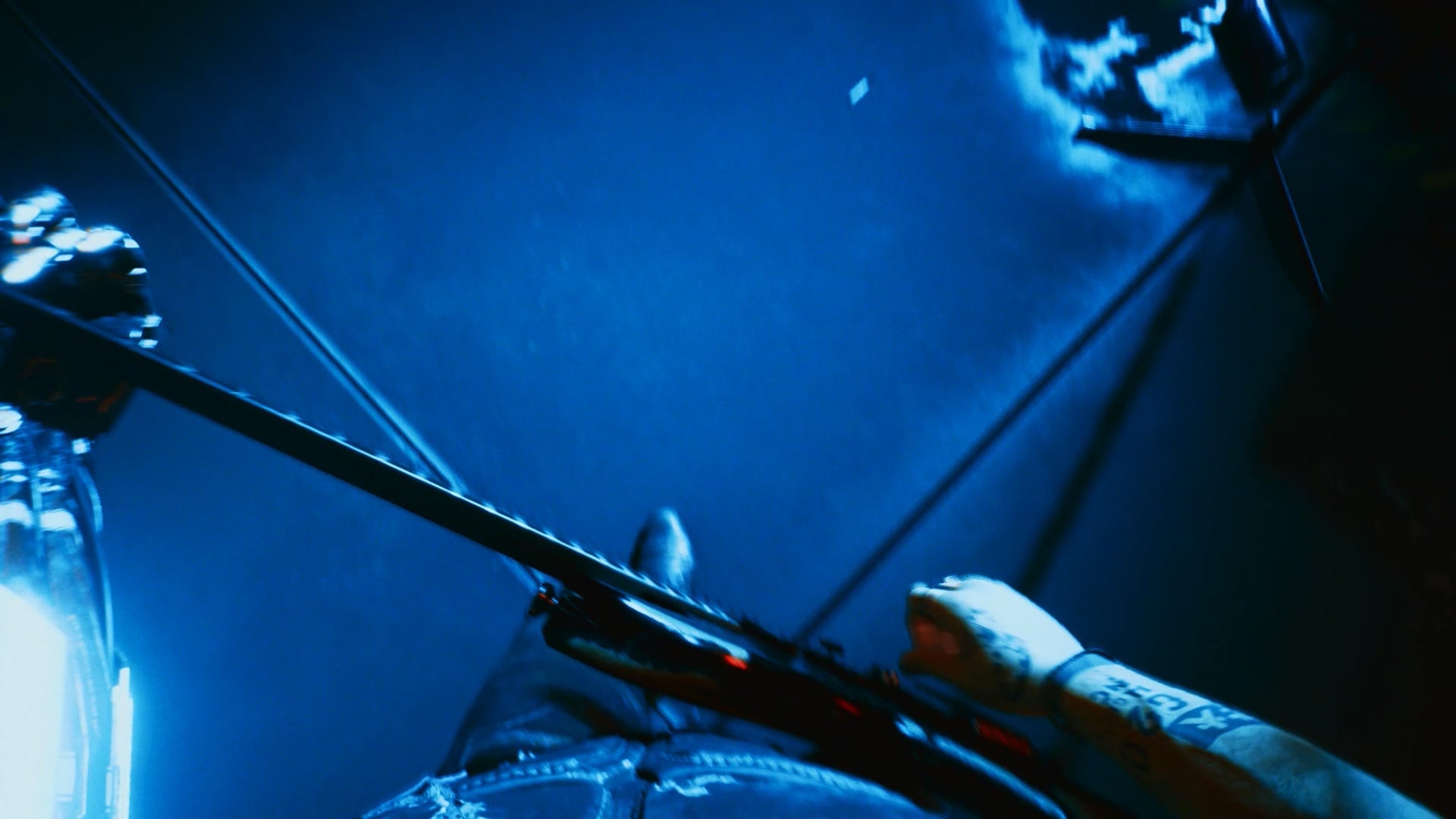
When Johnny says into the mic, “I’m here to say goodbye,” it reminded me of the last show I played before quitting tour life. And just as that night ended violently for Johnny, so did my own final show during that chapter. Full of rage about the music industry and my place in it, I threw my guitar against the wall. I’d quit a few short days later.
My departure meant the death of the band, an expensive, ambitious project. “So you’re just going to fucking burn this all down?” a bandmate asked me. Yeah. Like the Arasaka Towers, I did.
But in 2020 those memories were nearly four years old. I had come out as a woman, ready to start medical transition, and was living my life anew. And like Johnny glitching himself into existence to haunt V, so did my former life bedevil me. For the first year and a half of transition it was a trial to even touch a guitar. To do so would just summon my own Johnny Silverhand, interrupting me and fucking with my sense of reality and identity. And like V, I had a choice to make.
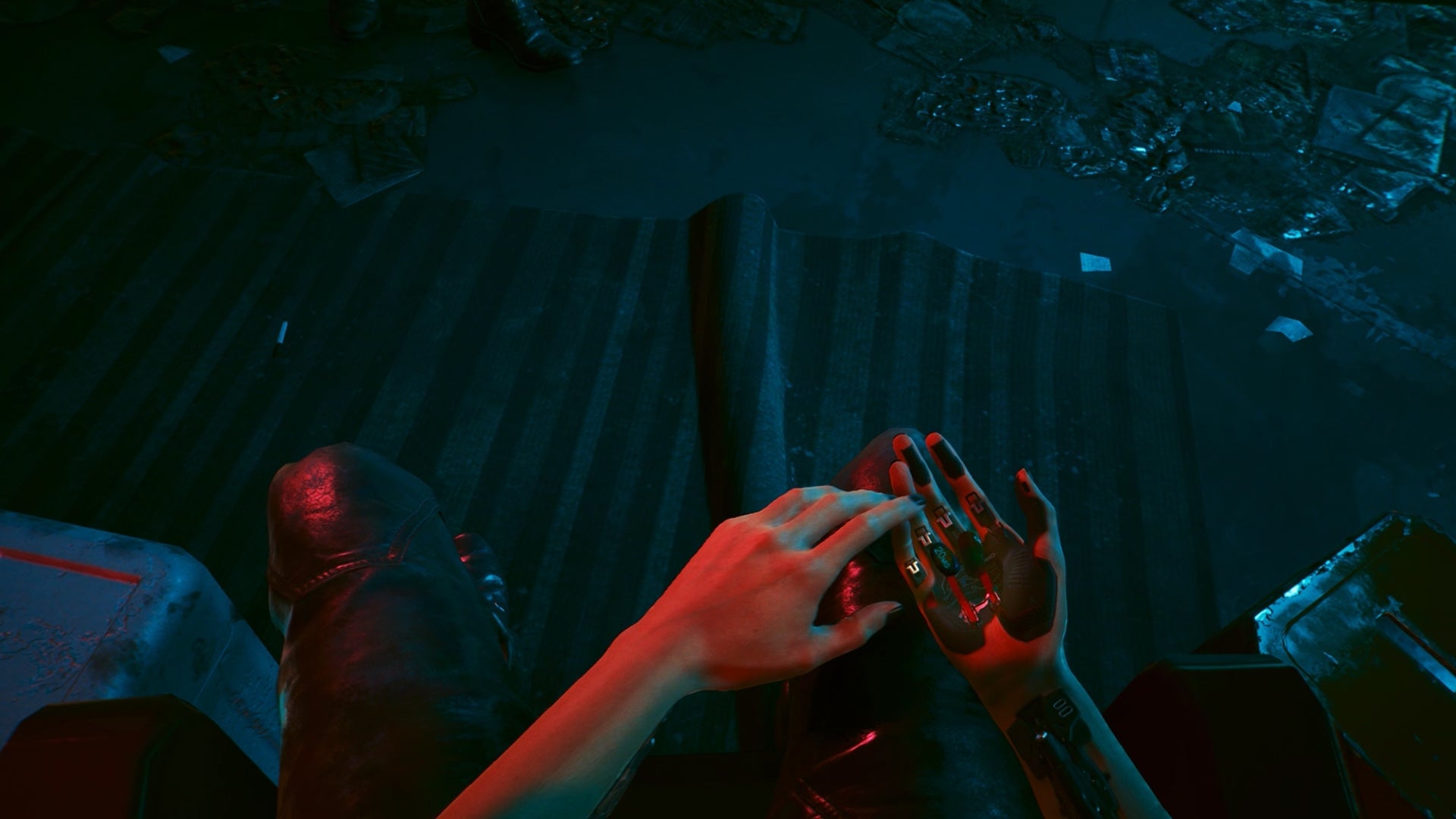
Been good to know ya
Cyberpunk 2077’s narrative was often fantastical enough that I could separate it from my own life and just consume it as a piece of science-fiction media. But every interaction with Johnny Silverhand made it too hard to ignore the obvious question I’d been wrestling with and would continue to wrestle with: Do I choose hostility or grace when faced with aspects of my life that make me uncomfortable? Do I learn to make peace with this unwanted “other” self, or do I tell him to fuck off? Do I give in and let this other identity take the wheel? Or do I just eat pills, take blockers, and see what happens?
In that first Cyberpunk playthrough, I chose to let Johnny go off with Alt into the void of the net, the same as how I chose to finally let go of my old self after years of trying to make it work, of promising myself it’d be fine. V initially thought she could just let him have her body, until she realized she couldn’t. It’s hard to watch that final moment with Johnny, where she just lets him go, falling away to an uncertain future on her own. I cry every time. But I had to do it.
I made the same choice with my own false construct, the rockerboy I left behind.