The Disney Parks have seen better days. What was once a desirable, affordable vacation for some American middle class families has devolved into something prohibitively expensive and stressful. Every aspect of the Disney experience must be premeditated and scheduled to maximize its declining worth. But despite the backlash, the problem isn’t getting better.
On Wednesday, October 12, the LA Times reported that Disneyland raised its single-day ticket rate by 9%. Put another way: until October 11, a single ticket on a peak day cost $164. Today (November 2022), that same ticket costs $179. A child’s ticket is slightly less at $169, but that’s only for children aged 3-9. Anyone who is 10+ pays full price. Off-peak days are the cheapest time to go to Disney World, but these off-peak times also on non-holiday weekdays, when most kids are in school. By contrast, a peak ticket to SeaWorld costs $84.99. A peak ticket to Universal Studios Hollywood costs $134. Those other theme parks aren’t Disney, of course.
So let’s say you’re a Disneyland family of four: two adults and two kids. Assuming both kids are 3-9, two children at $169 each is $338. Combine that with two adults ($358), and the cost is $696, before tax. For a single day. And this may be the cheapest part of the experience, depending on where you’re traveling from, where you’re staying, and for how long.
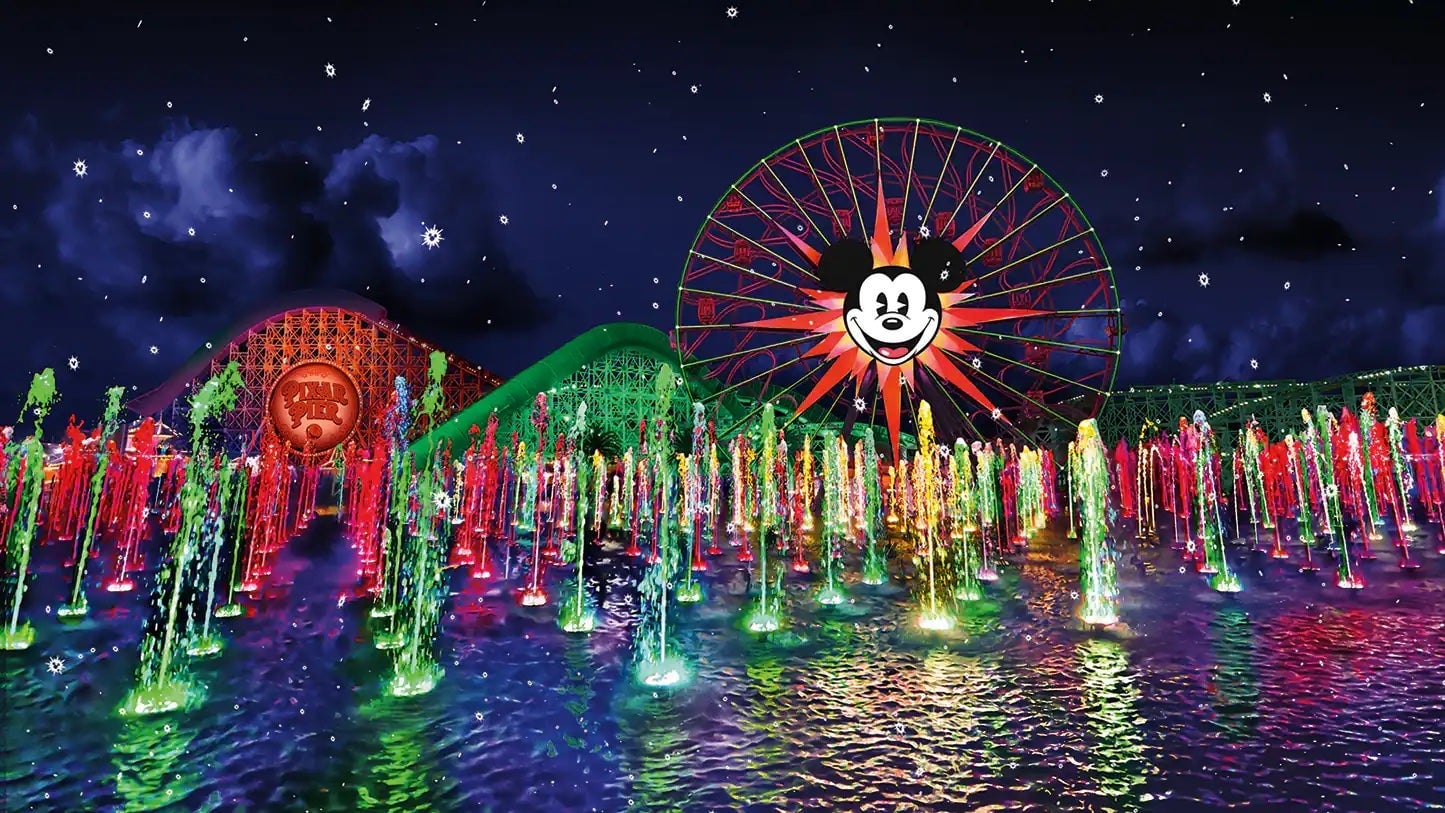
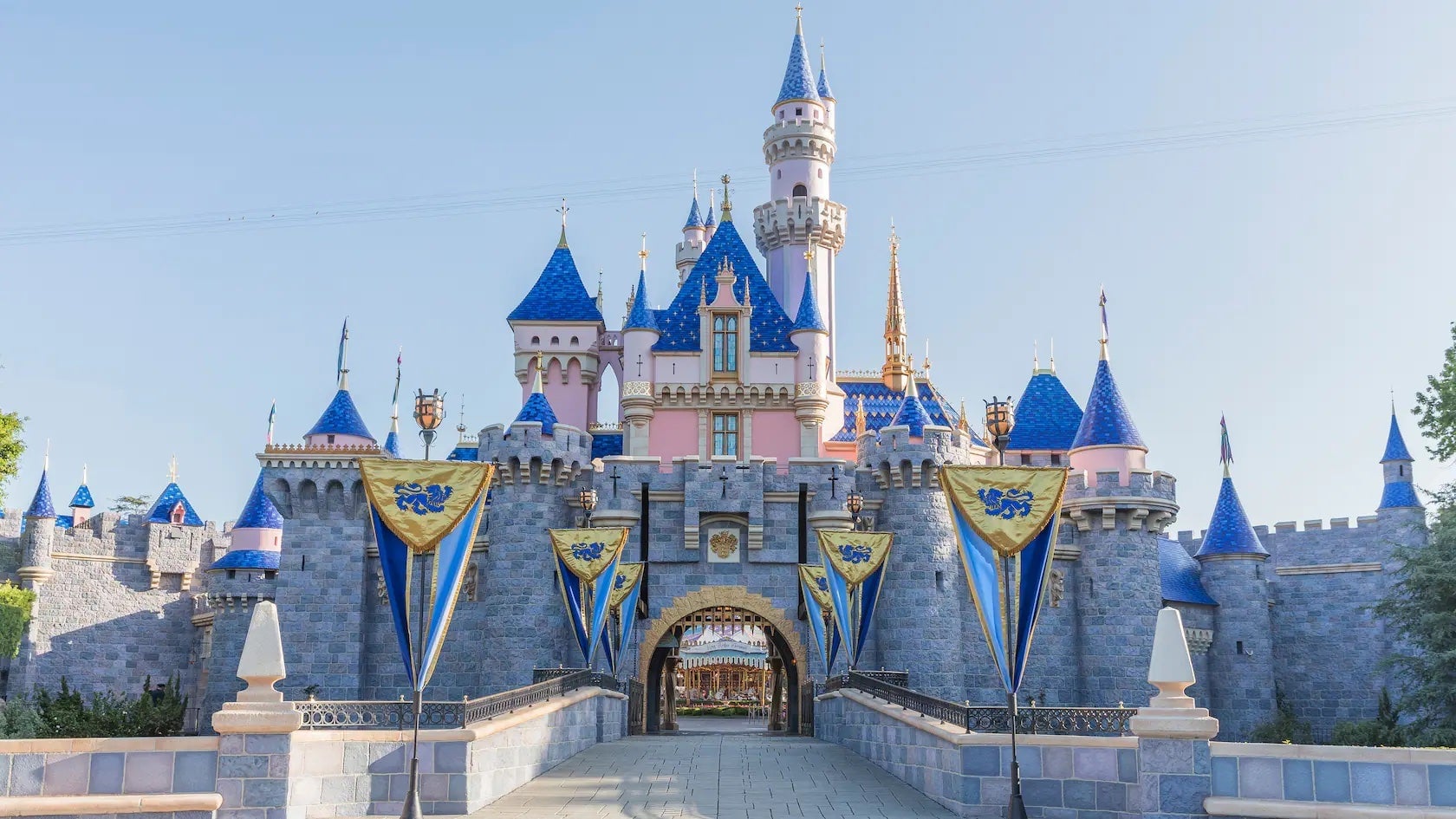
The Disney Magic has been a focus of the theme park since it first opened
It’s an obscenity on its face. But for years, Disney fans rationalized high prices as commensurate with an unparalleled Guest experience. Walt Disney opened Disneyland in 1955, as an alternative to the old, broken down seaside carnivals and amusement parks from his youth. Disneyland, by contrast, would be the “happiest place on Earth”—where people could be insulated from the outside world and its problems. Every ride would work. Every “Cast Member” would be friendly. Every floor, every surface, would be spotless. Then in 1971, Walt Disney World took this ethos even further; the Disney “Imagineers” even built a tunnel system beneath the Magic Kingdom, so the astronauts in Tomorrowland would never have to walk through Frontierland.
This cumulative effort—to create a seamless, Guest-centered experience, where every Guest feels like they stepped into a storybook, is what Disney fans refer to when they talk about “the Magic.” And like all illusions, the Magic relies on immersion and consistency.
Historically, the most evident Disney Magic has been the park’s tidiness. According to legend, Walt Disney followed Guests around his park and discovered that the average person takes 30 steps before throwing trash on the ground. And because of that, the garbage cans (which are continually emptied) are all spaced 30 feet from one another. In the years since, I’ve heard from some people that this story is true, and from other people that it’s a fabrication. But regardless, it says something that it would become a story at all. And, at least from Disney’s perspective, the veracity probably doesn’t matter. The company’s self-mythologizing is also part of the Magic.
But in the past two years, Guests have begun noticing cracks in the artifice. On online forums, there are multiple reports of stuffed garbage bins overflowing onto the streets, and rides that are either broken or unmaintained—the sorts of issues that Walt Disney was adamant to avoid.
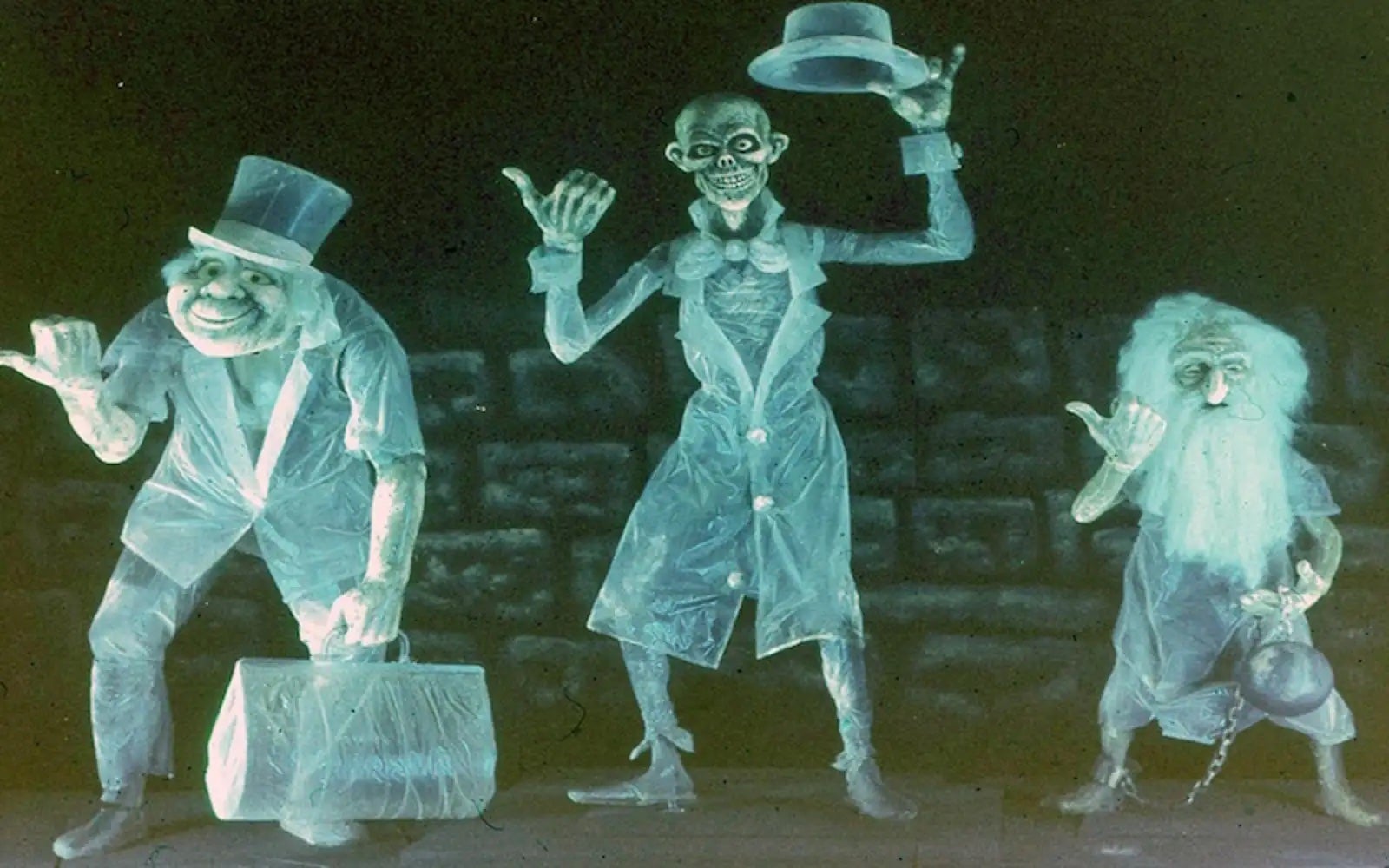
When I visited Disneyland this past February and rode the Haunted Mansion (which I lovingly covered in 2019), I was surprised to see that the climactic “Hitchhiking Ghosts” effect—in which the Pepper’s Ghost illusion is projected onto your reflection—was missing entirely.
Layoffs & lower numbers of Disney employees are making it harder to fix these problems
The Hitchhiking Ghosts are the most iconic part of the attraction. Their likenesses are on every piece of Haunted Mansion-related merchandise. But when I asked a Cast Member the following day if the effect was still broken, she confirmed that it was. She also had no estimation or knowledge of when, or if, it would be fixed. When I got back home, I posted about it on Reddit and learned that the effect had been broken for months.
This is fairly unprecedented—not because it broke, but because Disney allowed such an iconic aspect of their park to stay that way, without repairing it overnight or over a series of nights. This is not a dead light bulb or an Animatronic that doesn’t move its arm; this is the visual centerpiece on one of their most famous attractions.
When it’s working the way it ought to, the mirror effect looks like this:
But here’s what it looked like when I went there. Essentially, you’re staring at a reflection of yourself:
Understaffing is a significant, contributing factor to this decline in standards. In late 2020, Disneyland laid off 32,000 park employees due to pandemic-related budget cuts. By June 2021, only half of those employees had returned.
But there were bigger problems at play, even before the pandemic. In 2018, the Economic Roundtable sent an economic survey to 17,000 Disneyland employees. And of the 5,000 employees who responded, over 1 in 10 reported being homeless in the past two years. Three-fourths of employees did not make enough to cover basic living expenses. This year, the company is offering hiring bonuses to new employees, for positions that are especially difficult to fill. About a month ago, Disneyland posted a job opening for a maintenance mechanic who could check and maintain the rides—like a broken Haunted Mansion.
Until Disney fills positions such as these, the reliability of the rides will suffer. Cleanliness will decrease; concession stands and restaurants will remain closed. While it’s true that many businesses are having difficulty staffing during COVID, at Disney, it’s not for a lack of resources. The parks are raising prices and making record profits, so clearly, the Disney brass has bottom line priorities. And because the parks are filled to capacity, even as its executives cut corners and jack up the costs, these problems persist.
During the COVID-19 pandemic, Disney implemented a park reservation system, where after buying tickets, Guests would confirm which days they wanted to attend. Disney would then cap the number of Guests per day, to conform to both the lower employee count and the statewide COVID crowd regulations. As the pandemic waned, the cap increased; the assumption was that eventually, the crowds would scale back to pre-pandemic levels.
But somewhere along the way, Disney made the decision to never go back to full capacity, and instead, maximize the amount of money each Guest spends.
Disney no longer wants the maximum number of Guests, spending a lot of money per day. Instead, Disney wants a slightly lower number of Guests, spending a grotesque amount of money per day.
The 2021 death of the FastPass system best exemplifies this new strategy.
Decades ago, Disney realized that whenever Guests were waiting in line, they were not buying food or souvenirs. So in 1999, they innovated a reservation system called FastPass.
Here’s how it worked. Let’s say it was 11AM, and you wanted to go on Space Mountain. You could wait on the stand-by line, which was an hour-long wait or more. Or, you could swipe your entry ticket at the FastPass kiosk outside the attraction, and receive a time to come back—say, any time from 12:15-1:15. Then, you could have lunch or go on a different ride. And when you came back at 1:00, you could skip the stand-by line and go on the ride almost immediately, via the Fastpass lane.
This was, for 20 years, a mutually beneficial innovation for both Disney and its Guests, and as such, it was available to every Guest who bought a ticket, for no extra charge. Disney innovated the service further with FastPass+, which allowed Guests to make their reservations months in advance But in 2021, Disney ended the FastPass system and replaced it with a tiered pay system.
The My Disney Experience App replaces FastPass
So here’s how it works now. You download Disney’s new app, My Disney Experience, onto your phone. It includes Genie, an itinerary planner that calculates ride wait times and creates an itinerary, based on your interests. It is free, and by itself, it is useless, aside from allowing you to see wait times in a single place.
But downloading My Disney Experience also gives you the option to buy Genie+. This gives you access to the Lightning Lane—a digital queue for the popular rides that functions much like the original FastPass system—only now, you’re paying an additional flat rate, per person, per day, for the privilege. The original rate was $20. On October 11, 2022, it went up to $25. And on October 22 2022—11 days later—it went up to $30. So one individual in your party, visiting Disneyland for three days, would pay $90 in addition to their gate ticket. And every other person in your party would have to pay the same.
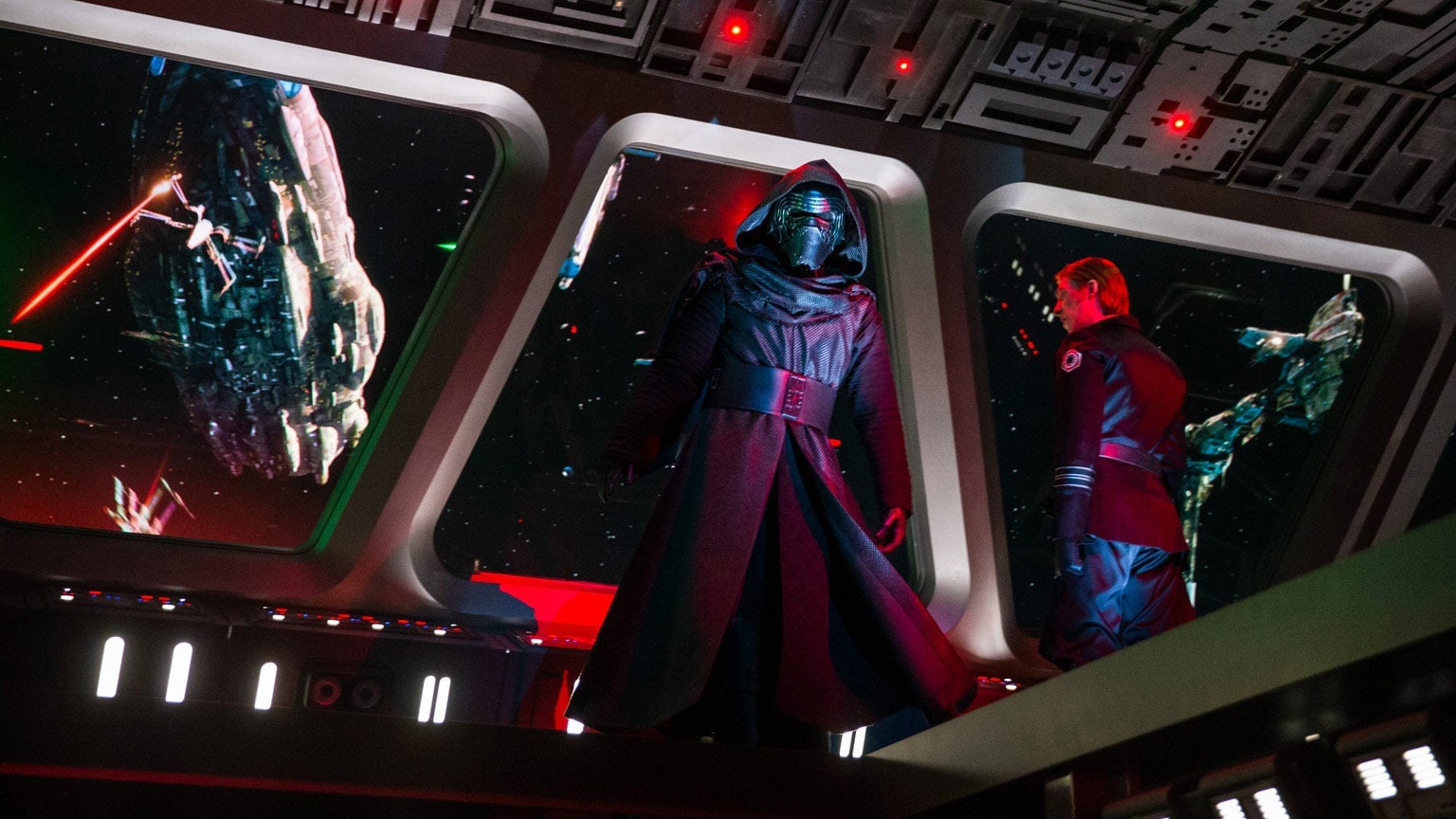
And that’s not the end of it. There are some attractions—the newest, most popular attractions, like those at Galaxy’s Edge—that are not included under Genie+ If you want to use the Lightning Lane on these individual rides, you have to pay an additional fee, per ride, per person. This a la carte price can vary. A single Lightning Lane pass for Rise of the Resistance, the new Star Wars ride in Disneyland, is $25 per person. A family of four will pay $100 for a single ride through.
It’s greedy as all hell. And the outside observer might look at this and think, “Well, don’t pay the extra fees then.” But in an abstract sense, you’ll be fleeced even worse. You’ll be spending most of your day waiting in stand-by lines—which are now even longer, because the Lightning Lane riders are all cutting in front of you. Assuming you go to a theme park to have fun, there’s nothing fun about spending 7 hours in lines all day to go on four or five rides—especially if you’re paying $179 at the gate. It becomes a sunken cost fallacy, where you need to maximize your time and fun per hour.
The only way to not be ripped off is to simply not go.
But let’s say you don’t do that. If you want to enjoy Walt Disney World or Disneyland with today’s pricing, what’s the best way to do it?
Counterintuitively, it’s to spend more days there. Let’s do the math.
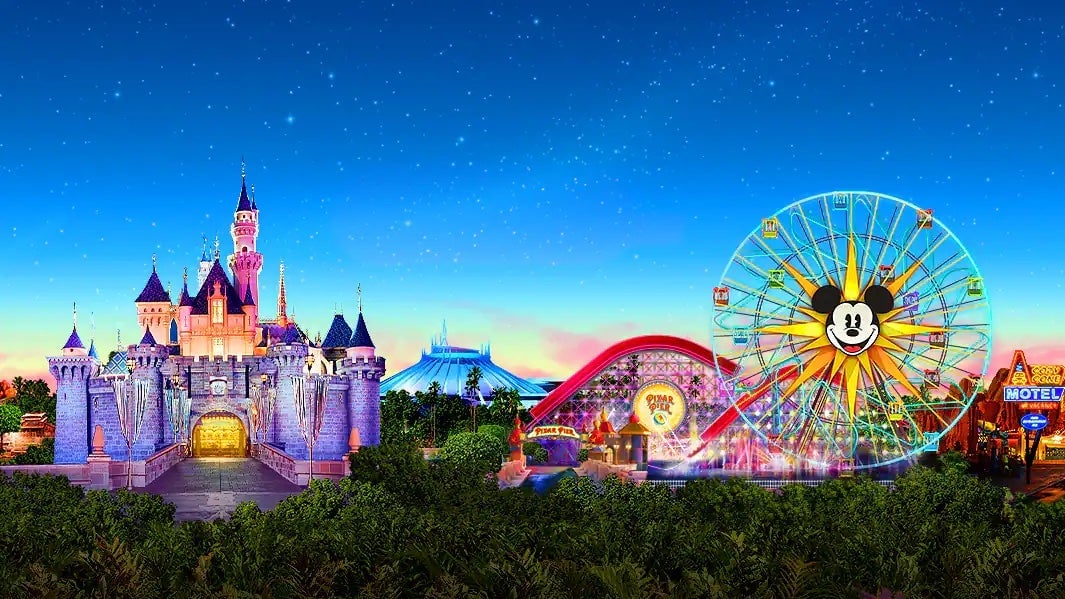
Disneyland Resort is composed of two individual theme parks: Disneyland (the original park) and Disney’s California Adventure. They are separated by a shopping district called Downtown Disney. If you want to do Disneyland properly—which we’re defining as being thorough, but at a brisk, non-strenuous pace—you need at least three days: one day for Disneyland, one day for California Adventure, and a third and final day to mop up any attractions you missed, finally get those beignets, re-ride your favorites, explore Downtown Disney, and shop for souvenirs.
If you go for more than one day, you’ll pay more, but each individual day will cost less. A two-day Disneyland ticket for an adult is $285, which breaks down to $142.50 per day. A three-day ticket for an adult is $360, which breaks down to $120 per day. The aforementioned family of four, going to Disneyland for three peak days, would pay $1400 to get through the gates.
Then there’s the extras. You have the option of a Park Hopper pass, which allows you to visit both parks in a single day. The Park Hopper option is $60 per person, regardless of the number of days you’re visiting. If you’re the aforementioned family of four that’s staying for three days, you’re up to $1640. If you want Genie+ for all three days, for all four family members, that’s $360. Now you’re up to $2000. And lastly, the individual Lightning Lanes can range anywhere from $7 to $25, and can vary depending on Guest demand. Let’s throw in 50 dollars per person for that.
So the total charge—to go to Disneyland for three days and spend more time having fun instead of waiting on stand-by lines—is $2200, before tax. That’s before airfare, hotel, food, parking (which just received a 25% increase), and souvenirs. In 2019, the same three day trip, on peak days, would have cost approximately $1000 less.
The Bob Chapek Factor
Current Disney CEO Bob Chapek has noted, numerous times, that the prices increase in response to customer demand—not inflation, as some defenders might claim.
“We always watch our demand,’’ said Chapek in an interview with CNBC. “When you’re playing a yield game like we are right now and you have the flexibility with our reservation system, we can move on a dime… It’s all up to the consumer. If consumer demand keeps up, we’ll act accordingly. If we see a softening, which we don’t think we’re going to see, then we can act accordingly as well.”
And then there’s this Chapek quote about price hikes and potential backlash, from an interview with the Hollywood Reporter:
“We have much more demand than there is supply. What we will not bend on is giving somebody a less than stellar experience in the parks because we jammed too many people in there. If we’re going to have that foundational rule, you have to start balancing who you let in… Our ticket prices and constraints we put on how often people can come and when they come is a direct reflection of demand. When is it too much? Demand will tell us when it’s too much.”
Disney wants whales—the wealthy, of course, but also middle and working class families, who save up enough money to go once a decade, or once in a lifetime. There are enough people who are willing to pay, at least once, for the experience of a Disney vacation. Disney childhood memories—with parents, grandparents, and friends—loom large. And even though the experience and expense of going back has changed significantly for the worse, longtime fans continue to chase those feelings. There’s a desire to replicate those memories with their new families, even at great cost.
It’s a bit naive to call out a multibillion dollar corporation for seeming greedy. But the extent to which they are so nakedly greedy—so bold and open about it—is unnerving. It demonstrates the resilience of Disney’s brand. Its value is tied intimately to its public-facing image, but at this point, they can show open disrespect to their fans and suffer little consequence; the company is simply too big to fail. The number of people who would make a bold choice and boycott all things Disney is so minute that it might as well not exist.
And here’s the really interesting question: how high can the prices go? Because, as Chapek said, the parks are operating at their desired capacity, and the reservations are still selling out. The Genie+ rate jumped $10 dollars over the course of two weeks—from $20-30. What will the rate be in December, when the holidays roll around? Or over the summer? Is there a tipping point when the single-day ticket hits $200? Are there enough people willing to pay that too, even as the price of groceries becomes absurd?
Walt Disney said, “You can dream, create, design and build the most wonderful place in the world, but it requires people to make the dream a reality.” Disney Parks earned $7.4 billion in revenue in Q3, up from $4.3 billion in Q2. And the people who built this dream—this “Disney magic” that moves people to part with an ever-increasing chunk of their hard-earned money—are the suffering Disney Cast Members, who must deal with increasingly entitled Guests. These include TikTok influencers who ignore their directions, trolls who try to antagonize them for clout on social media, and angry parents who spend above their means and feel they are owed an impossible level of perfection. Viral clips, even ones that have gotten cast members positive attention, have reportedly gotten people fired if the company apparently deemed the performance not fully in-character.
Disney Magic exacts a toll; there is too much degradation and too little return to prop up a monstrous entity in this fashion. But still, they do. Some of these Cast Members are part-time college students, but many of them are dedicated fans in thrall to the Disney Magic that inspired them to work there. And still, the Guests arrive, most in thrall to the same Magic. Even me.
There’s lots of anecdotal Disney Parks stories that are more urban legend than real, but here’s a story I witnessed in person, about 10 years ago. I’m a teacher, and I used to chaperone my students on their senior trip to Walt Disney World. Through a combination of luck and happenstance, I was allowed to go backstage and watch the Cast Members get ready for the afternoon parade. I found out that one of the costumed characters had thrown up inside his massive head and was receiving medical treatment. Cast Members never take off their costumes in front of Guests. And the person I was with explained to me that if he had thrown up during the parade, he would have continued dancing and waving—covered in his own vomit in an enclosed space—to preserve the Magic.
Later, I asked the person, “How many Mickey Mouses could be in the park at once, so long as they don’t cross paths? This man looked me dead in the eye and said to me, “There’s only one Mickey.”
Behind him was a Mickey Mouse costume head, sitting on a shelf.