Julian wanted to brush up on his Japanese and Spanish. The popular language learning app Duolingo, with its gamified incentives and rewards, its leagues, tournaments, and power-ups, seemed like a good way to do it. He started spending hours in the app, trying to claw his way to a better rank. That’s when he started noticing something odd: In Duolingo, ostensibly a learning tool first and foremost and not a competitive game, some users, for reasons Julian couldn’t fathom, seemed to be cheating their way to the highest ranks.
But first, a quick refresher on the massively successful app. Even if you aren’t one of Duolingo’s users, you are almost certainly familiar with its existence, or at the very least with its ubiquitous, vaguely threatening green owl mascot, which has over 6 million followers on TikTok. The app is tremendously popular, boasting 500 million learners and claiming to be the “world’s most downloaded education app.” At its core, it’s a simple language learning game that takes the user through lessons involving word matching, listening, speaking, and writing exercises. Duolingo offers over forty languages, and the base version is free, though there is a paid tier that offers additional learning opportunities, unlimited tries, and other perks.
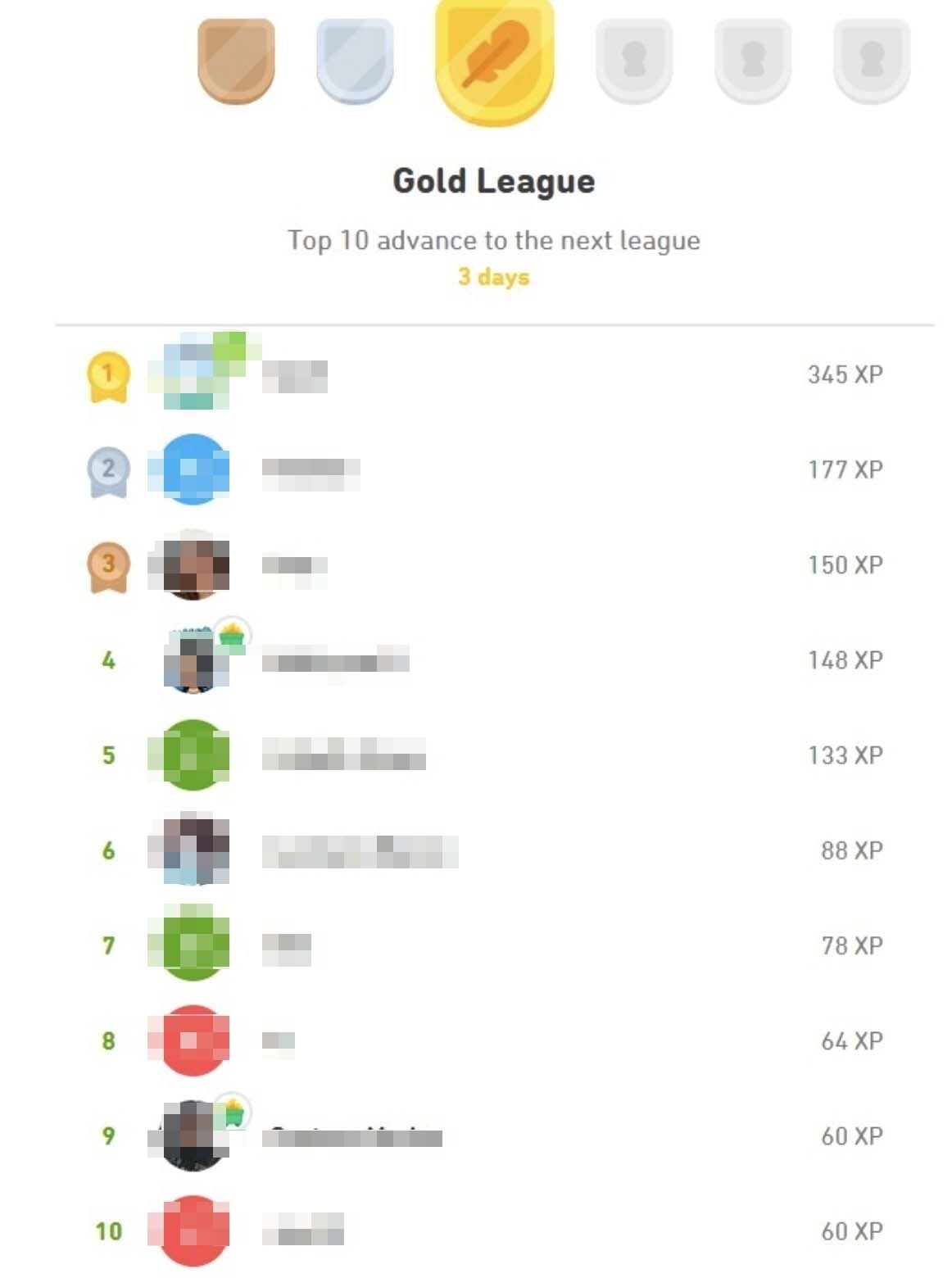
One of Duolingo’s many gamification features are its “leagues”—competitive ladders ranging in rank from Bronze to Diamond that players are placed into and ranked in based on how many exercises and challenges they’ve completed that week. For reference, a single lesson that takes five to ten minutes will grant between 10 and 20 XP, without boosts or bonuses. A casual player might earn around 50 XP a day, and Duolingo generally gives a little extra in terms of gems or other rewards for reaching that. It’s in these leagues that Julian noticed something strange afoot.
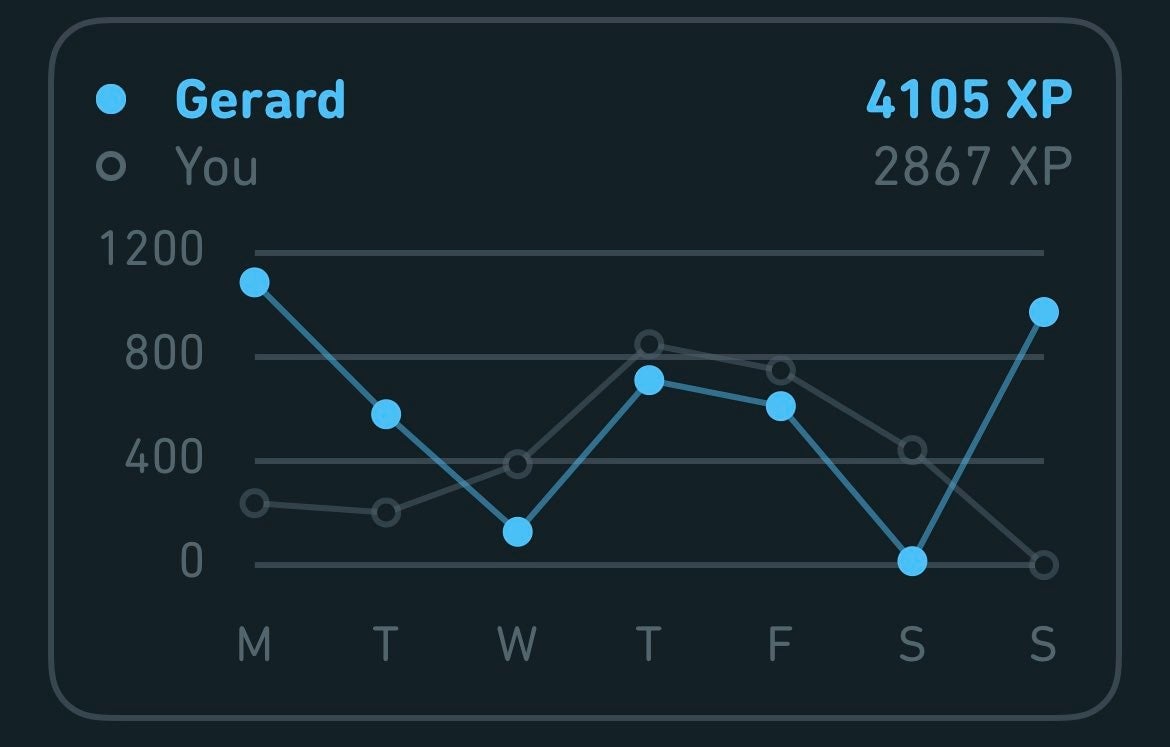
“Most people in the league would be in a relatively narrow band of XP scores,” Julian told me, “but sometimes the person at the top of the table would have utterly outrageous scores. I mean several thousand to tens of thousands of XP when the next closest was hardly above a thousand.” The top scorer’s name in Julian’s league was Gerard. Gerard kept scoring dramatically higher than the other participants in the league, and even a dedicated user like Julian couldn’t keep up. “I dutifully did lessons as the app developers intended and eked out a lead over Gerard with two days to go, only to have him put in a whopping 1300 XP with hours left to the finish,” he said. “The man had earned 25% of his total XP in 6 years of using the app in just this week alone. Just to beat me. It was then I became suspicious Duolingo might have a cheating problem.”
Compared to some other products of the tech boom, Duolingo looks like an uncomplicated success story—a fun, free, language-learning app used and beloved by everyone from middle school Spanish students to refugees trying to learn the language of their new home. Chances are good that if you haven’t tried it yourself, you know someone who has, and the friendly green owl’s reach only continues to grow. Over the past few years, however, Duolingo’s gamification has become a mixed blessing for dedicated users like Julian.
Julian’s story is fairly standard for hardcore Duolingo users. When his mom, who lives in Barcelona, got a premium subscription to brush up on her Catalan, it was an opportunity for him to refresh his Japanese and Spanish skills as well. Like a lot of users (including your intrepid reporter), Julian was compelled by the incentives and rewards offered by the app—quests, leagues, tournaments, power-ups, and so on. “As much as I’d like to think I’m above giving in to these tricks game developers use to hook players, I found myself spending hours in the app just to claw into a position to rank up.” And the more Julian played, the more it seemed like something was amiss when it came to the leaderboard scoring. The wildly high numbers some other players in Julian’s league were posting didn’t make sense. Were they cheating, Julian wondered?
This is a common suspicion among Duolingo users, and it can be discouraging to further learning, or, as it did for Julian, it can prompt a kind of arms race. He tells me about the strategies for maximizing XP: earning boosts through legendary challenges and switching to an easier language, taking advantage of the free tries offered by the paid version of the app, and even gaming the league rankings. “I would strategically position myself just out of the top 3 so my competitors ahead of me wouldn’t be notified they had lost their podium spots,” he recalls. “Then I would wait until just before the week concluded to pounce. Once I even waited until literally the last minute to submit the final answer for a lesson, leapfrogging first place and ensuring [my competitors] didn’t have time to catch up.” The Duolingo forums and subreddits are filled with similar stories and advice for people trying to win their leagues and earn coveted achievements.
These strategies probably make sense from a competitive gaming standpoint, but they might seem like a bizarre approach for retaining knowledge. And indeed, Julian is aware that he’s lost sight of the language-learning aspect of the app. “Yesterday, using these tactics, I stormed to a first place finish in the Diamond league. I got a little achievement for it. Is the badge nice? Yes. Is my Japanese any better? No.” Now that he’s gotten the coveted achievement, he says he can go back to focusing on learning, supporting his mom’s progress, and maintaining his 125-day streak.
There are lots of stories like Julian’s, and if you’re not familiar with Duolingo, it might be bewildering that anyone would get so invested in “winning” in an app designed for practicing a language. Whether it’s a hardcore maximizer like Julian or a possible cheater like Gerard, perhaps the most compelling question is: why?
Duolingo is possibly the ur-example of aggressive gamification—users earn XP that determines your rank on leaderboards, gems that can be used to buy perks, and there is, of course, the dreaded streak counter that tracks how many days in a row you’ve practiced a given language.
None of this is mandatory, and the only things you can earn are cosmetic or quality-of-life items (and bragging rights), but that hasn’t stopped the Duolingo owl and his frequent reminders from spawning a whole genre of memes. The effectiveness of Duolingo’s approach is also disputed, with even the app’s co-creator conceding that it probably can’t actually teach you to speak a new language. And where there are points to be scored or leaderboards to be climbed, there are those that want to dominate— sometimes by any means necessary.
There are no human beings grading or monitoring user performance in Duolingo, so it’s trivial to “cheat” in order to advance. Most exercises aren’t timed, so there is nothing stopping users from pulling up Google Translate to ensure they can pass a difficult level. Duolingo enthusiasts have cataloged myriad ways to maximize your XP gains, like taking advantage of limited-time boosts, repeating easy exercises, or otherwise “farming” activities within the app to earn large amounts of XP. There is also nothing stopping a user from knocking out an easy exercise to maintain their streak or turning off listening and speaking exercises to make a particular level easier.
While some of this may feel like cheating if you’re actually trying to learn a language, that’s between you and the big green owl. Duolingo does not take any of the above into consideration for leagues or advancement. It is entirely possible to “no-life” the app and earn thousands (or tens of thousands) of experience points entirely legitimately, irrespective of whether or not that gets you closer to speaking a foreign language. Since scores and profiles are public, Duolingo forums, subreddits, and Discords are awash with posts highlighting high scorers and asking, “How is this possible?”
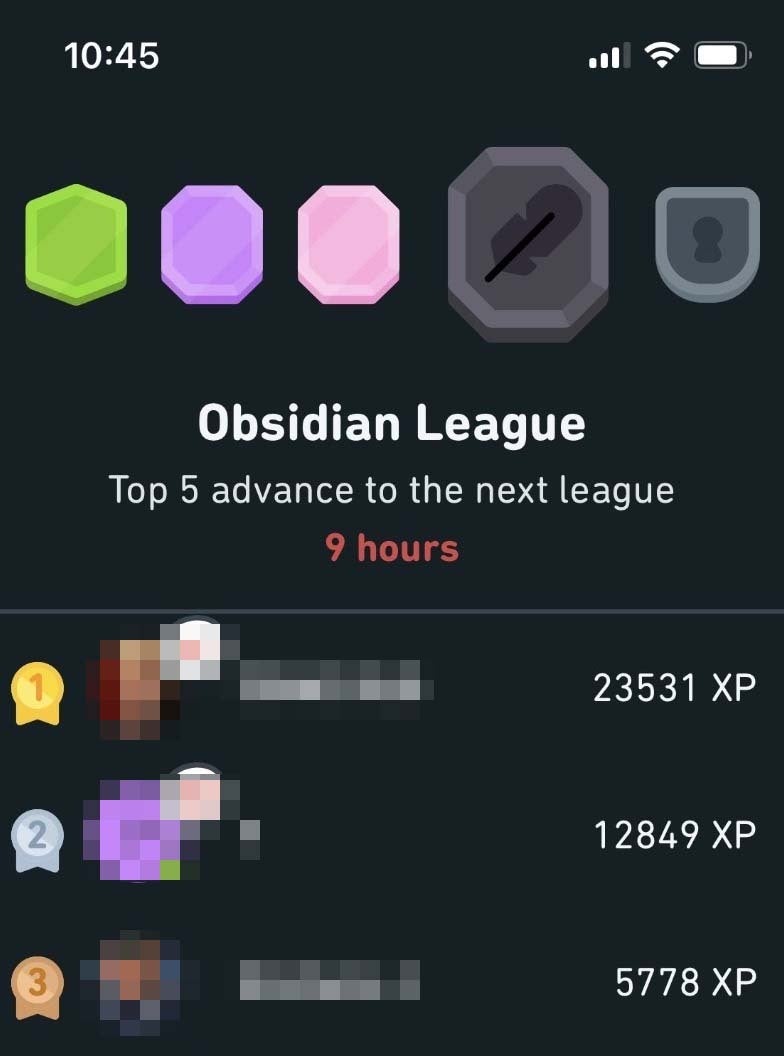
Most of the time, these scores are shockingly high but plausible for someone treating the app like a job. Not always, though, and Duolingo claims to take these aberrant situations very seriously. “We do take steps to reduce XP exploitation on Duolingo,” a spokesperson said via email. “We know many learners enjoy competing in Leaderboards and we want to maintain a fair experience for everyone.” Those same communities of maximizers are also on the lookout for exploits, bugs, and glitches that might allow them to squeeze some extra XP out of the bird, and the Duolingo team has its hands full squashing them as they arise.
Though a user might wonder about that league nemesis that somehow always manages to outscore them, there’s a good chance they’re just putting in more time, or taking advantage of useful but valid tricks to game the system a bit in their favor. There are, however, definite examples of not just implausible but impossible scores. On the unofficial Duolingo Hall of Fame, for instance, above its rankings of the very high but likely legitimate XP rankings for Diamond rank competitors is a list, grayed out to indicate the dubious nature of these scores—of several “Questionable” high scorers that tower above the rest.
Obvious cheaters or hackers—people with truly preposterous XP totals, or users who fly through an entire course in less than a day—tend to catch the banhammer pretty quickly, but it’s clear that some foul play persists on the Duolingo leaderboards. A cursory Google search or a trip through YouTube will pull up several bot or hacking programs that you can install yourself, ranging in complexity from simple auto-clickers to scripts that will complete entire chapters for you. The Duolingo app is always evolving and the team is trying to combat these tools, so some of these are obsolete, but others are frequently updated and functional. Aside from the risk of downloading and installing strange programs from the internet, these aids are easy to set up and trivialize any challenge that Duolingo offers.
According to Lolo, the creator of one popular hacking tool, there are several reasons for why Duolingo users would cheat: mostly to skip homework or get better grades (especially in the U.S. where some middle or high school language teachers offer extra credit for using the app or work it into their curricula), or in the case of particularly competitive users, to stay on top. “Older users are usually more competitive,” Lolo said in a Discord conversation. “They want to win the Diamond League to get the achievement, which is pretty much only obtainable when spending 40+ hours grinding the app.”
Lolo is a self-described coder/hacker and the creator of DuoHacker (now on its fourth version), a popular and easy-to-use tool that can be used to help with lessons or outright auto-complete an entire language program. “Many users taking part in leagues also feel cheated, as they cannot explain how [other] users earn thousands of XP faster and earlier than them. Often they expect them to cheat. So they look for revenge,” he said, suggesting something of a self-perpetuating cycle of such behavior.
Lolo claims to have tens of thousands of users, his videos have hundreds of thousands of views on YouTube, and the DuoHacker Discord is active with hundreds of members. Though it’s impossible to know for sure, it seems clear that a substantial portion of the demand for hacks comes from students—the comments beneath every video and the Discord are filled with them, often thanking the creator for making their schoolwork easier.
Lolo himself first started devising DuoHacker as a way to skip boring lessons, but is most interested in the programming challenge at this point, saying that over time, the ideas behind his cheats and the technology they use has grown more sophisticated. He offers a paid version of DuoHacker, which he says mostly just covers hosting fees. He also claims to have reached out to Duolingo repeatedly about security vulnerabilities and exploits that he’s discovered.
“Especially in the beginning I reported all the vulnerabilities, problems, bugs and security issues to Duolingo…again and again,” he said. “But I never got a response, and I know for a fact that they actively ignored me and never fixed these problems.” For their part, Duolingo’s representative pointed out that “ourCommunity Guidelines prohibit users from using scripts to cheat or otherwise negatively impact Duolingo or other learners.” When asked about Lolo’s specific claims, they replied: “Duolingo has a bug bounty program through [cybersecurity company] HackerOne. Submissions might not receive a response if they are reporting something that has been previously reported, or if they do not sign up for HackerOne after submission. Unfortunately it’s not possible to verify these claims from years ago.”
Theoretically, none of this has any impact on a user’s ability to learn a language on Duolingo. A lot of dedicated users now suggest changing your profile to private, which allows you to ignore the leagues entirely. Still, the app is pretty explicitly designed to poke at the same rewarding brain mechanisms as something like Candy Crush, and a lot of users can’t resist the temptation to gain an advantage, even if the stakes are low. And though Duolingo wants to preserve the integrity of their language learning program, as their own representative put it: “We don’t want to punish anyone for using Duolingo. It’s the not using Duolingo that we care more about : )”