There are two big names when it comes to video game escape rooms, and they’re remarkably similar ones. First you have Escape Academy, a wonderfully bonkers college for escape room artists, with a story that somehow includes murder and time travel. Then you have Escape Simulator, a more straight-faced collection of digital escape rooms, but with a much bigger focus on involved puzzles and deep mystery. Both are excellent, but only one of them has a sequel just released. Escape Simulator 2 came out this week, offering even more elaborately themed rooms and even more complex challenges to solve. I spoke to developers Pine Studio to find out more about how to find the balance between emulating real-world rooms, and embracing the impossibilities afforded by video games.
Escape rooms, as a concept, are showing no signs of fading in popularity. On the day Escape Simulator 2 released, I wasn’t playing the game because I was out celebrating my birthday with my family by playing in a real-life escape room (Tempo in Bath, UK—it was fantastic). And we were spoiled for choice, with more and more buildings in my local area taken over by these hands-on, locked-in puzzle chambers. A well-designed escape room is such a thrill, as you and your buddies scramble to unscramble codes, piecing together clues to cause a bookshelf to reveal itself as a secret door, then squeezing down a passage to find a hidden briefcase and new set of clues…It’s the best. But it’s also pretty pricey, and requires getting together a group of people willing to play. When that can’t happen, that’s when video game escape rooms step in.
The original Escape Simulator, released with perfect timing during the covid lockdowns of October 2021, provided a way to play such challenges when leaving the house and gathering in groups was very much a bad idea. And it was utterly splendid, a really superb collection of 16 rewarding rooms. Then came the DLC, and oh boy, there was a lot of it! In the years since, the number of rooms has reached 50, with more still to come. Given this, I wondered how a studio knows when it’s time to stop adding to their previous success and make the decision to create a sequel. “What pushed us toward Escape Simulator 2,” says Boris Barbir, co-founder of developer Pine Studio, “was the chance to create much larger rooms with a more realistic look. That change opened the door to a whole new kind of puzzles that we could not do before.” That doesn’t mean they’re done with the first game, however. Remarkably, there are still new rooms in development, with Barbir noting, “We will continue supporting it for a long time.”
Part of Pine Studios’ method is to involve real-world escape room creators when developing their challenges. “For both games we worked closely with real-life escape room designers,” says Barbir. “They start by sketching puzzles on paper, then we curate, adapt, and build them into playable virtual spaces. From there we go through several rounds of testing and adjustments until everything feels right.” For the sequel, the developers had the smart idea to add another group of consultants to the process: the best community creators who had built rooms using the first game’s room creation tools. “Their input,” says Barbir, naming Zesty, Elkondo, and Sade, “helped us keep the puzzles fresh and engaging.”
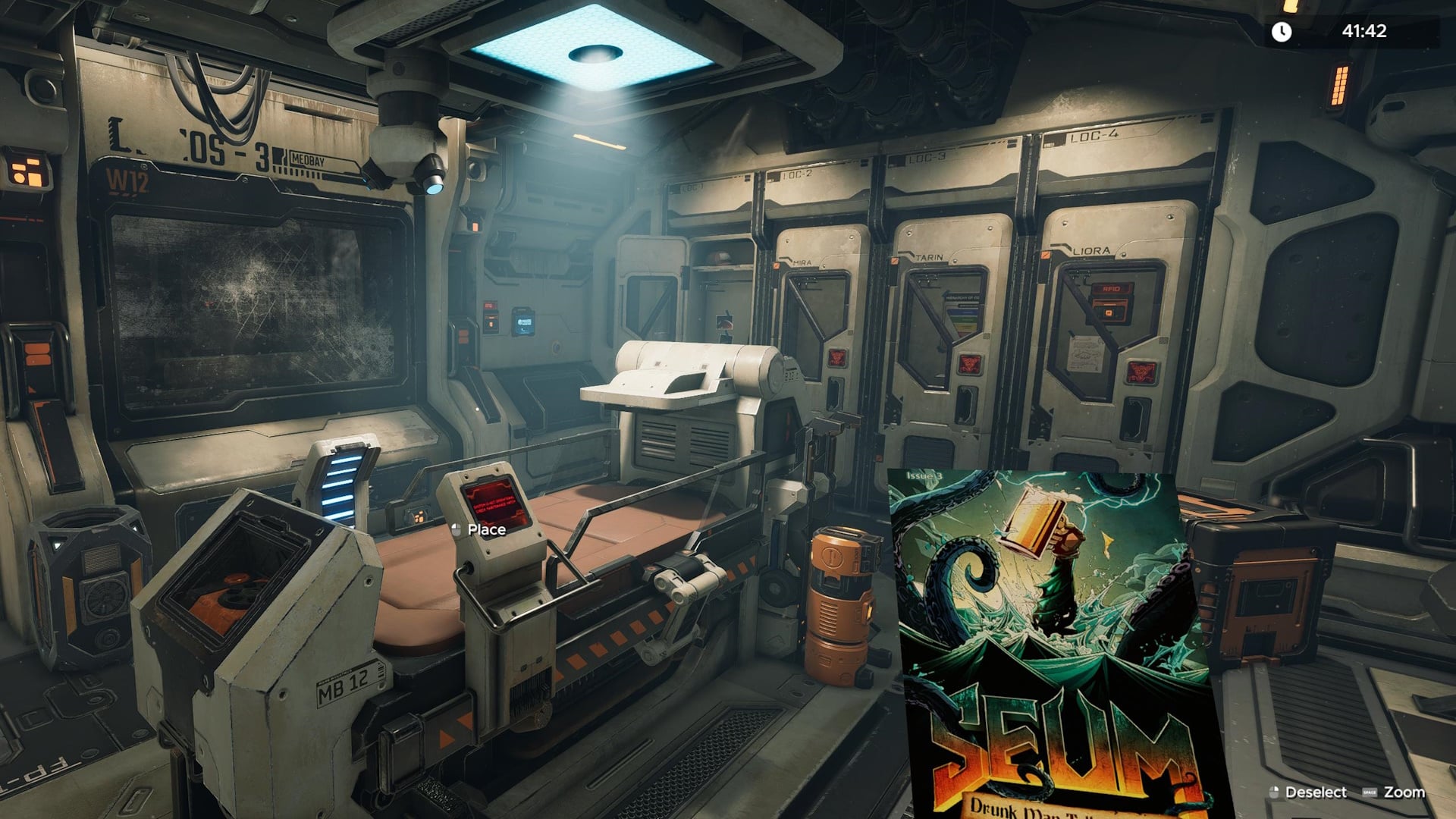
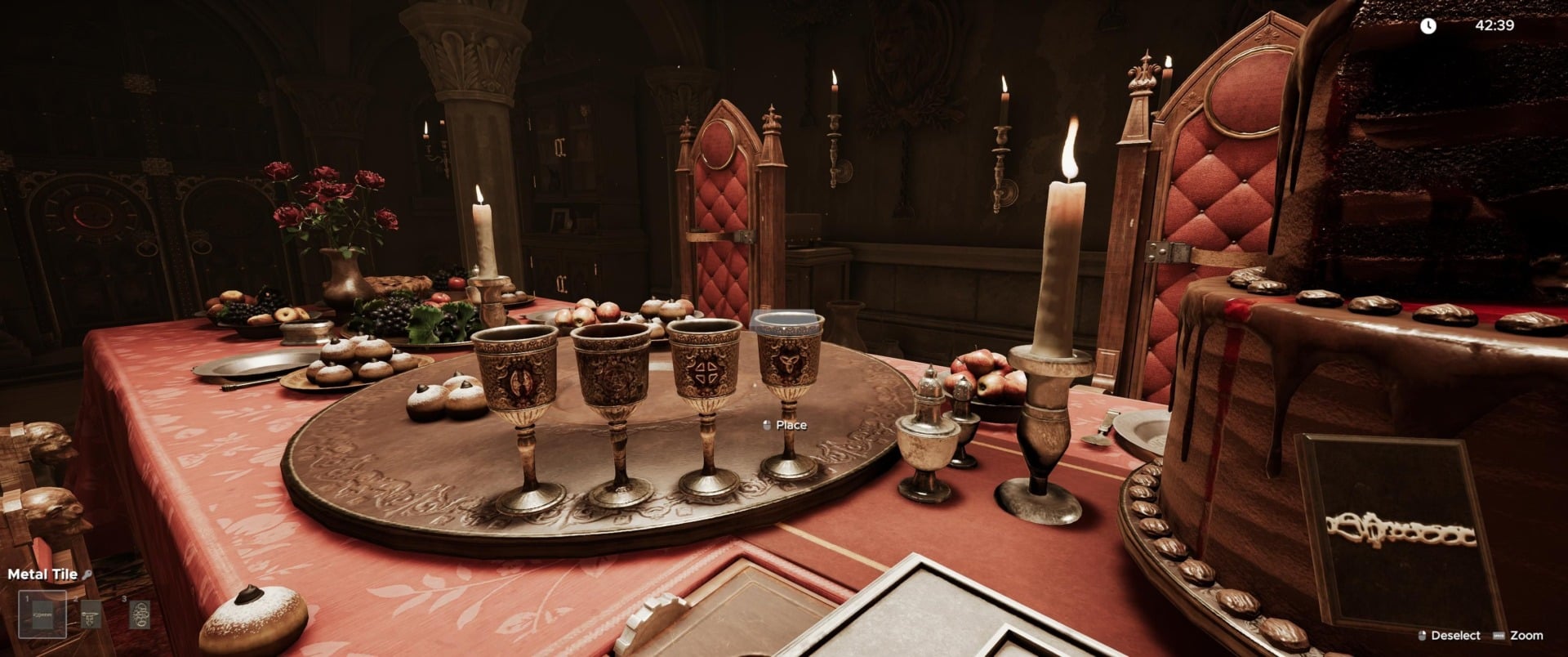
But obviously such designs have a delicate path to walk. With the freedom afforded by playing on a computer, these games don’t necessarily have to stick to the laws of reality, allowing for events and sequences that real-life rooms could never deliver. But then, at the same time, if they become too fanciful they can lose that unique sense of being trapped in an elaborate room and the hands-on nature of solving the puzzles. I wondered how Pine Studios approaches this balance. “We always try to keep the game true to being a simulator,” Barbir says. “Our playtests showed that players generally do not enjoy puzzles that work ‘magically’ without logic behind them. We design spaces and mechanisms that feel grounded in reality.” That’s not to say that magic isn’t a part of the games, however. Escape Simulator 2 begins with four puzzles set in a vampire’s castle, involving literal magic mirrors and some rather impossible spells, but there’s always a grounding rationale to their use. “The virtual world still gives us plenty of freedom,” Barbir notes. “We can build a pirate island or a zero-gravity spaceship, things that would be almost impossible to pull off in real life, but the puzzles themselves remain logical and believable.”
The community certainly became a big part of the original game. Via Steam’s Workshop feature, players were able to add their own creations to the mix, with over 4,000 rooms submitted in the last four years. A pattern Pine Studio noticed was that “a huge number of them leaned into darker, creepier or horror themes.” The same, Barbir says, is true of real-world escape rooms, with horror-themed settings proving the most popular. “In the first game we kept things light and playful,” he adds, “but with the sequel we wanted to explore that darker side.” That’s not to say this is a horror game, and there’s certainly nothing even approaching a jump scare. Instead it has a “moodier” atmosphere, still entirely suitable for younger players, but with a bit more spookiness.
Escape Simulator 2 comes with a 2.0 version of its room creator, and the hope the community will get just as engaged this time around with the more elaborate tools and room sizes. Of course, that requires some time, given just how involved it is to build something worth playing. A handful have started to appear, but it’ll be in the next few months that the game’s 12 developer-made rooms will start to be joined by the best creations from players. Talking of which, how long exactly does it take for the developers to create just one room? “Some of our larger rooms,” Barbir says, “take over six months to design, test and polish before they feel ready. It is a lot of work, but the result is worth it.”
I’d agree. I’ve played a fair few rooms in the sequel now, and they so satisfyingly scratch that escape room itch. You can play in co-op, too, to really embrace that pleasure of working as a team to crack the mysteries. And completed rooms unlock versions with even more difficult puzzles, giving a genre that’s usually very much one-and-done a reason to replay. Of course, if the previous game is anything to go by, we can expect dozens more official rooms to be added to the game over the next few years (and it’s worth noting plenty of these were free, especially the bizarre crossover packs like rooms themed around PowerWash Simulator and Among Us, with other DLC adding five new rooms for around $5).
Escape Simulator 2 is out now on Steam.