Climbing in video games is not broken. Climbing in video games is doing just fine. No-one is complaining about it and no-one has a problem with it. Except me.
Me: a person who climbs regularly. Me: a person who plays a lot of video games. Me: a person with no game design experience and only the vaguest idea of how video games are made on a grand scale.
I have a problem with climbing in video games not because it is ‘broken’. My problem is simple: video game climbing is functional but it could be so much better. Climbing has so much in common with gaming: the arbitrary challenge of it, the idea of it as a form of ‘play’, the reward, the grading, the acquisition of skills that don’t necessarily translate to the real world in any tangible sense.
Climbing has so much in common with video games. The things that make climbing rewarding are often the very same things that make video games rewarding. If we could embrace that common ground, maybe climbing in video games could be something truly spectacular.
Again, a disclaimer: I am not a game designer. Making video games is a tremendously difficult, herculean task of will and expense. These are just my own observations from a lifetime spent climbing in video games coupled with my own experience climbing actual things in real life.
With all that said, here’s how I think climbing in video games could be improved.
1. Use Momentum To Reward Players
In real life, climbing with momentum makes you feel like a God. It makes you feel powerful. It makes moves that initially seemed impossible feel easy and fluid. That feeling of pushing through your hips, of climbing with rhythm, of twisting your shoulders for extra length — it’s glorious. It’s the kind of feeling you get in most sports during those perfect moments: that concept of ‘flow’. Of being completely in the zone. I’d like to see that replicated in video games somehow.
Climbing in video games uses next-to-no momentum. If you can do a move whilst in flow, you can do it statically. That’s the norm. I think I understand why this is the case: video games tend to work best with a set of fairly consistent rules. Players need to know their own limits within certain scenarios. They need to know what’s possible, otherwise: frustration.
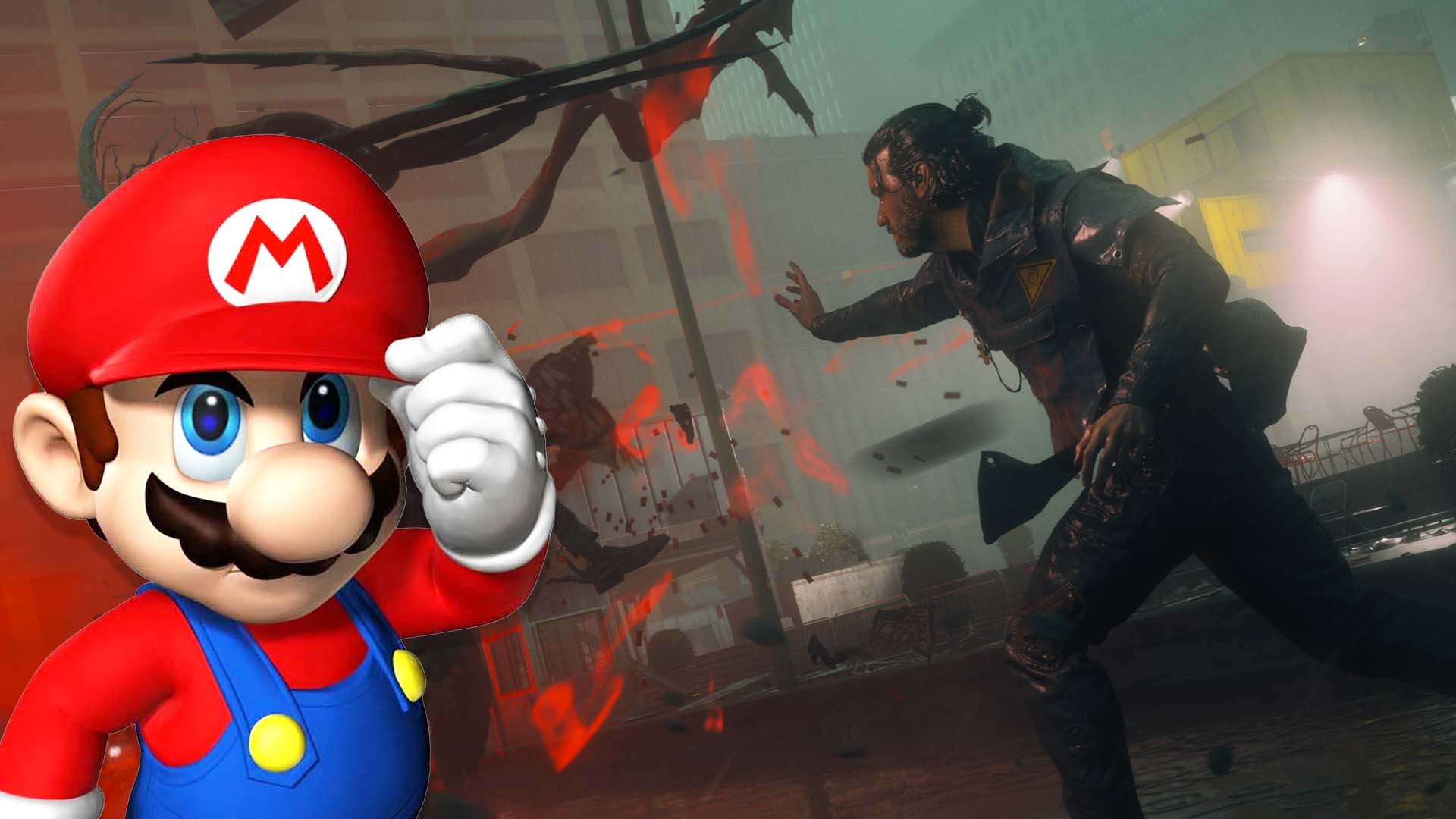
But here’s my counter-point: Mario’s jump.
Mario’s jump – the most pitch perfect jump in the business. It’s explicitly analogue. You can jump further at high speed, jump higher with different button presses. We need something this tactile in video games that seek to replicate the tactile feeling of moving upwards with speed and precision.
Games that have gotten that feeling right? They tend to be games with swing mechanics. Bennett Foddy’s GIRP springs to mind, as does the more recent Mount Your Friends. Both use momentum brilliantly and that’s partly because climbing dynamically is really all about swinging, and using the rotation of your shoulders and hips to push yourself to greater height.
So let’s get a swing going!
2. Give Us Better Animations
When I think of generational leaps in video game climbing, I think of the first Assassin’s Creed. Back then most people equated that leap to freedom: the ability to climb any ledge, on any building, in large-scale cities. That was important, obviously, but in terms of the climbing itself I’d argue Assassin’s Creed’s animation system was equally as important.
In Assassin’s Creed it would never have been enough to simply allow players to scale every vertical surface – the ability for the game’s protagonist to look as though he/she was climbing that surface in a relatable way, that had to be in place. In short: if it didn’t look right it would never have felt right.
Animation might be the most important part of making climbing feel legitimate in a video game. If the animation is loose and basic, climbing feels weightless and basic. If done correctly, you can feel the weight and consequence of each move. In that respect Assassin’s Creed was revolutionary.
But I can’t help but feel as though the series has gone backwards in that regard: with each new iteration, Assassin’s Creed becomes more outlandish in its animations, adds more flourish and – crucially – adds more speed. I remember when Assassin’s Creed 2 was in development. The team deliberately added more dynamic moves, the idea being that players wanted to move more quickly up the wall. I remember the team being proud of that ‘improvement’: players could climb up a wall at twice the speed.
I never understood that. Why would anyone want to rush one of the most important parts of its core gameplay? By adding too many dynamic, outlandish leaping movements, Assassin’s Creed lost that relatable, weighty realness of its climbing animations. It made climbing feel less like a tangible experience and like a rapid way of moving from point A to point B. It made climbing as banal as putting one foot in front of the other.
Personally, I’d like to see that kind of movement scaled back. I’d like video game climbing slow down a step and dial in on the smaller details of climbing movement.
Obviously all games have different pacing, and a different feel, but I loved the example Metal Gear Solid V set in its recent gameplay demo, featuring Big Boss doing some crack climbing. A slower pace, a renewed focus on small details like feet placement, shaking out lactic acid, correct hand positioning. The player doesn’t necessarily need to control these aspects of movement – most likely the player will just be pushing ‘up’ on the analogue stick – but having those precise movements play out in response to your simple actions is enough. It will feel glorious.
3. Make Difficulty Tangible
This is directly related to the last couple of points.
At no point in a video game have I ever ‘felt’ the difficulty of a climb translated correctly. In climbing it isdifficult to move on extremely small handholds. It’s difficult to push off delicate footholds. Conversely, it’s easier to make big moves from point A to point B if you can get your entire hand into a meaty jug of a handhold. In video game land there is no difference. There is no scale: you can either grab onto the hold or you can’t. You can either pull on it or you can’t. Movement needs to be more analogous. Mario’s jump people. Mario’s jump
Animation is the key here. If the protagonist is holding a smaller hold we need to ‘see’ that in order to feel it. Hands and fingers cling to different types of holds in different ways. We tend to crimp our fingertips on small holds and firmly clasp big holds with open hands. With an increase in visual fidelity and resolution we should be able to try solving this problem from a visual standpoint.
And once we can see it, we can work on translating that weight and difficulty to the player. If players are hanging on small holds, we should be moving more precisely on those holds — we should be moving at a slower pace. This could be done in two different ways. It could be involuntary — in the way that Mario skidding on ice is involuntary – or it could be something the player is punished for: if you move too quickly over this section, for example, the player will fall.
Either way – we need to be able to see, process and feel the difficulty of climbing in video games in order for it to feel truly rewarding.
Video game protagonists need to feel more human to be relatable. Why can’t Nathan Drake struggle more with difficult moves? Why can’t we watch him fully crimp on a small edge while delicately shifting his weight on bad footholds? That will make those moments when he can fully move quickly and powerfully over better holds all the more glorious. If anything, this sort of dynamic can help dramatically improve the pacing of video game climbing.
4. Make Climbing A Problem That Needs To Be Solved
Climbers actually refer to routes ‘problems’, mainly because there are an infinite amount of different ways to approach specific movements and finding the right method for each climb is often half the battle. On multiple occasions I’ve been struggling on certain moves only for a friend to say, ‘put your foot here‘ or ‘drop that knee into this position’. Instantly what once seemed impossible is ludicrously simple.
In short: problem solving is a large part of what makes climbing interesting.
Translating those kinds of delicate movements to a video game scenario? It’s arguably impossible and I’m not suggesting anyone should try. What I am suggesting is more choice in terms of the movements we perform whilst climbing and the routes we choose.
My favourite parts of Assassin’s Creed, for example, are the moments where climbing feels like problem solving; when you have to identify the holds, and find the best way to move towards them. Assassin’s Creed’s dungeons, I’d suggest, are the best example of this. Your freedom is restricted but, in doing so, players have to think their way through routes and the reward is so much greater.
More of that please.
5. Allow Us To Feel The Benefit Of Improved Technique
I’d argue the best video games allow players to feel the benefit of mastery: Dark Souls, FIFA, Mario. All too often climbing in video game does not allow for that type of growth.
The problem is multifold. There are next to no consequences for failure in video game climbing and, when you think about it, it’s pretty damn difficult to fail in the first place. We’re never really given the chance to grow and evolve.
The best rock climbing video game features no climbing whatsoever. That video game is Trials. In terms of its difficulty, and the fact it requires players to develop precise techniques and apply those techniques to wildly different situations? Trials is the perfect climbing game. Trials forces players to use momentum correctly, to move slowly through certain sections, but quickly through others. Forces players to remember specific movements but also focus on being in the moment: that’s precisely what climbing is about, and what I’d like climbing in video games to be about.
In climbing there’s nothing more satisfying than the correct application of pinpoint technique. Nothing more rewarding than seeing your hard work rewarded. That’s what’s missing from climbing in video games: it’s too easy, your success is a foregone conclusion.
The solution? That’s a difficult one. I’d argue it comes back to some sort of analogous control. The Mario jump. Trials is a perfect example. It takes a simple control system and makes it endlessly deep in terms of its application to different scenarios. That’s essentially what climbing is.
But — again — so much of what we ‘see’ dictates what we ‘feel’ in video game climbing. I’d be fine with simplicity, I’d even be fine with climbing being ‘easy’ if it were animated more precisely, if I was able to see the technique being applied correctly. In this regard we’re already seeing advances.
Uncharted 4’s climbing animations have improved dramatically and delicately walk the line between the idea of Drake as an ‘everyman’ and as someone who knows a little bit about scaling cliff-faces. We’ve already mentioned Metal Gear Solid V and Big Boss’s climbing techniques: that’s the kind of advance I’m looking for. That’s what I want to see. Even if that sort of dexterity isn’t necessarily reflected in the controls, it’s still a decent step forward.
http://www.kotaku.com.au/2014/09/why-snake-is-the-best-climber-in-video-game-history/
But to reiterate: climbing in video games is not broken. You might even argue that it’s in good shape. Climbing is doing just fine, but there’s an opportunity there. An opportunity to create something players can relate to on a more tangible level. If I had to sum up I’d say this: we need to see, feel, and understand the difficulty and weight of climbing. We need to be able to comprehend where we went wrong and the ways in which we can improve.
Mario’s jump, people. That should be the inspiration. Mario’s. Jump.
This post originally appeared on Kotaku Australia , where Mark Serrels is the Editor. You can follow him on Twitter if you’re into that sort of thing.