Xbox’s 20th birthday was all about killing the Xbox.
Yes, Microsoft released two next-gen Xbox consoles—the top-flight Xbox Series X and the lesser-powered, but less expensive, Xbox Series S—just a hair over a year ago. Both are hot-ticket items to this day, with the Series X still being nearly impossible to buy (well, at MSRP). These bona fide supercomputers were flanked by not one but two zeitgeist-dominating games published by Microsoft in the fall. Plus: Game Pass.
Read More: What The Xbox Series X/S Has (And Hasn’t) Added Over The Year
You may find it silly, then, to suggest that such a banner year is the beginning of the end for a gaming giant. But nearly every move on Microsoft’s part this year—from the expansion of its services to, in some cases, the renaming of those services—suggests a nearer-than-you’d-think future in which you don’t need an Xbox to play an Xbox.
Two years ago, even one year ago, such a notion could be considered laughable. And to be sure, we’re not quite there yet. But over the course of 2021, Microsoft, if nothing else, laid the framework to make its flagship gaming box irrelevant.
First, the games
Console or not, you can’t have a gaming brand without video games.
At the start of the console generation, Sony tore out of the gate in a headlong sprint, releasing a slew of well-received exclusive games—Demon’s Souls, Marvel’s Spider-Man: Miles Morales, Returnal, Ratchet & Clank: Rift Apart, and, of course, Astro’s Playroom—within the first six months. Microsoft, in comparison, stumbled.
During the launch window of the Xbox Series X/S, Microsoft didn’t have a single new exclusive game, instead opting to release several dozen “optimized” versions of Xbox One hits like Ori and the Will of the Wisps, Forza Horizon 4, and Gears 5. Those games sure looked and performed better—their resolutions, frame rates, and load times significantly improved by the Series console’s fancy computational architecture—but didn’t exactly introduce anything new to the Xbox fold. The year’s Xbox-only offerings were slim through much of 2021, and more often than not weren’t even Xbox-only—at least not for long.
In January, Bloober Team released The Medium, a fixed-camera horror game that was light on frights but heavy on questionable thematic material. (It came out on PS5 in September.) The excellent Death’s Door, a deliciously stylish dungeon crawling from Acid Nerve, debuted on Xbox, where it captured critical attention like a lightning rod for a few weeks there. (It came out on PS4 and PS5 in November.) Around the same time, following a delay out of the Series X/S launch week, Neon Giant released the cooperative isometric cyberpunk shooter The Ascent in a somewhat messy state. It’s fixed now. (Recent listings from international rating bodies suggest it could come to PlayStation soon.)
Even the biggest games published by Microsoft weren’t exclusive to Microsoft. August’s release of Psychonauts 2, developed by the venerable Double Fine, launched on PlayStation the same day as Xbox. Deathloop, an immersive sim developed by Arkane—and the first release out of Bethesda since Microsoft’s $7.5 billion purchase of its parent company, Zenimax—didn’t even hit Xbox at all. That one’s currently a PS5 console-exclusive, the result of Microsoft honoring contracts that were in place before the acquisition. (None of the relevant parties have commented publicly on when or even if Deathloop might come out on Xbox consoles. The PS5 exclusivity window expires after a year.)
Then the fall came.

In the first week of November, Playground Games released Forza Horizon 5, the first Forza game in three years. Forza Horizon 5 proved an instant blockbuster, garnering more than 10 million players right off the bat, racing to the top of critical aggregation charts, and demolishing the free time of digital photographers (and players who love to design anime-inspired liveries). It was, by legitimately every measure, a success.
Not a week later, 343 Industries, a Microsoft-owned studio established in the early 2010s specifically to develop Halo games, dropped a megaton. On November 15, the 20th anniversary of Halo, 343 surprise-released the free-to-play multiplayer mode for Halo Infinite—weeks ahead of the planned December 8 release. On Steam, it rocketed up the charts, closing in on 300,000 concurrent players that first day alone. The campaign, priced at a standard premium, hit that intended December 8 release date, and received widespread acclaim. Beyond the core stuff, reviewers lavished praise on a Halo that, after more than a decade, seemed to have rediscovered its soul.
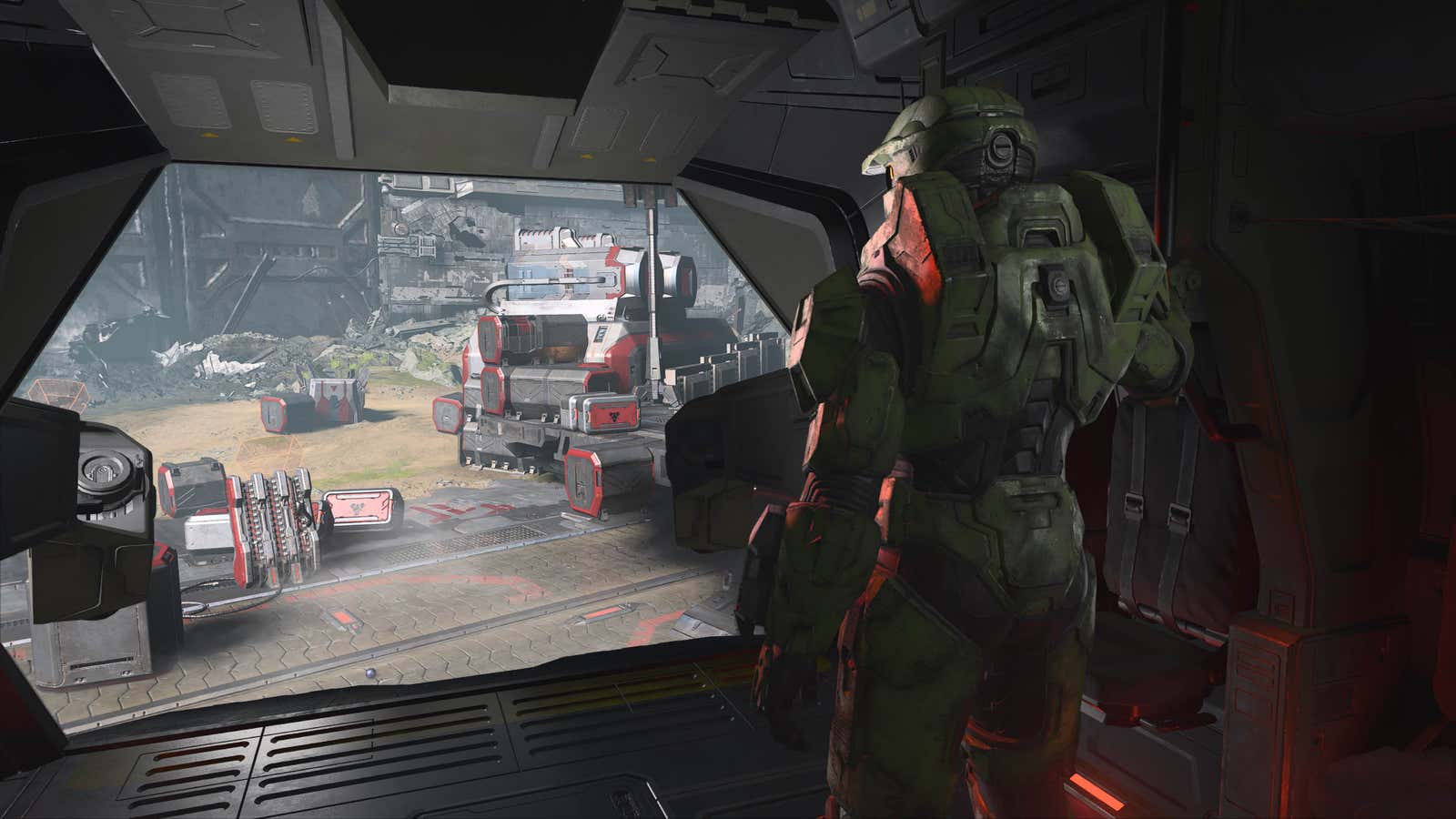
It’s funny: Halo Infinite feels like a microcosm of Xbox’s 2021. Following a tepidly received July 2020 showcase of Infinite’s campaign, Microsoft delayed the game indefinitely. (At launch, retail packaging for the Xbox Series X still featured Master Chief and other Halo imagery.) Within a matter of weeks, one creative lead came on board and another soon departed, the type of high-ranking revolving door that rarely if ever is indicative of a project in good shape. But after an initial, lengthy period of slumber, Halo is here. It’s dominating the conversation in ways few games do. And it’s hard to see it crawling back into hibernation any time soon.
In 2021, Game Pass came into its own
In lieu of a deep bench of exclusives, Microsoft focused less on specific games and more on how to get games in front of players. A core pillar of this strategy was the Xbox Game Pass service, which has appropriately achieved a sort of “Netflix for games” shorthand status. For $10 a month, or $15 if you want to pay for a tier that includes some extra perks, you get access to a library of hundreds of games that you can play with no strings attached (beyond the monthly fee).
Game Pass fell into a reliable cadence in 2021. On the 15th and 30th of every month, about half a dozen games depart the library. But every batch of departees was replaced by a drip feed of games that’d hit the service over a two-week period, In other words, Game Pass grew at a faster rate than it shrunk, resulting in a playable library that’s swelled to, as of this writing, 434 games. (Game Pass ad copy nonetheless touts the ability to “play 100+ games.”)
Read More: Xbox Game Pass Is Starting To Add Games Without Announcing Them
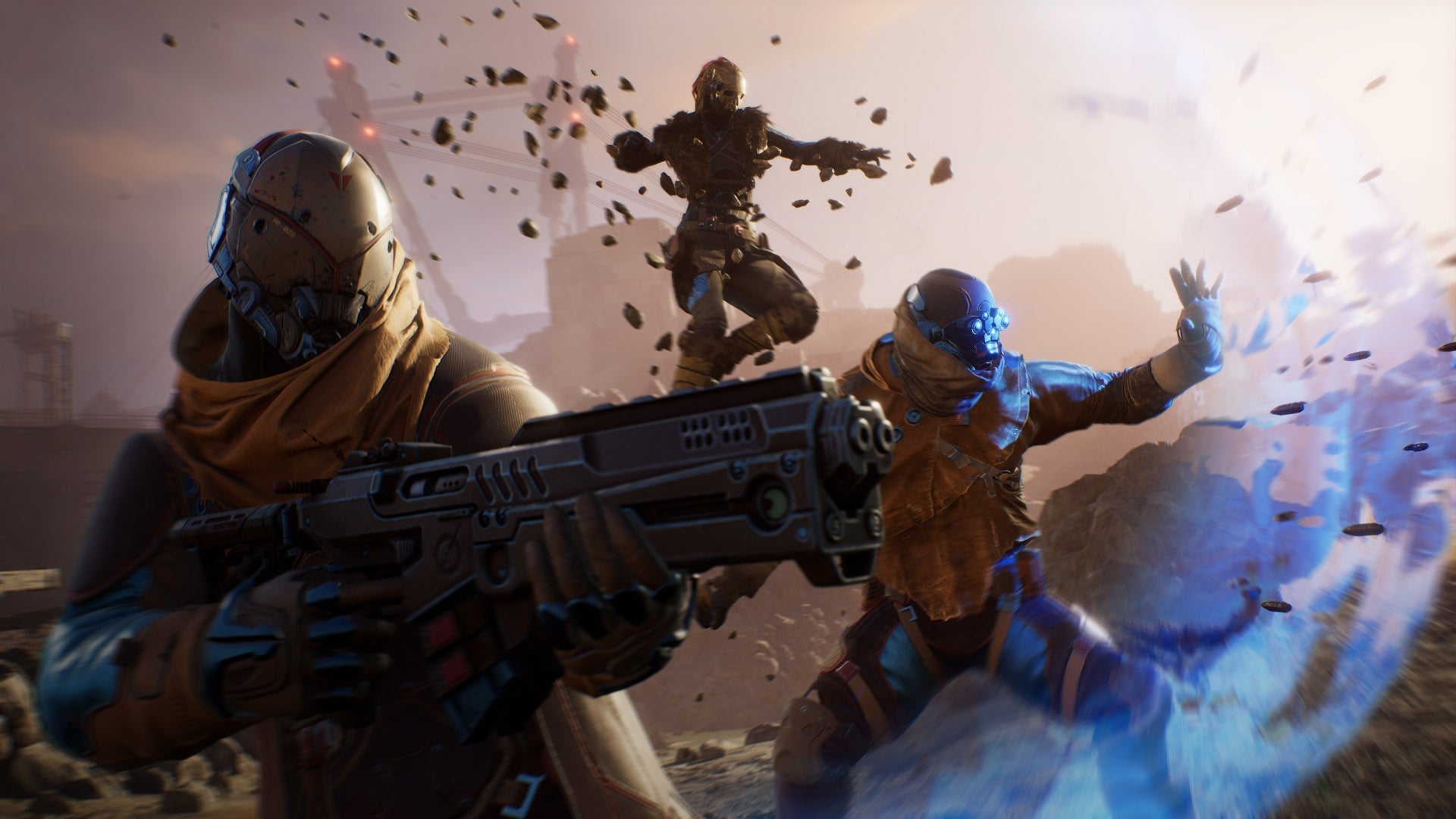
Some games are third-party blockbusters hitting the service on launch day in the hopes of starting off strong (Outriders). Others are third-party blockbusters with lapsed player bases hoping to get a shot in the arm (Marvel’s The Avengers). Those are punctuated by a ceaseless smattering of small- to mid-buzz games that launch on Game Pass, where they’re played by those who otherwise may not play them, thus drumming up hype, thus spurring sales boosts. Plus, nearly every first-party Microsoft game—including tentpoles like Forza Horizon 5 and Halo Infinite—hits the service on launch day, with exceptions, obviously, for games tied up in prior contractual agreements (see: Deathloop).
But if Game Pass had a killer year by the numbers, Microsoft didn’t brag about it. The most recent official figures date all the way back to January, when Microsoft said that Xbox Game Pass claims around 18 million players. In a September interview with The Wrap, Take-Two boss (and notable fitness guru) Strauss Zelnick stated, perhaps or perhaps not erroneously, that Game Pass sports around 30 million subscribers. Other estimates throughout the year pegged the subscriber base at 23 million. But, outside of those January figures, Microsoft hasn’t officially confirmed any numbers—though the company did note that, from June 2020 to June 2021, Game Pass subscriptions grew by 37 percent.
No matter how many millions of players actually pay for the service, Microsoft hasn’t ever distinguished a breakdown of which tiers those subscribers have signed up for. (Nonetheless, all table napkin math comes to the same answer: “A fuckton of revenue.”) That Xbox Game Pass remains tiered at all—both in terms of pay scales and available platforms—is itself no small matter of confusion, something Microsoft made minor steps to clarify during 2021.
Let’s break it down. The base tier costs $10 a month, and gives access to the Xbox Game Pass library. Simple enough. The higher tier, Xbox Game Pass Ultimate, costs $15 a month and comes with a number of additional perks, including game-specific DLC for Xbox games, access to the EA Play library (EA’s similar games-on-demand service), and a tied-in membership to the PC version of Game Pass. Signing up for just the PC version of Game Pass, meanwhile, costs $10. (Prior to September 2020, when it exited beta, Xbox Game Pass for PC cost $5 a month.)
At the 2021 Game Awards, in an ad spot so cloying you’d think it essentially suggested you stand up for a snack break, Microsoft made an official announcement: Rather than Xbox Game Pass for PC (clunky, confusing), the PC version of Game Pass is now called PC Game Pass. Bye-bye, Xbox branding.
Cloud gaming and other services
Xbox Cloud Gaming, the service sometimes referred to as xCloud (Microsoft always needs a couple tries to get the branding right), has been a staple for a few years now, but significantly expanded the breadth of its offerings in 2021. What once felt like a widespread beta test of a program destined for the bin now feels like the burgeoning seeds of Xbox’s next area for growth.
Key here is the introduction to game-streaming on Xbox One and Xbox Series X/S. By subscribing to Xbox Game Pass Ultimate, you can stream games from the Game Pass library directly onto your console, circumventing the need to download them to your internal storage (or pricey AF official external storage).
But the ability to play Xbox games without a console is now very possible. In June, Microsoft switched the backend architecture of Cloud Gaming to run on Xbox Series X hardware, significantly ramping up the quality of streamed games. Whereas previously you were limited in the platforms on which you could stream games, you can now stream games on Apple and Android devices. (Here’s a full list of Microsoft-verified devices.) Depending on the age of your device and the stability of your internet connection, you’ll get different mileage out of splashy, technologically intensive games. But the low-intensity fare is relatively reliable.
In other words, we’ve hit a point where, if you want to play Xbox games, all you need is an Xbox Game Pass subscription and a functional controller.
Microsoft also more or less sent Xbox Live—the long-running service required to play games online—to the farm upstate. In January, Microsoft announced a 50-percent price hike for Xbox Live. The backlash came swift and furious. Within a day, Microsoft, in perhaps the most curiously speedy corporate decision ever made by a multinational corporation, reversed the decision. What’s more, Microsoft said that it would no longer require an Xbox Live membership to play free-to-play games online, reversing years of precedent. Quick moves.
Two months later, Microsoft retired the “Xbox Live” name, instead opting to bundle its online services under the “Xbox network” umbrella. (Xbox Live Gold still exists, and still gives you two “free” games every month.)
Halo Infinite’s multiplayer mode, it’s worth pointing out again, is free-to-play.
Next-gen consoles remain elusive
The Xbox Series X is the obvious physical representation of Microsoft’s gaming strategy. There’s only one issue: Players still can’t get their hands on one
Last year, ahead of the next-gen kickoff, Xbox head Phil Spencer told Kotaku how he thought sales would break down over the course of the console generation. The Xbox Series S ($299), he predicted, would outsell the Xbox Series X ($499) in the long term.
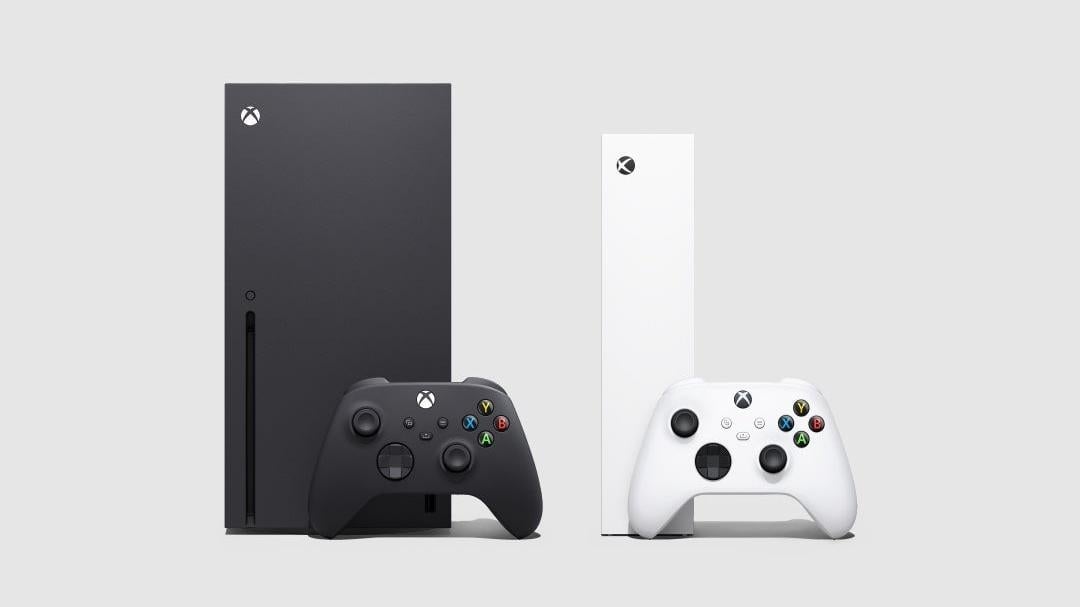
Does a 13-month window count as the “long term”? Maybe, maybe not. But right now, short of using bots or forking over a significant upcharge to a scammy reseller, it’s nearly impossible to get an Xbox Series X. On the other hand, you can find a healthy stock of the Xbox Series S on sites like Amazon and Best Buy. And you can, anecdotally at least, usually find a couple at big-box brick-and-mortar retailers like Walmart and Target, too.
Xbox Series X scarcity can be chalked up to a number of factors, including a global upheaval to the supply chain and a semiconductor shortage that’s wracked basically every industry. On the latter, manufacturers predict the issue could permeate into 2023. So, yeah, it might be some time before the Xbox Series X is available with regularity, in the sense that you could walk into your local GameStop and buy one off the shelf. But the way these winds are blowing, it’s fair to wonder: Do you even need one?
So, what’s next?
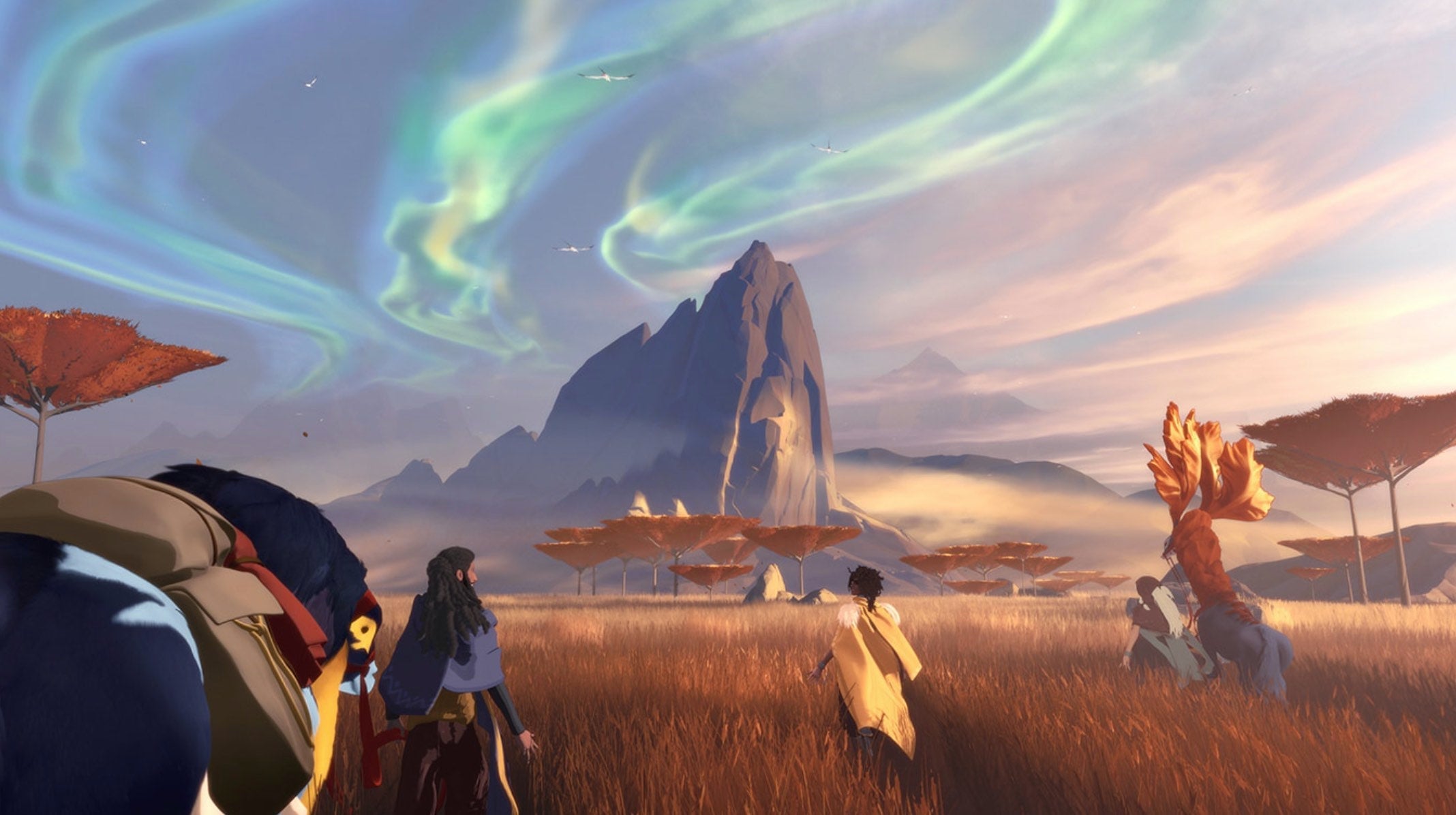
In terms of games, Microsoft has a lot in the wings. Playground Games, who struck gold with Forza Horizon 5, is currently working on a new entry in the Fable series of fantasy RPGs. Obsidian has its own fantasy RPG, Avowed, in the works, plus a sequel to 2019’s well-regarded capitalism satire The Outer Worlds. Rare is working on Everwild, but that’s so tightly under wraps we don’t know anything about it other than the fact it’s very, very pretty (and is now due for 2024). S.T.A.L.K.E.R. 2, a horrifically scary-looking shooter set in Chernobyl, is currently lined up for an April release. The Bethesda-published vampire shooter Redfall is planned for the summer, followed quickly by the Bethesda-developed Starfield in November (which, by the way, won’t be playable on PlayStation). And that’s to say nothing of the countless third-party games—from The Anacrusis to A Memoir Blue to Replaced—that will hit Game Pass on launch day.
To get all of those games in front of players, Microsoft is hoping to unveil a Game Pass streaming stick, a la Roku or Amazon Fire, which would be paired with a dedicated Xbox app for smart TVs. Spencer raised the possibility in late 2020, saying such a device could potentially be available by the end of this year. Barring some 11th-hour move by Microsoft, that obviously did not happen this year. But the door is wide-open now for such a release, particularly when you consider Microsoft’s slate of games (both those out now and those forthcoming) and the overall scarcity of, y’know, actual Xbox consoles.
“We’re working with global TV manufacturers to embed the Game Pass experience directly into internet-connected TVs,” Microsoft’s Liz Hamren told The Verge. “All you’ll need to play is a controller.”