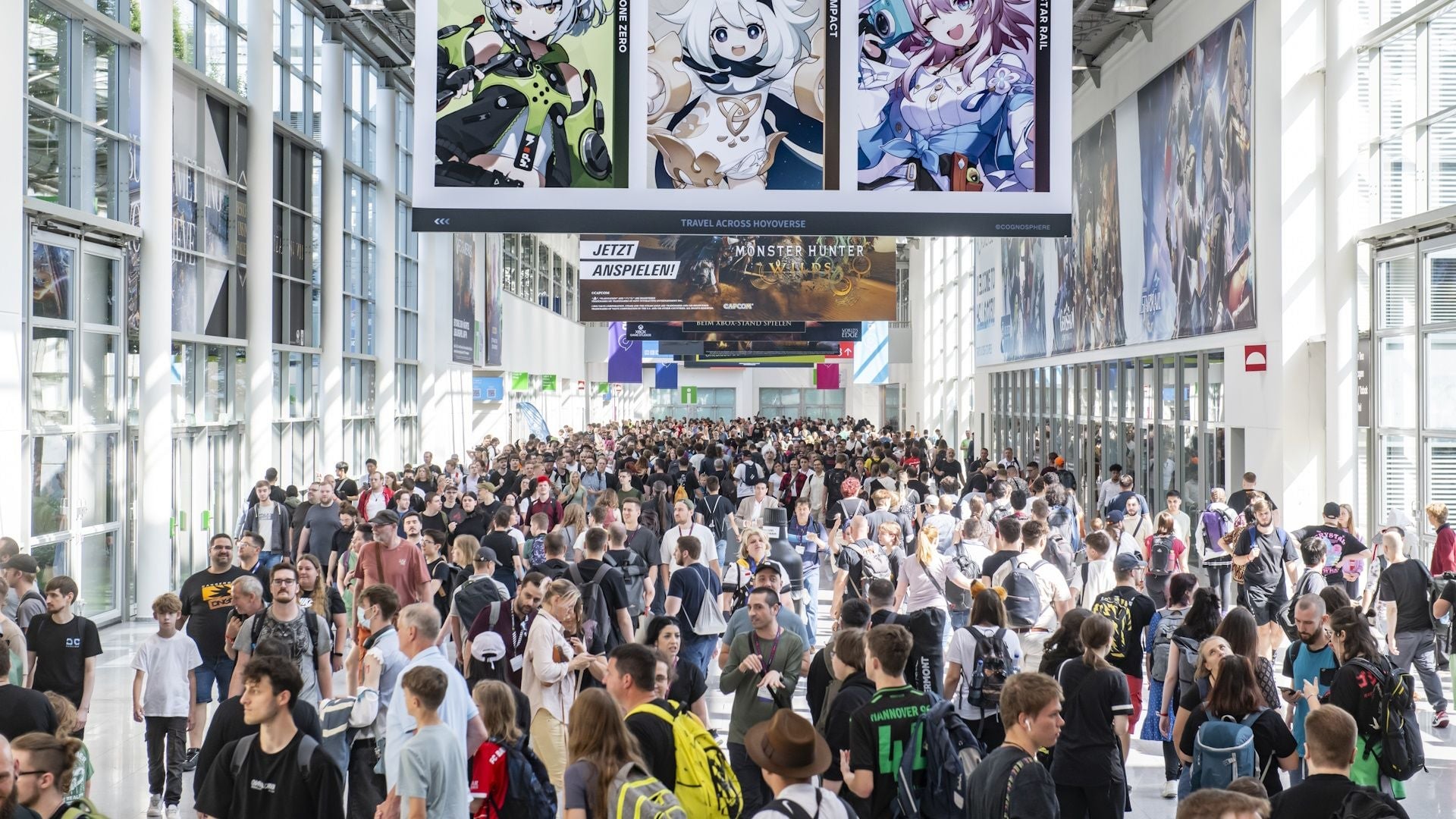
Gamescom is something of an anomaly. The annual event, in the German city of Cologne (or Köln to the locals), is the largest, most visited gaming exhibition in the world, dwarfing its nearest rivals, and has outlasted many alternative public and industry events. It adapted rapidly to covid, and became a successful online event when others wilted. And it somehow seamlessly combines a massive-scale industry event with an even more enormous public convention. So why is Gamescom so successful, where others struggle?
E3 is officially dead. It’s easy to blame covid, the cause of the Los Angeles event’s cancellation in 2020, 2021 and perhaps 2022, with the resulting demise and lack of online replacement leading to major publishers pulling out of 2023’s event until it was cancelled too. But really, its time had been up long before. For the majority of its life from 1995 to 2016, it was an industry-only event, and regularly pulled in 50,000 to 70,000 visitors (apart from during the bizarre decision to host it in an aircraft hangar in 2007 and 2008). Come 2017, as numbers and interest had begun to dwindle, E3 offered 15,000 public tickets at the same time as the number of exhibitors plummeted by a third. It was already looking very peaky before covid was even a factor.
Yet Gamescom, which delivers an industry event very similar to E3 (taking place in a monstrously large convention center that takes 15 minutes to walk end-to-end, with building-sized booths for major publishers decorated to match their games, and labyrinthine halls of business booths and meeting rooms), does this at the same time as offering a public exhibition that’s three times the size of PAX West. And add to this an opening night event featuring a wealth of massive-name exclusive reveals and trailers, hosted by the prince of gaming himself, Geoff Keighley. Which makes it all rather a big deal. And no diss to Germany, but it’s not exactly the first country that comes to mind when thinking about the games industry. So what makes Gamescom so persistently successful?
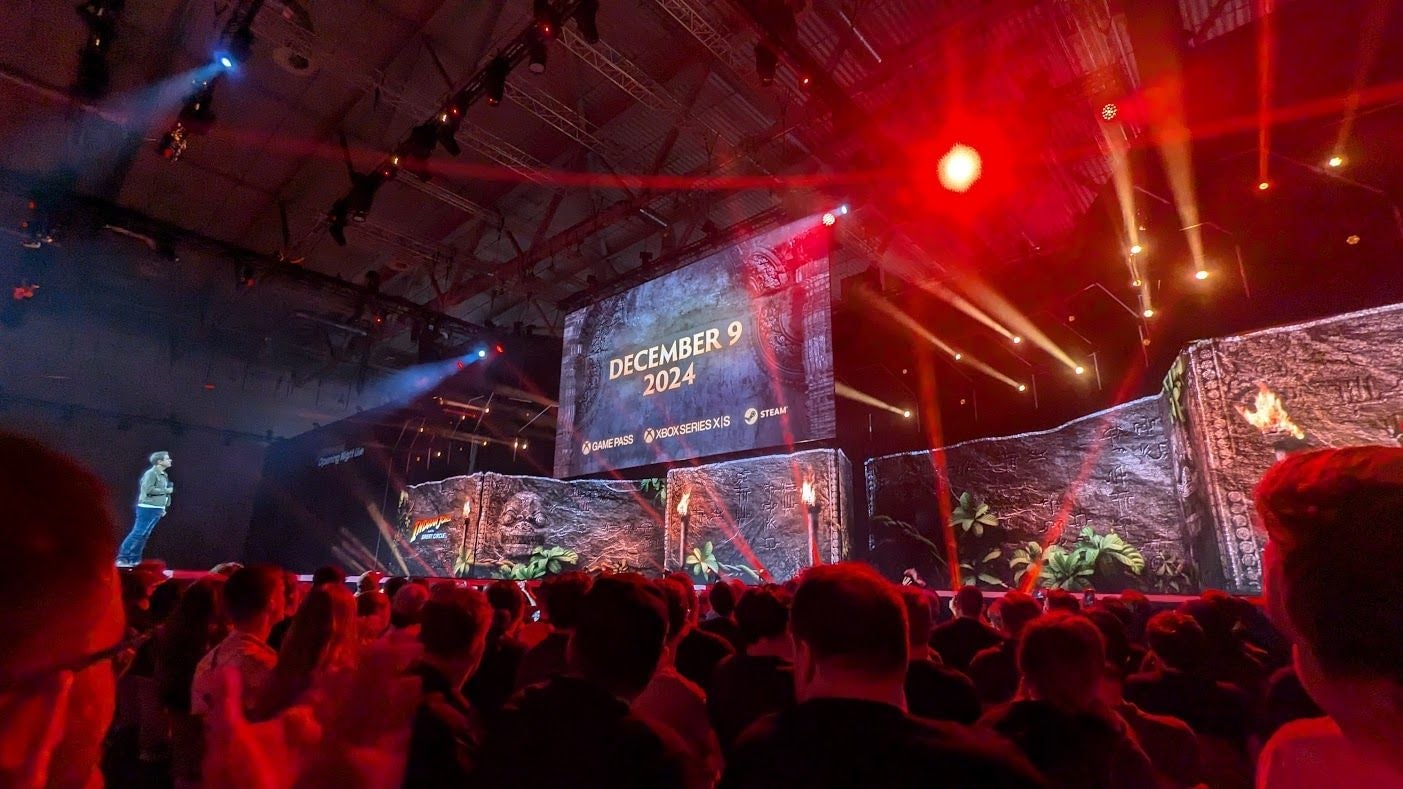
“Gamescom is a hybrid show,” says Tim Endres, the director of Gamescom, “that’s the USP.” He’s not talking about the combination of industry and public, but rather the overlap of in-person and online. And interestingly, this wasn’t something that began because of covid. In fact, the event had the jump on the virus by a full year, via the presence of the first instance of Opening Night Live in 2019. The flashy stage show that matches Keighley’s other annual ventures like Summer Games Fest and The Game Awards draws in an impressive live crowd (this year doubled to 5,000 people in the room), but a gargantuan online audience.
“This is the sixth year that we’ve been doing Opening Night Live,” said Geoff Keighley in a Zoom call the night before the event. Explaining why it has proved so successful, he stated, “Through the pandemic we were able to do a virtual show, and then come back live here at Gamescom. It’s really a global celebration.” This year saw 40 million people tune in—numbers any TV network would sell its soul to see—and it establishes the online presence of Gamescom in a massive way. By Saturday evening in 2024, a total of 310 million video views were reported.
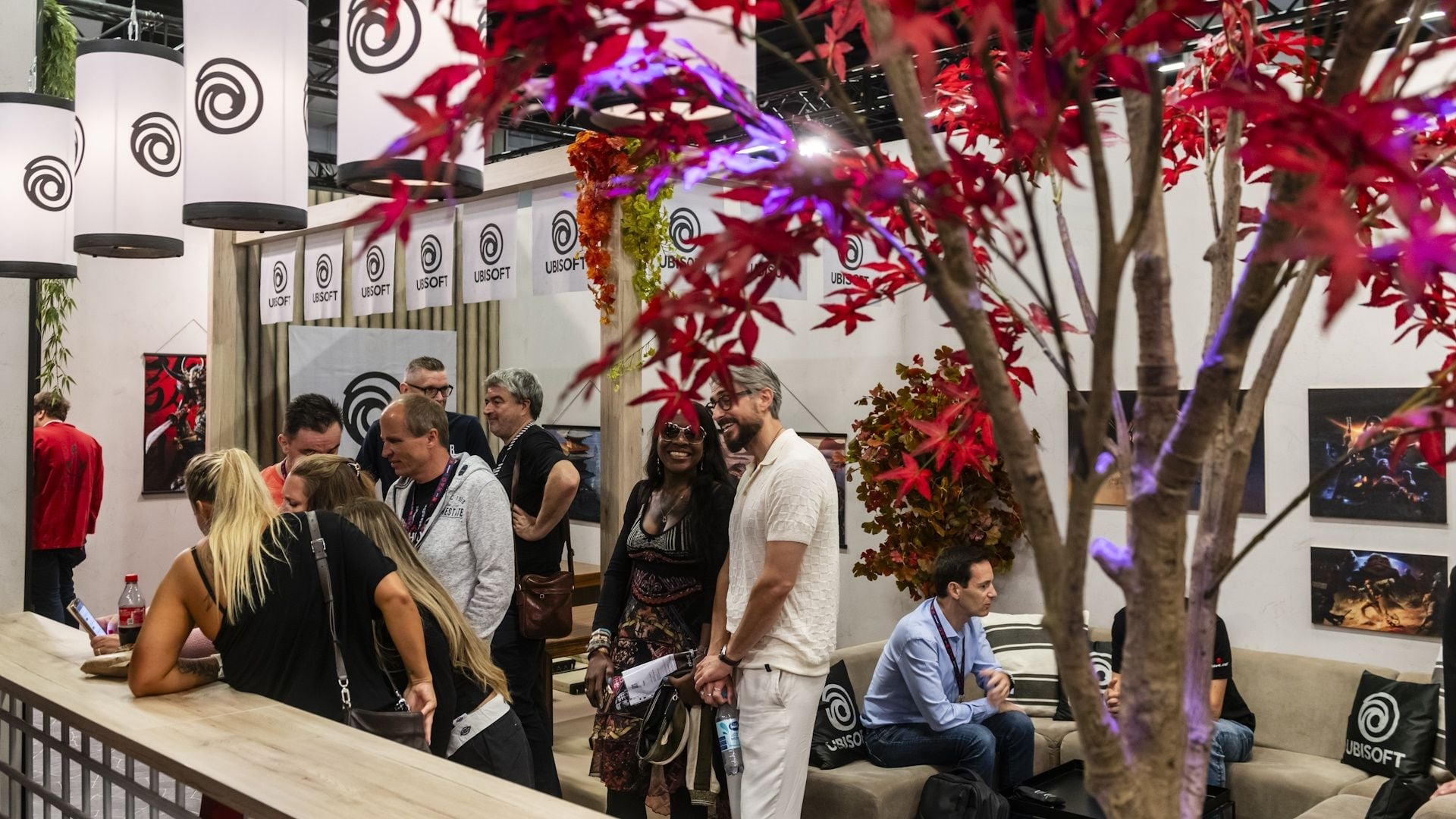
Endres wouldn’t be drawn into discussing E3, even now that it’s officially over. The Voldemort-like nature of the deceased event was an odd shadow during our chat, but I attempted to be more general when trying to understand why Gamescom survived the last few years. His answer: “Because we took place.” Endres primarily credits the incredible fortune of having gotten the show’s online nature established ahead of the global shutdowns in 2020 as a part of the reason for the event’s survival—they weren’t scrambling to try to invent some sort of last-minute digital version of their show, but rather building on an infrastructure that had already begun development. “We never cancelled, we never lost the contact to the community or the industry, so we were able to have a good pace for the restart after the pandemic.”
Boasting 1,400 exhibitors (E3 would hit 500 at its early peak) from 64 different countries, Endres says this makes the event the most truly international. It’s hard to deny this—I think back to U.S. events I’ve been to, where North American companies dominate the show floor, international exhibitors scattered around them. In Cologne, there was still a massive American presence—especially in the form of Microsoft and Xbox—but unsurprisingly the European numbers were far higher. Fifty percent of trade visitors came in from outside the country. “That means the world’s here at Gamescom,” said Endres. It’s also true of public visitors, with 10 percent coming from outside the country, meaning over 30,000 people travelling to Germany for the event.
Microsoft’s enormous amount of floor space was striking, and made me wonder whether Sony and Nintendo might be getting left behind. “Of course we’d love to see them too at Gamescom,” said Endres. “We’re in constant [contact] with them, and if they don’t come one year, it does not mean it’s a decision for the future.”
But Gamescom is also spreading outward. In 2021, Gamescom Asia was established, an annual event in Singapore, and 2023 saw the first Gamescom Latam, hosted in Sao Paulo, Brazil. Interestingly, despite the existence of those regional events, those countries are also present at Gamescom in Germany, which perhaps makes sense given the different nature of the shows. Gamescom Asia, for instance, is predominantly a show about mobile gaming—a platform that doesn’t have a large footprint at the European show (with the odd exception of Dark and Darker). It also sees the other big players getting involved, with Nintendo having sent games to Latam, and PlayStation showing up for Asia.
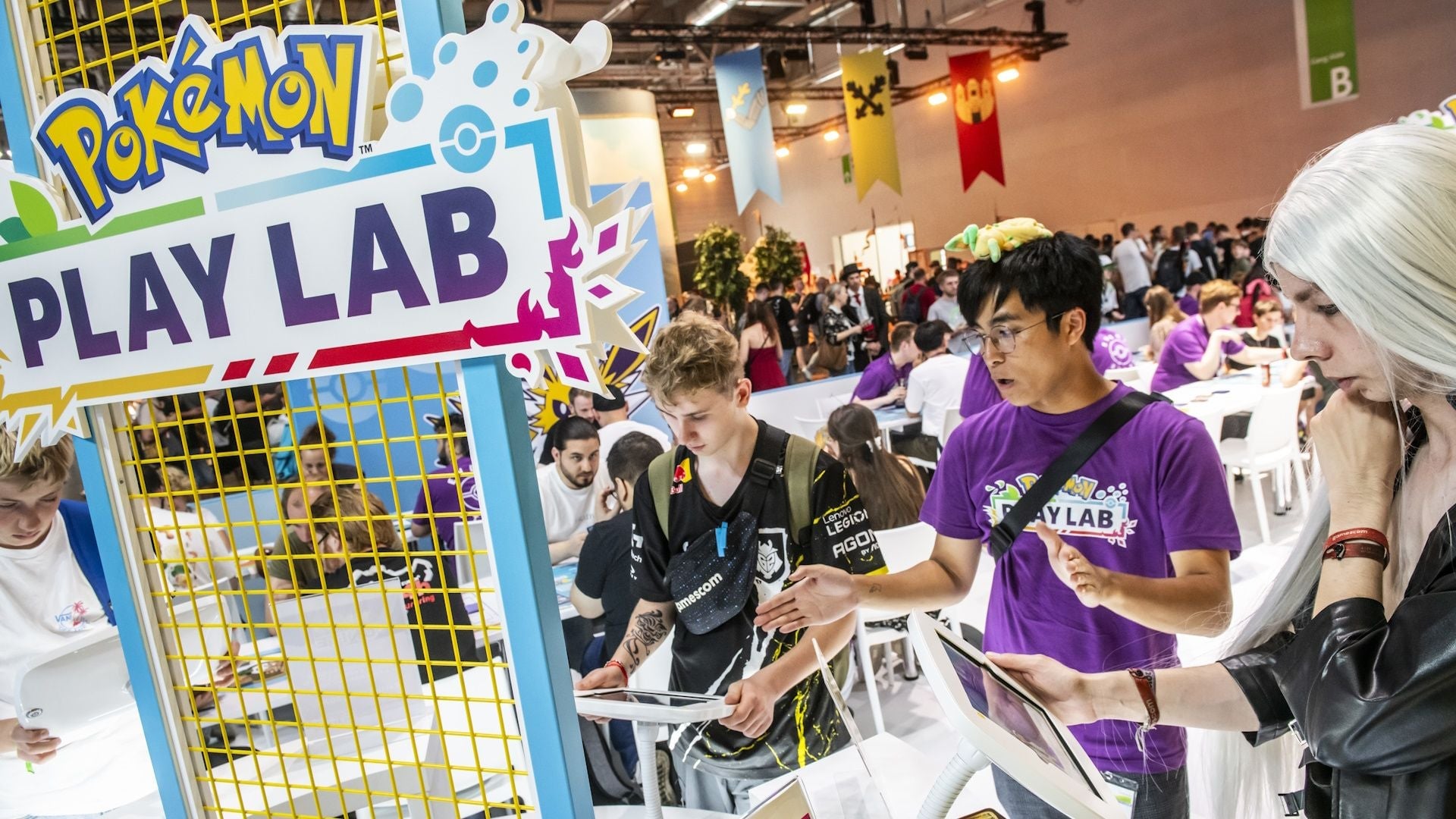
Which all sets up a rather big, obvious question, doesn’t it? Gamescom is massively successful, has gained international recognition as the biggest gaming event in the world, and has survived where that other big name in industry trade shows has failed. That would leave one rather obvious region that Gamescom isn’t reaching, one that has a large void where an event used to be, loosely replaced by a digital-only event that happens to be hosted by Geoff Keighley…
“You must be looking at the United States,” I say. On my audio of the interview there’s then a long silence, before laughter in the room from a couple of onlookers. I then say, “For my recording, there was a slight shrug.” Endres laughs, called out on his presumably accidental body language, and then stammers toward the company line. “What we see at Gamescom is this massive increase in internationality here in Cologne, and it’s going to be the core event in Cologne, and we have a worldwide reach starting from Cologne, and then with our satellites we have a different reach. And Sao Paulo is not far from the U.S… But right now we’re focusing on making Gamescom Cologne bigger, and Latam and Asia bigger, and then we’ll see what the future brings.”