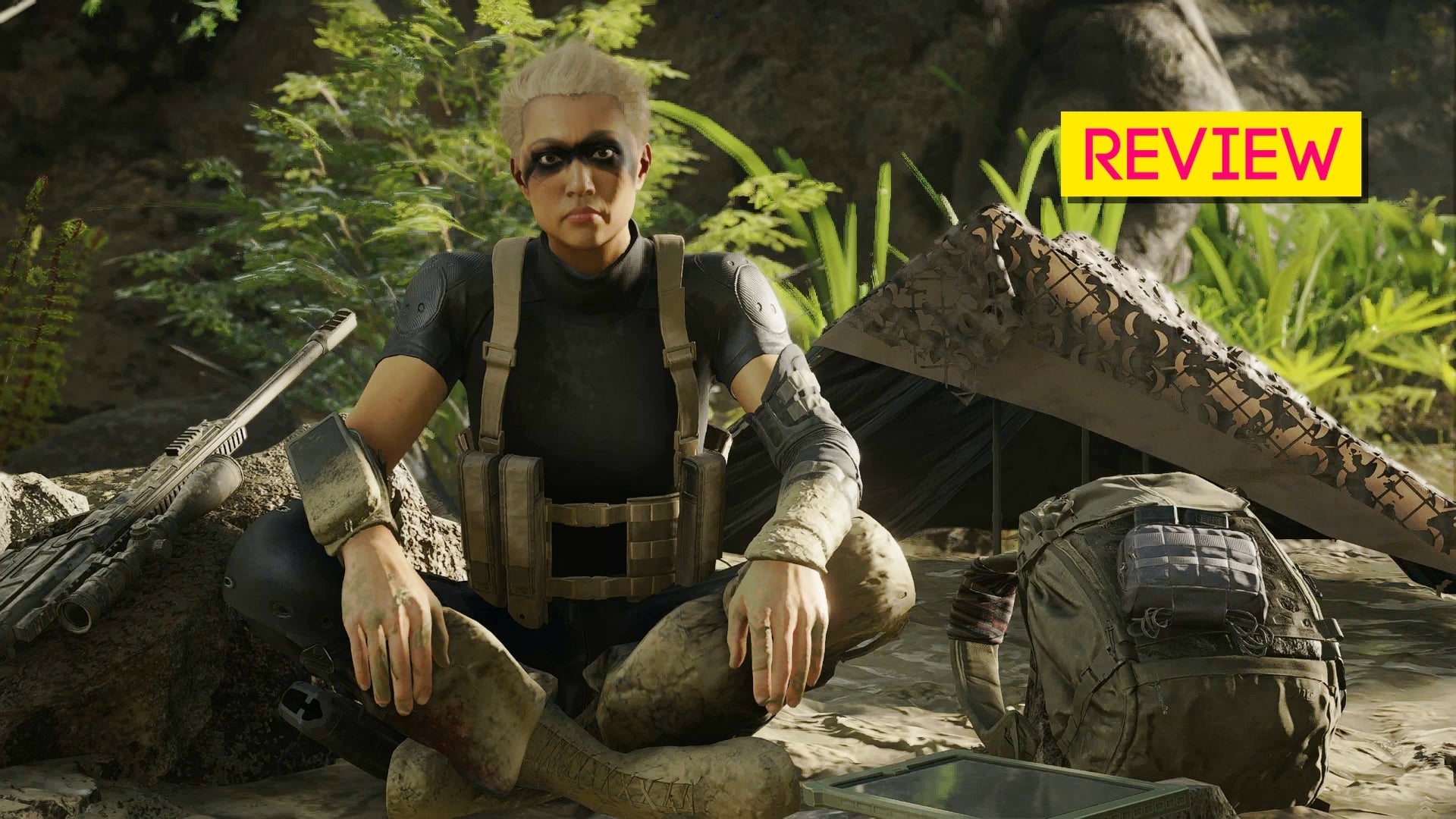
I have never played a game as inconsistent as Ghost Recon Breakpoint. In its finest moments, when the stars align, it delivers stealth action on par with the best in the genre. When it falls apart, as it usually does, a tangled weave of glitches and half-baked systems reveal a game compromised by bland AAA design sensibilities and a ceaseless desire to churn out content at a breakneck pace.
Ghost Recon Wildlands was a disaster. The 2017 game’s expansive open world was dull and difficult to traverse, its jock-bantering AI companions grated on the nerves, the length never seem justified, and its caricatured cadre of Mexican villains weren’t just embarrassing but racist. It’s an understatement to say that I did not care for it.
Breakpoint moves into the realm of speculative-fiction, shifting from a “what if” scenario about a real place to a poor man’s Metal Gear or Deus Ex on a fictional island. Its narrative has more focus, its world map is more diverse, its villains are more charismatic, and its moment to moment gameplay is sleeker than before. These improvements come with their own shortcomings and mistakes. The end result is an improvement over WIldlands that nevertheless disappoints more than it impresses. It is a better game, and you can have a lot of fun playing it.
Ghost Recon Breakpoint is at its best when you’re taking lengthy hikes through thick forests and stealthily infiltrating bases full of elite soldiers. But, like Wildlands it ultimately crumbles apart into a heap of conflicting ideas. It is a loot-shooter where loot doesn’t matter, a game about technology that constantly confuses its message, and a survival mechanic-laden exploration game where you never struggle to survive. A lot of things are thrown against the wall, rarely sticking.
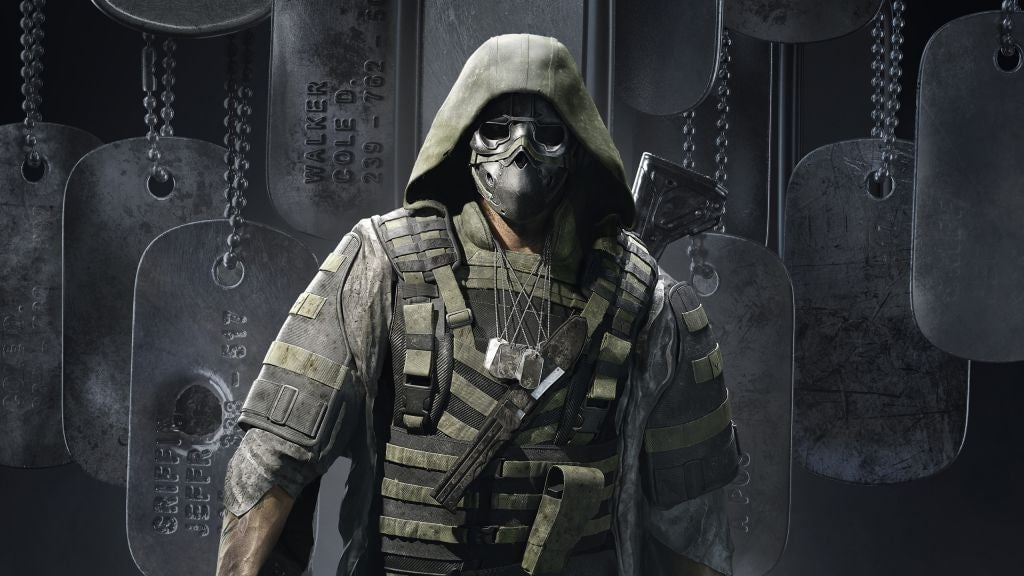
Ghost Recon Breakpoint
-
Back of the box quote:
"War Hasn't Changed"
-
Type Of Game
Legendary Military Sim (Gear Score 115)
-
Liked
When the stealth works, gimme that Jon Bernthal, much better map than Wildlands
-
Disliked
Tacked on loot-shooter mechanics, meandering story.
-
Developer
Ubisoft Paris
-
Platforms
PC (played), PlayStation 4, Xbox One.
-
Release Date
October 4, 2019
-
Played
Took down Walker in about 20 hours at around gear score 130. Still a few spare missions left.
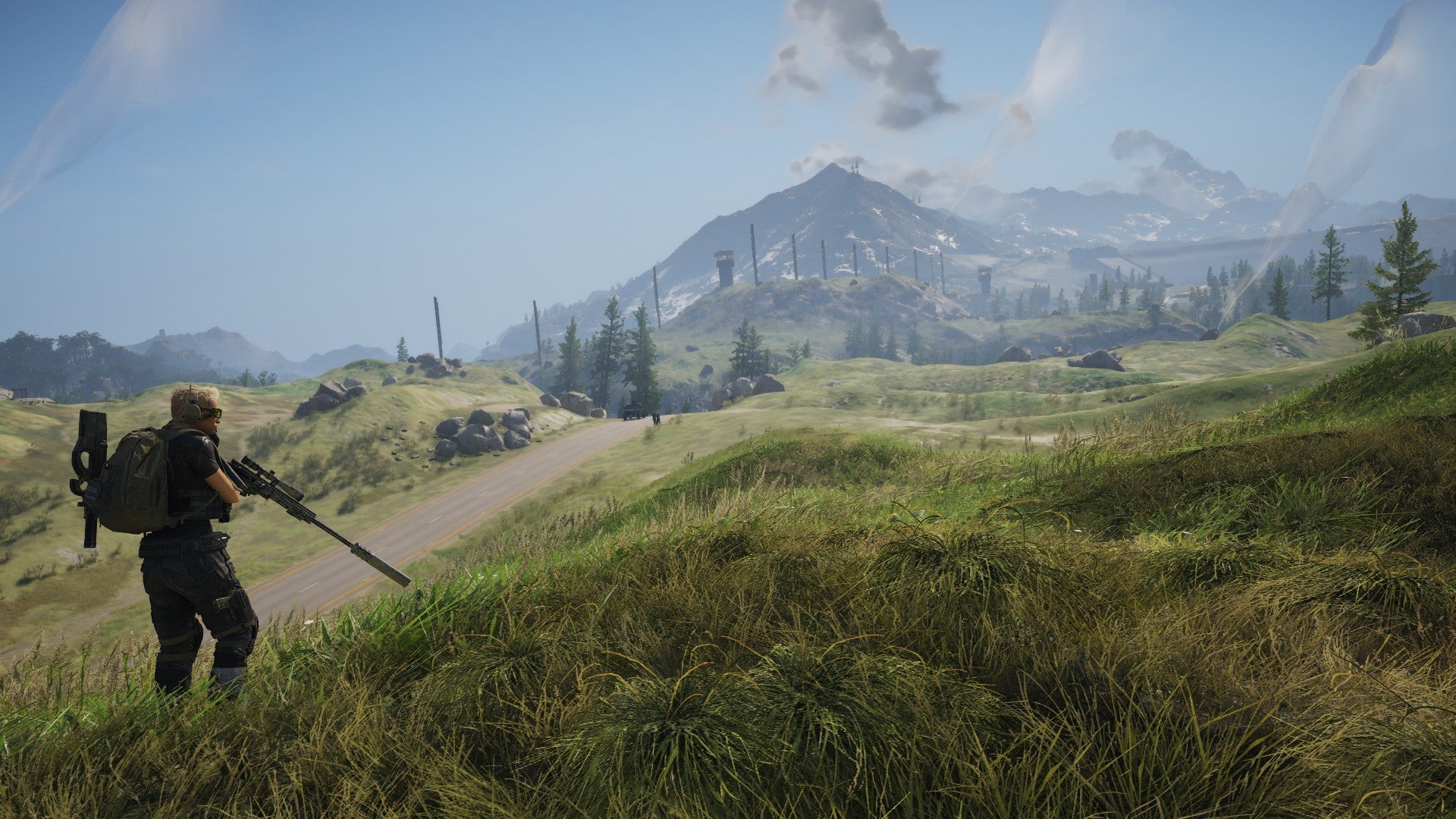
Here’s the thing: when Breakpoint works, it evokes the best moments of games like Metal Gear Solid V: The Phantom Pain. Kitted with the right mix of sniper rifles and personal defense weapons, a smart player can dispatch platoons of hapless guards and slink into fortified bases to interrogate commanders or hack computers for the latest intelligence. These forays might unlock a lengthy series of investigations that bring them face to face with dangerous enemy operatives who, while too easily dispatched when discovered, tease the possibility of grander battles. Helicopter chases erupt into something terrible as strange automated tanks fire flak volleys upwards into crackling bursts. Excursions through wind-swept fields turn grim as a surveillance drone swoops by and detects you before cover can be found. It summons a high-tech kill squad to chase you through the brush. All of these moments are incredible and hint at a game far more exciting than the complete package. But damn, if they’re not fantastic in isolation.
Breakpoint abandons the gritty pretext of Wildlands imperialist geo-politics for a techno-thriller whose pitch is more exciting than the execution. After a tanker goes missing off the coast of a remote corporate island commune, the player and their squad of “Ghost” special forces are flown in to determine what happened. Arriving at the island of Auroa, they are shot down and left behind enemy lines. The once-thriving libertarian paradise is now controlled by rogue paramilitary forces led by former Ghost Cole Walker, portrayed with slimy delight by Walking Dead actor Jon Bernthal. Walker and his allies have seized control of the island’s drone technology, with the aim of expanding outward and using it to quell conflict with grand displays of technological violence. It’s up to the player and a few allies—including the scientists responsible—to thwart Walker. It is a far more compelling set up than Wildlands, offering a clear villain and personal stakes alongside cursory commentary about modern warfare. But it never commits and is lost amid the static of rote gameplay systems.
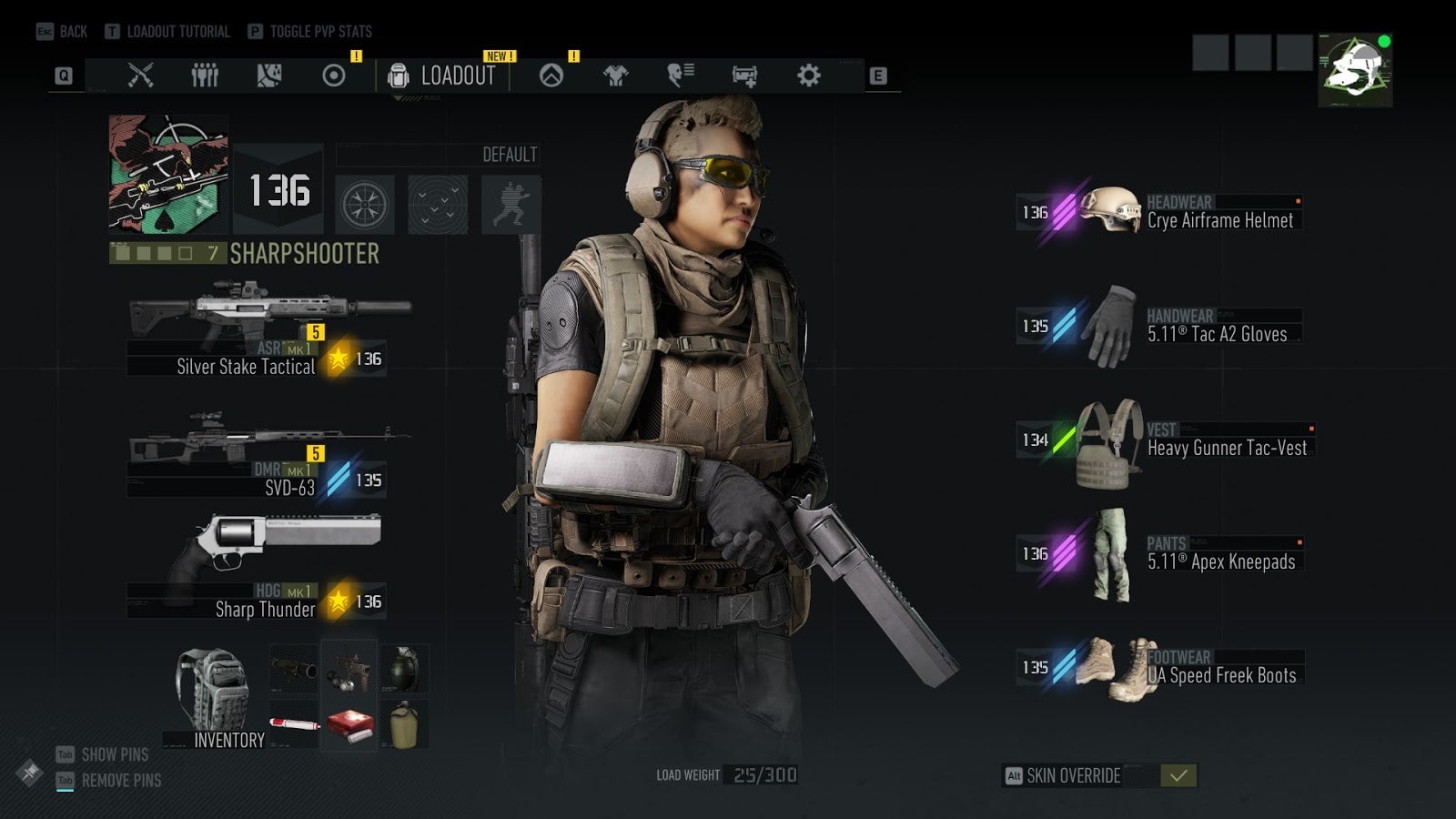 Pulling from Destiny 2 and its cousin The Division, Breakpoint models itself like a loot-shooter. Players have an overall gear score, which rises as they collect new items from fallen enemies or hidden caches. Weapons and armor come in tiers of rarity—cruddy grey, decent green, quality blue, rare purple, and legendary yellow—which often boast small bonuses such as reduced recoil or increased stamina. But unlike Destiny, were you might find a weapon with a unique history that you upgrade in order to have a constant companion at your side, Breakpoint’s loot is meant to be discarded as soon as you find something better. This means that an assault on an enemy base might yield fresh body armor that you immediately replace halfway through a firefight with more body armor because some random schmuck dropped a slightly better version. Once, I killed a high ranking enemy and received their unique submachine gun, only to find that the shopkeeper in my base was already selling more powerful weapons when I returned from my mission. There’s never any time to develop a weapon preference or create a unique character build. You grab loot, equip it if there’s a little green arrow indicating it’s better, and replace it as fast as possible. It’s not a grindy system—any excursion will upgrade your gear score from 5 to 10 points, depending on luck—but it is pointless. Loot is generic enough that players will not care about what they find, and perfunctory enough that raising your gear score rarely seems important. Breakpoint’s developers want the loot-shooter structure, the slowly rising power curve, without ever really committing to it.
Loot doesn’t matter because Breakpoint is astoundingly easy on default difficulties and only marginally harder on higher settings. Almost every weapon can be silenced and equipped with powerful optics, leaving the player to gleefully sneak about and eliminate enemies at extreme ranges or even up close with a single shot. This is true in nearly all cases, regardless of the difference between the player’s level and the enemies’ own strength. One time, I found myself on the hunt for a dangerous foe called Flycatcher, a sort of discount FOXHOUND operative who had a masterful command of engineering and an army of drones. After a long chain of interrogations and sleuthing, I located his base of operations. I snuck past the elite “Wolves,” Walker’s personally trained death squad. The sneak was exciting. Although I could kill with a single shot, the base layout was a mix of tight tunnels and drone-packed landing pads. I was eventually detected and pulled into a firefight with powerful troops. After the fight was over, I resumed my push through the base and up to Flycatcher’s position. When we previously met, there was a cutscene as his drones chased me through hallways, gliding around like deadly predators. This time, with his drones somehow oblivious to my presence, I snuck into his command room and killed him with a shot to the back of the skull. So much for the mighty boss. So much for our much-teased final encounter.
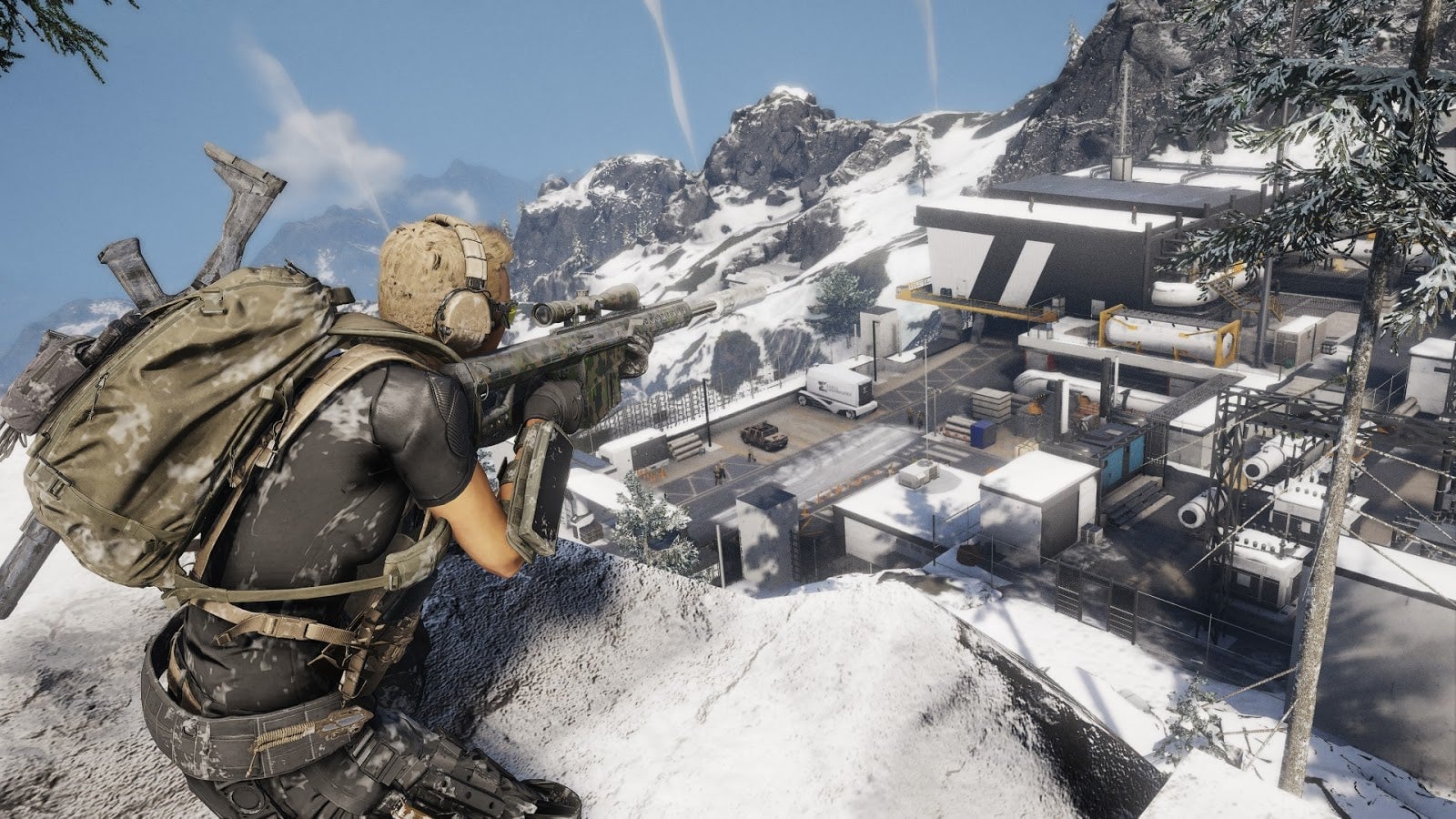 Breakpoint does have some interesting ideas and exciting modes. Its campaign uses a largely non-linear structure that allows you to tackle any challenge, up to and including the final battle with Walker, whenever you want. This is fantastic. There’s plenty to do and you can do it on your own terms. Wildlands gated content behind side missions, asking players to perform a variety of minor tasks in order to take on greater challenges. Breakpoint is open, letting players embark on whatever sort of experience they’d like. That can mean treasure hunts, daily missions to destroy enemy supply lines, the somewhat generic but enjoyable story mode, tracking priority targets, or wandering for better gear. You are the center of a wheel, with various spokes pointing out in disparate directions. It is often more over-the-top Just Cause than classically stealthy Ghost Recon. You can cut loose, track targets, grind out faction reputation. It’s in your hands, and the world is more exciting as a result.
Draped over all of this is Breakpoint’s most controversial feature: a robust suite of microtransactions that’s proven difficult to talk about given the immediate, inflamed response. This anger is justifiable—that so much of Breakpoint has been chipped and locked behind an instantly implemented store is a grim mark of what modern gaming has become—but the reality is that this monetization structure is more egregious in its nonsensical existence more than anything else. Much of this stems from a now-unavailable purchase that was never available during any point of my playtime: the ability to purchase ability-granting skill points. Alongside gear score, players slowly level up their character through experience points that contribute to a general level. Each time you level up, you gain skill points to spend on various passive buffs, drone abilities, and equippable boosters that grant bonuses such as increased accuracy at a distance or reload time. Their continued inclusion would have upset the game’s already precarious balance. That they were considered at all is frustrating. What remains is a largely avoidable collection of purchasable crafting materials, vehicles and cosmetics that nevertheless grates with its very presence. While there was never a point that I felt compelled to buy anything nor was I made to engage with these systems the same way I might have been with Star Wars Battlefront 2’s odious loot boxes, Breakpoint is draped in a heavy cloth of currencies and unlockables. Year after year, players receive a new Ubisoft open-world game. More recently, this comes hand in hand with a new shop meant to wring extra cash from consumers. Many will ignore it, others will not but it’s there, waiting for whoever it might snatch in its jaws.
 Breakpoint’s gameplay is weighed down by extraneous systems, and the narrative similarly stumbles as it tries to juggle too many ideas. It’s not a bad story, but it’s more fraught than the writing seems capable of handling. Breakpoint’s creators want to tell a story about the dangers of technology and the terrifying nature of unmanned drones but can never point the finger adequately. This is a game where rogue agents get their hands on deadly and impersonal weapons, where the player often needs to hide from overhead drones lest they call in destruction. These weapons, Breakpoint shows, are something to fear. They are a power that can easily be subverted for evil. And yet, the player has access to a personal drone that can mark and instantly destroy targets and somehow nothing bad comes of that. Much of the story is focused on rescuing scientists so that they can mope about their creations while also working to subvert them and, ultimately, get them back into the right hands.
The game has no time for the idea that these weapons, at least in their basic forms, are a part of warfare today and that regardless of who has them they enact untold death upon not just enemies but civilians as well. Instead, it presents its weapons merely as tools. Science can get overly ambitious, yes. As Breakpoint protagonist Nomad says: “progress isn’t a zero-sum game.” But in this particular case, what matters more is the user and not the weapon itself. Walker is a rogue agent, a mad outlier seizing innovative technology. The player is the loyal soldier, the good American, who will save the day. We don’t want drones to fall into the enemy’s hands. Better to keep them in our hands, where at least they will sometimes blow up the people we are aiming at. Let me just deploy my drone and tag the enemies for execution. Thank goodness I upgraded my own tech enough; it would be horrible if anyone else had this power. This disconnect is frustrating because Breakpoint’s gameplay manages to imbue these weapons with gravitas. They are terrifying to behold and it is always horrible to feel the cold gaze of a recon drone hone on your position.
Gameplay systems speak, and their absence also speaks. That I benefit from the tools that I wish to rob my enemies of becomes a judgement on them and not on the tools. What do my enemies lack? Not weapons but discipline, loyalty, and the things that make a “good” soldier. More clearly: what is Ghost Recon saying? Well, nominally that the status quo is fine and that there’s “good” and “bad” applications of technological violence.
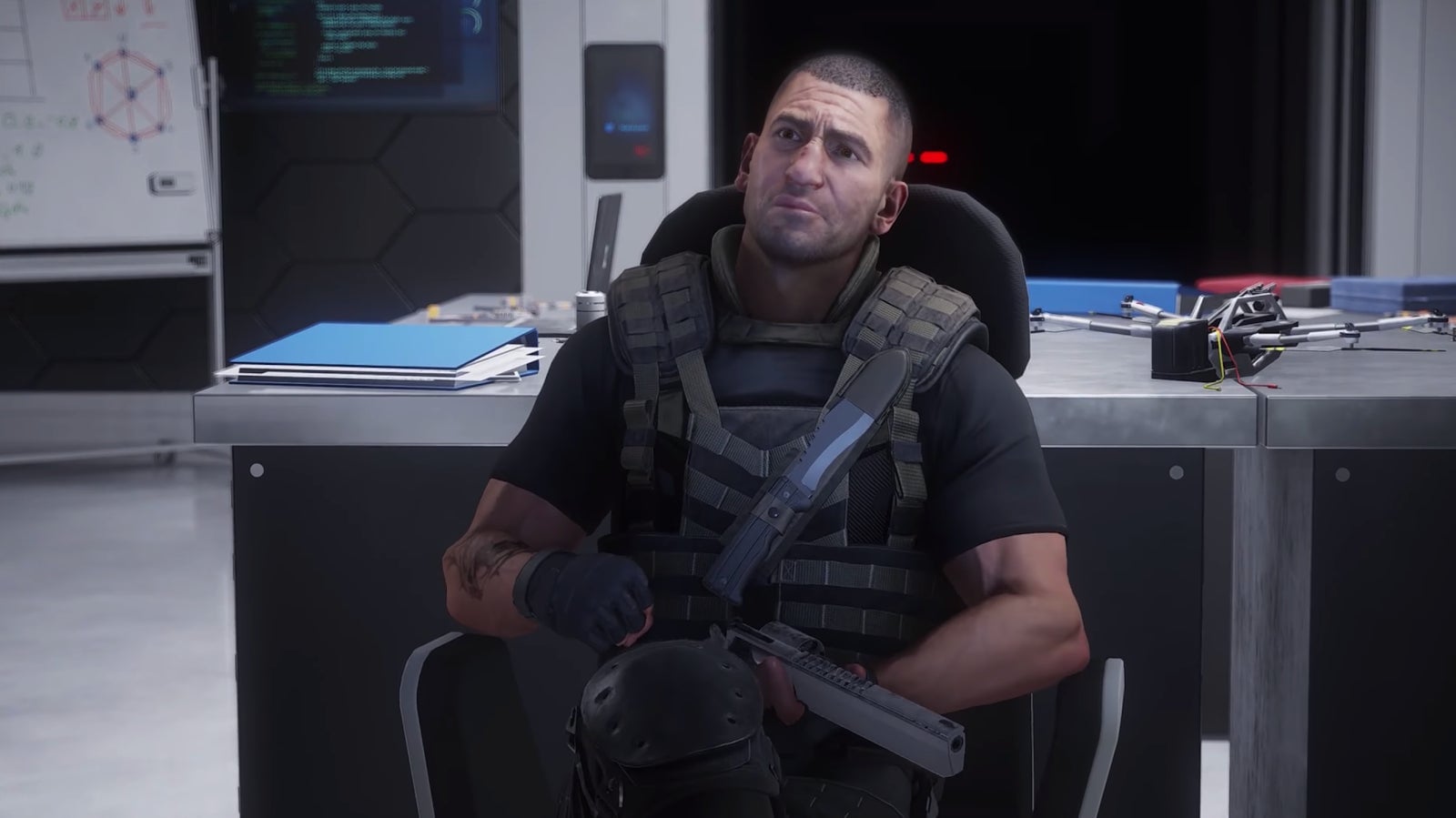
The story also falters in other areas. While Bernthal is a deeply watchable actor and Walker chews up every scene he’s in, he’s also a disposable villain. He needs to be, if you’re able to hunt him down whenever you want. As a result, while there are flashbacks that show off the player’s history with Walker and try to bring a more personal side to the story, it falls flat. Walker’s motivations are vague, his speeches empty, and whatever dangerous bite he is introduced with diminishes over the course of the campaign. Breakpoint’s effort to create a compelling villain are commendable—I certainly paid attention when Walker was on screen—but its loose structure ultimately undermines the narrative. I was told that Walker was a “revolutionary” who “has a reason for being here,” but there’s little time devoted to those motives. It’s clear that Walker feels shackled by government bureaucracy. “We’ve chosen to become the warriors we were meant to be,” Walker says. What that means isn’t apparent until his last moments.
There are smaller narrative annoyances, too. Side characters lack Bernthal’s raw charisma, their individual quest arcs rarely coming to a compelling endpoint. There are times where I get a sense of who these characters are, and times when I came to really like them. The ousted corporate CEO Jace Skell seems disconnected until we learn he’s been funding research into a cure for someone’s cancer. Fiery revolution Haruhi Ito struggles with her methods after a bomb’s collateral damage kills innocents. In other cases, it’s a jumble. Who is this AI specialist and why is she suddenly working with one of my scientist compatriots? Do I really care if one of my fellow Ghosts betrays me if we only had one scene prior to his heel-turn? It’s easy to lose track of the plot.
There’s lip service paid to high concept ideas including the bias of computer algorithms and anxieties about transhumanism, but these are deployed more often as buzzwords than ideas to explore. It doesn’t help that Breakpoint often confuses what these things mean. (Take a drink every time they’re actually talking about posthumanism instead of transhumanism. Take another when the term is used as a boogeyman without context.) Breakpoint’s creators want the game to be taken seriously, but doesn’t want to do its homework.
 The more I played Breakpoint, the more frustrated I became. Breakpoint, for its momentary victories, it often feels superfluous and bland. Its tacked on loot rarity system is neither interesting nor robust enough to warrant inclusion. The story claws at ideas without grasping anything, even if it hits individual beats from time to time. Ubisoft’s structure of annualized releases, of constant open worlds and content, robs Breakpoint of any staying power. Did I not just play another military loot-shooter when The Division 2 released in March earlier this year? Won’t I just sneak around more guards and evade more drones when Watch Dogs Legion releases next year? Wasn’t I silently taking out bases in Far Cry New Dawn in February? The answer is yes, but here I am slogging through a massive open world to find bursts of enjoyment in a game that’s in over its head.
I knew what I was in for and managed my expectations. Booting up Breakpoint, it was cliche and generic but I didn’t dislike it at first. For the first few hours, it was harmless enough until I eventually resented it. I resented the idea of playing 20 to 30 hours of this bland sludge. I resented its dull military hooting and hollering. I groaned at another cosmetic packed store, another fresh way for someone to lose twenty bucks. It started slow, far too slow. I didn’t care about Walker and I barely do now. I was supposed to trudge through his huge map, another world built by committee, until I faced off with this crew cut clown? Fuck that. I wanted no part of it. It was only after nearly 10 hours of playtime that things started to fall into place. As Breakpoint allowed me to wander from mission to mission and expanded my sneaking tools, things started to fall into place. Removed from the tacked on loot system and vapid skill trees, I found bright flashes of chewy stealth action. Damn, they were good.
Finding those moments doesn’t absolve Breakpoint of its many missteps. It’s not a redeeming enough fact to wash away the AAA triteness. Breakpoint is a game that feels meant to satisfy a company’s coverage of Q3 profits, a game with systems so blatant and unnecessary that they literally mean nothing within the game itself. Gear score is an arbitrary value. You can’t even call it a carrot on a stick. It’s all stick. There’s no point. It’s there because that’s what big games do now. There’s a giant piece of raid content because you gotta have a big endgame for your years-running service games. Microtransactions are slapped on, with useless cosmetics and (initially) sneaky ways to power up your character because a one-time purchase is never enough these days. Bases, side-quest, daily reputation grinds, guns, guns, and more guns. Breakpoint embodies the corporate philosophies that I’ve come to loathe and which many players are rightfully sick of.
I have gone from ambivalence to anger to quiet acceptance with Breakpoint. There is so much that frustrates me, so much that drags down the experience into a muddled and forgettable thing. But every now and then I’ll dive into a snow filled ditch, covering myself in dirt as enemies walk within feet of me or hit a shot from 400 meters out and everything feels right. It’s a damn shame that Breakpoint seems religiously devoted to slapping together mismatched bit of modern game design into a mediocre patchwork. For all the clumsiness, there’s something here but it’s been watered down.