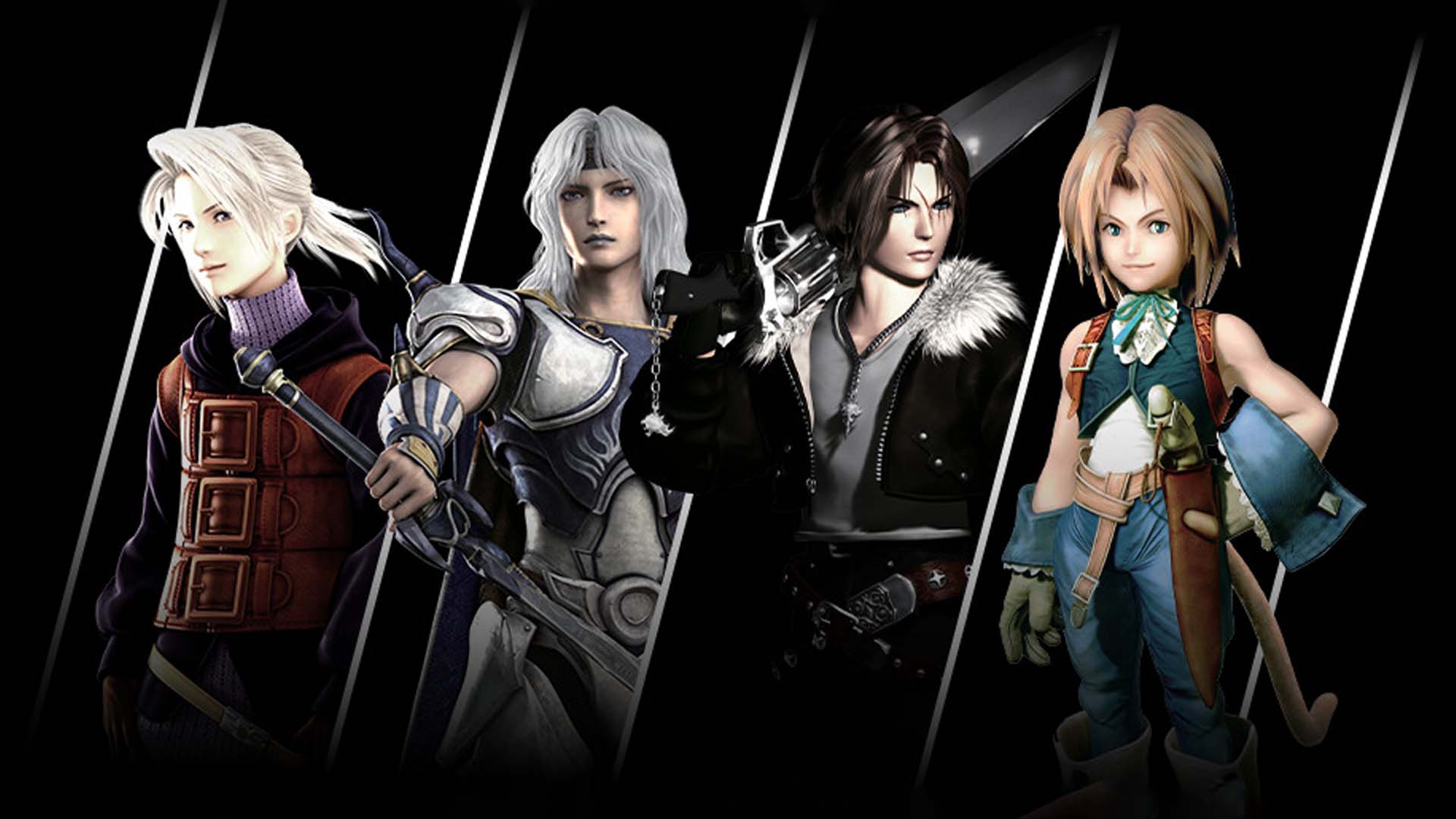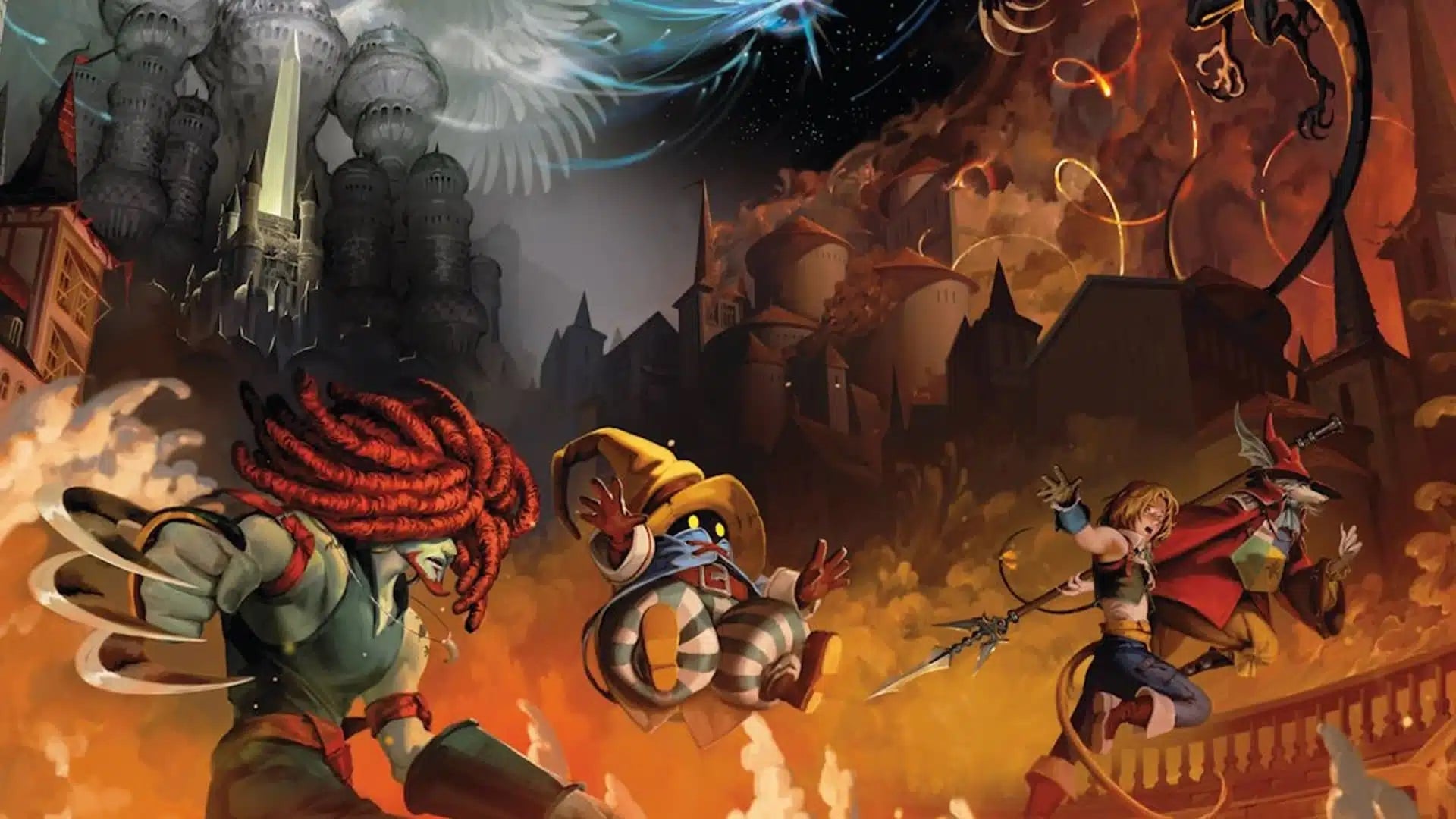
Here’s to the world map. Here’s to those goofy, disproportionate, inelegant pieces of virtual parchment that we’ve been exploring for the past three decades. Let’s bring’em back.
A world map, for those of you who might not be familiar with the concept, is the video game term for the strangely-scaled pieces of geography that string together the cities and dungeons of a role-playing game. Instead of moving between snakelike passageways or teleporting across oceans, you’ll exit a city and find yourself in some sort of weird version of reality where planets are flat and topography fits nicely on a square grid. You’ll travel miles and miles not in hours but in mere seconds, stampeding across fields as if you’ve somehow grown to Godzillian proportions.
See, back in the day, when the creators of games like Dragon Quest and Final Fantasy were dreaming up fantastical lands for players to explore, they knew that they’d have to find some way to make their worlds feel massive. Of course it would be impractical to design them like the real world, in which it would take you quite some time to walk between continents, so these creators decided to establish their own laws of physics. Enter the world map, where scale is skewed and your heroes are the size of cities. Where you can see every location that a game has to offer in glorious flat form.
There are always rules to these maps, of course. Your character can never walk over mountains or bodies of water. Often you’ll have to find some sort of vehicle—like a floating airship or submarine or neon horsebird—to access everything. Terrain is structured not to make geographical sense, but to get you where the story-teller wants you to go.
I love the feeling of walking into a new world and imagining everything there is to offer. I love to scrutinize the terrain and try to find what’s hidden in every corner of a fictional world.
These days, not a lot of RPGs have world maps. With the era of realistic graphics has come a depressing trend: everything has to be real. Serious. There’s no room for skewed realities or characters the size of mountains. Worlds are depicted with proper proportions: the deserts of Final Fantasy XII, the endless plateaus of Xenoblade, the grassy fields of Pokemon
But I’m still in love with those disproportionate world maps. I love the feeling of walking into a new world and imagining everything there is to offer. I love to scrutinize the terrain and try to find what’s hidden in every corner of a fictional world. I love firing up an airship for the first time. Flying everywhere. Unlocking secrets.
Maybe you remember starting up Dragon Quest as a child. Maybe you felt some sort of wonder when you first saw the world of Alefgard. Maybe you were overwhelmed by its size, captivated by the thought that you could explore the whole thing.
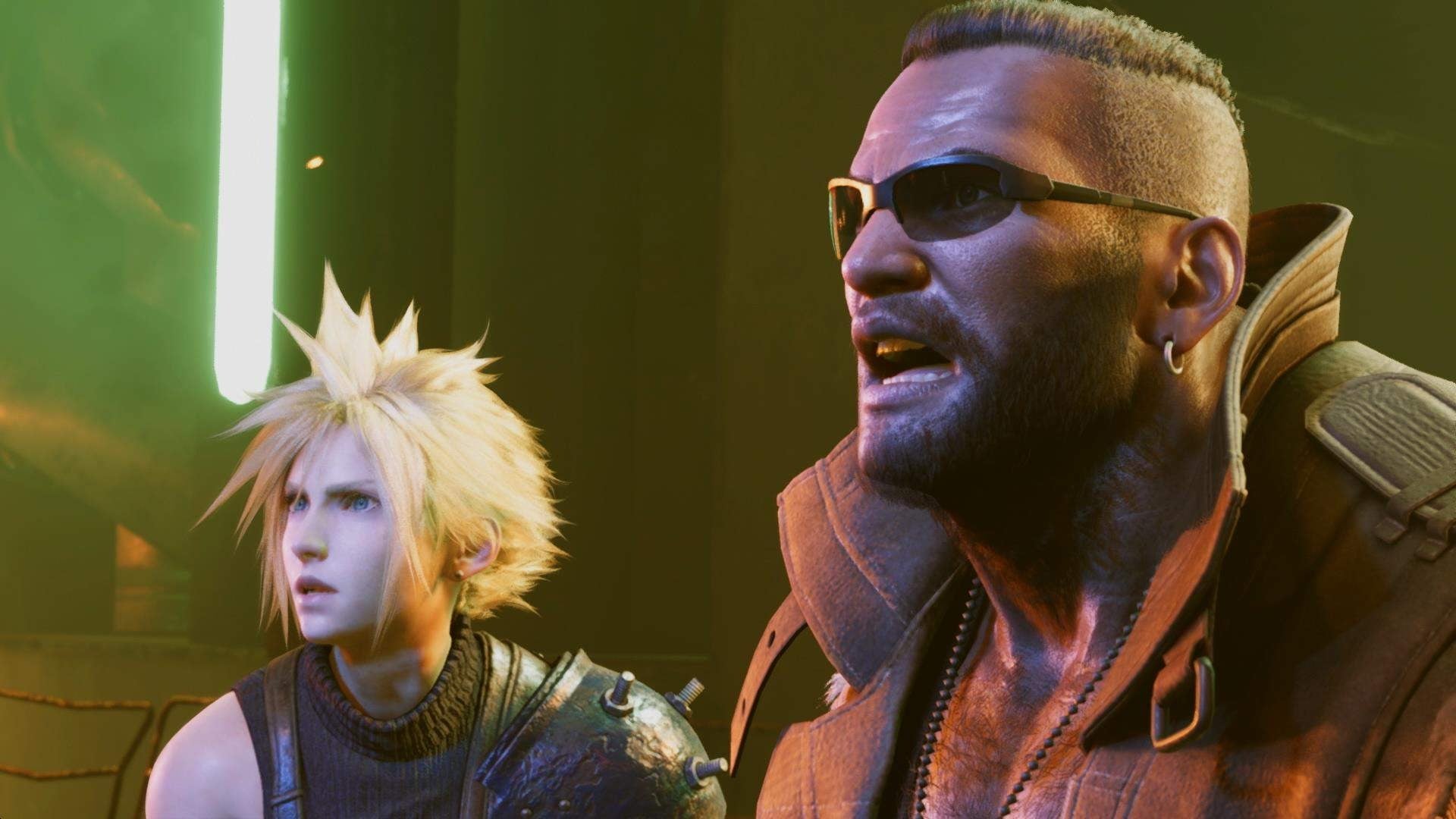
Or maybe you remember how it felt when you left Midgar for the first time in Final Fantasy VII, only to discover that, no, this high-tech city wasn’t all you were getting. You’d just seen a fraction of what the game had to offer. Suddenly there were fields and hills and mountains and nasty giant snakes that immediately wiped out your whole party if you stepped in the wrong place.
Here’s the part where you might throw around the word “nostalgia” and say that world maps are stupid, that I only like them because I grew up exploring them, that I’m “totally biased.” And here’s the part where I tell you you’re wrong.
A world map, more than anything, is a collection of symbols. Symbols for castles that expand once you enter them. Symbols for mountains that block your progress. Symbols for your character. Symbols for the passage of time. Symbols for the distance you travel.
Perhaps most importantly, a map is a symbol that says “hey, you can have everything.” Long before games like Grand Theft Auto and Morrowind set our current definition of “open world” games, Japanese RPGs were blazing their own paths. These designers were laying all of their cards on the table. “Here’s everything we’ve made: go explore. Go find our secrets. Fly around this world and own it.”
There’s a reason you almost never see NPCs on world maps. This is your playground. You get to fight the monsters. You get to fly around. You get to hunt down the treasure.
A role-playing game is nothing but a collection of symbols. Levels to symbolize your power. Statistics to tell you how strong you are, how quick you are, how smart you are. Swords that can be upgraded or replaced to do more damage—as if swords can actually do more damage when you give them a new hilt or mineral. We’ve come to accept these symbols because they have meaning to us. They say something. They make us feel something.
Maps are no different. So give me those weird, wacky little symbols of cartography that signify nations and cities. Give me castles the size of people that suddenly morph into massive dungeons when you step inside them. Give me more world maps.
Random Encounters is a weekly column dedicated to all things JRPG. It runs every Friday at 3pm ET.