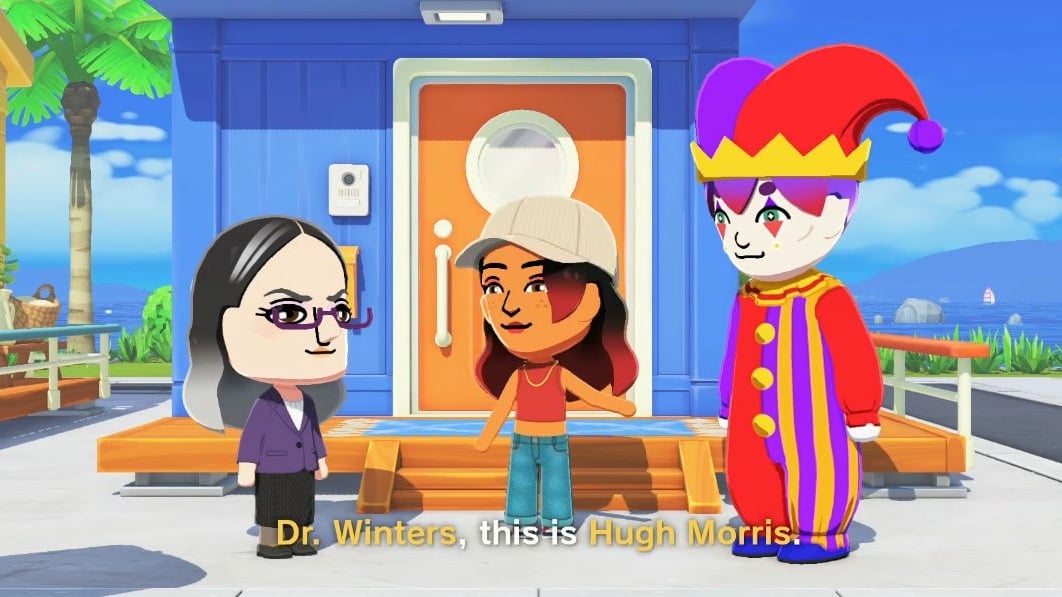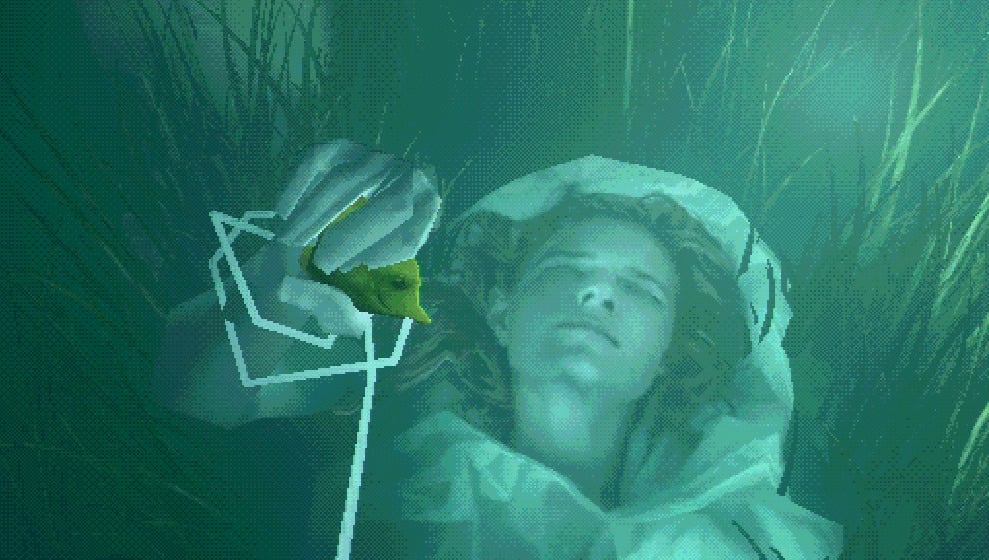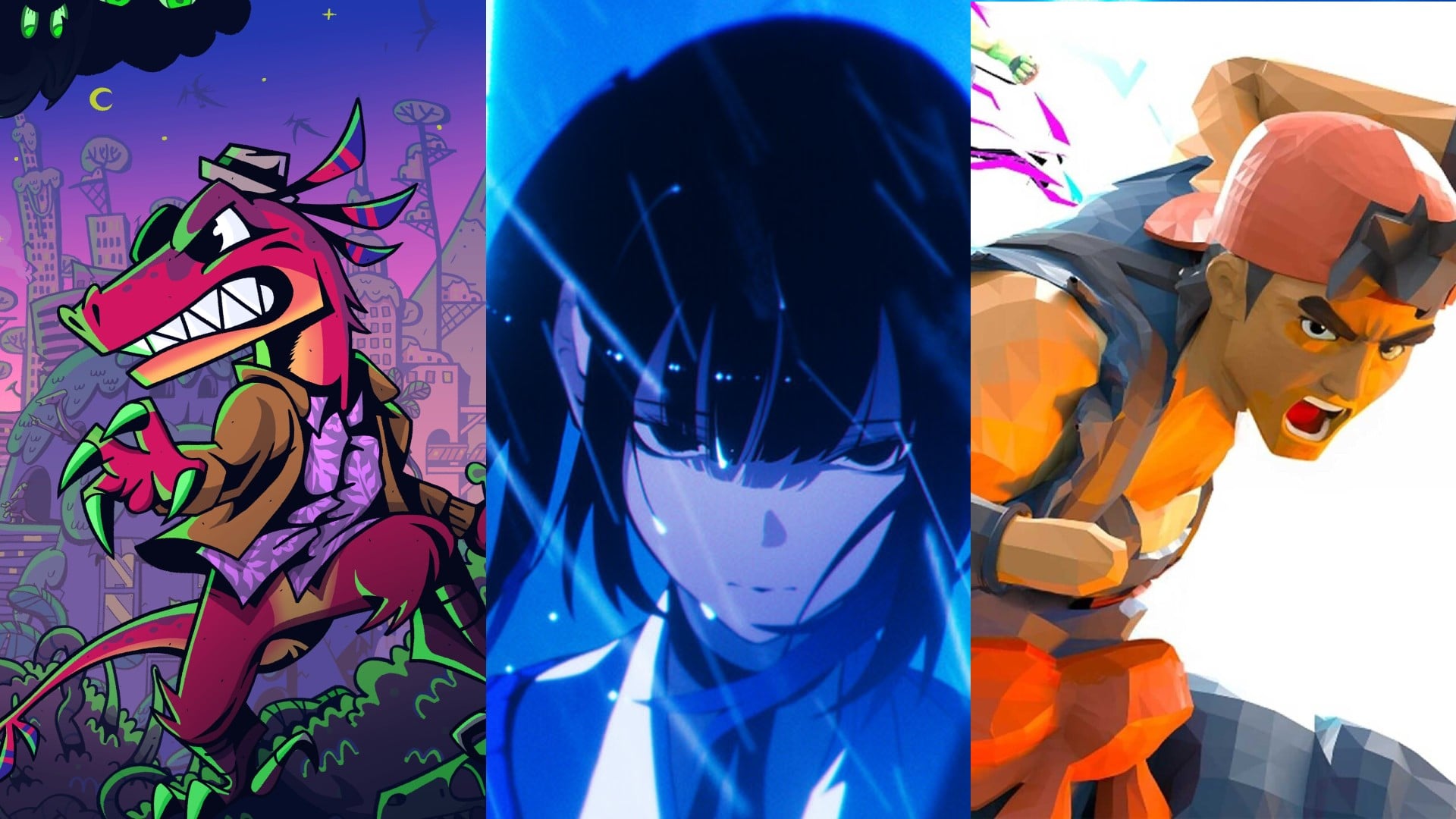
Glitchhikers: The Spaces Between isn’t necessarily what I thought it was going to be. On paper, the indie title from Silverstring Media is an experimental, “surreal” trip through transitive spaces like long car rides, trains, airports, and parks. You move through these areas, listen to ambient sounds around you, and talk with the many NPCs who fill this world, each with a set of complex topics to discuss and meditate on. I expected a fun romp through a quirky indie game, and on that level it certainly delivers; however, the subject material and how it connects to gameplay, and the emotions it stirred, took me a bit by surprise.
While the internet has often played around with the topic of “liminal space,” it usually does so with far more abstract gestures that tend to decenter people and keep at bay all thought and emotion that isn’t either creepy or somewhat horror-adjacent. r/LiminalSpace, the Backrooms, and tons of Garry’s Mod content out there are full of it.
That stuff’s fun and spooky but, as Glitchhikers demonstrates, the idea of an “in between” state can be a place of transformative passing thoughts and conversations, ones that don’t just creep us out with unnameable feelings, but rather experiences that allow for self-reflection and intense, cosmic contemplation.
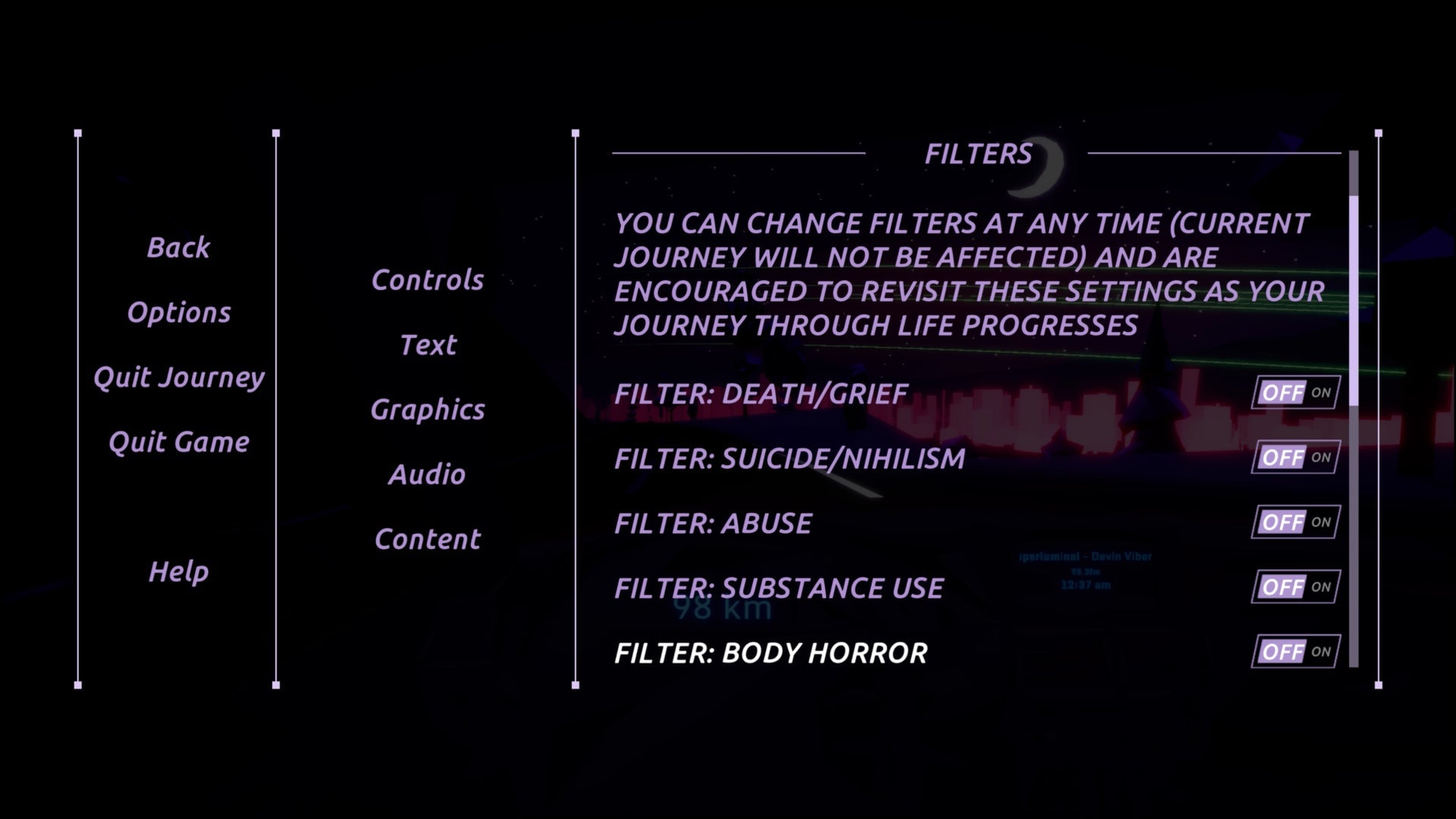
Critical to Glitchhikers is an extensive set of content filter options that allow the player to choose which topics they’d like to prune from the experience, in case they’re not interested in a particularly heavy subject. Perusing this list and then looking at what this game was promising to be, I had enough information and expectation, like checking a map before heading out on a trip; knowing these topics were likely to appear, I could at least prepare for some potentially difficult conversations and thoughts, or turn them off entirely.
The opening of Glitchhikers, and each subsequent return to its level-selection “hub,” is a kind of place I’ve been to thousands of times before in real life: a rest stop with a convenience store on a nondescript highway in the middle of nowhere. Before a single NPC spoke to me, before any of the wandering thoughts about our place in the cosmic universe, or the struggles of moving through grief, and navigating the complexities of queer culture that this game is filled with, I knew that this game was going to invite me to sit with some of my own personal experiences.
Glitchhikers hit me with a wave of memories; in my 20s, I was a touring musician. The details aren’t important, but I have many, many memories of hours spent on the road, moving across the United States and other countries. These stretches of life in motion were interrupted by two things: playing a show and stopping somewhere to rest or get food.
There was always something strange, for me, about those rest stops. It’s hard to describe well and upon reflection, maybe it was simply exhaustion from traveling. Or just depression. Or, more than likely, the standard closeted dissociation I’ve heard many other trans people talk about before coming out. Perhaps I hated being still and I just wanted to get moving again. Taking my eyes off the horizon for a moment and gazing on the endless aisles of consumer goods just locked me in a place of silence.
Glitchhikers brought me back to this space, these memories. Walking into that convenience store, I was ready to once again reflect on a point in my life that involved a lot of hope, ambition, and promise on the more positive side of things, paralleled by memories of substance abuse, failure, and closeted life.
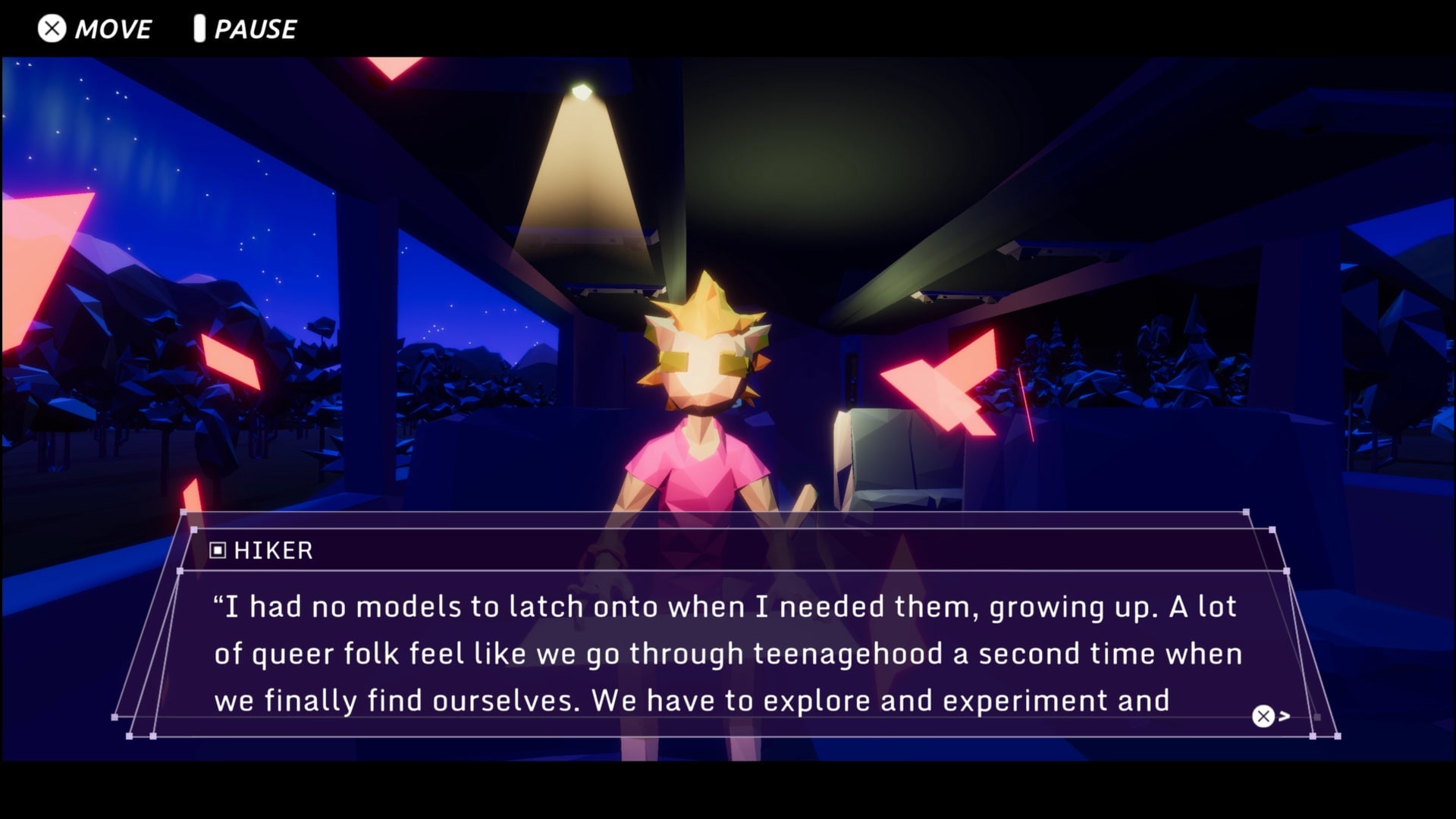
This is a game that slowly evolves around you. The inventory of the convenience store updates after trips, and new NPCs will appear on subsequent strolls to talk about all manner of topics, some of which are rather heavy. It’s a reminder that when moving through these transitory, liminal spaces, the world is somewhat different at the other end.
If I was inhabiting a digital space reminiscent of a time since passed in my life, Glitchhikers prompted me to think about what was different in the present. What had updated in my own convenience store of life. Much as some of the characters are reflecting on events from their past and who they’ve become since moving on, I too was pulled into a moment of honesty with myself about where I’ve traveled to.
It certainly helps that queer narratives are front and center in this game. Sitting with my thoughts on my own transition and the impact of staying closeted for so many years didn’t feel unwelcome here. In fact, the game has been a gracious invitation to interpret my own transness among broader questions of our place in the cosmos, trailing thoughts about physics, architecture, map design, and of course the nuances of personal relationships and painful memories.
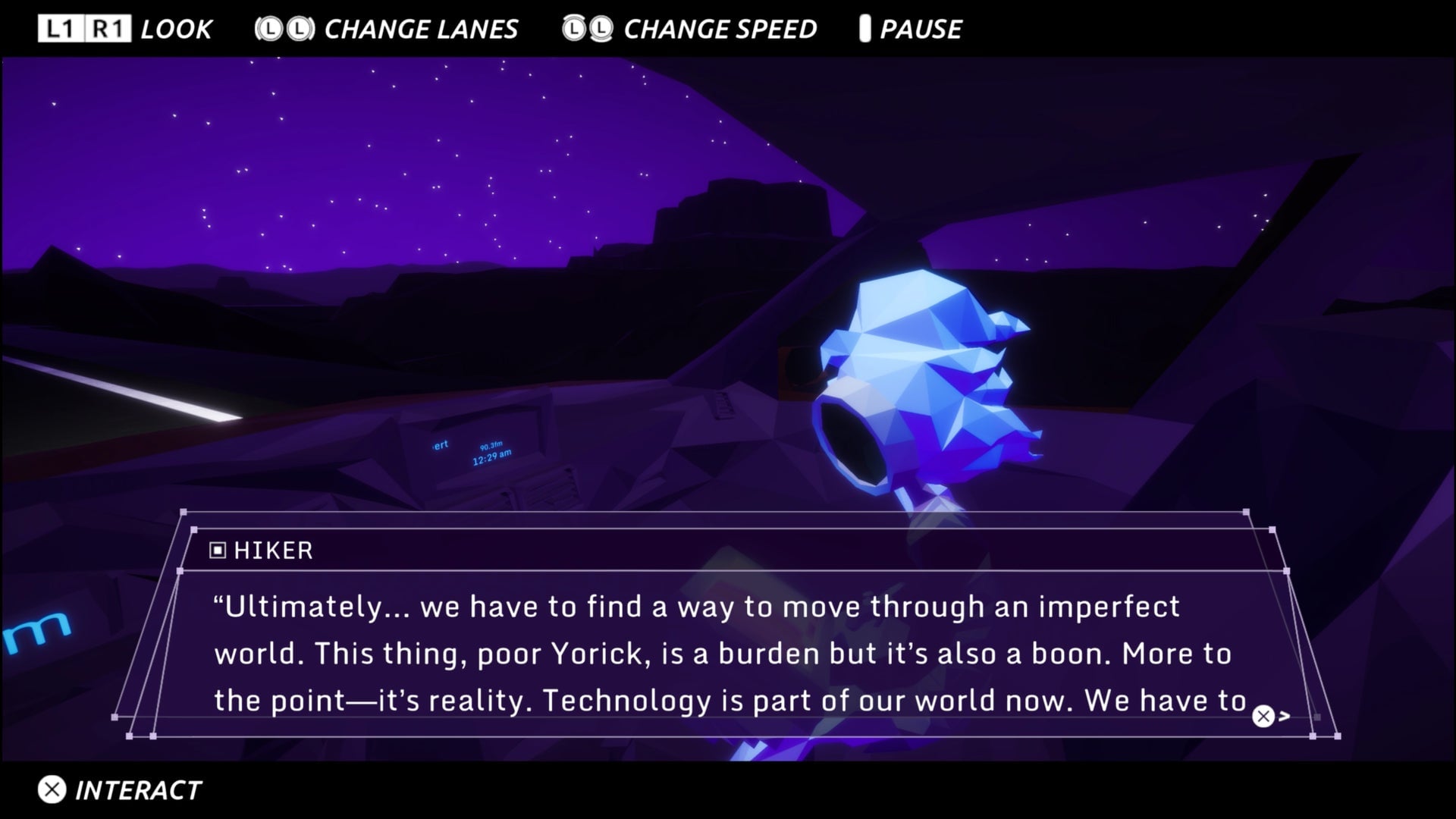
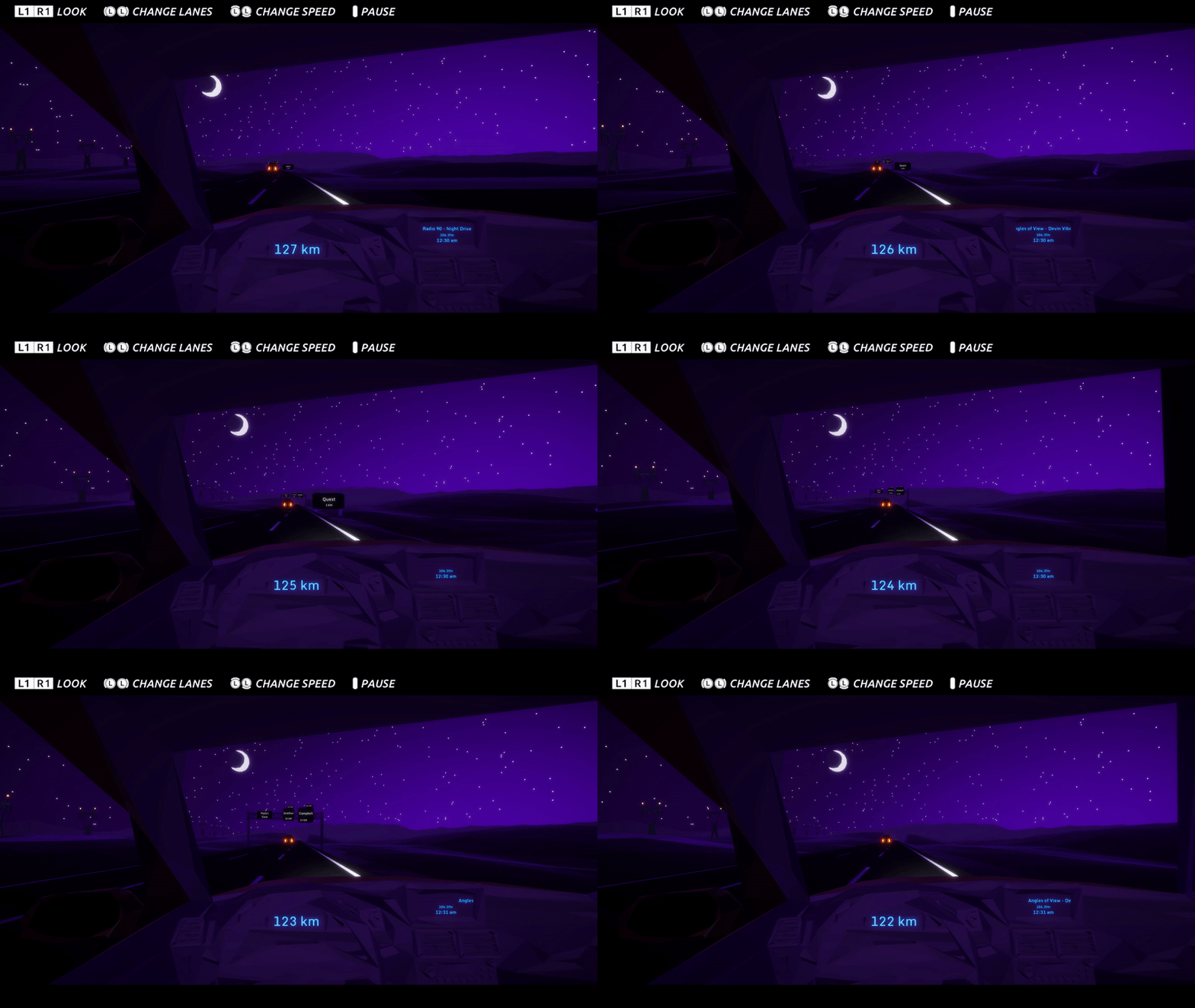
The game strikes me as having a lot of direct and indirect metaphors. Driving is referenced frequently, with characters asking me as the player what exactly I’m getting out of it. Answers range as they would in real life: a journey to a destination, a need to just get out and move, or something more ephemeral.
When I traveled in real life, I never drove. Growing up in New York City, the need for a driver’s license has always been less pressing than it is elsewhere. Glitchhikers provided me with something I didn’t have when I traveled in the past: the position of being behind the wheel, of being in control.
That control works on literal and metaphorical levels. There’s both the literal control of choosing which activity to do in the game, as well as the control over the topics, directly in the middle of a conversation, or behind-the-scenes with the content selection. There’s a question of control lingering over many of the conversations. Do we have the ability to control how a relationship is going to pan out? Do we as individuals have control over our lives in such a complicated, late-stage capitalist society? To what extent? What can we do with the time that we currently have?
Glitchhikers reminded me of Andrea Long Chu’s description of gender dysphoria as being similar to being on a plane and then realizing it’s never going to land. You’re just stuck there. As with many descriptions and metaphors for gender dysphoria, one size doesn’t fit all. This one resonates with me though, if for no other reason than the fact that I spent my entire life up until coming out and transitioning as feeling like I was on a never-ending trip somewhere. Actually reaching my destination, though, required a level of honesty that took years to be able to muster. In being on a literal trip again in Glitchhikers, I’m reminded of the fact that I’m not who I was when I was traveling last, and that, at least in one way or another, I’ve been able to land my plane.
Glitchhikers has brought the metaphor of travel and identity back into my focus, but the control it gives me by putting me literally behind the wheel, as well as just being in a different place in my life, is both new and affirming. Functionally, the game is a chill as fuck indie title with cool music and quirky visuals. It’s a nice way to wind down a day. But the more time I spend with it, the more I’m able to take stock of where I’ve been and where I’m going. Who I’ve been along the way and where my mind is wandering to now, knowing that I have the steering wheel this time.