There’s something fantastical about flying in a video game. We can easily run, jump and swim in real life. Flight is more exotic. But we do fantasize about it. Where do you think the term “flights of fancy” comes from?
Nowhere is the realization of flight grander or more satisfying than in video games. When done right, flying in a game can leave a lasting impression on both players and developers that impacts every game they play or make going forward.
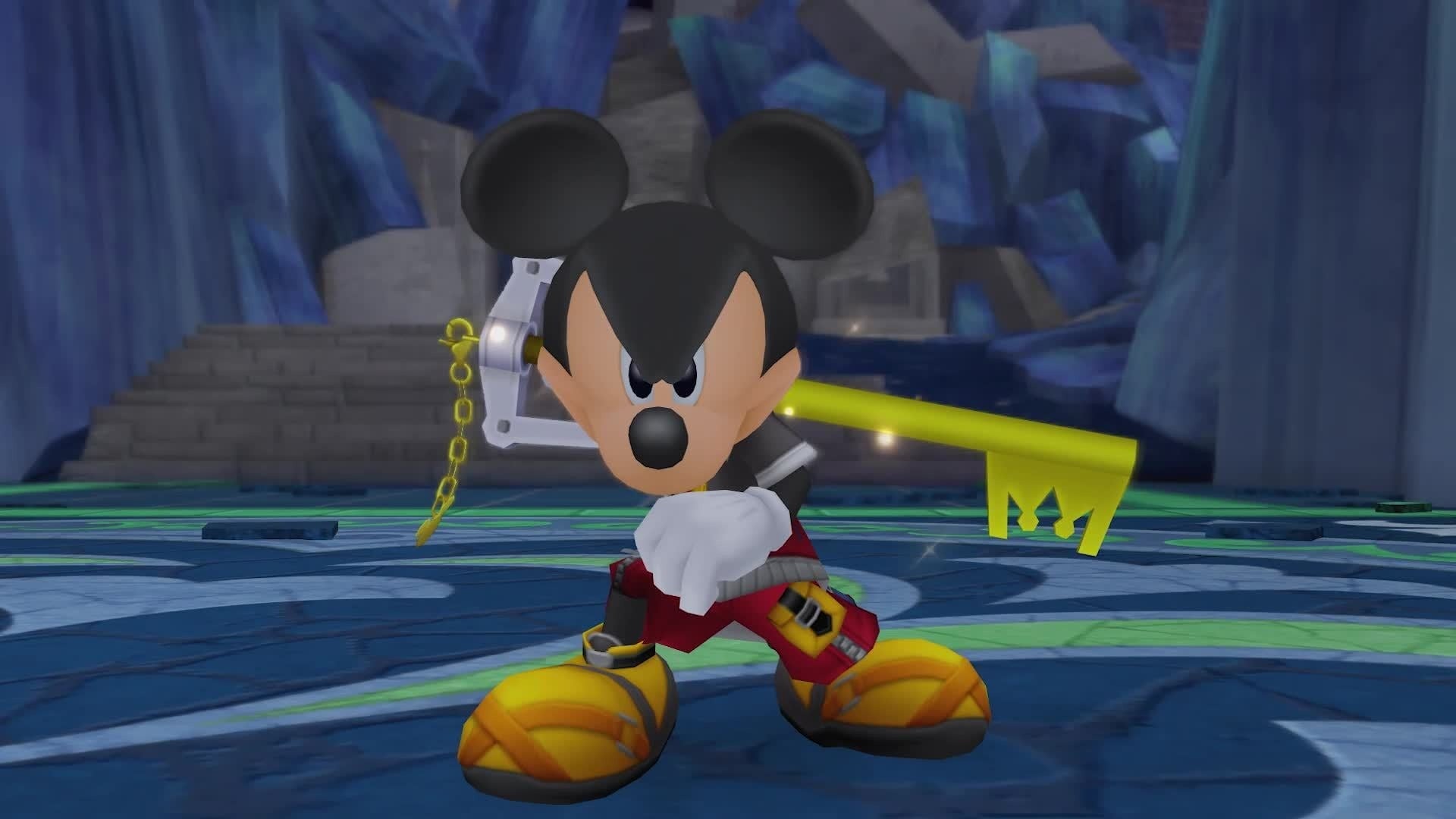
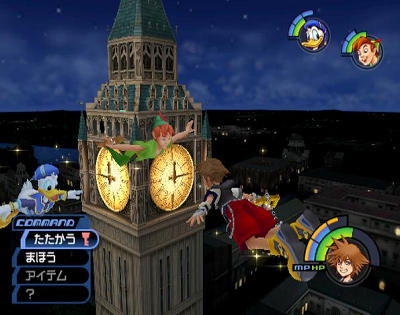
Telltale Games designer Mike Stemmle pointed this out while demoing Tales of Monkey Island Episode 3 for me in September. I asked what gameplay inspirations helped him develop for Monkey Island and after a moment’s pause he said, “Kingdom Hearts.”
“Oh, because it has pirates?” I asked.
“No,” he said. “It’s the flying.” The way the game introduces flying the player -– about halfway through its storyline after you’ve been running and jumping on the ground the whole time -– was like a revelation in game design for him. “Because once you get [to fly in Never Land], it’s like you knew it was coming. It just felt right.”
There’s a fantasy fulfillment that comes with flying in video games. And even if flying in a game is just another way to get from point A to point B, it’s appealing to a part of your senses that you don’t use very much in everyday gameplay.
“We live in a very X, Y world,” Dark Void Senior Producer Morgan Gray said. A veteran of flight games like X-Wing vs. TIE Fighter and X-Wing Alliance, he knows his Z axis and isn’t afraid to build his games around it. “If you look at … shooters, when they first came out, everything was flat. [There was] a roof over your head and walls on all sides. It was only really when you got to games … where you had enemies [above or below you] where you had to start exploring the Z axis.”
Like Doom players that had to learn to use the mouse to enjoy Quake, your average gamer has to put in effort to master flight. Instead of thinking in only one or two directions, he or she has to think in a 360 degree bubble where enemies can come from any angle. They have to be aware of their character’s (or aircraft’s) physics so that they don’t get lost when trying to execute a turn. Some games make it easier for the player by limiting the range of flight to forward-only like Star Fox or Panzer Dragoon; other games like Dark Void layer on tutorial after tutorial to make absolutely sure you internalize the controls before cutting you loose in the wild blue yonder.
By that same token, developers without Gray’s flight-filled background have to work a lot harder to implement flying. Whereas Gray can look back over both his career and his childhood and see Chuck Yeager’s face mocking him after Gray had crashed and burned in Advanced Flight Training, some developers only have memories of Star Fox or Wing Commander as their flying inspiration. They don’t realize that there’s more to flight than getting off the ground.
“Don’t get me wrong,” says Gray. “[Wing Commander’s] level design was great, the ship design was great, progression was great. The actual nuts and bolts of flight? All pretty arcade-y because [it didn’t feel] like there was meat to the simulation.”
Developers with traditional level-making experience on shooters or adventure games that have the walls on all sides and the roof overhead have new challenges when making an enjoyable flying sequence or full game. They have to relearn how to organize a level around enemy spawn points in spaces with no walls or roofs.
“You really need to use enemies not only as a way of making a challenge for the player, but as defining space because [players] have to have that frame of reference for ‘where am I in the terrain?'” said Gray. “If you get [the timing right], it really gives the [flight] meaning and puts a plot to the [enemy] encounters. It’s different than ‘And now we walk you in this room and find the blue key,’ because you don’t get blue keys in the air.”
He compared a perfect flight level to a map called De Dust in Counter-Strike. To him, it was obvious that some developer had sat down with a stopwatch and timed how long it would take enemies to reach players when spawning from two different points on the map. That developer knew exactly where the player would be and what they would be doing when the enemy got to them, and they build the level outward around the player from that point.
Flying levels, Gray said, should be built the exact same way.
Nowhere is this clearer than in the upcoming Avatar for the Wii. A flight level with a giant lizard bird was the centerpiece of a demo given to me by creative director Daniel Bisson and he wasn’t shy about telling me it was the hardest level to design. In early efforts, the enemies spawned too fast and the Wii Balance Board was over-responsive to even the slightest shift in weight, causing the lizard bird to pitch wildly and slam into spawning enemies. As the level developed, they added more environmental boundaries like tunnels and trees to define the flying space and confined 360 degree movements to quick time events.
So what began as a flying level instead turned into an arcade-style on-rails experience. Sure, you’re up in the sky on the back of a bird. But, there’s not much fantasy fulfillment and no raw freedom in having your hand held.
The trick is keeping reality from ruining fantasy. Yes, it’s a lot of work to pilot an X-Wing in the Star Wars: Battlefront games; but if you get to blow up a TIE Fighter as a reward for your patience, you don’t mind sinking effort into learning how to be a pilot. Likewise, War in the upcoming Darksiders would look silly with a pair of wings sprouting from his burly back; but hijacking a gryphon from an angel for a quick joyride through a ruined city appeals to the fantasy of the character and doesn’t last so long that the game needs to bog the player down with real physics.
Above: The lone flying level in Darksiders.
With Crimson Skies and flight sims on side of the spectrum and our Star Foxes and Panzer Dragoons on the other, there are so many ways gamers can fulfill the fantasy of flight. Each new game that introduces a flying segment or builds its entire experience around the thrill of strapping on a jetpack builds on the collective fantasy gamers and developers share of taking to the skies.
The ultimate dream of flight in games, says Gray, is this: “I don’t know where I’m at, but I’m having fun.”
Title Image: The Fall of Icarus, Peter Paul Rubens, 1636