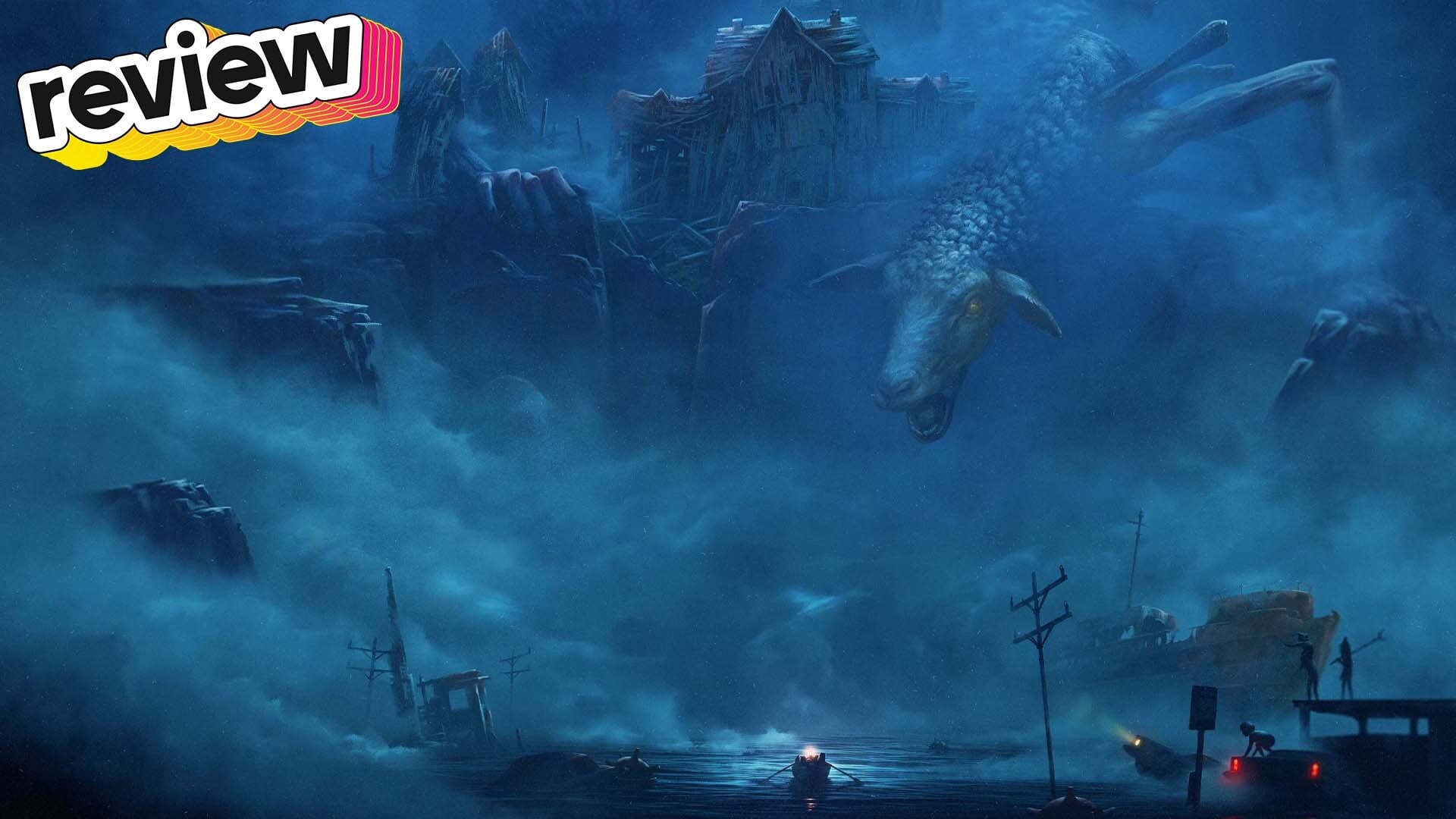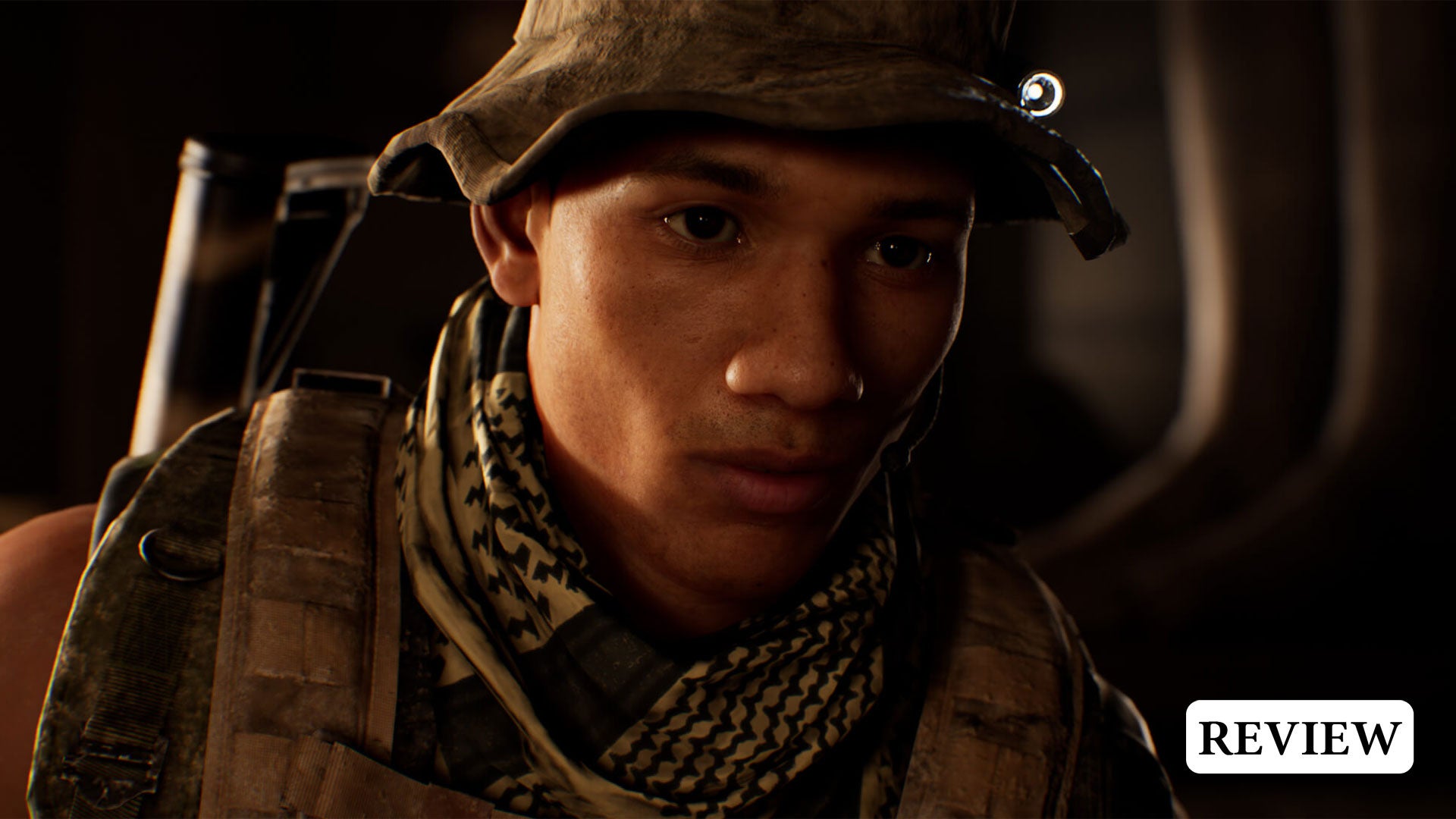
House of Ashes wants you to know that it’s a video game so bad that it sometimes undermines its own cinematic power with gameplay that feels obligatory rather than supportive of its storytelling. Yet it also wants the prestige associated with blockbuster American films with weighty themes, and gets itself into messy thematic territory as a result. Its efforts to be a game are sometimes directly at odds with its efforts to evoke the specific pleasures of the horror cinema it’s trying to emulate, and although it tries for some degree of narrative nuance, it can’t let go of its dedication to rehabilitating the Iraq War.
The Dark Pictures Anthology: House of Ashes is the third entry in the interactive narrative game series, developed by Supermassive Games. In this choose-your-own-adventure horror game, you play as an omnipresent decision-maker who swaps between multiple characters’ points of view. Most of the game is cinematic, and sometimes you have to input actions during quick time events. There are also exploration sections in which you can find archeological notes about the deadly creatures your hapless squad of soldiers has stumbled upon.
Set soon after Saddam Hussein was ousted from power, House of Ashes focuses on a group of American soldiers who are searching for chemical weapons in a small Iraqi village. It’s a setup that can only lead to tragedy involving space vampires in an underground Sumerian temple. Your influence over the story is limited, but an omniscient narrator (called The Curator) emphasizes that your decisions will affect whether characters live or die. Though “help the cast survive” is a bog-standard premise in narrative games, I was intrigued because House of Ashes is a horror game, and as a genre, horror brings with it certain expectations of its own. Most horror aficionados know the experience of feeling secondhand embarrassment as characters make terrible, life-ending decisions in horror movies. This game was supposed to be an opportunity for catharsis. I was excited at the opportunity to save messy humans from their own shortcomings.
Well, some of them, anyway. Maybe I wanted to see one or two of them meet a grisly end. Supermassive Games understands horror movies very well, and it executes with genre-savvy precision. The tension is taut in all of the right story moments. The audio design is masterful, and serves to elevate tension. Unfortunately, though, it’s also trying to be a video game, and there are times when its horror-movie presentation and its nature as a video game feel fundamentally at odds with each other. In most horror movies, you’re rooting for at least some of the humans to survive, and possibly triumph over the monster, the knife-wielding killer, or other threat. But there may also be a few characters who you wouldn’t mind seeing get picked off. Because House of Ashes tries to position itself as a choose-your-own-adventure game heavily influenced by horror cinema, I assumed that not saving my least favorite characters would be as valid a choice as saving them.
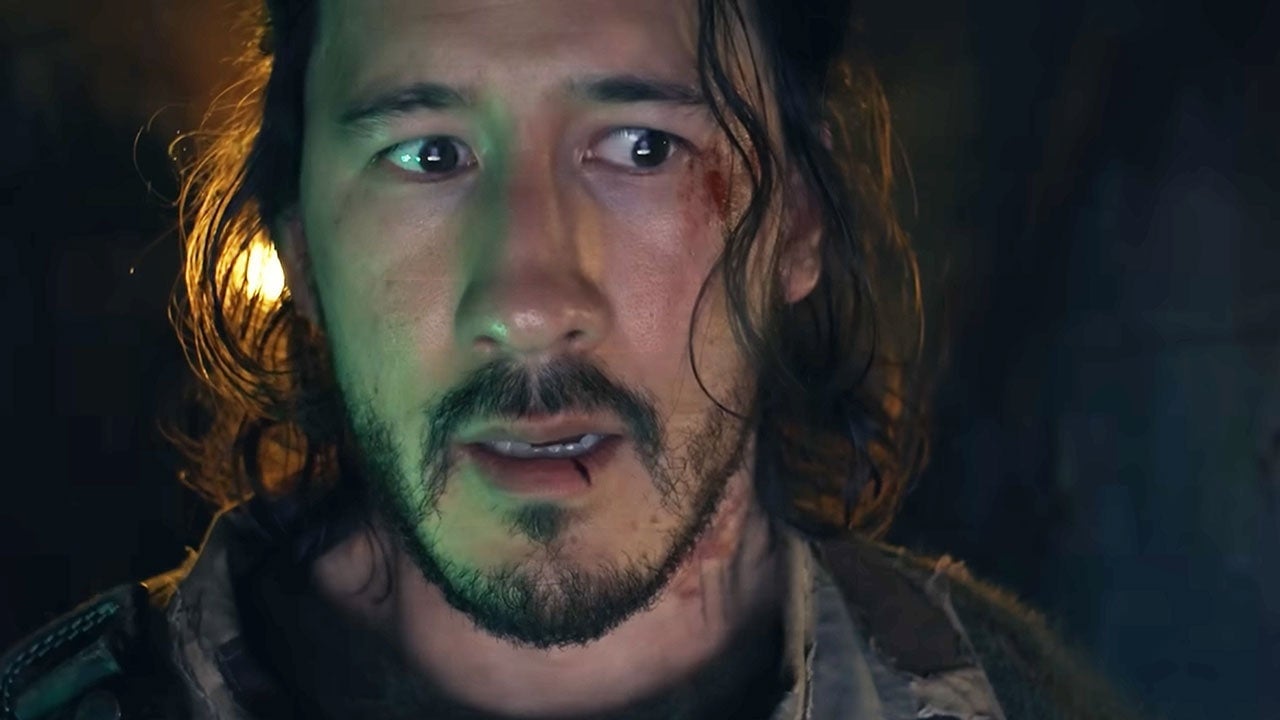
But the game disapproved of me indulging in the horror-movie pleasure of seeing unlikable characters meet a satisfying death. The Curator chided me when I made choices that led to a character’s demise. But come on, some of these characters were practically made to be killed off in a horror movie! Not a single character intervened when misogynist side characters were making awful comments about women. Jason, a lead character, forced me to sit through multiple racist comments about Iraqis. I did not feel that these characters were good people, and the game encouraged me to roleplay, so I felt no guilt about playing Eric as an overconfident jackass who made a tactically unsound decision in order to save face. There has to be a reason why his wife wants to leave him so bad, right?
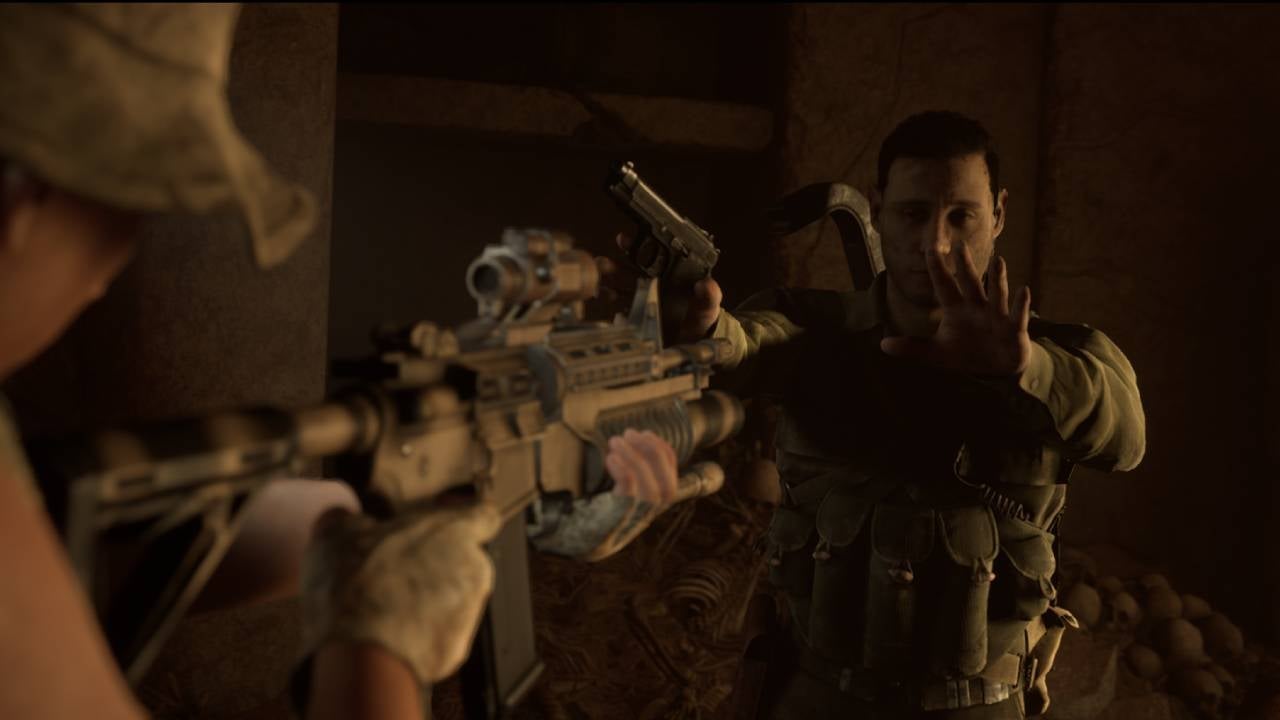
House of Ashes clearly tries to make you dislike these characters early on so that they have room to grow and win you over as the story progresses. That’s fine in a movie, but the game gave me some control over these characters, and I purposely made many choices that were informed by my impression of them as awful people. The Americans weren’t going to take leaps of faith on characters who had hurt them in the past. A single father wasn’t going to save an enemy soldier by risking his own life.
And I liked that the story felt cohesive regardless of the choices I made. What I didn’t like was the narrator chiding me for failing the “charges” whose welfare lay in my decision-making. He wanted me to play god, but I had no love for his creations. This became a game where I wanted to watch the cast fall from their own hubris. I made stupid choices because characters in a horror film don’t make smart, altruistic choices under duress, and I felt the game’s disapproval. There’s a constant, frustrating tension between how the game wants to let me roleplay, and how it wants to tell its own story.
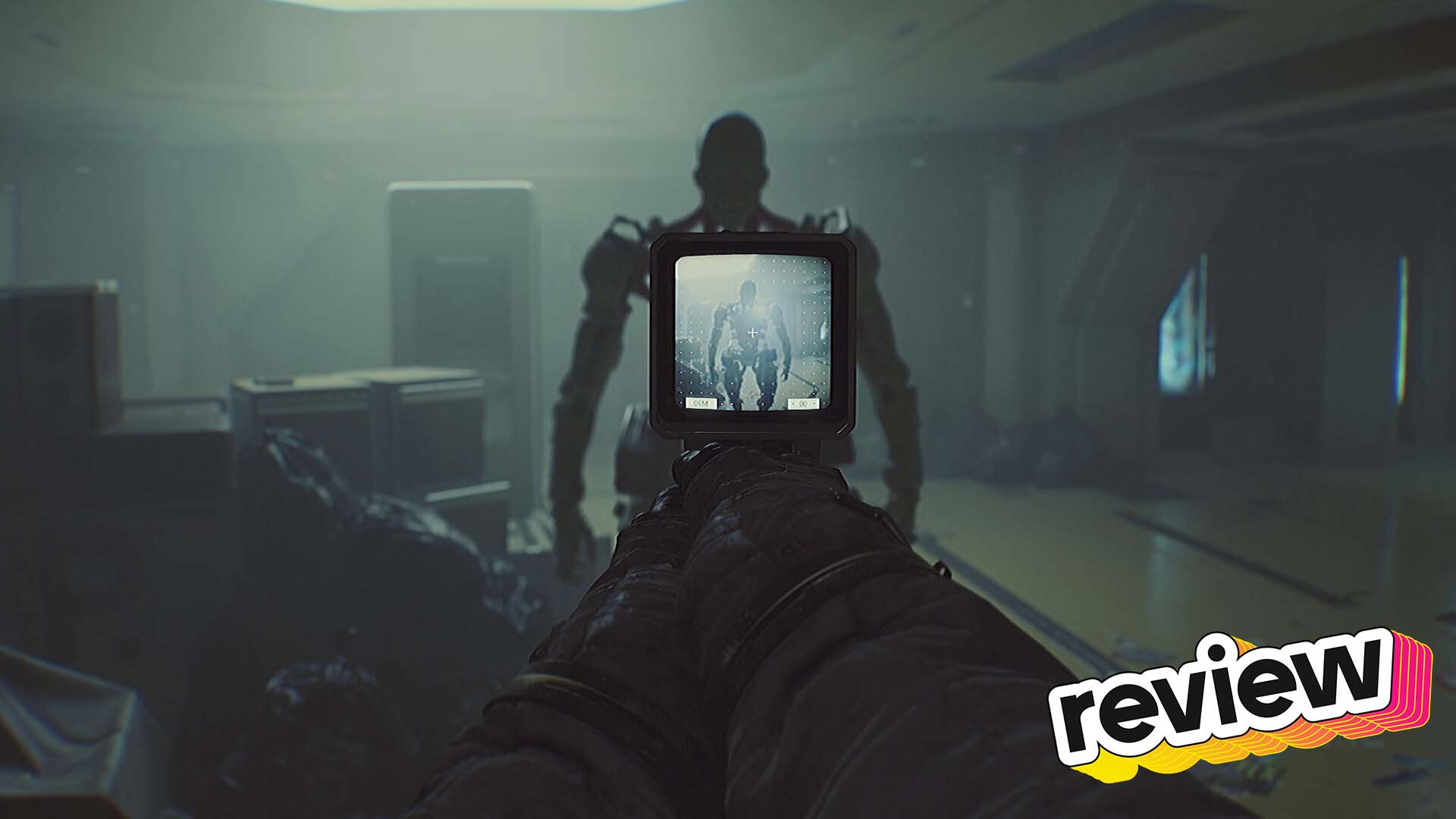
However, the exploration sections are the most frustrating part of House of Ashes. The camera drifts for what I suspect are artistic reasons, but this is at odds with how the gameplay is designed. When the game asks me to look for interactable objects located below eye-level, it’s not fun when I then spend a good chunk of my time wrestling with the camera to get a decent view of the floor around my character. The wandering camera does intensify feelings of claustrophobia during the game’s tunnel exploration sections, but I’m not convinced that it’s a worthwhile trade-off.
You also have very, very long cutscenes to contend with. I’m not anti-cutscenes, but the pacing here is often irritating. Lulling me into movie-watching mode with extended cinematic clips, then giving me a “click to dodge” prompt after several minutes doesn’t actually keep me on my toes. It feels like an unwelcome interruption. The game also doesn’t clearly communicate what the stakes are of a given QTE, so you don’t know if it’s inconsequential or life-or-death. When a character dies, you don’t always know if it’s because you failed at something or because that was scripted to happen no matter what. This undermined any sense of direct involvement I might have felt in the action, and created a feeling that these interactive moments were just kind of there to force me to press buttons.
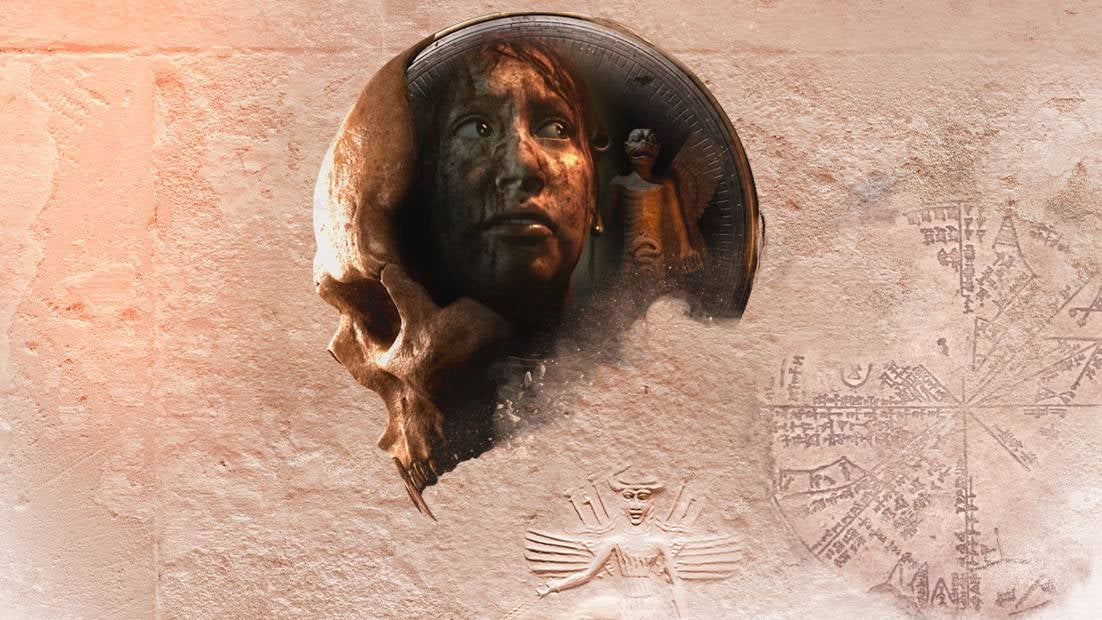
The Dark Pictures Anthology: House of Ashes
-
Back of the box quote
"If Sumerian space vampires sound like your idea of a good time..."
-
Type of game
Narrative-driven horror game
-
Liked
Genuinely fun horror film (in game form), constant edge-of-your-seat tension.
-
Disliked
Poor handling of themes, inconsistent consequences.
-
Developer
Supermassive Games
-
Platforms
PC, PlayStation 4, Xbox One, PlayStation 5, Xbox Series X|S
-
Release Date
Oct 22, 2021
-
Played
Six hours. Completed one full playthrough, read a lot of lore in the collections.
Although House of Ashes is a very tense horror film (of a game) that delivers on well-choreographed action, it tries and fails to be the meaningful political commentary that it’s striving to be. It acknowledges some of the horrors of the Iraq War, but its framing ultimately reproduces the logic of the war on terror. House of Ashes doesn’t hold back in portraying the cost of American paranoia. The squad busts into a peaceful farming village and shoots civilians, one of whom retaliated against the Americans after they deliberately destroyed an effigy with religious significance. Two characters are haunted by the memory of shooting an unarmed woman at a checkpoint. Despite all the game’s efforts to humanize the American soldiers, I struggled to feel sympathy when they were terrorized by vampires considering they had invaded a peaceful village just a few minutes earlier.
In other moments, the sole Iraqi protagonist reassures a marine that he did the right thing by shooting a civilian out of paranoia. He also tries to sell the audience on his own humanity by explaining that his son is attending a university in London (arguably the capital of the west). Salim doesn’t survive because he’s simply an outstanding soldier. He survives because he’s a Good Minority with western education and connections. In contrast, Captain Dar of the Iraq Republican Army is portrayed as the Extremist, Unreasonable Minority who prolonged the conflict by trying to defend Iraqi civilians. While the inclusion of Captain Dar is meant to bring some moral complexity to the narrative, he ends up reinforcing the idea that the Iraqis should have been nicer when Americans invaded their country. Yeah. I also wish that House of Ashes just stuck to space vampires.
Alas, the narrative never dares linger on the idea that the Americans are barbarous invaders. Instead, American imagery is used to indicate what’s comforting and familiar. What can be trusted when nothing else in Iraq can be. A cross necklace. A drive-through diner in the midwest. In times of peril, the marine motto “Semper Fi” (always loyal) is used for reassurance. The game emphasizes cooperation and understanding, but its own themes betray that goal by casting Iraqi culture as unfamiliar and strange.
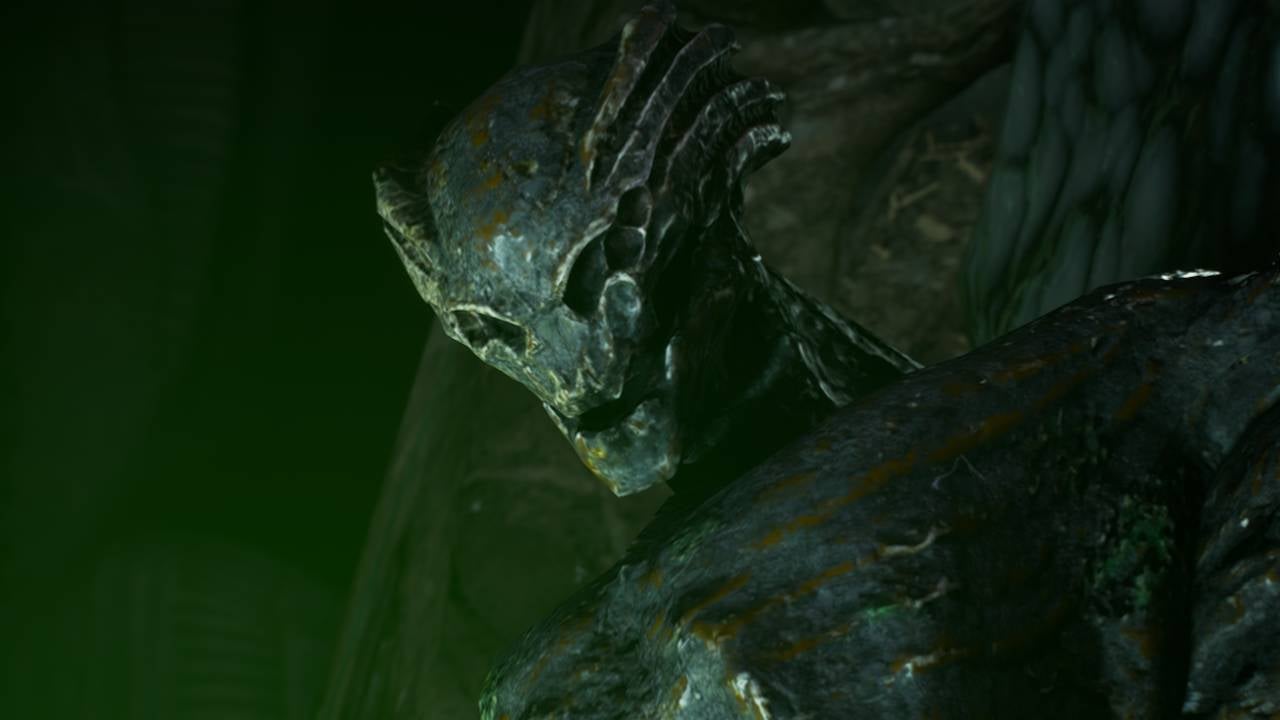
House of Ashes only flirts with the idea that the Iraq War was monstrous and unjust. It never commits to the idea that American violence is just as monstrous as the violence committed by the actual monsters in the game. Unsurprisingly, the soldiers eventually decide to bring the fight to the vampires, and hey, I get it. I, too, enjoy hunting vampires when they’re trying to kill me. But this draws a troubling link between the monstrous vampires and the people of Iraq. At one point, Salim asks, “You want to fight these vampires on their own turf?” and the marine Jason replies, “That’s what I’ve been doing since I came to this country.” Yeah buddy, but there’s a big difference between the human citizens of this country you invaded and these superpowered space vampires, even if you did drop in on their home turf, too.
Tonally, it feels more like the kind of rah-rah, imperialist propaganda that was so common in the early 2000s than a work that’s trying to leverage its concept and setting to speak to the true nature of the horrors of the Iraq War. While Iraq isn’t stockpiling warheads in House of Ashes, what they’ve got are functionally WMDs: a colony of murderous vampire spawn. The vampire nest is a feel-good justification for horror movie violence, one that undermines the game’s half-hearted suggestions of war remorse.
And it sucks because the final fight scenes in House of Ashes are legitimately gripping and fun. It’s just unfortunate that the game can’t fully commit to either a clear perspective on the Iraq War, or designing choices that feel like they have direct effects on story outcomes.