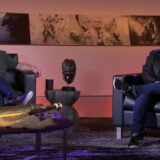
Most of Koichi Hayashida’s talk at the Game Developers Conference today about making the most recent Super Mario game for Nintendo was silly. Some of it was even a joke. Until he got to the earthquake.
March 11, 2011. Japan’s worst natural disaster in ages. He was in the fifth floor of a building in Tokyo and, well, how do you get enthusiastic about making a Mario game after that?
Who would want to? How does life go on?
“I felt the earthquake,” he said. “I was busy explaining to my team how we made the first level in Super Mario Galaxy 2 at the time. I was on the fifth floor and the shaking was really severe. From inside the walls I heard a sound I’d never heard before, like the sound of something breaking. At that moment, I was thinking, ‘this is it, I could die…’
“The office was closed for a week. We were concerned about radiation, power outages and there were lots of large after shocks. We weren’t’ sure if we were going to be able to continue development in Tokyo at all. No one knew…
“I didn’t know what to do with myself at the time. When the office reopened, this is what I said to the staff: ‘We’re all asking ourselves what we can do to help right now. I think bringing smiles to the faces of people with a fun game by the end of this year is something maybe only we can do.’
“But I had to ask myself: is it really possible to enjoy your work under such conditions? About a month after that, I asked one of our team members why he decided to get into this kind of work. The reason he gave was because making games is fun. I heard that, and I thought, of course, making games is fun in and of itself. ”
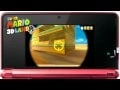
Hayashida said his team started spending part of their workdays playing Super Mario 3D Land together, needling each other about design decisions and just having a good time. “Enjoying work was a great source of strength for me following the earthquake,” he said.
That kind of talk is heavier than it usually gets from Nintendo game makers. It is also entirely human.
Super Mario games aren’t made in some fantasy land. They are made in a world where the ground cracks and people can die. They’re made in country where Shigeru Miyamoto, Nintendo’s pioneering game designer, remains an inspiration for game creators like Hayashida both because of his game design knowledge and because he’s the kind of person who seeks to find the fun in everything. Hayashida explained that Miyamoto likes to walk around so he can guess how long things are, then measure them, then feel good about his guesses. “‘That desk looks 50 inches wide,’ [he’ll say]. Then he’ll measure it. If his estimate is correct, he’ll decide he’s in fine shape that day.”
Find the fun in everything, Hayashida kept saying, which is why his presentation about the game started so… silly.
He had begun his talk by sharing some of the goofier ideas that he may have had while thinking about what Super Mario 3D Land would be about. (It wasn’t clear if he was just making this stuff up.)
He had considered making a “Huge Mario”, who was so tall that you could only see the lower half of him on the screen.
He thought of making a “Long Mario” with long legs. Problem: “He was kind of scary.”
Maybe they could put a cockroach on the top screen and you’d have to smash your 3DS shut to squash it.
Or… you could change Princess Peach’s face to your girlfriend’s face.
“How about Pro Skater Mario?”
None of this came to pass. Maybe none of it was ever even considered. It was hard to tell.
“What can you expect in 2012?” Hayashida said, being silly again. “A new Mario game? Pro Skater Mario with smashing cockroaches! That was just a joke.” Really, just a joke.
The middle of Hayashida’s talk was about game design ideas: how Nintendo worked to make Mario play well in 3D and how to make a fun portable Mario game.
The stereoscopic 3D was intended to make jumping through a Mario game easier. But not everyone could see the 3D in 3D Land prototypes the same way. Some needed the graphics to pop more or to recess. The developers tested 3D in a version of Super Mario 64‘s Whomp’s Fortress level. They tried a few styles of 3D that they left in the game (you can switch them in the menu and adjust them with the system slider).
The game was intended to court advanced and beginner players. To do that, Hayashida put the “end” of the game earlier than he normally would. He left the hard levels in the back half of the game, after the credits rolled.
He had his son play the game, and re-learned the value of letting people play the game they want to. He explained this by sharing a story about how his young son initially tried controlling the game with only his right hand, and then with both hands on the 3DS circle pad… and then told his dad that he figured the point of the game was to collect coins. Sure, Hayashida realized, his boss, Shigeru Miyamoto always told him that players should be able to play things however they want to.
The 3D Land‘s team motto was “Enjoy Everything,” Hayashida said. And that’s what got him talking about the earthquake and the challenge to find life’s sunshine during a bleak moment.
He told his story about being on the fifth floor.
And then he concluded with a letter his team got from a Japanese person who played Super Mario 3D Land after the game came out in the fall.
He read it:
“This game has been like a light finally shining into what has been such a depressing time. I felt like this game has given me the power to go on living. It’s something like a miracle. It’s helped me remember pure feeling from a more innocent time. I want to thank the development team.”
(Top photo originally by Daniel Berehulak | Getty; modified by Luke Plunkett)