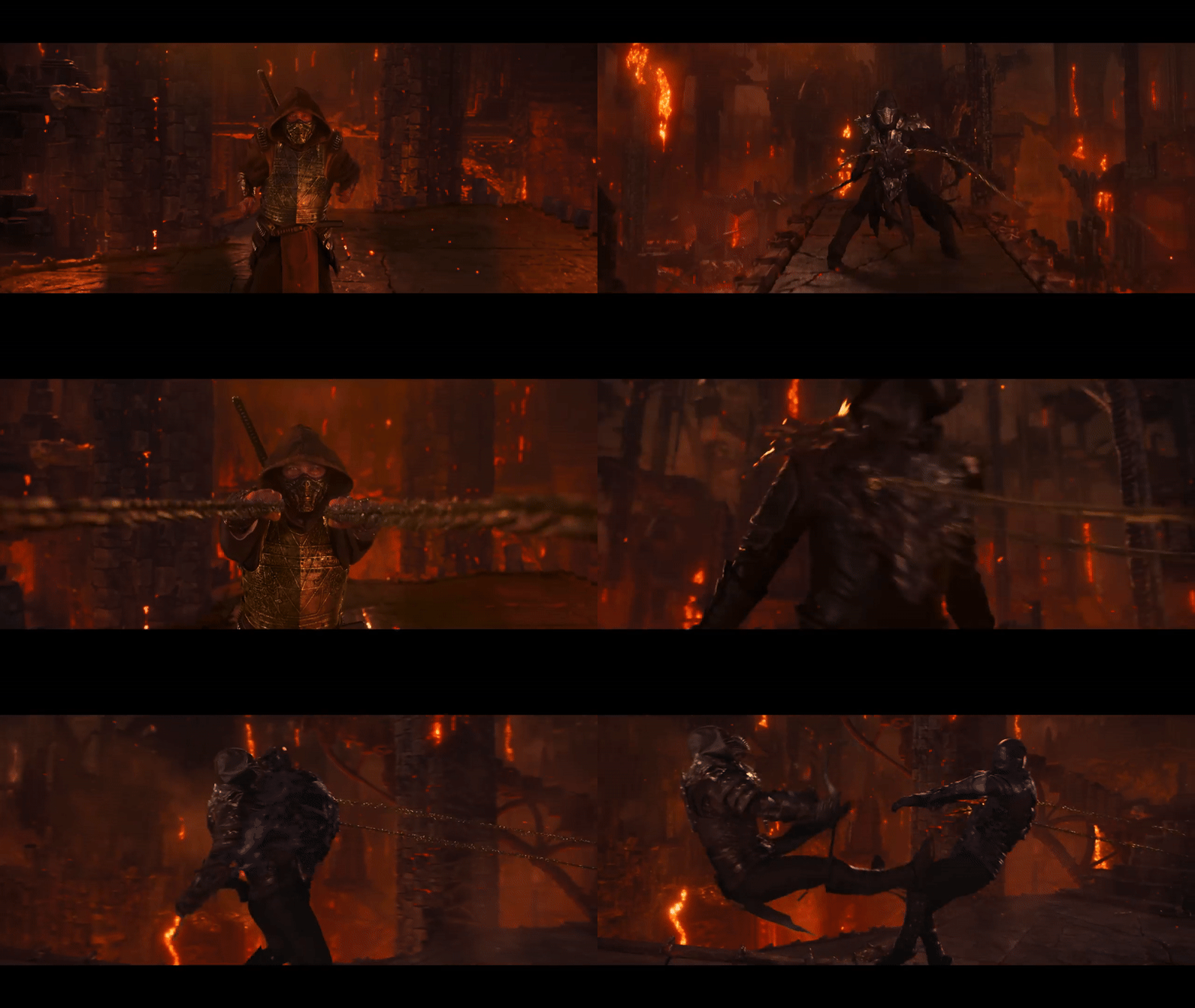
Editor’s note: Hollywood seems to have a penchant for shitty video game adaptations, don’t they? But the utter disaster that was a movie like Super Mario Bros. didn’t quite scare away movie producers and directors.
When a team of passionate, actual gamers got together, they recognized that someone had to pay attention to the booming success of Mortal Kombat. But they weren’t just making a movie out of it. They were building a franchise.
Writer Jamie Russell digs through the history of Hollywood’s affair with video games in his book, Generation Xbox: How Videogames Invaded Hollywood.
We’ve already highlighted one story to have surfaced from the book—namely, the story of how Microsoft’s Halo franchise failed in the movie world—but this tale brings us back to the earlier days of video game adaptations.
I’ve taken an excerpt from Russell’s book to share that story with you guys. The book itself is a fascinating history lesson into the relationship between Hollywood and video games, and it’s worth a read if you are so enticed.
Generation Xbox: How Videogames Invaded Hollywood
By Jamie Russell
It was during a visit to Midway’s offices in Chicago, that [producer Larry] Kasanoff saw the company’s new hot property, the Mortal Kombat coin-op. They took the movie producer down to a local arcade where it was testing off the scale. As kids crowded around the machine, Kasanoff realised they had a hit on their hands. That wasn’t news to Midway. But the producer was also convinced it had potential as a movie. Their response? “Bullshit! There’s no way you can do that. This is an arcade game, there’s no way you can turn it into a movie.” Kasanoff told them, “I don’t just want to just make a movie. I want to make a franchise.”
Despite the huge interest in Mortal Kombat’s success, the reaction was largely one of derision or outright bewilderment. Hollywood, always risk averse, was convinced that videogame movies were the kiss of death after the corrosive impact of Super Mario Bros.. “Everyone was calling me up saying, ‘What are you doing? This is going to ruin your career. This is a videogame, this can’t happen’.”
Videogames were still considered a new phenomenon. The older generation of studio executives simply didn’t get it. “My best story of what it was like back then was the meeting I had after I announced I had the rights to Mortal Kombat,” says the producer. “[One of the studios] said, ‘This is great, come right up’. When I got there, I’m in a boardroom with millions of people and they’re going: ‘This is fantastic, this is great, you’ve got Mortal Kombat, this is wonderful…er, what is it exactly?’ I tried to explain to them but nobody even had a Nintendo console to play the game on. So we got a golf cart to drive around the lot until they found the merchandising guy. He had a console. We plug it in, I show them Mortal Kombat on Nintendo [the sanitised, bloodless version]. They looked at it for about 30 seconds, turned to me, stuck out their hands and say: ‘Well, thanks for coming.'”
Hollywood, always risk averse, was convinced that videogame movies were the kiss of death after the corrosive impact of Super Mario Bros..
“My philosophy always was: the reason why people fail making movies from videogames is because they try to make movies from videogames,” Kasanoff explains, somewhat gnomically. “I thought: we’re not making a movie based on a videogame, we’re making a movie based on the story that the videogame is based on. The story is the centre of the wheel and the videogame is the extension of one of the spokes.” With a screenplay ready, Kasanoff began to look for a studio.
Kasanoff, who knew [studio] New Line didn’t have much else to fill their summer slate with, cut a deal: “They needed a hit for the summer and because of my track record, they thought, ‘What the hell maybe this is it’.” Kasanoff agreed to halve his fee but in return he’d keep sequel, merchandising and TV rights. It was a bold move, reminiscent of George Lucas’s deal with Fox on Star Wars. After Mortal Kombat became the franchise that Kasanoff believed it could, he cleaned up. “Once the movie became a hit, and those rights became enormously valuable, [New Line] were constantly trying to get those rights back from me. I think they were somewhat resentful.” As the screenwriter William Goldman once said, in the movie biz “nobody knows anything”. In the grey zone where videogames and movies met, that statement was doubly true.
“[Head of production at New Line] Mike [De Luca] didn’t look anything like a studio executive,” recalls [director Paul W.S.] Anderson. “He had torn jeans, a Black Sabbath T-shirt and you know he just looked like a skater kid. He was the first person I saw in Hollywood who had game consoles in his office. Nowadays you go into any young executive’s office in Hollywood now they have toys, game systems. It’s almost de rigueur – like an interior designer puts all these things there when they do the office. Mike really was the first person I’d met working in Hollywood who had an appreciation of this aspect of youth culture.”
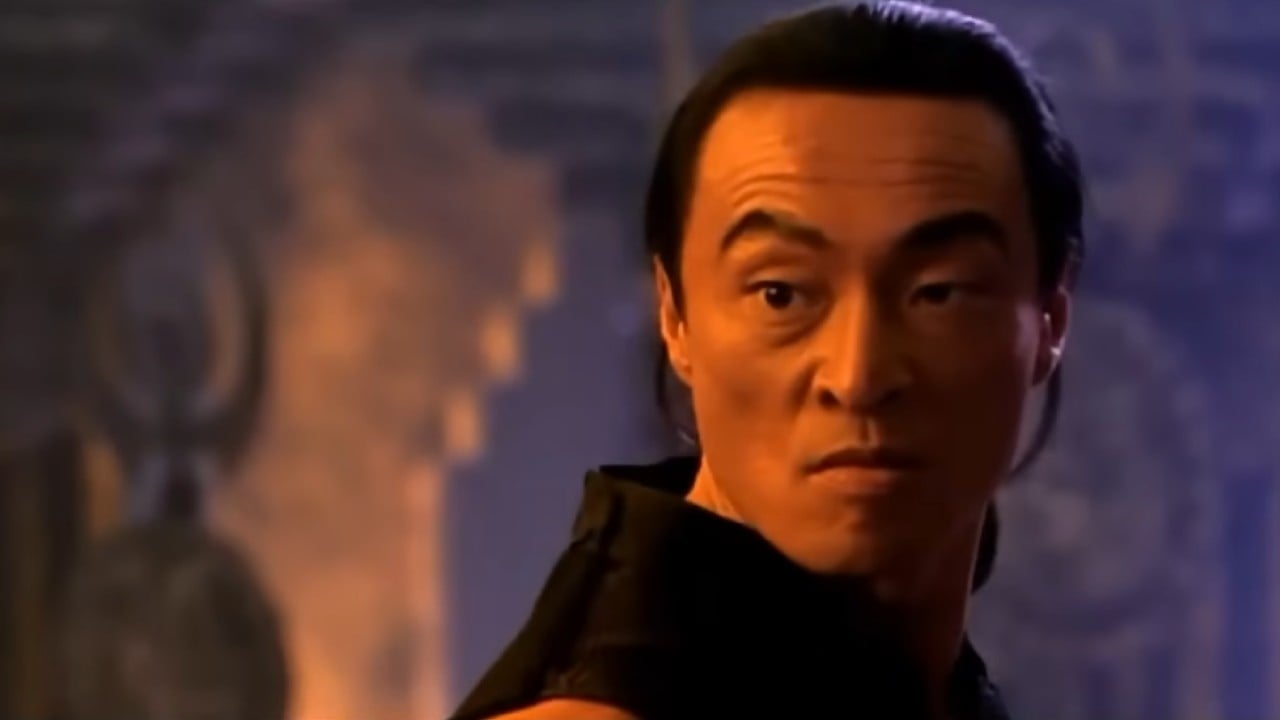
In hiring Anderson, Kasanoff and New Line were taking a big risk. But the feeling was that the project needed someone who could connect the dots to the fan audience. “There was this belief that videogame movies just didn’t work, the idea of adapting videogames into movies was a flawed one,” the director says. “My feeling was, it wasn’t a bad idea. They really were a justifiable intellectual property to adapt into movies. It was just that no one had made a very good movie out of one yet that reflected the game correctly and that was also a movie-going experience that pleased fans as well as non-gamers. Mortal Kombat was probably the first movie to deliver that.”
Throughout 1993, the Mortal Kombat phenomenon had been mentioned in nearly every newspaper in America – even before it joined Night Trap in the dock at the Senate hearings. It was synonymous with everything that was cool, edgy and violent about videogames. Parents and politicians hated it, moral crusaders denounced it. You couldn’t buy publicity like that and the kids quickly claimed it as their own. Even though the movie wouldn’t arrive until 1995, the brand’s cultural half-life was still strong enough to make most young moviegoers’ Geiger counters click like crickets on speed.
During production, as a courtesy more than anything, [Mortal Kombat creators] [John] Tobias and [Ed] Boon were flown out to visit the set. Kasanoff was keen to get them involved, though he was concerned about the impending culture clash as these Chicago videogame engineers found themselves dazzled by the bright lights of the movie biz. “There’s always a tendency for people to show up in LA, get an Armani suit, a convertible and a bimbo and boom! they’ve gone Hollywood. There’s always a risk that you’re going to lose a percentage of people in doing that,” he says. “But the thing with John and Ed was that they didn’t believe in it. Nobody believed in this movie.”
What did surprise the designers was the deference they were shown. Hollywood has always been good at playing to talents’ egos and when Tobias and Boon arrived on-set they got the red carpet treatment. “Everybody was very gracious. Even the stuntmen would come up and shake our hands and thank us. What they were thanking us for was us creating the game which ultimately led to them having a job. I wasn’t expecting that at all and I got a real sense of what we had created and what it had snowballed into.”
“We’re not making a movie based on a videogame, we’re making a movie based on the story that the videogame is based on.”
While the collaboration with Midway was smooth sailing, New Line was a different story. “The reality was that the studio in those days was such a mess,” says Kasanoff. “You couldn’t find anyone. During one of the Mortal Kombat movies I’m sitting in a teak long boat in the South China Seas [on location] and I get a phone call from the New Line office saying, ‘You know, you’re not greenlit yet…’ I just hang up the phone and say, ‘Action’ and nobody bothers to call back until after we’ve finished the movie.”
The studio’s haphazard management style was a headache. Executives would disappear for weeks at a time and Kasanoff occasionally had to fight to get his requests met. “You’d tell them: ‘I have to fly this guy in from Xianju, China because he’s the best wushu kicker in the world’ and they’d look at you like you’re fucking crazy: ‘Who cares? Just kick somebody’. But that’s not what you do. We took extraordinary care with the martial arts. The biggest tenet of Mortal Kombat is the martial arts.”
The first test screenings confirmed that. Audience feedback suggested there was too much talking, not enough punching. New Line ponied up more money and additional fight scenes were shot. When they ran it again, the reaction tested off the scale. “The audience couldn’t sit still,” remembers Kasanoff. “It was like they were at a Black Eyed Peas concert. Kids were getting up and fake punching each other in the aisles. That’s when I realised it was a hit.”
Even still, Kasanoff claims no one had faith in it, neither at New Line or Midway. Or even in Hollywood generally. “After the test screening an executive at New Line said the movie was a piece of shit,” says Kasanoff in his inimitable style. “When I finished the movie I took it to Chicago to show Neil Nicastro, who was chief executive of Midway. I said, ‘You see, you said I wouldn’t do it but here it is.’ He sits and watches it. When it’s over, he looks at me and says: ‘Three out of 10. Piece of shit.'”
Even during the opening weekend, the producer fielded calls from acquaintances telling him his career was over. “But this is Hollywood, so when it turned out it was a hit, the same people called me up and said ‘I knew it, I was behind you all the way!'”
Franchising the hell out of these properties became the standard approach. If nothing else, The Wizard had been prescient about the way videogame movies would become an issue of commerce over art. Kasanoff, who had the confidence to secure the Mortal Kombat rights early on, reaped the benefits of this approach. Mortal Kombat cost $20 million to produce and took over $23 million in just its opening weekend in the States. By the end of its theatrical run, Mortal Kombat had grossed $70 million in the US alone and $122 million worldwide.
That was just the tip of the iceberg of what would become a $3 billion cross-media franchise. “It’s a lot more than a movie,” Kasanoff told Cinefantastique magazine in 1995. “It’s an animated video special, a live-action tour that we’re doing, a series of toys and merchandise licenses, a making-of-the-movie book, a novelization of both the movie and, separately, the underlying story. It will one day be a live-action TV show, and an animated series. All that stuff is in the works or has already happened. Mortal Kombat is more than a videogame we turned into a movie. It’s a phenomenal story we are cross-publishing in every medium that exists. That’s what I formed the company [Threshold] to do. It’s not just a movie, it’s a way of life.”
Taken individually the Mortal Kombat products, with the exception of the original videogame, were largely uninspired. Cumulatively, they were unstoppable. Each property fed off the others, generating heat from its cousins’ exposure. As a business model it was brilliant. From a fan’s perspective it was like being spoon-fed one pureed Big Mac after another. The success of Mortal Kombat – undeniably a phenomenon – told every Hollywood producer with their eye on a videogame property that the bar didn’t have to be set that high. New Line and Midway’s executives were right: Mortal Kombat the movie was a piece of shit. But with the right Midas Touch even turds could be gold-plated.