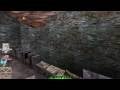
Editor’s note: I’m sure I’m not the only one with fond memories of the original Unreal, which came out on PC one million years ago in 1998. What was it that made that game special? Let’s find out.
The following is an excerpt from the new book Escape to Na Pali: A Journey to the Unreal, written by Kaitlin Tremblay and Alan Williamson. You can pick up a digital copy of the full book here or get it in print-on-demand format here.
An Alien in an Alien World
When we think of what it means to be alien, we’re informed by our understanding of both the natural world and the world of fiction. After all, why do you think most aliens are bipedal, humanoid, air-breathers? H.R. Giger’s iconic xenomorph from the Alien saga is an elongated human with additional genitalia co-opted as weaponry; most of the creatures from Star Trek and Star Wars are human actors with bonus appendages glued to their faces. That’s partly for budgetary reasons, but also our innate understanding of biology: it is difficult to perceive of a creature that doesn’t breathe or feed; or one that has evolved in an environment with, for example, low gravity or a lack of oxygen as a respiratory substrate. It’s like in Doctor Who when people say the Doctor looks human, and he replies “You look Time Lord”. When we see pictures of new organisms discovered in deep-sea trenches, exaggerated proportions and bioluminescent bodies, these seem more alien than any Hollywood creation. They live in such different environments to us that they seem almost otherworldly.
So we shouldn’t expect anything different from the world of Unreal. First and foremost, a shooter requires things to shoot — formidable enemies that are threatening and agile. What better way to make a formidable enemy than to make a superior human? Species like the Skaarj, Kraal, and Nali are humanoid in nature; they’re taller than the player, they’ve got the odd extra limb or tail, they’ve got scary faces. Job done. They’re just alien enough while remaining familiar: the Skaarj are a stereotypical race of proud warriors who have subjugated and oppressed the Nali through brute force. They’re predators in the immediate sense, and also similar to ‘the Predator’ of cinema: skilled hunters with advanced weaponry and dubious morality.
Instead of attempting something alien in the absolute sense, which would risk shattering our sense of disbelief with something too preposterous to fit into our existing biological schemata —think of The Blob, more ludicrous than horrifying despite having no human-related features — Unreal aims for something that is plausibly human, but still recognisably alien. Creatures, environments, and structures are intelligible to us, but still otherworldly. Pools of water glow green, with rainbows of colour skirting across their surface. Machines are powered by strange crystal technology – which, to roll out the old Arthur C. Clarke quote, is indistinguishable from magic in the game. The Skaarj are mining the planet for ‘tarydium’, a blue crystalline substance similar to tiberium from the Command and Conquer series or the subtly-named unobtainium from Avatar. At night, two moons light your way, one red and yellow, the other blue and grey. To be a human here is to be alienated, on the cusp of understanding the world and yet landing just outside it, isolated.
For the developer, the world-forger, that’s the easy part. Anyone can tint the moon red and the water green, but a palette swap does not an alien landscape make. Going beyond these superficial changes, Unreal isn’t just an alien environment compared to Earth — it’s odd compared to other games as well. After a claustrophobic journey through the metal ruins of the Vortex Rikers, the last vestiges of futuristic humanity, Unreal‘s environments soon become implausible, impossible. The towering Sunspire is a logistic nightmare of construction, with its volcanic moat and peak that almost hits the vanishing point. The ruined temples of Na Pali are, at best, architecturally impractical. Today, the modern player is spoiled for choice of fantastic vistas and set-pieces in games like Borderlands and Skyrim, but at the time of Unreal’s release most shooters were confined to interconnected tunnels and boxes.
The popular idTech engine, which powered iD Software’s Quake series and provided the basis of games like Half-Life, used a method of codifying level information in memory called ‘binary space partitioning’. We don’t need to worry about the details of these algorithms, but they worked well for enclosed areas and were inefficient for large open spaces. Comparatively, the Unreal Engine — at least in its earlier revisions — treated maps as huge solid chunks that the level designer hollowed out to create spaces for the player to move through. It was made for roaming, and Unreal takes full advantage of it: we can walk through enormous canyons and peer over the edge of waterfalls. This opportunity for scale and spectacle is evident from the moment you first load the game, with a flyover of the Nali Castle that has rarely been emulated in games – simply because other games couldn’t do it.
It’s not just the fundamentals of design that create that sense of the alien: the little things add up, too. Enemies absorb all the ammunition you can embed in them, with little detriment to their health or physical appearance. Lumbering Titans continue to hurl rocks at you while greedily gobbling your rockets like they’re training for an intergalactic hotdog eating contest. Skaarj can conjure energy projectiles from their wrists through embedded biomechanical technology. You can swim through vats of toxic waste and emerge unscathed, or sprint forever without worrying about your stamina. Our sense of disbelief remains intact, but these are distinctly unearthly experiences, and the contrast between the world of Unreal and our own is even more jarring for players brought up on a diet of reality-aping military shooters.
Newcomers to games, as well as innocent bystanders, often find the conventions of the videogame medium ludicrous: the chest-high walls, the inoperable doors sprayed onto walls as decals, even the conversations characters have with each other border on the farcical. Unreal‘s floating villages and titanic monsters bend the laws of physics, but seasoned players have grown accustomed to this ‘game logic’, and don’t even think to question it. Our minds reconstruct the implausible into the plausible. Yet we hold a work like Ridley Scott’s Prometheus, with its nonsensical plot and hilarious incongruities, to a higher standard than a game like Unreal. Perhaps advances in technology have led to higher standards for plausibility, but today’s game developers could probably still get away with a creature like Unreal‘s ‘gasbag’, a floating head with two arms attached and no visible sign of propulsion. Arguably, this makes it more difficult for a modern game to be creatively adventurous: compare Unreal with Halo 4, a game where the player is in a similar situation as they are both stranded on an unfamiliar alien world. Where Unreal can simply create worlds, Halo 4 is shackled by the lore of the series and the demand to justify its fantasy. You can’t have a floating platform in Halo without thrusters powering it from below. Na Pali’s ‘Haven’ doesn’t need thrusters to stay afloat in outer space: it just does, and that makes it all the more alien.
Tools of the Trade
Shooter weapons of the era usually fell into a pattern dubbed the ‘Sorting Algorithm of Weapon Effectiveness’ by pop cultural website
TVTropes: as you progress through the game, you face stronger enemies, but you also get stronger weapons to use against them. The player starts with a basic pistol, collecting an arsenal of rocket launchers, miniguns and ‘Big Fucking Guns’ by the game’s conclusion, all stored in the player’s exceptionally capacious trousers or the world’s largest backpack. That’s a good thing, because it gives the player time to develop the basic skills they need to survive before introducing variety. For example, Duke Nukem 3D‘s later episodes afford the opportunity to shrink an enemy or freeze them before stomping them with Duke’s boots, rather than just shooting them or blowing them up.
Halo‘s pistol —lovingly dubbed ‘Gun’ by enthusiasts — had such effective stopping power that you didn’t even need another, a far cry from the pea shooters of Doom and Quake 2. Aside from Bungie’s Halo franchise, with its delightful array of purple laser cannons, the weapon set of a modern shooter is fundamentally unimaginative: assault rifles with a scope for aiming, shotguns, plus a conveniently-placed rocket launcher when a tank or helicopter needs dispatching. Perhaps it’s an inevitable outcome of the expected ‘realism’ of a modern military shooter: assault rifles are common in games because they’re common in real life conflict. The Kalashnikov AK–47 is so synonymous with armed struggle that it appears on the national flag of Mozambique.
Unreal‘s weapons are an important part of its world-building, which makes sense considering you’re always looking at the world down the barrel of one. Contemporary shooters like Doom, Quake, and Half-Life were all set in or around Earth in the present day and thus subject to its military sensibilities, but Unreal takes place so far in the future that it doesn’t really matter. You’re in a land where time has little meaning: other prisoners from the Vortex Rikers have had a considerable headstart on your character, and Na Pali nights last for weeks. Maybe time just flows differently here, another subtle way to infer the otherworldliness of Na Pali. Even the humans here are ‘alien’ to us, in the same way that we would seem alien to a person from 1800. As is a common theme in science-fiction dystopias such as Alien and Robocop, humanity is represented – perhaps even controlled – by mega-corporations like Unified Military Services (who operated the Rikers) and the Inuit Corporation (owners of the research vessel ISV-Kran).
Weapons with a stronger connection to the military world were removed during
Unreal‘s development. The Quadshot is a quad-barrelled shotgun that still exists in the game even though you can’t collect it (you can type ‘summon quadshot’ into Unreal‘s console to see for yourself). Its animations lack the polish of the game’s final weapon set, as you would expect, but it also feels like it doesn’t belong, and that’s more due to its human origins than our familiarity with Unreal‘s other tools.
The year after
Unreal‘s release brought the expansion pack Return to Na Pali, developed by Legend Entertainment. As with many expansions of the era, Return to Na Pali doesn’t match the quality of the original game: in fact, it includes maps and art assets that the original developers left out of Unreal. Among its litany of sins – the poor quality of levels, the myriad of bugs – it adds human weaponry including an assault rifle (now a mainstay of the modern first-person shooter) and rocket launcher. They’re not only redundant, since Unreal‘s weapons are a pretty well rounded set, but they paradoxically feel more alien than the Skaarj weaponry.
Human weapons aren’t the focus of
Unreal — you’re an escaped prisoner, not a doomed space marine — and the weapons your character finds are subtly twisted. While escaping the Rikers, you find a Dispersion Pistol: this stereotypical pistol fires lasers as effective as a puff of hot air, but, like most weapons in Unreal, it has a secondary fire mechanic where shots can be charged for extra damage. Unusually, the Dispersion Pistol can be upgraded throughout the game, gradually becoming more powerful and unwieldy until each shot causes the same damage as a rocket.
Speaking of rockets, no shooter would be complete without one:
Unreal‘s can be loaded with six at a time, although inexplicably the game refers to it as the ‘Eightball’ launcher. There are a couple of other human weapons: a semi-automatic pistol called the Automag, a powerful hunting rifle with sniper scope and a surprisingly ineffective minigun. But where things get interesting are the alien weapons, not just for their aesthetic design, but also for their use in combat strategies.
Unreal has weird weapons with weird ammunition. The ‘Stinger’ is ostensibly a mining tool that fires blue Tarydium shards, but unlike the minigun, the Stinger’s projectiles are slow enough that Skaarj can dodge them. Later you find the Biorifle, which launches radioactive Tarydium sludge that sticks to walls and detonates after a short while. The Razorjack is a Skaarj weapon, which spits razor blades that ricochet off walls and is particularly useful for decapitating foes. The ASMD seems like a standard energy rifle, but its alternate fire launches projectiles that can be detonated with a blast of primary beam fire. It’s the shooter equivalent of a combo attack in Street Fighter II.
There’s no Sorting Algorithm of Weapon Effectiveness here. You cannot work through your weapons from best to worst, using up their ammo, gradually moving from unfamiliar alien weaponry into traditional human arms.
Unreal‘s varied arsenal affords the player a huge degree of strategy: Flak Cannon shells can be launched into corners to flush out an enemy, sticky sludge traps are best placed in doorways, and Razorjack blades can be spammed down narrow corridors in a desperate attempt to evade death. Given this varied and downright fun selection of guns, it’s little wonder that Unreal became such a popular multiplayer game when it was refined into Unreal Tournament, with few changes required to the weapons. In fact, Unreal‘s frenetic pace of combat and intelligent, highly mobile enemies make you feel like you’re playing a ‘deathmatch’ against computer-controlled bots at times.
Aside from the strategic opportunities afforded by alternate fire and sheer variety, there is another interesting element to
Unreal‘s weapons that sets it apart from other games of the time. Many shooters did, and still do, use what’s called ‘hitscan’ to determine whether you’ve hit your target. When you pull the trigger, the game looks at what is under your crosshair: if that’s an enemy, then a ‘bullet’ hits them. Compare a sniping player in Halo: Reach to Battlefield. The Halo sniper doesn’t need to lead their target from a distance, because no virtual bullet is actually being fired — the game just calculates the result when you press the button. A Battlefield sniper is firing a genuine projectile that takes time to reach its target — even if that’s a very short time because the bullet is travelling so fast — and so the sniper must take this travel time into account by anticipating the target’s movement. Later Battlefield games even model the effect of gravity on the bullet. In the Max Payne series of games, which famously utilised a slow motion ‘Bullet Time’ effect similar to the film The Matrix, every bullet is a genuine projectile. Even when Max isn’t performing a Hard Boiled dive with a constipated grimace on his face, the bullets still whizz past him. Hitscan is another curious aspect of ‘game logic’ that the player takes for granted, but as soon as the man behind the curtain is revealed, it makes immediate ‘sense’ why your guns behaved that way. What Unreal does differently is to introduce intra-weapon inconsistencies, and the best way to discover these is to fire them at a Skaarj.
The Skaarj AI has a cheeky dodge manoeuvre that’s a Litmus test for hitscan weapons. The rifle and Automag are hitscan, and cannot ever be dodged — because you can’t dodge math. Eightball rockets and Stinger shards are true projectiles, and that’s why Skaarj have time to perform an irritating roll before the projectile reaches them. But the ASMD is different: its primary fire is a hitscan laser beam that
looks like a projectile. Fired from a distance, enemies will recoil before the beam ‘reaches’ them! The ASMD’s secondary fire is a true projectile, but it can be immediately detonated by the primary beam. It sounds like a programming trick that’s barely worth a mention, but in the context of 1998, these quirky weapons helped create Unreal‘s unique alien identity. A shooter veteran doesn’t expect enemies to dodge ‘machine gun’ fire from the Stinger, and doesn’t expect the ASMD to instantly connect. That’s why the latter weapon is so useful and the former feels so strange. It’s not just that the weapons look alien, they also feel alien, especially if you have a previous understanding of the underlying mechanics.
Even for the modern player,
Unreal just feels different in comparison to other shooters. That name is as appropriate as ever. The constructs its alien identity not through creative innovation, but rather subversion, a subtle shifting of the conventions and tropes of the genre that communicates to the player: ‘this is not the world I know. Things are different here’.
On Na Pali,
we are the alien.
Kaitlin Tremblay is the Managing Editor of the videogame culture magazine Five out of Ten, and a game maker focusing on horror and feminism. She can be found on Twitter as @kaittremblay
Alan Williamson is the founder and Editor-in-Chief of Five out of Ten. He has written for the New Statesman, Eurogamer, Memory Insufficient and the short story anthology Ghosts in the Machine. You can find him on Twitter as @AGBear
Escape to Na Pali: A Journey to the Unreal can be downloaded in a variety of formats here, and you can purchase print-on-demand copies on Blurb