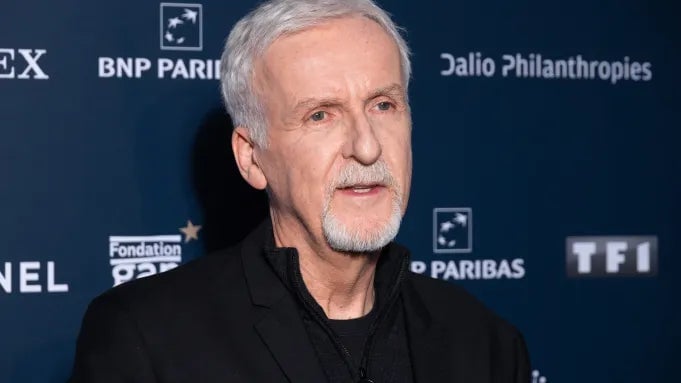
In some fictional world probably created by AI, John Connor is rolling over in his grave. On the the Boz to the Future podcast, Terminator director and former staunch AI detractor James Cameron not only explains his new support of AI but says it could be an essential tool if filmmakers want to keep making visually daring films like the Dune movies in the future.
On the podcast, the three-time Oscar winner explains he changed his stance on AI being part of the filmmaking process for the same reason that can make almost anyone change their opinion on anything: money. No, he wasn’t paid to change his opinion (as far as we know), but he harped on the financial burden incurred when crafting elaborate VFX-heavy films like his Avatar series and Denis Villeneuve’s Dune movies. According to him, if we want to keep making such films, production costs have to come down, and AI might be the way to do that.
“If we want to continue to see the kinds of movies that I’ve always loved and that I like to make and that I will go to see—Dune, Dune: Part Two, or one of my films or big effects-heavy, CG-heavy films—we’ve got to figure out how to cut the cost of that in half.”
He made sure to clarify that in his view, AI shouldn’t replace humans’ jobs, but accelerate them. AI should be “doubling their speed to completion on a given shot, so your cadence is faster and your throughput cycle is faster, and artists get to move on and do other cool things and then other cool things.” It appears he views AI in movies as akin to the computer replacing the typewriter, rather than sentient killing machines replacing the human species.
As practical as that may be, it still sounds like it came from bizzarro world when you remember that Cameron gave an ominous warning about AI back in 2023 when he told CTV News, “I warned you guys in 1984, and you didn’t listen.” Finding AI so horrifying that he references his 1984 film The Terminator, whose plot is set in motion by an AI that seeks to wipe out humanity, when warning about its dangers doesn’t sound like a stance one can just pivot from in less than two years.
Still, he’s spent time since then studying the workings of AI, which may have contributed to the shift in his views. On the Boz to the Future podcast he discussed taking time to learn the nuances of the AI space in order to find a way to leverage its redeemable aspects to push filmmaking further. “The goal was to understand the space, to understand what’s on the minds of the developers,” he explained. “What are they targeting? What’s their development cycle? How much resources you have to throw at it to create a new model that does a purpose-built thing, and my goal was to try to integrate it into a VFX workflow.”
To his credit, he never said AI should be writing movies, having said in 2023, “ “I just don’t personally believe that a disembodied mind that’s just regurgitating what other embodied minds have said—about the life that they’ve had, about love, about lying, about fear, about mortality—and just put it all together into a word salad and then regurgitate it…I don’t believe that have something that’s going to move an audience.” So he’s not fully on the AI bandwagon. But he did join the Stability AI Board of Directors last September to help bring AI capabilities to future filmmakers. With Cameron on board, it could only be a matter of time before Hollywood begins finding ways to incorporate AI without killing us all.