Of all the studios Electronic Arts has bought over the decades, few were as talented or important to the history of video games as Westwood Studios.
Yet despite essentially pioneering the real-time strategy genre as we know it, creating one of the most popular franchises of all time and doing not one, not two, but three excellent movie adaptations, Westwood no longer exists.
Popcap, when you’re done counting your money, you may want to bear that in mind.
https://lastchance.cc/electronic-arts-buys-maker-of-bejeweled-and-plants-vs-5820553%3C/a%3E%3C/p%3E%3Cdiv class="not-prose my-8 -mx-4 xs:mx-auto">
Westwood was formed in 1985 by Brett Sperry and Louis Castle, and spent its early years porting console games to the personal computers of the day. It would be three years before its first original game, RPG Mars Saga, was published by Electronic Arts in 1988.
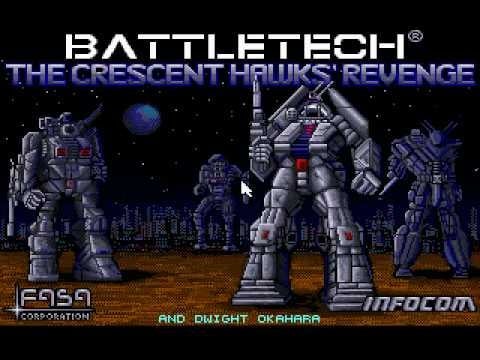
Westwood first began to make a name for itself with a pair of games based on the Battletech universe. In 1988 it released BattleTech: The Crescent Hawk’s Inception, and followed it up in 1990 with BattleTech: The Crescent Hawk’s Revenge, a small-scale strategy game that was mostly played out in real-time.
That same year saw Westwood release its first commercial blockbuster, Eye of the Beholder, a role-playing game for the PC which was published by SSI. It would be followed a year later by a sequel, Eye of the Beholder II: The Legend of Darkmoon
Yet for all its success and critical praise, Eye of the Beholder was just another RPG. What Westwood released next would change PC gaming forever.
In 1992 the studio unleashed Dune 2. A sequel, in name at least, to Cryo Interactive’s adventure game based on the 1984 Dune film by David Lynch, it was nothing like its namesake. Building on the real-time work Westwood had introduced in BattleTech: The Crescent Hawk’s Revenge, Dune 2 was the world’s first true, modern real-time strategy game, using a system of base construction, resource harvesting, combat and mouse control that titles such as StarCraft II still employ to this day.
Other games before it, including Westwood’s own Battletech sequel, had displayed RTS tendencies. Some could even be called proto-RTS games. But none could tie everything together like Dune 2 did, taking a genre that had traditionally been reserved for slow pacing and number-crunching and making it exciting
For the remainder of the 1990s, it was nothing but blue skies for Westwood. Role-playing games The Legend of Kyrandia and Lands of Lore were both big hits, and Westwood were also behind 1994’s The Lion King, a platformer building on the strong success of previous Disney cartoon adaptation Aladdin
In 1995, Westwood returned to real-time strategy gaming with their own IP, called Command & Conquer. With its hammy FMV cutscenes, extensive CGI action and fast-paced missions, it took RTS gaming to the masses, launching a series which to this date has sold over 20 million copies, an incredible achievement for something based mostly on the PC.
In between sequels and expansion packs to C&C, including the equally-popular spin-off Red Alert series, Westwood found the time to release, of all things, an adventure game based on 1982 flick Blade Runner. It too was a hit, especially with critics, proving not only that you could make good games out of movies (a rarity even to this day), but that a studio could do it multiple times across multiple genres, something that had never been done before, or since.
You’d think with that kind of track record that Westwood would still be around, making smash hits in every genre they touched, but sadly, it was not to be. Bought by Electronic Arts 1998, aside from Command & Conquer and Dune games the studio’s output soon dries up, the Westwood name split across two studios which released things like failed MMO Earth & Beyond and under-appreciated action game Nox
It’s a shocking demise for a developer that during the 1990’s was, pound-for-pound, perhaps the most successful Western studio going around. What makes it especially sad is the waste of Westwood’s expertise in its years under EA’s ownership.
Westwood displayed this kind of versatility like no other developer. From strategy gaming to role-playing, adventure games to platforming, licensed adaptations to its own IP, nearly everything it touched turned to gold. And it’s that dependability, that knowledge that Westwood could take anything and make a great game out of it, that I miss the most.