Amazon MGM’s Like A Dragon: Yakuza has the unenviable task of taking RGG Studio’s beloved Yakuza video game series and translating it into prestige television. The Yakuza games are as much studies of bizarre secondary characters and unlikely encounters as they are narrative-driven crime stories. And while side quests and random chats with NPCs in the street might create memorable game experiences, they hardly make for compelling television. Amazon made the smart choice of loosely adapting the first Yakuza game instead of committing to a full retelling, but the show’s strong potential gets lost in a muddle of confused storytelling and shallow character development.
Episode one is an odd introduction: A stylish segment you’d expect from a heist comedy kicks things off, with protagonist Kazuma Kiryu (Ryoma Takeuchi) and his friends Yumi (Yuumi Kawai), Akira Nishikiyama (Kento Kaku), and Nishikiyama’s sister Miho (Hinano Nakayama), staging a daring theft. They pull it off, with a few bumps along the way, and when they return to their home, the Sunflower Orphanage, it goes terribly wrong. It turns out the money belonged to the Dojima family, one of the most dangerous yakuza families in the region.
The story sets itself up as if it’s about these orphans and the struggles they face. The stolen money was supposed to help them get away from Sunflower and their harsh adopted father, Kazama, but the rest of the episode is a lengthy, rather shallow, series of events that sees the four kids join the yakuza. Apparently, the worst thing Kazama ever did at Sunflower was establish rules, and Kiryu, supposedly, did all this just so he could join the yakuza. Episode one doesn’t stop to explore why Kiryu wanted to join the yakuza or why the other kids wanted to leave Sunflower, and neither topic comes up again. It’s a bit of a mess, thanks in large part to Kiryu himself.
Kiryu’s characterization is one of the series’ more confusing diversions from RGG’s games, which show Kiryu’s personality by putting him in uncomfortable situations and challenging his worldview during encounters outside the main story. Amazon never gives its Kiryu a chance to develop, and he desperately needs it. His character is a rebellious youth who wants to fight, a dream that grew after he saw the former Dragon of Dojima—Kamurocho’s top-ranking prize fighter—only once, and that becomes his entire personality. Even putting aside the source material, that’s not the stuff from which interesting characters are made, and it makes his transformation in 2005 feel strained and unbelievable. Even though Like A Dragon: Yakuza is consciously trying to tell a story different from RGG’s, it expects the viewer’s familiarity with the Yakuza games to cover gaps in the show’s narrative. You don’t have to see Kiryu’s love for his adopted family, you just know it exists—except, if you’ve never played the first Yakuza, you really don’t.
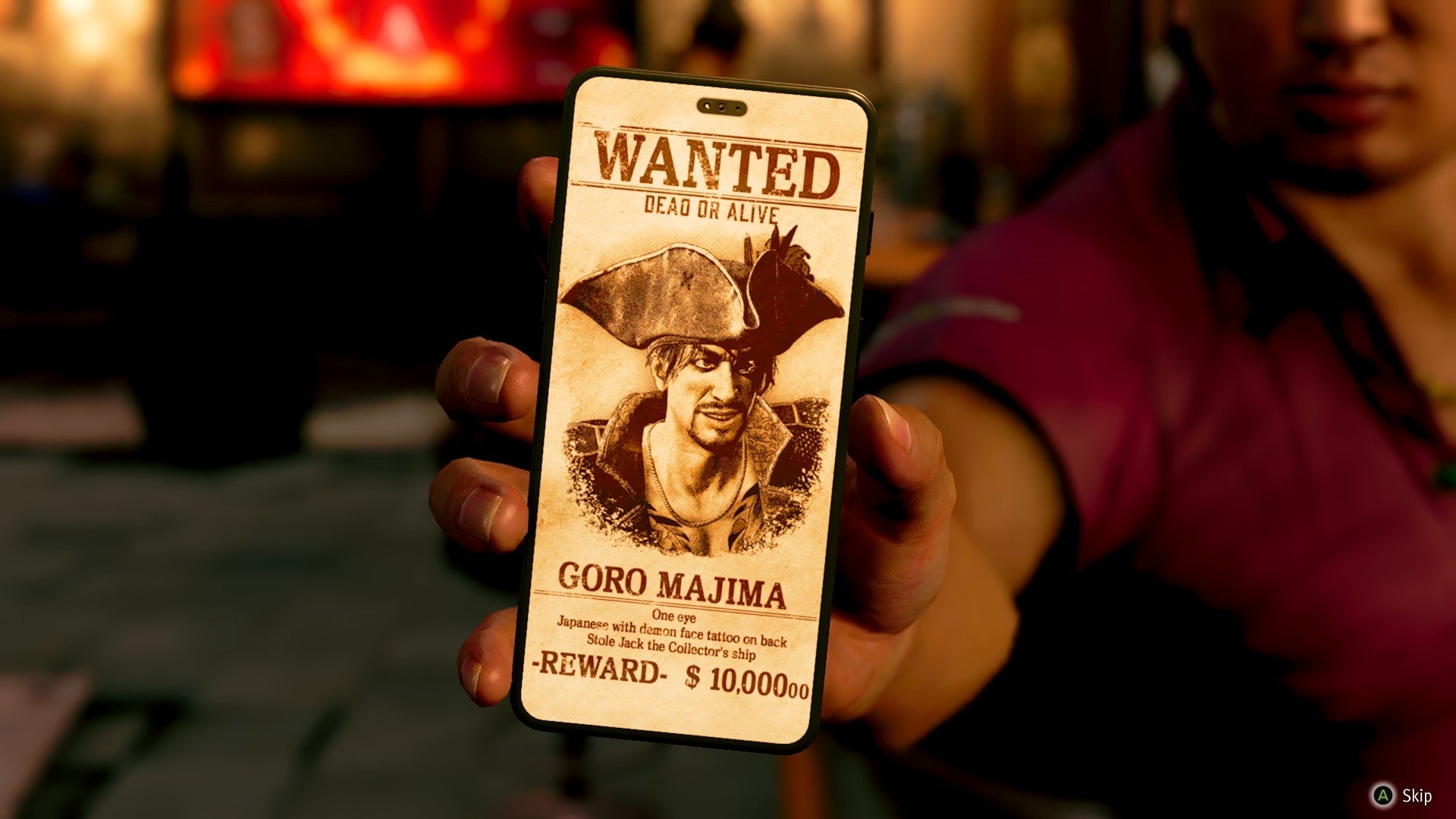
Between shifts in perspective and time period, none of the subplots have enough time to feel fully realized. That problem isn’t helped by having an extended fight between Kiryu, Nishiki, and Goro Majima take up a good portion of the third episode and a subplot about property crime that spans two episodes and goes nowhere.
To be fair, the show is at times highly entertaining, and its fight choreography is superb. Like A Dragon: Yakuza might fumble Yakuza’s storytelling and thematic development, but it perfectly captures the chaotic energy, ludicrous scenarios, and ridiculous, over-the-top violence of its fights. There’s a gunfight in the middle of a beauty pageant, Majima gets bashed on the head repeatedly with a concrete block and walks away unfazed, and Kiryu throws away formal fighting rules and embraces underhanded tactics, pulling off brutal moves lifted almost directly from the Yakuza combat system’s signature Heat Moves. He grinds faces onto stone walls, lifts grown men above his shoulders before slamming them into the ground, and carelessly smacks a low-level grunt’s head into a fitting room mirror without even looking at him.
Given how infrequent these fights are, though, it’s hard not to wish Amazon put that effort into stronger character and plot development instead. Unlike RGG Studio’s games, Like A Dragon: Yakuza is determined to shy away from any kind of social injustice commentary or the possibility of corruption in high places, and its story feels sanitized as a result, despite its frequent bursts of shocking violence.
The closest it gets to making a point is in episode two, when Yumi and Miho start their jobs in a hostess club. There’s a particularly moving scene where Miho, holding her favorite stuffed animal, tells Yumi she wants to make enough money to see the world, then have a family and die as a grandmother. The next day, she— a child—drinks so much to make a client happy that she passes out. Their new “family” forces children and young women to perform for rich old men, all to earn money that has to go toward rent for a dilapidated apartment while dreams of a better life wither and die. That’s the most self-reflective the series’ first half is, though, and it never tries weaving these themes into its story as the Yakuza games do.
The burden of carrying the series’ first half forward falls onto its characters and their relationships, and Like A Dragon: Yakuza just isn’t built for that to work. The first episode spends too much time dragging out the drama of the Sunflower kids joining the Dojima family and not enough on building the emotional foundation its story requires. The relationships between Kiryu, Nishiki, Yumi, and Miho are almost non-existent, despite being at the center of the show’s narrative, robbing its biggest moments of the emotional weight they’re meant to have.
The series develops a slightly stronger sense of coherence starting with episode four, although it doesn’t quite shake the problems of its first half. It starts with a heist, like in episode one, but on a much bigger and more dangerous scale. Yumi’s sister Aiko (Misato Morita) and her work partner waylay a van transporting 10 billion yen for the Omi Alliance in a bid to start a war between yakuza clans. Why the largest, most efficient yakuza organization in the region is transporting that much money in a single van with a minuscule escort is anyone’s guess.
Near the end of episode four comes a moment that the entirety of Amazon’s reimagining of RGG’s game depends on. Miho collapses, her fragile kidneys finally unable to take any more abuse, and Nishiki is devastated. The importance of this moment makes it all the more surprising that, up to this point, we’ve seen Nishiki have no interaction with his sister. He and Miho never speak, and the only time they’re physically together is in flashbacks to when they first arrived at the Sunflower orphanage together.
Suddenly, Like A Dragon: Yakuza expects us to believe in this deep relationship between the two siblings, one so important to Nishiki that this trauma threatens to shred his sense of self. It’s to Kento Kaku’s credit that he sells these scenes so well despite having little to work with, but they feel hollow anyway.
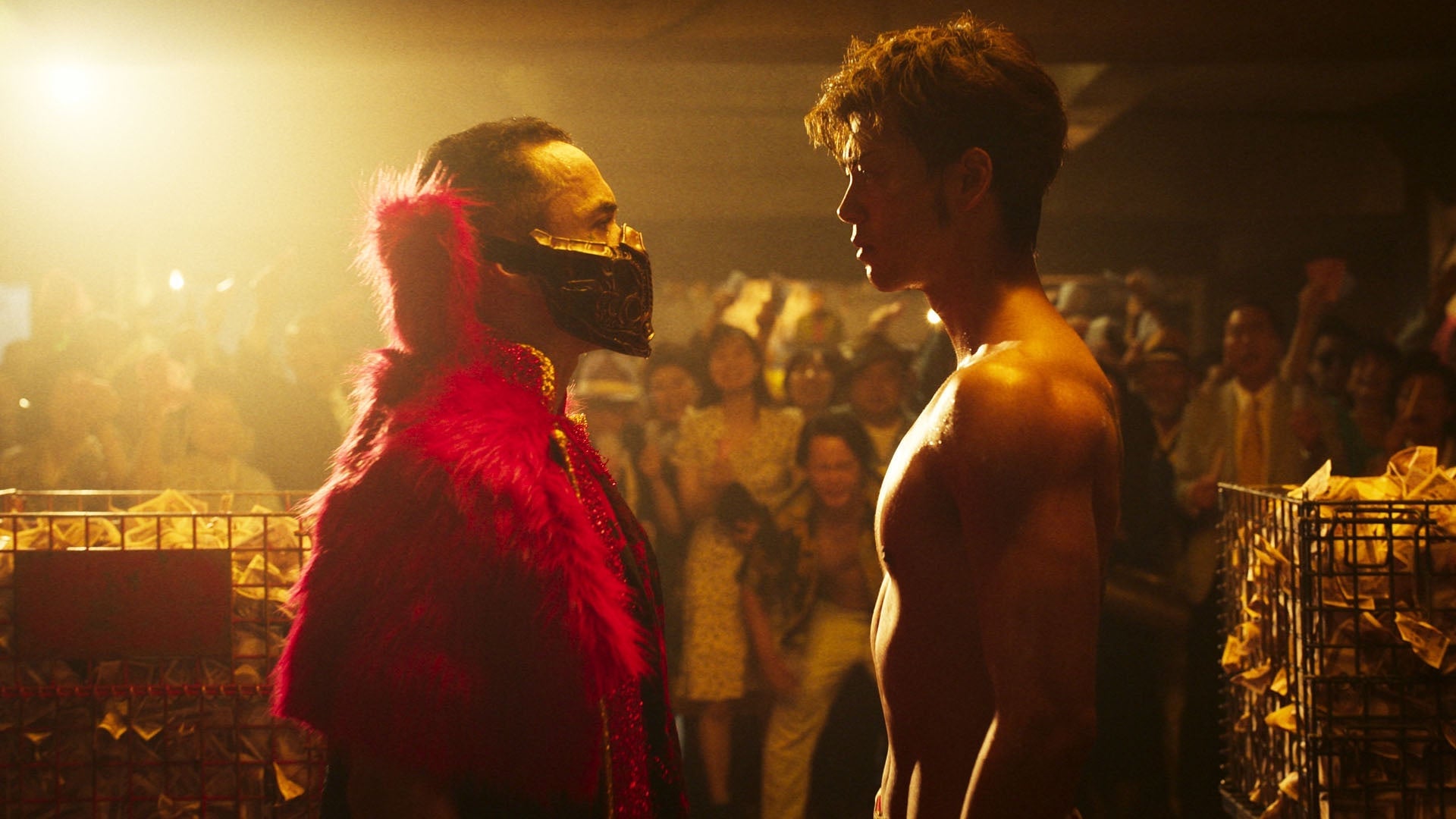
The problem is all of this is a conspiracy. Dojima forces Kiryu into the boxing ring to rig the betting odds and profit when he eventually loses, and he uses Miho’s illness for leverage. Miho wouldn’t have survived the transplant surgery anyway, as prolonged dialysis had weakened her heart. Nishiki then learns his kidney was a match for Miho, but Dojima had instructed the doctor to say otherwise.
It’s a shockingly cruel scenario, undercut slightly by how little interaction we’ve seen between the family and the Sunflower kids until now. Yumi and Miho have the most reason to hate the yakuza and their exploitation, but Miho’s death is a catalyst that awakens in Nishiki the desire to bring the entire Tojo clan down. He brutally murders the fixer who lied about procuring a transplant for Miho and shoots the Dojima leader in an act of vengeance. Kiryu takes the blame and goes to jail, and Nishiki finds himself moving up the ranks in the family. Nishiki’s newfound loathing for the yakuza is understandable. However, the show expects you to believe it stems from months of abuse, with Miho’s death being the final act that pushes him over the edge, and it just doesn’t work.
That said, Amazon’s decision to recontextualize Nishiki’s personal downfall and professional rise to power takes the narrative in a much stronger direction than we see in the first Yakuza game. In the game, the Dojima family’s head attempts to assault Yumi. Nishiki kills him, and Kiryu takes the blame to save his best friend from going to jail. Yumi loses her memory, and when she regains it, begins a destructive relationship with a corrupt politician who vaguely reminds her of Kiryu before eventually dying to save Kiryu. Casually using sexual assault as a plot point is distasteful and misogynistic, to say the least, but then anchoring Yumi’s entire personality to her love for Kiryu does her yet another disservice by removing any sense of individuality. She’s not a person. She’s just an object and a love interest. Like A Dragon: Yakuza tosses that setup away entirely and refocuses the emotional tension on the bonds between the four, and then three, friends.
As a result, Nishiki’s motivations extend beyond frustration over Yumi loving Kiryu instead of him, which means he gets to be more than an angry incel, and it turns out everything bad that happens is, in fact, Kiryu’s fault, just as his friends said. His desire to join the yakuza forced Yumi, Nishiki, and Miho into a nightmare from which they could never escape. On paper, the character dynamics are much stronger and more interesting than in the original Yakuza game, which makes Like A Dragon: Yakuza’s decision not to develop the relationships between characters even more baffling. The show could have used the time spent on the property subplot–which goes nowhere after episode three–to show the tension of the brotherhood and rivalry between Kiryu and Nishiki, to emphasize Kiryu’s selfishness a bit more, or even to give Nishiki’s inferiority complex more attention.
The series’ end is a particularly interesting point. After Nishiki, revealed as the Demon of Shinjuku, murders dozens of Tojo clan members, Kiryu confronts him in a battle worthy of the Yakuza games’ most over-the-top encounters, and the yakuza wage war on the streets of Kamurocho—after all of this masculine melodrama, Yumi is the one who brings the conflict to a close. It’s Yumi who hands over the Omi Alliance’s money, gets Aiko to safety after her sister sustains a grievous injury, and helps Kiryu after his fight with Nishiki. In the end, a woman’s determination, anger, love for her sister, respect for her dead friend, and exceptional aim with a handgun make the dream of a better world possible–not Kiryu’s fists and dreams of glory.
It’s just a shame that Like A Dragon: Yakuza only decided to try developing this main idea at the end, which is a structural issue as much as a problem with writing. Six episodes at roughly 45-50 minutes a piece is just nowhere near enough space to develop six main characters and four distinct plots. When half of those episodes focus on throwaway subplots instead of character development, a disconnect between the show’s expectations and what you actually feel is inevitable. Still, the ending creates a potentially strong setup for a second season, which, if the final scene is anything to go by, is also inevitable. Perhaps like with the Yakuza games themselves, the second one will be better.