I’ve never met a person who likes Mario Party, the digital board game featuring iconic Nintendo characters. I mean, I know people who do like the games exist; we’re up to, what, Mario Party 9 now? Someone is buying these things.
But nobody in my circles likes the game. A copy always finds its way into my friend’s collection anyway, but it’s still that franchise you can’t suggest without everyone making a scrunched-up face—as if you said something foul, as if things were about to get unethical. Maybe you don’t feel the same way about Mario Party, I’m guessing you, too, have a game that you can’t suggest without having everyone in the room groan and reconsider whether or not they actually want to hang out with you.
But sometimes, everyone is tired enough of the same old games they’ve played a hundred times over together to give Mario Party another try. I figure it’s one of those exercises people do when they need to remind themselves why they should feel a certain way. Oh, and sure, alcohol is probably involved. Mario Party, in my friends circle at least, requires a lapse of judgment.
So we’ll pull the N64 out, and as the game loads, we’ll eye our controllers nervously as the game loads. If you’ve played the older Mario Party games you know exactly why: the mini games will fuck your hands up. Wikipedia says that Nintendo of America gave out gloves to people who hurt their hands while playing the first two games. To 1.2 million people, to be exact—that’s a lot of people! You play these Mario games—play them seriously, I mean, intending to win—and everyone will know your shame. It will brand you with blisters, or at the very least you will walk away with Mario Party stigmata.
Once you start playing, things don’t seem so bad on principle. You take turns rolling digital dice, and you move your characters across the board, and you collect stars and coins. The person with the most stars and coins wins. You buy stars with coins, and you earn coins by landing on blue spaces on the board, or by winning mini-games.
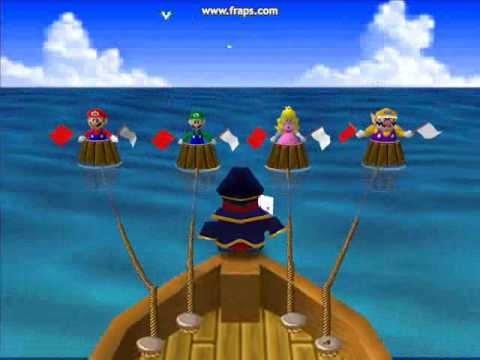
The mini-games are where things start falling apart (or getting good, depending on how you look at it). Some games will be free-for-all, some will put you in teams of two if not three against one. The game chooses teams at random, so any out-of-game alliance is quickly tested and realigned once the mini games start. Actually, there are (delightfully) little about Mario Party that is static—but more on that in a bit.
Scarcely do the games feel balanced or fair—some, like Paddle Battle, give too much power to a single player. Some, like Coin Block Blitz, aren’t fun—they’re just something to do. Some, like Bumper Balls, you might be better off not doing anything at all to win. There’s good games in the first Mario Party, of course—but somehow, we get stuck with the same damn games over and over again.
https://lastchance.cc/winning-mario-party-9-by-doing-absolutely-nothing-5904412%3C/a%3E%3C/p%3E
So let’s say you’ve managed to do well on the mini-games, and have collected a good number of coins. It doesn’t matter. This is a multiplayer Nintendo game, remember? And the core tenet of a lot of these games is entropy.
https://lastchance.cc/a-stealth-game-where-getting-caught-is-half-the-fun-484594553%3C/a%3E%3C/p%3E
Mario Party functions similarly thanks to how it lets you steal coins, items and stars from other players. That, and random events on the board mean the power always shifts. This is true up until the last moments of the game—at the last minute, Mario Party awards players with extra stars for things like winning the most coins in mini games, having the greatest number of coins, and another for whomever lands on the most mystery spaces. Someone who was losing during the majority of the game could suddenly steal the match from under everyone else. For all the effort and planning you may put in doing X and Y, someone can grab the win by stealing stars as easily as winning the lottery. It’s kind of bullshit, and it’s kind of great at the same time, too.
So here’s why a lot of my friends hate Mario Party, then—and why some people hate Smash Bros and other party games that incorporate a lot of randomness: to play them is to relinquish control. You can try to game it, you can try to make things go your way, but you can never fully control what’s happening. When most games are about mastery, letting go of that feels jarring—this is especially true in competitive context. How are you supposed to be competitive when you can’t be in control? What liveliness many people see in the randomness, we can’t help but look at as flaws in the design—even if the point is to enjoy the havoc.
Again, I won’t claim this is a universal experience, but I’ve noticed the more serious someone is about games, the more likely it is that they’ll dislike party games—as in, games meant first and foremost for entertainment. Serious gamers tend to like serious games that require strategy of some sort.
Party games? Nonsense. Those are for people who like to watch the world burn.
The Multiplayer is a weekly column that looks at how people crash into each other while playing games. It runs every Monday at 6PM ET.