IGN editor-in-chief Casey Lynch works on weekends and asked me last Saturday to chime in on the topic of violent video games.
He hit up some other folks, too. So if you’d like to know what Adam Sessler, Ben Kuchera, Ben Silverman, Brian Crecente, Dan Hsu, Dan Stapleton, Francesca Reyes, Harold Goldberg, Ian Bogost, Jeff Gerstmann, Jeremy Parish, Jim Sterling, John Davison, Kevin VanOrd, Kris Graft, Leigh Alexander, Logan Decker, Ludwig Kietzmann and Sophia Tong had to say about the state of the debate about violent video games, go read Casey’s piece
I’m in there too. Right at the end, because either Casey thought I should have the last word or because the list really is in alphabetical order by first name.
I present my replies here, as well, to highlight the two things I brought up which are my two main frustrations about the debate about video game violence:
1) The people who criticize violent video games seem, quite often, to have not played violent video games (watching someone play them doesn’t count!)
Casey had asked: “What did you think of the tenor, the topics of discussion, and the outcome of meeting?’
My reply: “It’s hard to know what the outcome of the meeting will be until we find out what the Vice President is going to suggest to the President regarding violent video games. Our interview with one the attendees indicated that Biden didn’t seem to be attacking games, but, not surprisingly, he also has little first-hand experience with them. The latter never helps in arguments about video games, much less in the possible creation of policy about them. It would certainly be nice if some of the discussion about violent games was about gaming literacy, if the people involved in policy that affects games in any way would take seriously the notion that in order to understand video games, you need to play them.
https://lastchance.cc/on-friday-joe-biden-asked-the-video-game-industry-to-i-5975805%3C/a%3E%3C/p%3E
2) The people who make violent video games seldom speak up about them. Maybe they should, like, once a year at least? Once a decade, even?
Casey had asked: “Where do we go from here?”
I replied: “I don’t consider the games media as part of the games industry. If the “we” you’re asking about is the games media, I’d say we should continue to report about violent video games as clearly and honestly as possible. We should strive to report not just the goings on of people attacking or defending violent games but we should share the insights of people who have played them and encourage open discussion about the amount of violence in games and the way playing games makes players feel.
“If the ‘we’ is the industry, I don’t consider myself a part of the gaming industry, but I would ask the industry to ponder who it is who sat at the table with Biden and who it is that speaks up for video games. Who defended Mass Effect on Fox News a few years ago? The game’s publisher? The game’s developer? No, it was someone in the games media.
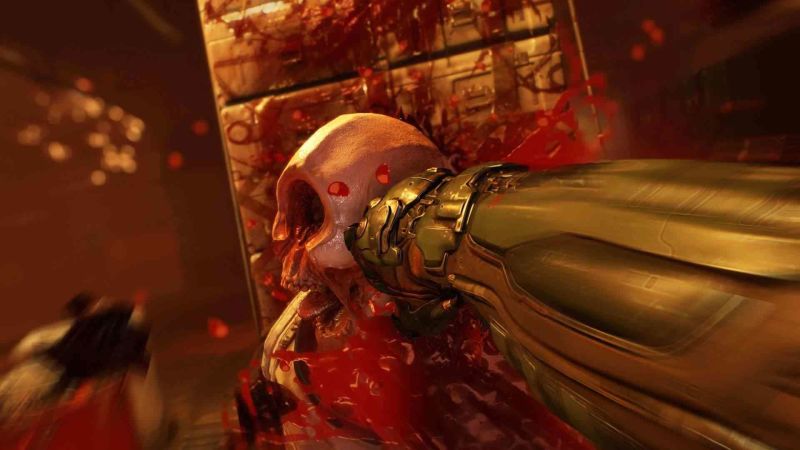
“How many times did you see the makers of Doom, Mortal Kombat, or Grand Theft Auto defend or celebrate their creations in the face of recurring criticism about those games? It’s rare. The lobbyists and the CEOs are the people who meet with Vice Presidents, but where are the game creators who will loudly stick up for video games? No game company that was meeting with Biden last week would even admit it publicly. Their PR reps either declined to comment when asked or referred reporters to the ESA, gaming’s lobbyist group. For how many years now has this been the default position?
“At what point will game creators ever speak up for their work? When will they find the opportunity to? When will they MAKE that opportunity? Often I hear the excuse that to engage those who say your work compels people to commit murder is to immediately lose the argument. Entertaining that concept is legitimizing it, the theory goes. Fair enough. But there comes a time when the silence seems deafening. There comes a time when the idea that violent video games are made by fathers and mothers and not CEOs and monsters seems implausible, because almost none of these fathers and mothers—not even the ones with Hollywood agents—has tried hard to put a face to it. Everyone wants the lobbyists to speak for them or just wish it all away. This many decades into video games’ existence, that seems bizarre and a bit sad.
“Maybe it’s time for the people who actually make video games to come out of the shadows, speak up and introduce themselves to the large part of America that doesn’t understand them or, worse, is scared by what they create.”
Play the games, critics. Talk about what you made, creators.
For a counter-argument about why creators should continue to just about never talk, consider the Quentin Tarantino approach
And for a great overview of what we’ve learned from a quarter century’s worth of scientific study into violent games, please check out our big report on the matter
https://lastchance.cc/from-halo-to-hot-sauce-what-25-years-of-violent-video-5976733%3C/a%3E%3C/p%3E
Finally, do go read Casey’s round-up. Lots of smart people in there are saying smart stuff.