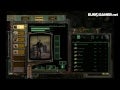
“Forsaken by his people, he strode into the wasteland,” the narrator intones in the intro to Fallout 2. 16 years later, and creator Brian Fargo has delivered that promise anew in a very literal way: by making Wasteland 2, a spiritual successor to his Fallout games that’s also a…sequel to their predecessor.
That’s a mouthful of a description. It’s appropriate, though, given how odd Wasteland 2 can often feel. This is a game that bears an immense burden of everything that came before it, to the point where it’s impossible to talk about without mentioning its relationship to the original two Fallouts. Playing it feels that way, too. It was carried into existence on the back of nostalgia-fueled crowdfunding, beta testing, and the hopes and dreams of its developers and expectant players.
The upsurge in fan’s passionate and adulation for the game didn’t just stop when its Kickstarter campaign ended just shy of $3 million, either. If anything, it’s gotten stronger since then. Wasteland 2 technically came out today. But many gamers have been playing it for months already thanks the long lifespan the game enjoyed as a semi-exclusive early access title on Steam.
I didn’t play the early access version of Wasteland 2, because I didn’t want that to be my first time with something I’ve been so excited for, but also nervous about, for so long. The Wasteland 2 that used to be is a different beast than the one launching today. It’s evolved aesthetically as well as technologically, as Eurogamer showed in a recent comparison.
It was also a game inXile Entertainment put out to its most loyal fans and supporters—at least partly, I’m guessing, to solicit their feedback and advice on making the game closer to their desired image. Even if it wasn’t ultimately intended strictly for that audience, these were the players that inXile were willing to share the game with before anyone else. I have a hunch that at least some of these people are also the sort of gamers who first discovered that, say, you could beat the original Fallout in a matter of minutes simply by running straight to the two main bosses.
I’m more the kind of RPG fan who has many precious memories of playing RPGs like Baldur’s Gate, Planescape: Torment, Icewind Dale, and—of course—Fallout on the computer my brother and I were forced to share during middle school and high school. I consider all of these to be some of the best games ever made. But I also have started to understand that my only sense of them comes from distant memories. What if revisiting the CRPG would end up ruining it for me? I’ve fretted more seriously than I probably should have. Have gamers’ tastes really changed? Have mine?
My first thought when I finally got around to booting up Wasteland 2 little more than a week ago was: Oh thank god, this still feels like home. It didn’t have the same unique tone and dark beauty as Fallout, quite, but it still looked good in that comfortably familiar oatmeal color that the post-apocalyptic southwest always seems to have.
But then I got down to actually playing, and I quickly learned a valuable lesson: playing dense, story-driven RPGs that don’t give much in the way of guidance and can take well over 100 to complete is definitely not like riding a back. “This is…harder than I remember,” I wrote to a friend a few hours later.
Wasteland 2 is a difficult game to play because it bucks many trends in mainstream role-playing games today by remaining deliberately old-fashioned. Compared to modern standards like Dragon Age or Skyrim, it’s incredibly hard to comprehend at times, let alone play. And it’s certainly nothing like the lackadaisical approach to picturesque, open-world RPGs that Bethesda popularized with the Elder Scrolls series, and has now applied to its version of the Fallout franchise.
But I think this is also a good thing. Its intangibility, and its ensuing difficulty, is an aesthetic choice, rather than a functional oversight.
I say this having played a great deal of Wasteland 2 and experienced very little of it at the same time. My Steam account informs me that I’ve put in more than 20 hours. Wasteland’s creators, meanwhile, claim it takes upwards of 70 to complete the entire campaign. Both of these numbers are meaningless as a tool to judge progress in a game like this, however. I feel like I’ve only played a fraction of my 20 hours inside it. And that’s because I’ve either restarted Wasteland or stepped back to a save point so far behind me that I sacrificed a serious chunk of time at least 5 or 6 times now.
I had to keep restarting and reloading Wasteland 2 for not better reason than this: I kept fucking up, and irreversibly so. I’d build the wrong foursome of starting characters, and wouldn’t be able to hold my own in the game’s vicious combat system. Or I’d fail to plan ahead and stock up on supplies, leaving my squad of post-apocalyptic peacekeepers (Rangers) hopelessly drained for a critical encounter. Or—and this happened twice already—I would move too slowly in responding to various crises across the nuked-out near-future Arizona, leaving the world I was trying to hold together to descend slowly into chaos. That, or just erupt straight into it.
I kept trying new things to see if I could survive longer in the Wasteland before I gave up and decided to start fresh. All those myriad attempts later, and I still don’t feel like I’ve cracked Wasteland 2 open enough to get a proper taste of the meat inside yet. I’m still just learning how to play it in the first place. This learning process is very compelling, but I’m not sure it will always be that way.
The wonderful part of Wasteland 2 is that it demands a particularly patient, studious kind of gameplay because of how opaque it is at face value. That can also be its greatest weakness, however. The game has revealed very little of itself to me. Instead, it’s preferred to challenge me to figure everything out myself.
Take the very first quest in the game as an example. My group of ragtag Ranger recruits was ordered by their new boss to go search for some repeater units (read: tiny metal boxes I had to go pick up) that a former ranger hadn’t bothered to return because he was killed. Only thing was: the path to this man’s body led straight through a small raider camp.
I started playing Wasteland 2 shortly after a few solid days of playing Diablo 3, so my first impulse was to stride right past them. I tried that, and when one the raiders started to sound aggressive, I attacked them. A few minutes later, all my party members were close enough to being dead that I figured it was time to reload. Second try, I managed to talk my way past them—mostly by just being able to resist the urge not to shoot them all immediately. Then I walked around the outer corners of their little encampment, trying to see if I could poke my way through one of the fenced-off areas. Turns out, all of these were trapped, and my diplomat character died an unceremonious and thoroughly not heroic death trying to open the door of a chain-link fence.
On round three, I avoided any trouble and went straight for the cave that Ace’s blood trailed towards. There, I met a giant frog. Before I could even assess whether this giant frog was hostile or just wanted to chat, said frog initiated combat and, with a flick of his tongue, stole my best fighter’s gun right out of his hands.
Oh, you’ve got to be fucking kidding me, I thought. Now the FROGS have theft abilities too?
The rest of my time with the frog went over relatively smoothly, all things considered.
I appreciate it when a game invites me in with such a bold, presumptuous call-to-arms. But I’m also not sure that makes it actually want to play it sometimes. Maybe this was because I was transitioning from a game as repetitive and mindlessly satisfying as Diablo 3 again, but the ambiguities of Wasteland 2’s general directive to “complete this quest, we’ll let you figure out how” a tad…overwhelming. At its most frustrating, Wasteland 2 has allowed me to trip over my own virtual shoelaces so clumsily that I’m left infuriated at how it seems passively indifferent to the amount of time and energy I’ve sunk into trying to make it through a particularly nasty and violent slog through a sprawling prison complex before I finally realize that: yep, I should have been managing my characters more tactfully several hours ago.
Far more often, however, I just end up feeling lost. Hitting a wall in this game is always a grim moment of reckoning that forces me to reconsider practically every decision I made leading up to when things officially started to hit the fan. I remain fundamentally optimistic about Wasteland 2, however, for this very reason.
The game might frustrate me, even exhaust me. But it’s also made me remember that getting lost was an important part of what made Fallout 1 and 2 special. Overcoming one’s fear and trepidation was essential to unlock the true beauty of these games. They let you stumble about so heedlessly that finally finding your way became its own reward. This is a unique kind of difficulty—one that tests you not by seeing how well you can perform in a given time or against a certain enemy, but by asking you how you’d like to challenge yourself. If that means Wasteland 2 is less approachable than something like Mario Kart or Diablo? Well, sometimes it’s nice to see a developer wholeheartedly and unapologetically appeal strictly to the kinds of gamers they know will appreciate their work, rather than trying to moderate it for a wider audience.
It Brings Back Lots Of Great Stuff From The Good Old Days
Wasteland 2 is a role-playing game through-and-through in the old school, PC-based, “I have no idea what the fuck I’m doing yet but gimme another 200 hours and I’ll have a strategy guide for you” kind of way. Much like the recent RPG Divinity: Original Sin, seasoned genre fans will probably be delighted to see many long-lost motifs make a return here: dialogue options and plot lines branching ever-outwards in different directions, skills and traits encouraging mastery, experimentation, and combination for maximum effect, inventories and status-bars demanding tireless micro-management.
At the same time, however, Wasteland also makes some welcome changes to the original Fallout paradigm. Most notably, you control a squad rather than a single character. This turns the game into a tense, squad and turn-based tactical game when it comes to combat. And there is a lot of combat, seeing as this is the post-apocalypse and killing each other seems to be the main thing people are into now that civilization has called it quits. I think this is what Fargo meant when he told me earlier this summer that the game mixes equal parts of Fallout and the original Wasteland. His new game is a fascinating combination of two normally distinct genres. It’s sort of like XCOM: Enemy Unknown, but only if that game was played in slow motion, had an interesting story and cast of characters, and provoked more complex moral questions than: “What space alien should I shoot at next?”
From its very first moments, Wasteland forces you to make uncomfortable choices. There’s the character creation system, for starters. You get four Rangers to begin with (a number you can, and should, quickly start adding to), all of whom must work together in near-perfect unison to execute a smooth lift-off in the game. Not coincidentally, this is where I started to feel lost. I consider myself fairly well-versed in nineties-era CRPGs, and even then being confronted with Wasteland’s eclectic mixture of skills took me aback. Just look at this thing:
Impressive, all those different numbers and bars to fill up. But, wait a minute: what on earth is “toaster repair?” Is it better to start out with points in “lockpicking” or “safecracking?” Must there always be a distinction between “brawling,” “bladed weapons,” and “blunt weapons?” Aren’t you basically doing the same thing, whether it’s with a rusty scythe you picked up off the ground or a…rusty spiked bat you also picked up off the ground?
Wasteland presents all of these options with neutral descriptors, saying what they help a character do but never explaining whether or not they’re truly important. That’s up to you to figure out. I’ve found the game challenging enough on its normal difficulty that getting past this first step proved an anxiety-inducing gamble.
In my very first playthrough, for instance, I created one character intended to be a dedicated techie—the kind of person that could hack into things and fix other things on the fly. Another, meanwhile, was primarily a diplomat: high in charisma and intelligence, with skill points for smooth-talking and outsmarting people. Both of these characters quickly showed me that they were valuable in overcoming certain specific obstacles. But they were also utterly useless in even lending a helping hand in most other areas. Within an hour or two, I was underground in a basement trying to fend off gigantic man-eating cockroaches. My “diplomat” was using all of his turns to run helplessly in the other direction while the techie, fresh out of ammo for her plasma pistol, kept trying and failing to stab one with a knife she wasn’t experienced enough to use. This left my other two Rangers—the only two who could handle pistols and rifles effectively—to fend off all the giant bugs on their own. And then one of them was eaten.
Ah, well, I thought. Poor guy. I guess it’s time to reload again.
Just trying to make your way around the world is similarly tricky. Useful supplies have been relatively scarce in Wasteland 2 for me so far, which means I end up scouring every nook and cranny of every dungeon I went into for treasure chests—or whatever the post apocalyptic dystopian sci-fi versions of those two things are. A good chunk of these ended being rigged with explosives or other traps. I hadn’t thought to invest in “trap disarming” in my first go-around. Or my second, as much as it was starting to sound like a pretty good idea to consider. Because, really: who goes for disarming traps as their skill of choice when there are things like “assault rifles” and “weapon-smithing” sitting right next to it? Disarming traps would’ve been a hell of a lot more useful, I soon realized after staring down a third innocuous-looking metal crate in one level after the first two in that room had exploded in my face.
“Seems like doing that set off a trap,” the game quipped in its ongoing text log of your adventures. “Maybe be more careful?”
Wasteland lays a trap for you, and then it makes fun of you for stepping in it. Somehow, even the hints this game sparingly doles out feel like thinly-veiled barbs. How wonderfully vindictive; how gleefully cruel.
…But It Also Brought Some Of The Bad Stuff Back With It Too
I’ve learned how to play Wasteland by making mistakes over and over again, then doing my best to learn from them when the game scolds me—or, more often, just lets me die. Gradually, I began to turn my characters from lumps of ill-formed clay into ambidextrous multitaskers who always know how to use at least one deadly weapon. The times I forgot to pick up ammo or scrounge for supplies forced me to use every conceivable item in my inventory to some advantage. I began to appreciate the true value of mundane skills like being able to repair objects, rather than being enthralled by the promise of one day shooting a bazooka at a giant mutant.
In other words: little by little, I see that I’m uncovering the secrets necessary to just be able to play Wasteland. Before I can even settle into a comfortable groove, however, the game keeps greeting me with other, far more sinister challenges. A virulent zombie-like infection begins to spread, roving gangs of marauders constantly threaten your every move, nuclear threat looms ominously. Entire swaths of the map can be destroyed if these issues aren’t addressed quickly enough, meanwhile, which has only added to the pressure of feeling like I must quickly master any number of techniques and abilities I’ve only just became aware of. This is where all the starting and re-starting comes in, if that wasn’t clear.
I’m Still Not Sure If It’s A Good Game, But I’m Ok With That
I guess if I had to sum up my reaction to Wasteland 2 so far in a single word, it would probably be “confused.” Or maybe “confusing.” Heck, why not just “beaten down?” I’m still enjoying it regardless, however,sois the game’s difficulty a bad thing? Not necessarily. But as I continue to play Wasteland 2 in fits and starts, I also keep thinking back to what Brian Fargo said to me earlier this summer about his love of “rabbit holes”—the story-lines that are played out to their fullest extent, leaving one to question whether or not they feel they actually did the right thing by saving one small settlement when the other could’ve offered some special device that would really come in handy right about now. Or maybe they just genuinely aren’t sure if they did the right thing, morally speaking.
“That’s what makes choices meaningful in games,” Fargo told me at the time. “When you can’t just reload and try again. Because when you can undo everything constantly, you lose some of the drama from the story. Players should look back and think to themselves: ‘God, I’d completely forgotten about that moment, it’s been so long.'”
I love Fargo’s idea as a method of storytelling. It’s harder for me to stomach when it comes to the actual gameplay in Wasteland 2, however. I enjoyed the silly feeling of stumbling into traps, or accidentally shooting one of my own party member’s face’s off, the first time I ran into these hurdles. Maybe even the second. By the third time, though, I was usually pleading with the game to be more forgiving.
Difficulty is a matter of personal taste, of course. But compare Fargo’s comments to something that XCOM: Enemy Unknown developer Jake Solomon told me before that reboot was released back in 2012. As with Wasteland 2, nostalgia is a core part of XCOM’s identity. Solomon told me that trying to appeal to the memories that people had of the original XCOM games didn’t fit so neatly with his sensibility as a designer, however:
When old gamers get together we talk about that with nostalgia—”Wasn’t that awesome? That game wouldn’t give a shit! It would just shoot all your guys!” But as a designer, I’m sort of like, “what the fuck am I doing?” Players are just gonna get off the drop ship and die, there’s no recourse? Unless I’m trying to teach them something philosophically, there’s nothing the player’s going to take away from this. So we’ve tried to eliminate anything that comes across as having no counter to it. The game isn’t just like, “Eh, sorry! Tough shit.”
Wasteland 2 is the kind of game that isn’t scared to tell you: “Sorry! Tough shit.” The original Fallout games weren’t either, in many ways. But there was something so captivating at their core that made their clumsy elements increasingly succulent, even if they were still unpalatable upon the first bite.
At one point this week, for instance, I found myself stuck in this spot where I was supposed to make two characters who represented opposing factions agree with one another but couldn’t figure out how to finish what I was pretty sure was the last step to solving this puzzle. Once I did, it was so annoyingly obvious that I wanted to kick myself. But I also found myself feeling this weird urge to just say “fuck it” and start over once again—this time with slightly higher conversational skills. Do I have a problem? I thought, somewhat in earnest.
That’s when I forced myself to think back to my first, fleeting brushes with the original Fallout. I remember having no idea what to do for a solid week, before I finally caved in and looked online to discover what character builds actually worked. I remember shivering as I felt the game’s shell crack open, step by small step. I remember spending what felt like days combing through an abandoned military research facility—not out of any hunger for loot for loot’s sake, but because I genuinely felt that this kind of routine scavenging was what survival meant for the people in the post-apocalypse meant struggling to do so. That’s when I stopped feeling lost in Fallout, and began to be enthralled instead.
I still don’t know if Wasteland 2‘s heart beats as strongly in comparison. At face value, it can often end up looking like a cheaper version of Fallout more than a proper “successor.” But if Fallout hastaught me anything, it’s that games like this take time to understand and explore before gamers can begin to truly appreciate and evaluate them. We need to let ourselves get lost in the wasteland. We need to puzzle through the game—both alone and together online—before we discover its greatest characters, its deepest quests, its weirdest surprises.
Or at least, that what I want to do going forward. Despite the many wrong turns I’ve already taken in Wasteland 2, I’m intrigued enough to keep picking away it at in my own bumbling way.
To contact the author of this post, write to [email protected] or find him on Twitter at @YannickLeJacq