The musician Alex Lasater, who goes by A L E X, considers his happy place to be a basement shag-carpet floor, on one of those endless summer-break evenings when the humidity hangs in the air and the room is illuminated by the ghostly, fuzzy-blue glow of an old TV.
I know this, because one of the songs on his 2017 debut album Growing Up Vol. 1 is named, plainly, “I Miss Having Sleep Overs,” and it’s currently sitting at 76,000 views on YouTube. The textures are muted and narcotic; a loopy beam of crystalline synth, a heartbeat drum-machine pitter, and a wordless voice behind the veil.
The only thing that penetrates the fog is a bevy of samples plucked directly from the seminal Super Mario 64. Princess Peach reads her charmed invitation aloud, Mario sighs a heavy depleted-HP sigh, and a few of those goldenrod coins jingle in your pocket. The Mushroom Kingdom is a cutesy realm attuned to the tastes and proclivities of 10-year-olds everywhere. In A L E X’s interpretation though, things have gone wrong. “I Miss Having Sleep Overs” is not frightening or sinister, but it is askew, pensive, and uncanny. A complex blend of mournfulness and tenderness.
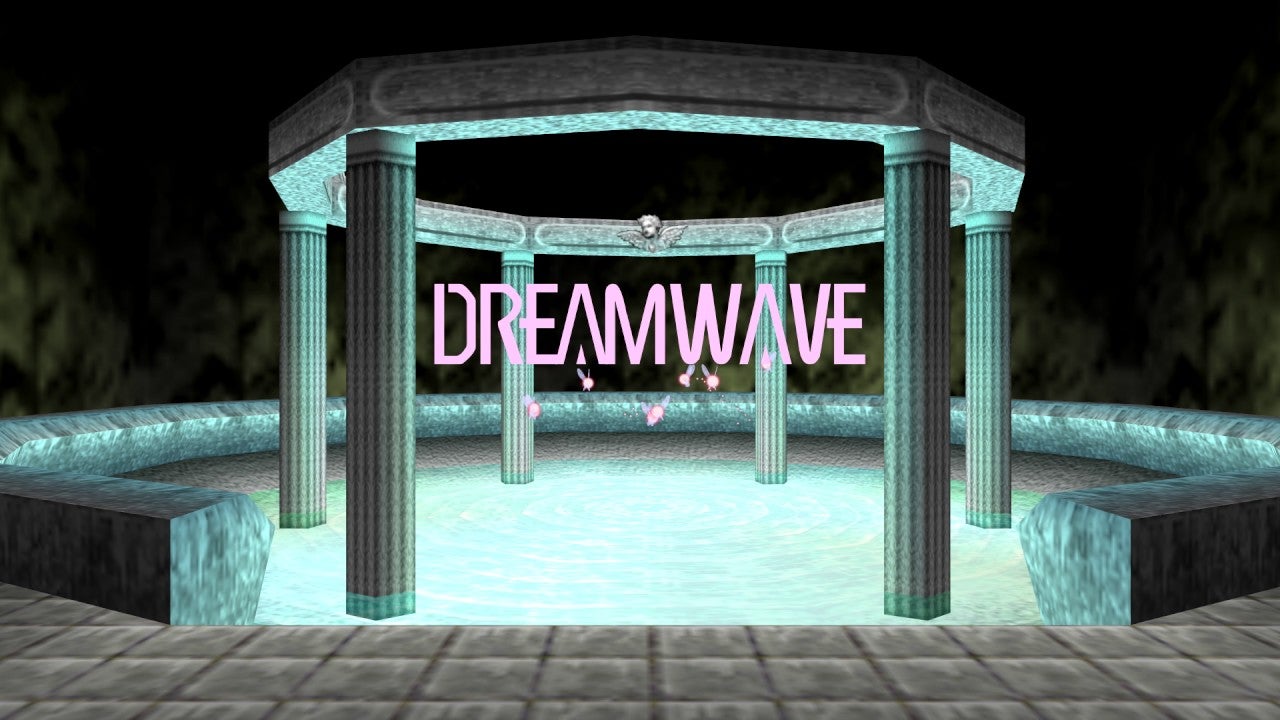
Broadly, you can lump A L E X’s music into the lo-fi hip-hop scene; where kids compose sedate, 21st-century relaxation tapes and distribute them through live-streams that have taken over YouTube. More specifically, he belongs to a small community of artists who have found a wealth of inspiration in the bloopy soundscapes of the Nintendo 64. The best way to find the stuff is through YouTube mixes, where anonymous DJs skulk through SoundCloud and offer up curated compilations with Vaporwave-lite names like “Mariowave” and “Nostalgia 64.” The music itself can be funny and uncanny at first glance—a true aestheticization of 1998—but the soul of it hints at a deep, inflamed nostalgia.
“When I make music I try to make whatever I’m feeling at the moment. I think for a lot of people music is heavily based on expression,” said Lasater, 22, over email from his Seoul, South Korea residence. “So when I make music [I’m thinking] ‘I want to make something that sounds like this feeling’. I guess I just feel melancholic and nostalgic a lot when I use those [Nintendo] samples, and people feel the same when they listen to them.”
A L E X doesn’t exclusively compose with Nintendo samples. There’s a wide tapestry of Clinton-era touchstones at play on Growing Up, including one track titled “I Wasn’t Allowed To Watch Whose Line Is It Anyway Growing Up But Now I Think It’s Pretty Good.” But by and large, video games, and they way those games intersected with his childhood, represent his best work.
He’s not alone either. Consider Seventh Sage’s sleepyheaded remix of Mario 64’s “Dire Dire Docks,” or Rainy’s liquid distillation of the iconic file select jingle, or Phillip Schlosser’s quixotic piano flip of the Great Fairy Fountain theme. Most impressive of all might be Z E L D A W A V E; a full-length album produced last year by a 23-year-old British Columbian named Graeme Clark. It imbues eight songs from Koji Kondo’s iconic Ocarina soundtrack with a hazy ennui, and can be listened to in full through a 20-minute music video (now at 1.3 million YouTube views), complete with a washed-out VHS sheen over a sun-bathed Hyrule Field.
“After going through Ocarina of Time footage and listening to the music over and over again I began experiencing feelings of reflection,” says Clark, when I ask him about Z E L D A W A V E’s composition process. “I added cartridge noises at the beginning and end of the album, and tried to pick cutscene clips that reflected growing up, like ‘leaving the forest’ and ‘memory of younger days.’ I only later realized how the idea of changing from a kid in a ‘happy overworld’ to an adult in a ‘dark overworld’ is strangely reflective of our nostalgic experiences.”
I shouldn’t be shocked by the way Z E L D A W A V E speaks to me. I’m 27 and spent most of the ‘90s attached to an N64, so I’ve already done the unconscious, emotional work annexing the innocence and chastity of my childhood to those old Nintendo overworlds. It doesn’t take long to realize that Clark’s music is written in tribute of that heritage, and that he too spent a ton of time chasing his tail in the Lost Woods. However, that’s not to say that this is a phenomenon exclusive to my generation. Musicians have always cribbed ideas from video games. In the past, though, that manifested through the jejune low-res rumbles of the Game Boy, NES and SNES. “Chiptune,” as we dubbed it, fetishized the Reagan ‘80s for a slightly older cadre of gamers who left their earliest and happiest memories with Super Mario Bros 3 rather than Super Mario 64. Nostalgia, like all things, is sinuous and in permanent evolution. Everyone has their own foundational text, and now it’s millennials’ turn to establish the canon.
“The generation of early 3D is sort of the ‘new 8-bit’ in a sense,” says Luke Besley, a 28-year-old from Melbourne, Australia who produced that aforementioned “Dire Dire Docks” remix. “I feel so grateful to have these aspects of my childhood acknowledge[d] and referenced and celebrated in an artistic sense. There were so many others like me who perhaps once felt ostracised for enjoying video games as children, and we can now all come together and celebrate it, while other [things] from that era fade away into history.”
It’s strange, though, that the musical retrospection of the Nintendo 64 is touched with such a deep, fundamental melancholy. Chiptune could be tempered and wistful, but it’s rarely been outright sad. Growing Up and Z E L D A W A V E, on the other hand, are congenitally somber. It makes me think that people my age have embraced a near-cultish relationship with our own languor. Personally, I enjoy A L E X’s art because of the way it triggers me. It doesn’t make me relive my greatest and most heroic sleepovers. Instead it forces me to contend with how quickly those memories—those people—have become ghosts. You see it represented in the comments that dot the songs on YouTube. Many of them short, heartsick koans that speak to a boundless sorrow far beyond Koji Kondo’s legacy. “I miss my childhood and having no worries,” reads one, penned by user infinitejest, on an upload of A L E X’s chopped-and-screwed cover of “Zelda’s Lullaby.” “I feel so depressed and alone nowadays.”
If there is a ground zero for all these calcified emotions, an OG auteur for these vibes, it is probably the Swedish eccentric Yung Lean. He broke onto the scene in 2013 as a teenager, with a delirious hip-hop persona that hybridized fuzzy ‘90s nostalgia and contemporary debasement. In the video for his best song, “Hurt,” he details how much he enjoys being zonked out of his mind over a gloomy, tilted-cartridge beat. Two red N64 controllers dangle on either side of the frame, in the same way Rick Ross flexes the $1.5 million diamond mini-me around his neck. A few scenes later, he shows us his extensive, laminated Pokémon card collection, and a flickering broadcast of Pokémon Stadium on an old, worn-out TV. After “Hurt” went viral and Lean got famous, he introduced us to the rest of his burnout posse that he stormed the streets of Stockholm with; naturally, they were called The Sad Boys.
Nobody can say for sure why Lean found a conduit for his own dejection with the N64. The console isn’t intrinsically sad, and neither is all the art it inspires, best evidenced by Atlanta upstart Lil Yachty, who, in 2016, used the iconic pan-flute at the start of Super Mario 64 to brag about the beautiful life he was living. But clearly, there is something about the orchestral heritage the N64 left behind that tastes bittersweet to those who first experienced it as children. Nintendo famously did not ship a sound chip in the guts of the company’s first 3D console, and you could argue that those limitations manifested in the gloomy, slow-motion dirges that are now permanently lodged in our brains.
I think another theory is more likely. The inaugural 3D consoles represented the developers exploring a broader emotional range with the games they were making. I mean, the tonal differences between A Link to the Past and Ocarina of Time are clear. That ambition required a sadder, downtempo MIDI rather than the sprightly up-beat anthems of the SNES, which itself begat the chilly ennui of Super Mario 64. How that intersects with your own nostalgia depends on your mileage, but Besley told me he remixed “Dire Dire Docks” specifically because he felt like it had an accidental, uncanny connection to the sedate, rainy lo-fi he was already listening to. “To me, it always scratched the same itch,” he says. That has to count for something.
Nobody is profiting off of N64 nostalgia right now. A L E X, Besley, and Clark all work out of SoundClouds and BandCamps, the de facto platforms for the music industry’s part-timers. They upload their tracks for free on YouTube. If there is to be a true breakout star, it hasn’t happened yet, though this does not seem like a scene that’s concerned with those kind of benchmarks. In the meantime, the artists I mentioned are hard at work on follow-ups. A L E X released Growing Up Vol 2 in June, and Clark is in the middle of a sequel to Z E L D A W A V E, which he says will focus on brand new remixes of Majora’s Mask songs. He intends on having the record out before the end of the year.
Clark told me he specifically released Z E L D A W A V E as a video mix on YouTube because he liked the idea of people assuming it was the work of a global hive mind, rather than a singular architect. It is a strangely ego-free endeavor, but I also think it speaks to the ethos of this scene. All of these artists, in their own ways, are fighting for the sanctity of their memories. The resonance of a record like Z E L D A W A V E rests squarely on the ability of an audience to mourn the little things; stumbling into a Great Fairy Fountain, saluting the Big Goron, saying farewell to Saria for the final time. Art is so often the consolidated experiences and virtuosity of a single person. That’s not the case here, Instead, the beauty is that everyone who grew up N64 feels like the author. Touch it, taste it, and commiserate.
“In a way, I think nostalgia informs us that all great things will eventually end, and that’s okay,” says Clark. “You’ll always have memories and feelings to reflect on, but the value of our favorite things comes from the fact experiences don’t last forever.”
Luke Winkie is a writer and former pizza maker from San Diego, currently living in Brooklyn. In addition to Kotaku, he contributes to Vice, PC Gamer, Playboy, Rolling Stone, and Polygon.