A union-busting complaint recently filed with the National Labor Relations Board accused Nintendo of America and contract worker agency Aston Carter of surveillance, retaliation, and other unfair labor practices. According to four sources familiar with the incident, that complaint, first reported by Axios, comes after a part-time employee spoke about unions in a business meeting and was later fired mid-contract. In an unprecedented move, others are now speaking up about feeling disrespected and exploited at the notoriously secretive Mario maker.
The department meeting took place in February, sources said, and a remark asking for general comment about unionization in the games industry came during an open question and answer period at the end. Months earlier, Vodeo Games became the first studio in North America to unionize, and unionizing QA testers at Activision called on the publisher to voluntarily recognize them. The employee was fired shortly after for allegedly violating their NDA in a comment on social media.
Nintendo wrote in a statement yesterday:
We are aware of the claim, which was filed with the National Labor Relations Board by a contractor who was previously terminated for the disclosure of confidential information and for no other reason. Nintendo is not aware of any attempts to unionize or related activity and intends to cooperate with the investigation conducted by the NLRB.
Nintendo is fully committed to providing a welcoming and supportive work environment for all our employees and contractors. We take matters of employment very seriously.
But sources tell Kotaku the social media post in question was extremely vague, and based on disciplinary actions they had witnessed in the past, would normally have warranted a warning at best. Instead, they contend the contract worker was being retaliated against for their comments in the February meeting.
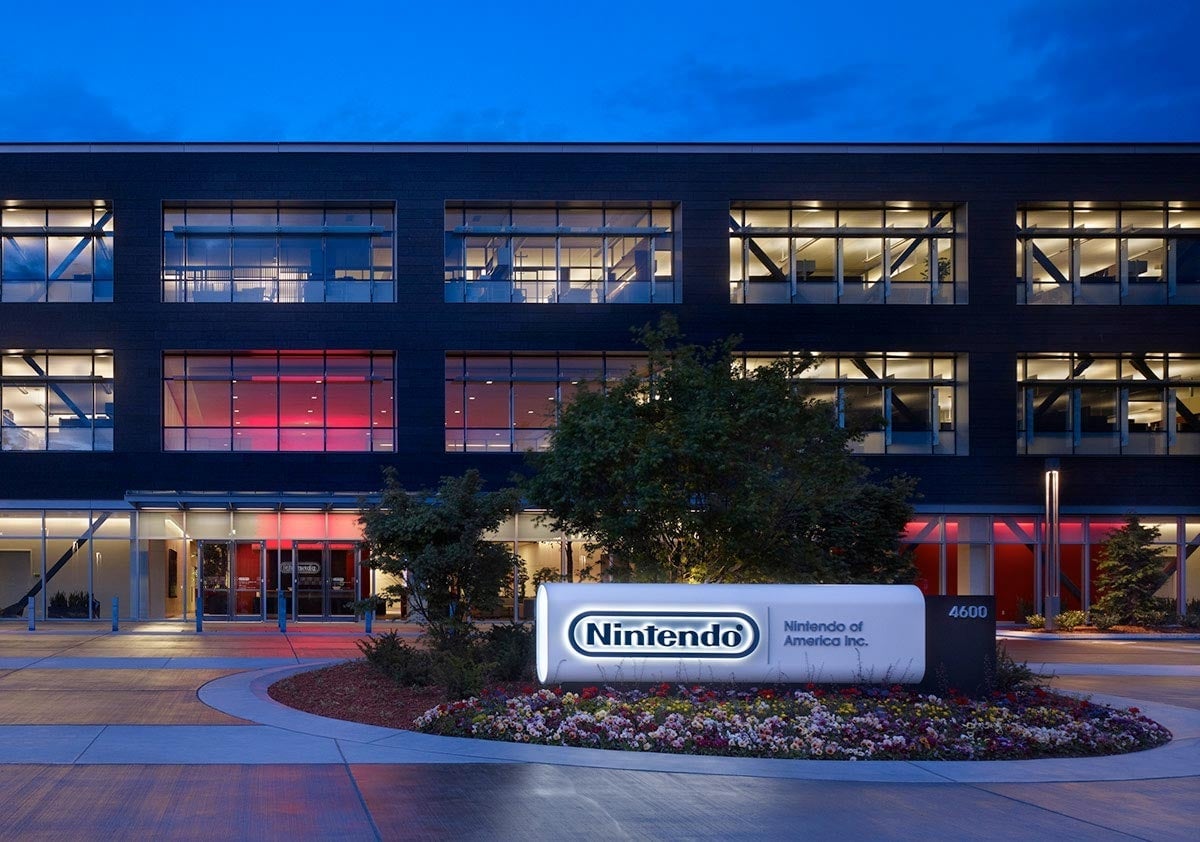
According to 10 current and former employees at Nintendo of America’s Redmond, Washington headquarters, however, the issues there go deeper than just one instance of alleged retaliation. For many, the chance to work for gaming’s equivalent of Disney and the storied company behind Mario, Zelda, and other classics, is a dream come true. For the hundreds of contract employees at Nintendo of America, however, the dream can forever feel just out of reach and tarnished by the company’s insistence on treating them like second class workers.
Nintendo did not provide further comment after repeated requests.
Employees Kotaku spoke with describe a two-tiered system where temporary workers are cycled through outside agencies on 11 month contracts, with mandatory two month breaks in-between. They say they can apply for unemployment during that time, but remain without access to health benefits, and breaks between contracts can sometimes last much longer. These types of mandatory breaks between contracts are something Microsoft famously put into practice after it lost a historic $97 million class action lawsuit to thousands of then “permatemp” employees at the company.
Many testers say they make as little as $16 an hour, which is less than the minimum wage of next-door Seattle in one of the priciest housing markets in the country. A handful of people make over $20 but that’s rare, said one current full-time employee. Meanwhile, competitor Activision Blizzard recently announced it was making all its testers full-time staff with full benefits and a starting rate of $20, following a recent push by QA staff at Call of Duty Warzone studio Raven Software to unionize.
The recent wave of labor organizing, not just in the video games industry but also at places like Amazon and Starbucks, headquartered just miles down the road, has some asking tough questions about why one of the most beloved gaming companies isn’t doing more for its most precarious workers at a time of record profits. In their eyes, Nintendo of America relies on an army of contract workers in product testing, customer service, and other departments without providing any health insurance, few opportunities to be promoted to full-time, and little recognition, both publicly and internally.
One of them is Jelena Džamonja, now a more than five year veteran of the temporary worker cycle there through temp agency Parker Staffing, which brags about its close relationship with the console manufacturer on its website. Like many aspiring developers at Nintendo of America, Džamonja began as a tester tasked with discovering bugs in the company’s big first-party releases and other published games.
She quickly took on management responsibilities, leading and training other testers, but she was still only considered part-time, and thus kept at arms length by the company despite working shoulder to shoulder with “red badges,” a nickname for those who are full-time. But she was doing the same work and her contributions were just as meaningful.
“There are a lot of talented people who find the biggest, shittiest bugs that would make players freak out,” she said. “They find them, report them, and then don’t get credited.”
After the video game crash of 1983, Nintendo revitalized the industry with the NES not just by creating some of the most iconic games in the medium, but also by explicitly tying its entire branding to the idea of quality. The industry had nosedived after being inundated with low-quality games that saturated the market, the narrative goes, leading the Japanese company to create what was known as the “Nintendo Seal of Quality,” a logo emblazoned in gold that was meant to assure the consumer that the publisher’s products had been properly tested and would work as advertised.
While the publisher would later drop the ‘quality’ part of the logo, the word best encapsulates how the public perceives Nintendo’s branding. One of the most commonly cited quotes from Super Mario creator Shigeru Miyamoto has to do with the necessity of delaying gamesto ensure that they release in a good condition, often brought up in opposition to the rest of the industry, where increasingly games are released in unfinished and buggy conditions.
Both of these things, it’s worth noting, are partially based on half-truths and misunderstandings of what Nintendo actually said or did. The “quality” was never meant to denote whether or not a game was good, just that it was functional. The quote, meanwhile, never actually happened even though it goes viral on social media every few months.
But Nintendo has reaped all the benefits of being associated with top tier products, an association so strong that it has overwritten the actual truth. So it’s worth asking: who is ensuring that Nintendo provides that top tier quality that consumers say is the thing that sets the publisher apart?
“It hurts your pride because you do contribute to these games and the quality and reasons why players keep coming back,” Džamonja said.
The inequality of this system hit home for Džamonja in early 2020. It was an icy day in an unusually snowy January when she says she slipped and hit her head while walking to work. She didn’t think anything of it at first, but by the time she was in the office she had trouble reading and started to worry she’d suffered a concussion. Fortunately, there was an onsite clinic in her building.
But when she went to visit for a checkup she says they turned her away because she wasn’t a full-time employee and wasn’t part of the Nintendo health insurance plan. She decided to ask a coworker to drive her to a nearby urgent care facility instead. That didn’t work either. The colleague was a full-time Nintendo employee. Since as a contract hire Džamonja was technically employed by Parker Staffing, she said she was told it was against company policy for her colleague to drive her off-site. Parker did not respond to a request for comment.
“By this time I was full on crying,” she told Kotaku in a phone interview. Eventually, an Uber was called.
“They want to control you like you’re full-time, but not treat you like a full-time worker,” she said.
While contract workers are expected to perform at the same levels as their full-time counterparts, including signing up for necessary overtime when a project runs up against a deadline, their access to Nintendo of America’s facilities is limited. Many said they can eat lunch at the Mario cafe, but are expected not to linger in the main building. The company’s hyper-vigilance around leaks means they must also be accompanied by red badges in many parts of the campus, and can’t even bring their parents on a tour of the Nintendo museum there.
“You can work next to someone side-by-side for 20 years and not get invited to the [company] cookout,” she said. “It’s bullshit,” said another current contract employee. “The idea of being hired full-time is like a carrot on a stick to keep you dealing with the [mistreatment].”
One former associate in the customer service department said she worked at Nintendo for an entire decade with only one year off, but she was never promoted to full-time status.
[It was] easier to fire them in a quickly changing environment. [Nintendo of America doesn’t] need to pay as many benefits, lower wages. And their long term employees (not just myself, but many of us) were strung along with the enticement of full time employment… they’d keep moving the goalposts to full-time employment there.”
Even when people did get moved to full-time, it wasn’t always a big jump in pay, and sometimes still felt uncompetitive with local rivals. “Full-time pay is of course better, but still not great by industry standards; it’s almost as though they want to compensate us with ‘the privilege of working for Nintendo,’” said one current full-time employee. “Absolutely they have the ability to pay properly,” said another.
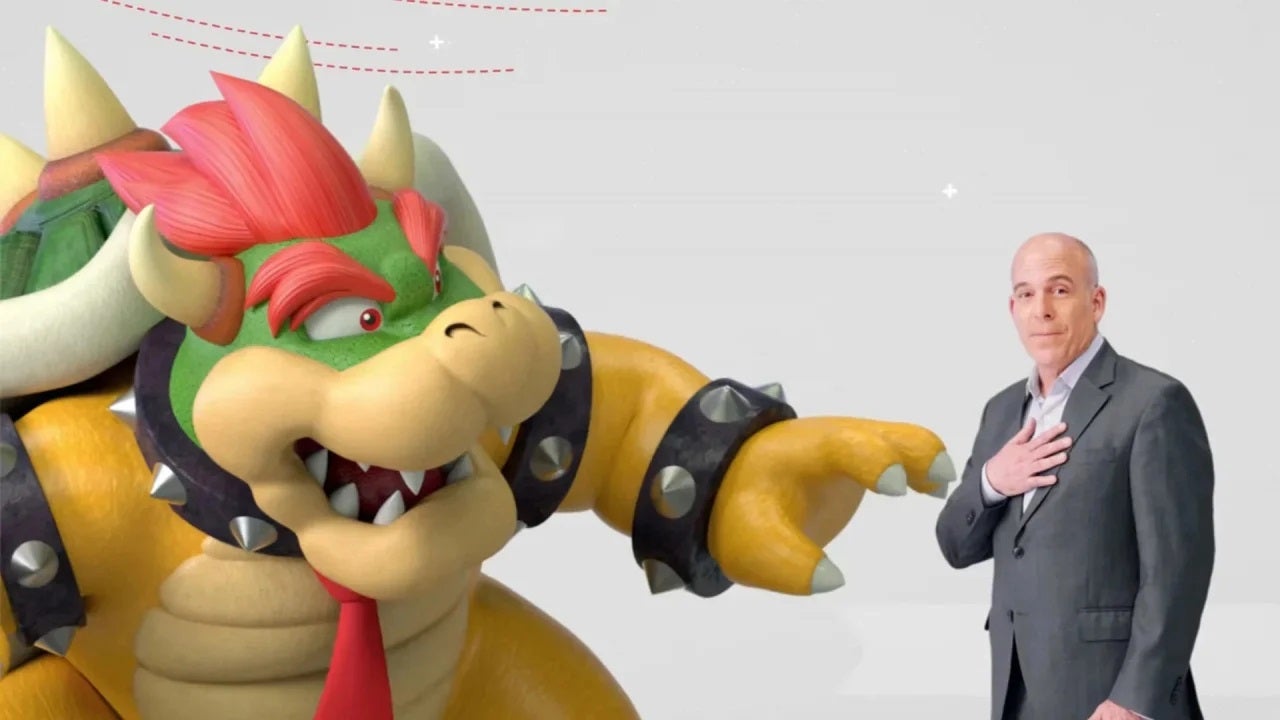
But it’s not clear who exactly is in charge of those types of decisions. Contract workers are told to take up pay concerns with the agencies they’re hired through. On paper, the man currently in charge is Doug Bowser, who took over after Reggie Fils-Aimé retired in 2019. Some full-time employees aren’t sure whether Nintendo of America has the power to improve conditions on its own, or requires authorization by Nintendo Japan, where the company’s main power brokers are based. One current employee suggested long-time Nintendo veteran and current VP of operations, Don James, had the final say. Another said that Nintendo of America couldn’t even change the wallpaper color in a meeting room without approval from Japan. A third source said that it was difficult to push back against things like overtime because “our Japanese counterparts would do more so we have to match what they’d do.”
In some ways, Nintendo’s willingness to prioritize its games over the people who actually make them has been out in the open all along, at times repeated by the gaming industry in stories that have somehow been repackaged as stories of grit and determination, or reframed in a cutesy way. Shigeru Miyamoto, creator of legendary icon Super Mario and considered by many as one of the most influential figures in the entire medium, has some of his legend rooted in personal neglect—and Nintendo has enshrined it.
In an interview currently hosted on Nintendo.com, there’s a segment where Miyamoto is asked about a rumor that, early in his career, he once cut ties with friends in order to focus on gaming development. While he clarified that he had only called a few friends to tell them they probably wouldn’t see him for months, the anecdote is not an outlier.
Later in his career, Miyamoto was apparently known by employees to walk into a room and say that it was now in fact “Mario Time.” Then, work went even further into the night, an experience that an employee at the time called “the craziest crunch time that I’ve ever experienced in my development career,” even though Miyamoto would, by 2 a.m., tell people to go home for their “health.”
Stories like this are numerous; The Legend of Zelda’s opening song, for example, was created in a “desperate” overnight frenzy to try and avoid a delay. But according to a 2020 interview with Miyamoto, the only way to achieve a “dream, or vision” when managing people is to think about the players first.
“I also believe that a shared feeling of success should come only after the players have actually enjoyed a game,” he remarked at the time. “Before that point, people might see me as a mean boss, trying to drive us through the rough patches. But I think that’s what dictates whether someone is a good leader or not.”
Current and former employees have also told Kotaku they felt that even discussing their working conditions could lead to repercussions. “There’s definitely a fear of talking about these things with the red badges,” said one current contract employee. One of the current full time employees Kotaku spoke with didn’t disagree. “The general feeling is that you will be punished for being outspoken at every level.”
“They knew they could get rid of troublemakers because there’s a line out the door of people wanting to get hired there,” said Jenn. She felt that there was a major “culture shift” at NOA in 2015 where management put a greater emphasis on performance metrics. Compared to the five years that she had previously worked at Nintendo, there was more focus on call wait times and attendance. A source who spoke on the condition of anonymity told Kotaku that projects and teams shrunk in that year (one of which was their team), and there were major structural changes in how contractors would be allocated projects. The new tiered structure for testers meant that they felt pressure to work overtime if they wanted to be assigned on more projects in the future. The source felt that these changes were because of the Wii U’s underwhelming performance.
Several who did “speak out of turn” said they were later taken aside and given warnings. Džamonja recalled a meeting in 2021 that took place during a wave of anti-Asian violence. Her director addressed the rise in hate crimes in the meeting by reading an official internal statement from Nintendo condemning them. When the meeting wrapped up and there was a last call of any questions or comments, Džamonja said she shared that she was volunteering as part of a neighborhood watch group in Seattle to help people get home safely, and to let her know if anyone else wanted to learn more about it.
A day after the meeting, Džamonja said she received a message to get on a call with her agency representative. Her manager had apparently been unhappy with her comment, and the representative reprimanded her on his behalf for going off topic to promote the volunteer group. In addition to the seeming double-standard, Džamonja and others accuse this dual system of micro-management of breeding confusion and leading to games of telephone where agency reps misinterpret feedback from Nintendo of America staff and then lay it at the feet of contract workers. Some also feel incidents like this can hurt their slim chances of promotion or even get them laid off and never invited back.
Elisabeth Pring was on her second tour in testing at Nintendo of America recently when she says it was suddenly cut short. Pring says she’s outspoken about what she feels are problems at Nintendo of America, and feels that put a target on her back. Earlier this month, she said she called out the lack of work from home flexibility for testers as Nintendo in a meeting with a director. The director had said he would be remaining remote for health reasons and Pring, who says she’s immunocompromised, asked why contract workers weren’t being afforded the same option. Shortly after the meeting she says she was chastised for not going through the “proper channels.” Pring said she was pulled aside for warnings like this three times in the past month.
On April 11, management put a meeting on her calendar for the end of the week, but never said what it was about. That Friday near the end of the day she and five others dialed into a conference call with their Aston Carter rep and Nintendo managers. It turned out they were all being let go. Pring was stunned, she said, having received no indication from her supervisor that she would but cut mid-contract. Before the meeting ended she shared her frustration that they weren’t even given 24 hours notice they would soon be out of work.
“I was fucking pissed,” she told Kotaku in a phone interview.
Shortly after the meeting concluded, she received a message through Microsoft Teams to hop back into a call with her Aston Carter recruiter. During the brief exchange she says she was chastised again for voicing her complaint in an open forum rather than with the appropriate supervisors, despite already being on her way out the door. Aston Carter did not respond to a request for comment.
“You need to go after what you want in this industry because they will never just give it to you,” she said. “I love games and someone needs to change this industry.”
In the meantime, current and former staff Kotaku spoke with are waiting to see if Nintendo of America starts changing or tries to quell the latest upswell in complaints as it has allegedly done with past ones.
“The air in the office is tense right now,” said Džamonja. “They’re afraid to talk about this.”
Džamonja and others said they love the work and the people they do it with. They just wish the system they’re forced to do it in would treat them like equals. “If I was fulltime I would stay at that job forever,” she said. But that didn’t happen. “I feel like I hit a glass ceiling where my input no longer mattered.”