Price tourism, the scummy practice where people spoof their location so as to take advantage of emerging economies in the poorest parts of the world, isn’t exactly looked fondly upon by the games industry. Picking up a full-price game for a buck-fifty by pretending you’re in Brazil both rips off the developers, and damages the economies of the country being e-invaded. But in a weird twist, publisher extraordinaire Mike Rose has just revealed how it helped boost his latest game to an unexpected level of success.
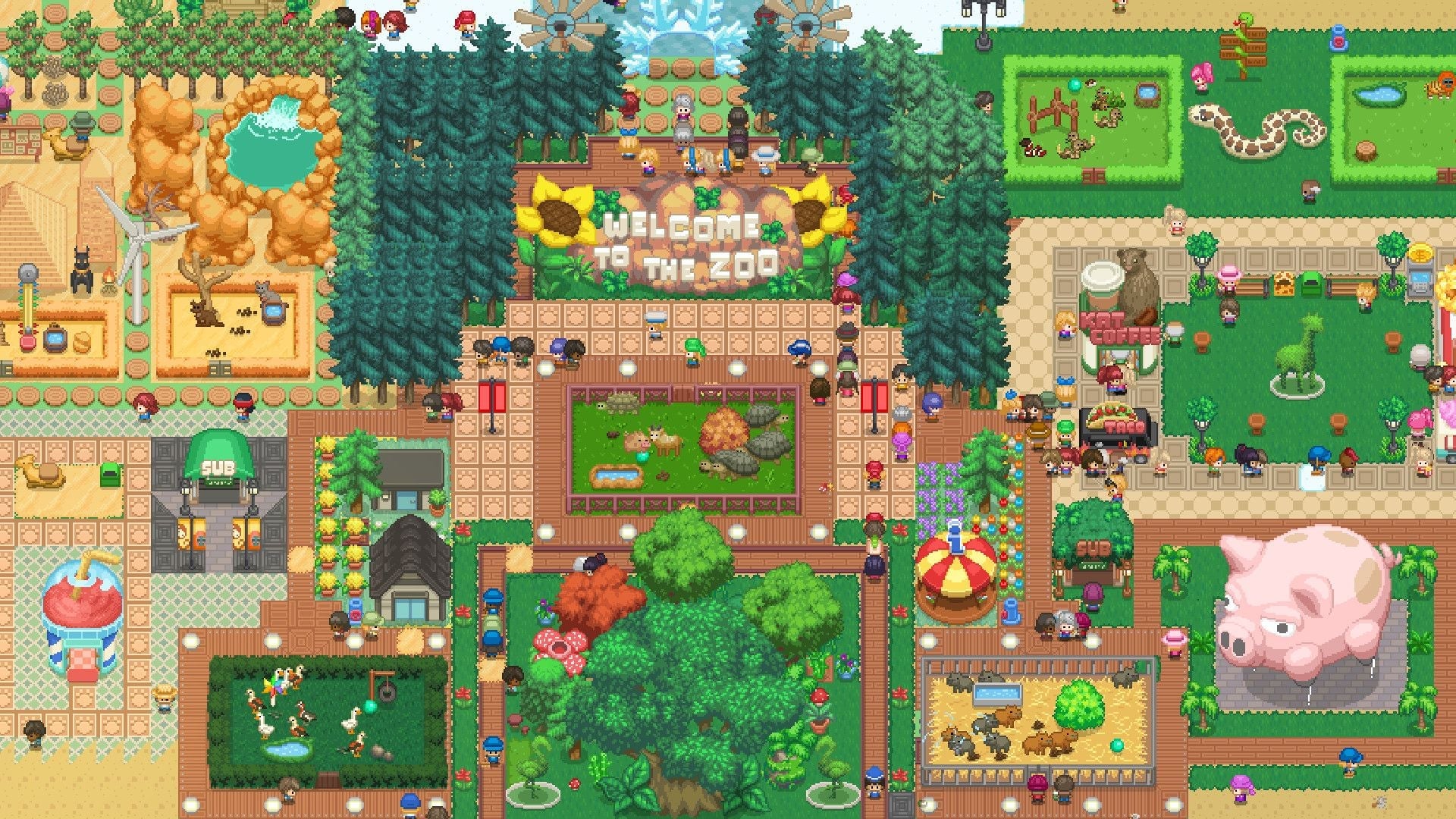
No More Robots is the publisher of many successful indie projects, with names under its belt like Yes, Your Grace, Hypnospace Outlaw, and Descenders. 2021’s zookeeper management sim Let’s Build A Zoo, by developers Springloaded, was NMR’s biggest investment to date, and went on to perform well for the publisher on PC last year. At the end of last month, the game came to consoles, including Switch. It went up for pre-order a week earlier, on September 22, at which point Rose started noticing something strange.
Firstly, it seemed like good strange. Pre-orders for the Switch version were flooding in, and he was delighted. Until he noticed that 85% of the pre-orders were coming from Argentina.
https://twitter.com/embed/status/1580515794361798656
Now, Argentina is not a strong economy, and due to the Switch’s regional pricing, the usually $24 game and DLC bundle was priced there at around $1.50. Obviously these weren’t genuine Argentinian sales, and Let’s Build A Zoo was the victim of price tourists, who use various websites to identify the cheapest location to purchase a game, spoof their IP or register a Switch account for that country, and then buy the game at its local rate. All these pre-orders were netting NMR only a buck each. And it began to seem like a disaster.
However, due to a weird quirk of the way Nintendo compiles its regional sales, it groups all of the Americas when monitoring sales for the United States, and counts units sold, not revenue. All those Argentinian pre-orders were being registered by the Switch’s algorithms as U.S. interest, and it immediately began promoting the game far more heavily on its storefront to some of the highest-paying customers: Americans.
This then saw the EU Switch store think this game was big business, and it started being promoted to much of the rest of the world’s full price-paying nations. By launch day, September 29, the game was high up on both stores’ “Great Deals” tabs, getting—as Rose tweeted—“loads more attention than we would have got.”
It’s impossible to measure just how many more sales Let’s Build a Zoo will net as a consequence of this situation, but Rose explained to Kotaku that simply being on the Deals page on the Switch has previously seen his games double their sales. He tells me the game has since performed extremely well on Switch, describing it as “our best launch to date,” beating out the huge-selling cycling sim, Descenders
This, of course, all leaves a large ethical question. Buying games this way, taking advantage of smaller economies in the poorer nations, has consequences. Oftentimes, it will lead to developers and publishers questioning whether they should even sell their games in such regions given how much money they’re losing, or putting their prices up to a point where they’re locally unaffordable.
2022 mega-hit Sifu is due to release on Switch this month, but Argentinians are reporting the game is no longer available to pre-order there. It was previously reported to be priced at 40 Pesos ($2), but links to the former store page now end in Wario. It seems very possible this is another example of the phenomenon, with the opposite reaction. We’ve reached out to developers SloClap to ask for more details.
Cursed to Golf developer Liam Edwards of Chuhai Labs tweeted to say that the studio’s recent game faced the same situation.
lol this happened to Cursed to Golf also… people getting the game for $2. Nothing we could do about it 😞 https://t.co/P43UlXNZil
— Liam E ➡️🦝PAX East (@LiamBME) October 13, 2022
Edwards told Kotaku that his team discovered the Argentinian pricing via a discussion on a forum focused on such matters. He explained that regional pricing is not in their control, nor even the publishers’, but rather a standard price is set, and then the eStore reprices the game accordingly per region. For Cursed To Golf, that price was between $2 and $3. “It’s definitely not cool,” Edwards says of people taking advantage of these prices. He adds that it “compounds how many things developers have to continually keep in mind when selling their game.” Although he adds that a positive side effect is that “at least that people who maybe cannot afford it have a way of picking it up while also ‘donating’.”
As far as Mike Rose is concerned, he really doesn’t want to increase prices in Argentina, given how unfair it would be to an economy where around $2 is a standard price for a game. In his Twitter thread, Rose concludes that “Platforms really need to work out asap what to do about how easy it is to region-swap and buy games for dirt cheap.” He adds, “This isn’t just on Switch—we’ve seen big ‘Argentina’ across all platforms, including Steam and Xbox.”
https://twitter.com/embed/status/1580516894695530498
“Every loophole always gets taken advantage of,” Rose tells me when I ask how he addresses the ethical issues, adding that he thinks a lot of developers will see it as an “‘Oh crap’ situation and raise the price.” But for No More Robots? “I’m just gonna keep pricing our games how they’re meant to be priced, and then if people take advantage of that, I guess that’s their right.”