“If a young boy takes acid and experiences a change, the least a film can do is give him more than acid gives him. But you mustn’t give him the visions that acid gives him; you must give him the pill. And then let each individual see his own visions.”
That’s legendary director Alejandro Jodorowsky discussing his creative process in the novelization of El Topo, the 1970 acid western that put him on the map as one of the world’s foremost avant-garde filmmakers. Goichi “Suda51” Suda has long credited El Topo and its main character’s journey to enlightenment via bloodshed as a major influence on the original No More Heroes, which debuted on Nintendo Wii back in 2007. But inklings of Jodorowsky’s outlook are arguably present in every game Suda touches.
No More Heroes 3 is the latest such trip, directed, designed, and written by Suda alongside his team at Grasshopper Manufacture. The studio’s punk-rock ethos has produced hit after underground hit since its inception in 1998, and now Grasshopper’s finally returned to its most notable series for another adventure through the wild workings of the Southern California-inspired Santa Destroy and its outlying sister cities.
The folks at Grasshopper inject every game they make with layer upon layer of symbolism, surrealism, and absurdity. At times, it’s hard to gauge the studio’s work against the rest of the medium, if only because everything it produces is so aesthetically unlike anything else in video games. There’s no comparison, no point of reference to act as a critical guidepost. It is an anomaly with no peers, at least outside the diverse realm of indie games. As per Jodorowsky’s personal directive, Grasshopper sets itself apart from the pack by “giving [players] the pill” and letting everyone “see [their] own visions.”
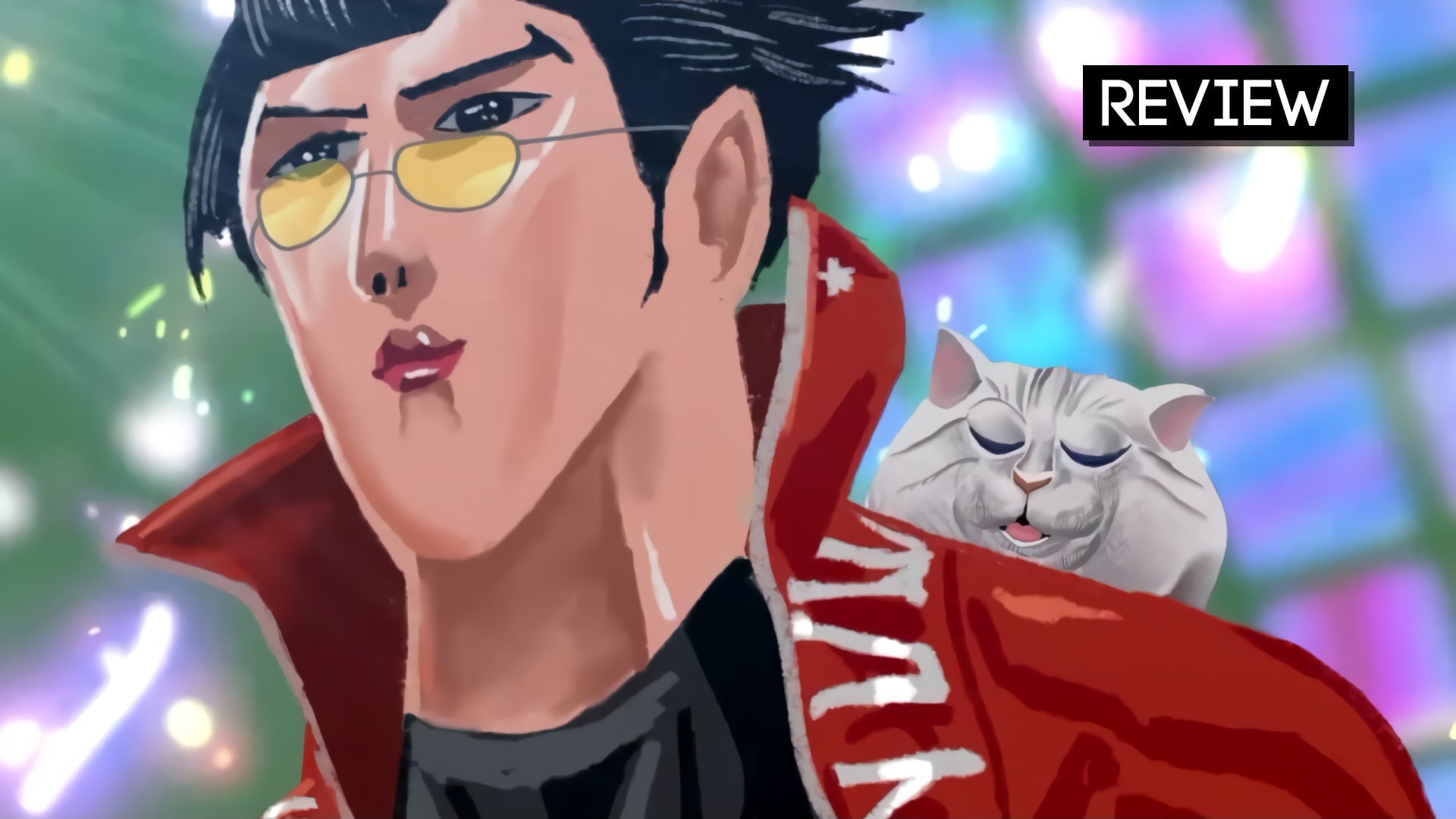
Just like previous games saddled Travis with ostensible goals amid the chaos—getting laid in No More Heroes and exacting revenge in No More Heroes 2—this third outing thrusts the otaku assassin into the role of Earth’s savior against alien invaders. The extra-terrestrial head honcho Prince Jess Baptiste VI is hellbent on conquering the planet, but agrees to let Travis take on his goons one by one until only the two of them remain. This narrative contrivance helpfully establishes the series’ traditional gameplay loop: Travis works his ass off, Travis makes enough money to fight a boss, Travis kills said boss, Travis says some profound shit, Travis repeats.
But even so, I’d be hard-pressed to say that that’s what this game is “about.” While previous games flirted with the idea of ascribing loose morals or a vague pathos to Travis’ chaotic, bloody campaigns, No More Heroes 3 lands firmly in the theater of the absurd. Sure, one could make the argument that No More Heroes as a whole is an indictment of modern societal detachment or even something as clichéd as America’s unique fascination with violence, but I don’t think that tells the whole story, especially in this latest installment.
The real truth, ironically, is that there is no such thing as the “real” truth. No one, true meaning exists in No More Heroes 3 apart from whatever hypothesis the player themselves ascribes to the experience. And that’s oddly comforting. Even as our own reality crumbles around us, there’s a strange sort of solace to be found in art that doesn’t presume to have all the answers. The search for significance in the insanity is meaningful in and of itself, and though it may be futile, resolving to take those first steps on that neverending journey has an empowering, introspective energy that’s hard to find in more sermonizing fare.
And really, it’s the little things that make No More Heroes 3 so special rather than some grand statement on our place in the universe.
Like the frequent interludes in which Travis and his friend Bishop excitedly discuss their favorite Takashi Miike films.
Or the text adventure-style side stories about magical girls and sentient androids.
Travis screaming about gooseberries and fuckheads as he demolishes enemies.
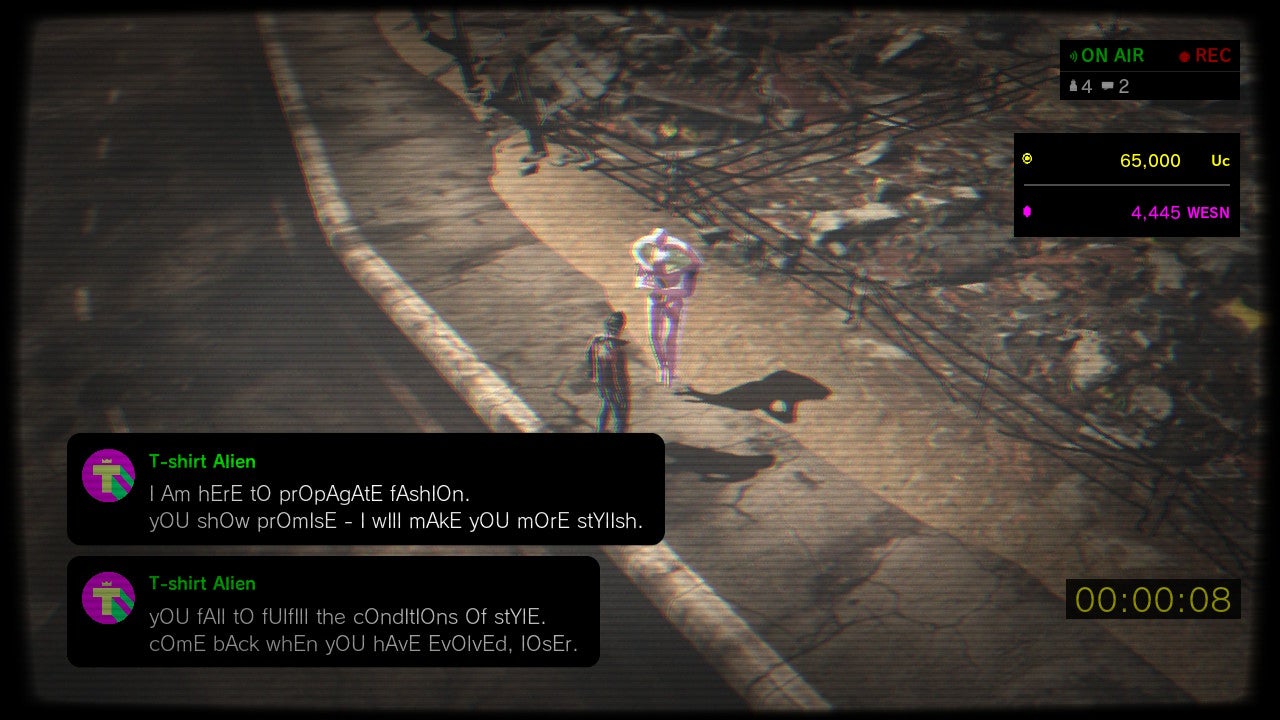
How about the faux CRT effect that covers the screen in Call of Battle, a region that loosely parodies Call of Duty?
Or Travis aping Nintendo properties by somersaulting like Mario off the tops of palm trees he planted and singing the iconic Zelda fanfare whenever he catches a scorpion.
Not to mention the fact that a game mainly about rapidly slicing aliens into bloody ribbons even asks you to do something as mundane and time-consuming as plant trees and catch scorpions in the first place.
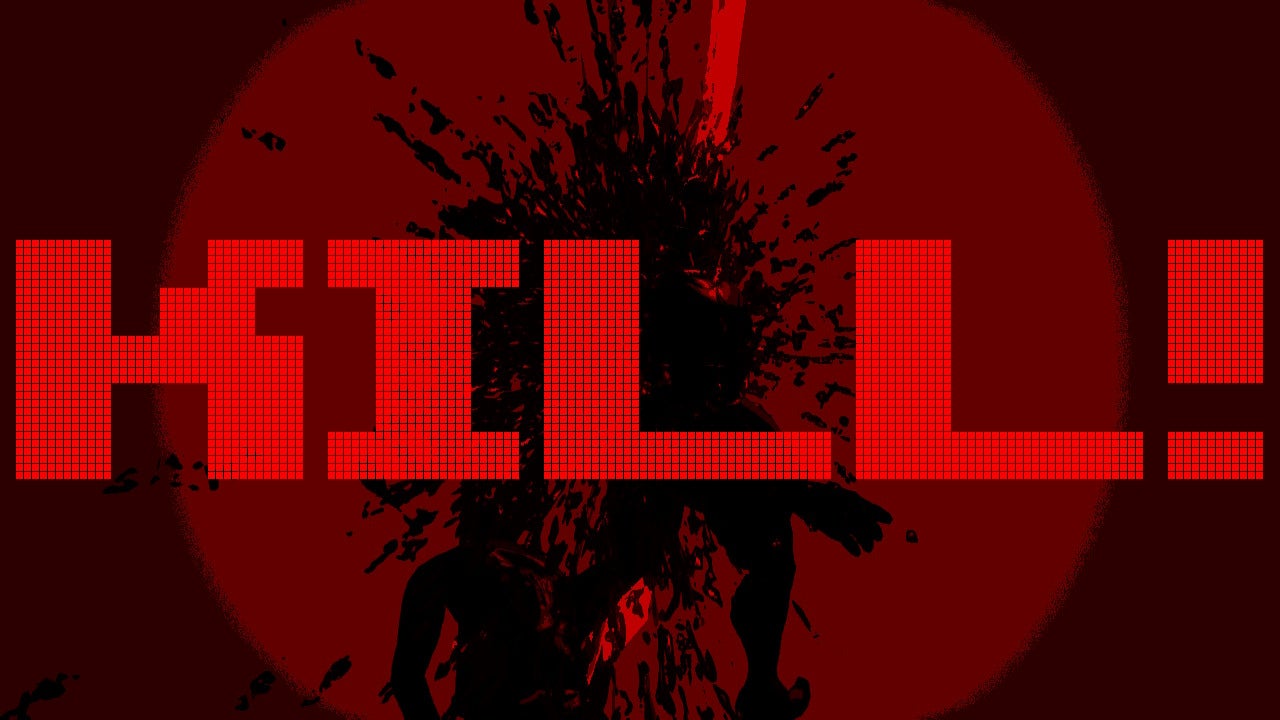
Suda’s portfolio, No More Heroes 3 included, in some ways hews closer to cinema than even the infamously film-obsessed Hideo Kojima, or at the very least appreciates its differences from gaming to a much greater degree. He’s more than willing to inconvenience the player if it means staging a perfect scene or properly conveying a specific emotion. At times, it’s just about making sure aesthetic flourishes—for example, the unskippable “KILL!” graphics that capstone every battle—are given enough space to resonate, both literally and figuratively. Grasshopper projects may not always adhere to traditional concepts of “fun” gameplay, but they never fail to embody an idiosyncratic ideal.
That said, there’s still a capital G game at the heart of No More Heroes 3, one that should be familiar to folks who’ve played the series before.
Aliens have invaded Earth and it’s up to Travis to demolish their hierarchy rank by rank in an exercise that’s part game, part life-or-death battle. Along the way, he hustles for extra cash by mowing lawns, running belligerent jerks and their posses of fellow belligerent jerks off the highway to protect commuting grandmas, and mining precious ores in lava-filled caves. A steady barrage of chaotic ultra-violence is punctuated with sophomoric, slapstick humor. Toilets still function as save points and Travis still curses like a sailor (well, actually, more like a middle schooler trying to impress his friends), because why change a winning formula.
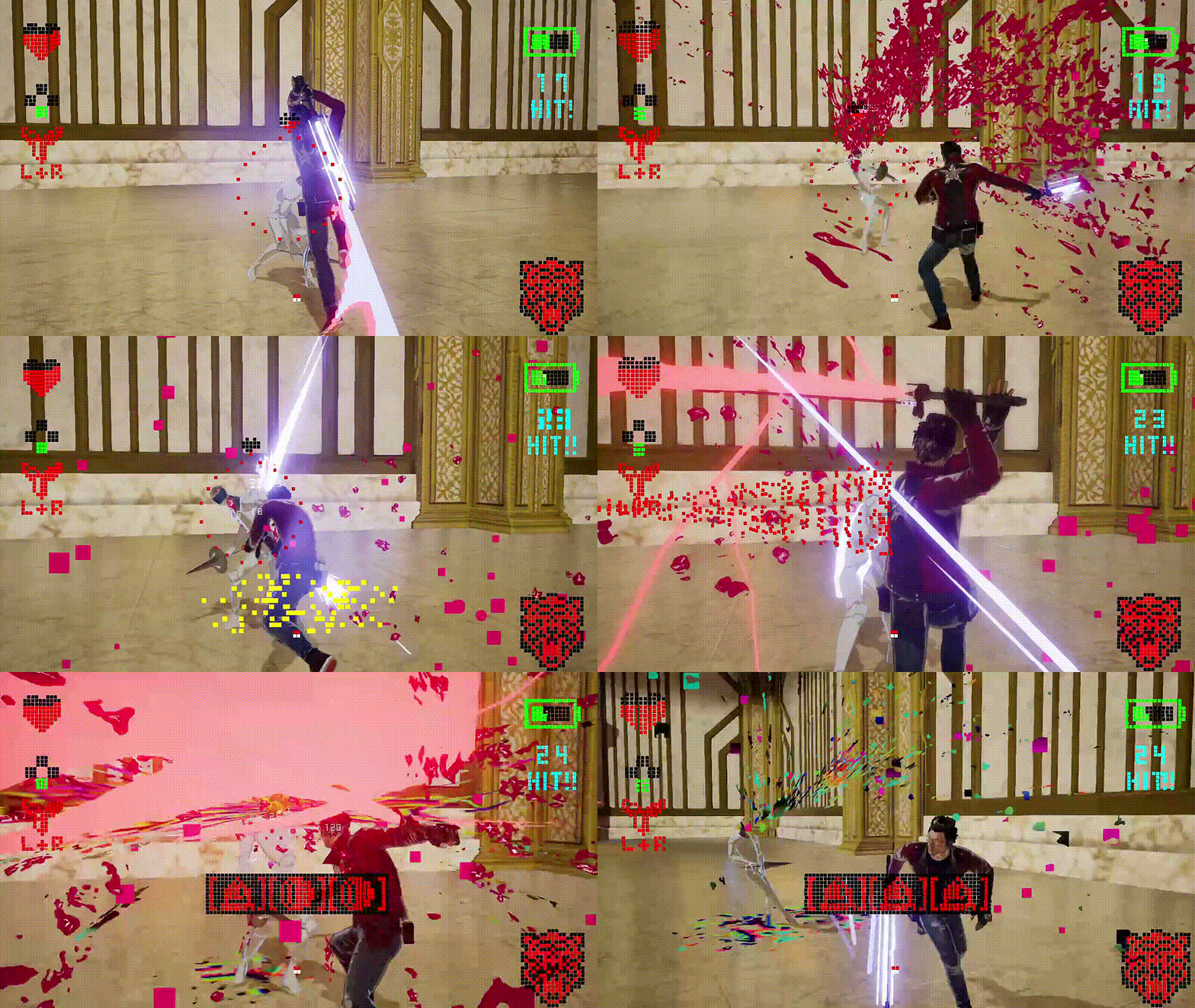
As far as combat goes, Travis can button-mash weak and strong attacks as well as grab foes for wrestling moves. Dodging attacks at the last second—indicated by the targeting reticule changing from red to purple—slows down time and opens enemies up to additional rapid strikes. Whittle an opponent’s health bar to zero, and an on-screen prompt will indicate which direction you need to waggle the Joy-Con or point the right thumbstick to finish them off. The beam katana runs on a battery, so you’ll need to stop and jerk it up and down (wink wink) to charge it when it dies, which this time around can also be done while moving.
No More Heroes 3 doesn’t have the multiple beam katana variations of previous games, but does introduce a set of special moves reminiscent of Travis Strikes Again. Early in the game, Travis is rewarded with four Skill Chips that give him access to techniques like Death Kick, a powerful, two-foot dropkick, and Death Rain, a shower of overhead projectiles. But where Travis Strikes Again let you mix a wide variety of skills into your own customized loadout, No More Heroes 3 limits you to just these four techniques.
The restriction has its benefits. Instead of searching for the statistically “best” loadout, No More Heroes 3 combat becomes a sort of puzzle in using your available resources wisely. At times it feels like a fighting game, in that knocking down goons and constructing intricate situations for them to deal with once they get to their feet often provides new opportunities for dealing damage on distracted and guard-broken enemies. The combat system ends up being fluid, engaging, and open to experimentation, despite its basic, button-mashing foundation.
No More Heroes 3
-
Back of the box quote
“I-TA-DA-KI-MASU!”
-
Type of game
Slice (and dice) of life
-
Liked
Improved combat, random non-sequiturs, overall absurdity.
-
Disliked
Overworld framerate still stutters after all these years, minor bugs.
-
Developer
Grasshopper Manufacture
-
Platforms
Nintendo Switch
-
Release date
August 27, 2021
-
Played
17 hours to see the story’s ending, with an extra 7 spent wrapping up side missions.
Where No More Heroes 3 truly shines, however, is its presentation. Chapters are established as if they were episodes of a television series, complete with consistent intro and outro sequences crediting the developers and voice actors. The game cuts away to side stories with spinning logo transitions à la the 1966 Batman television series. It introduces bosses as guest stars with the sort of “monster of the week” vibe you’d see in an old-school anime, or even a tokusatsu franchise like Super Sentai. You learn enough about these baddies to make their eventual battle with Travis consequential, but then it’s on to the next one just as quickly.
I fully expect No More Heroes 3 to be divisive because, well, that’s just how things go for Grasshopper Manufacture. While the game is arguably the studio’s best release to date, it’s also rife with the same technical issues that’ve always plagued the series. During my time with No More Heroes 3, the open-world environments were prone to framerate collapses, bugs like getting stuck in walls or falling through the floor frequently ruined side missions, and there was even a full-on crash that erased a sizable chunk of progress.
It’s not my intention to let Grasshopper off the hook for these failings. Developers should obviously do whatever they can to steer clear of frustrating players with technical limitations and avoid a Cyberpunk 2077 situation wherein those problems eclipse the game itself. But I can’t say I’m very bothered by its shortcomings. No More Heroes 3 is certainly gorgeous, but the growing obsession with 4K, ultra-detailed, 60 frames-per-second visuals can be limiting to creative expression and at times even detrimental to artistic vision, especially when game devs court negativity by deliberately eschewing these sacrosanct demands.
Where do we draw the line? What if a developer wants to make a game that runs at a lower-than-average framerate? What if they’re okay sacrificing frames to get some other aspect of the game working properly instead? What if a dipping framerate is being used as an artistic flourish? With that frame of reference, it doesn’t feel too far-fetched to imagine gamers going from grousing about small parts of a game running at 59 frames per second rather than a full 60 to demanding developers compromise their vision because they’re sick of sitting through a recurring leitmotif and just want to get back to mashing buttons.
In short, Grasshopper may not have meant to ship No More Heroes 3 in a less-than-perfect state, but barring any major changes, those imperfections are intrinsically tied to the experience and, it could be argued, meaningful aspects of the work themselves.
Fortunately, the barbed wire-wrapped heart of pure joy at No More Heroes 3’s core eclipses most of these issues, especially if you’re a longtime fan of the studio’s work or at least open to the more unique experiences they provide. It’s full to bursting with all the creativity one would expect from a Grasshopper Manufacture project thanks to the passion Suda and his team so obviously have for making games, which shines through in every second of this absurd adventure. And while not perfect on the technical front, tight combat and aesthetic flourishes make it one of the most engrossing and self-assured releases of the last decade.
More than establishing a core meaning or truth to cut through the absurdity of reality, No More Heroes 3 is all about imparting a feeling. Those emotions, by design, will be different for everyone who takes the Jodorowsky-like pill Grasshopper has manufactured into the form of a video game.
When the first No More Heroes came out for the Wii all the way back in 2008, I made sure to take the day off from my shitty retail job at some now-defunct video rental place so I could play it all day. I’d already fallen in love with killer7 (a game I still consider Suda’s masterpiece) and wanted as much time as possible to experience the latest entry in Grasshopper Manufacture’s punk-rock oeuvre. It was incredible.
Now, over 13 years later and playing No More Heroes 3 for work, it feels like an important loop has closed in this one-sided relationship.
“In Japan, ‘batta’ means ‘grasshopper,’ and ‘mon’ comes from ‘mono’ which means a ‘thing,’” Suda told documentary channel Archipel during a 2016 interview. “We use ‘battamon’ to say that something is a copy, a fake. Originally, I quit Human to make my own company. Grasshopper Manufacture was born from there, it was in a sense not a ‘real’ studio, a ‘fake.’ In the end ‘battamon’ is not a word I particularly like as it is, but rather a concept.
“We are grasshoppers jumping around in the grass.”