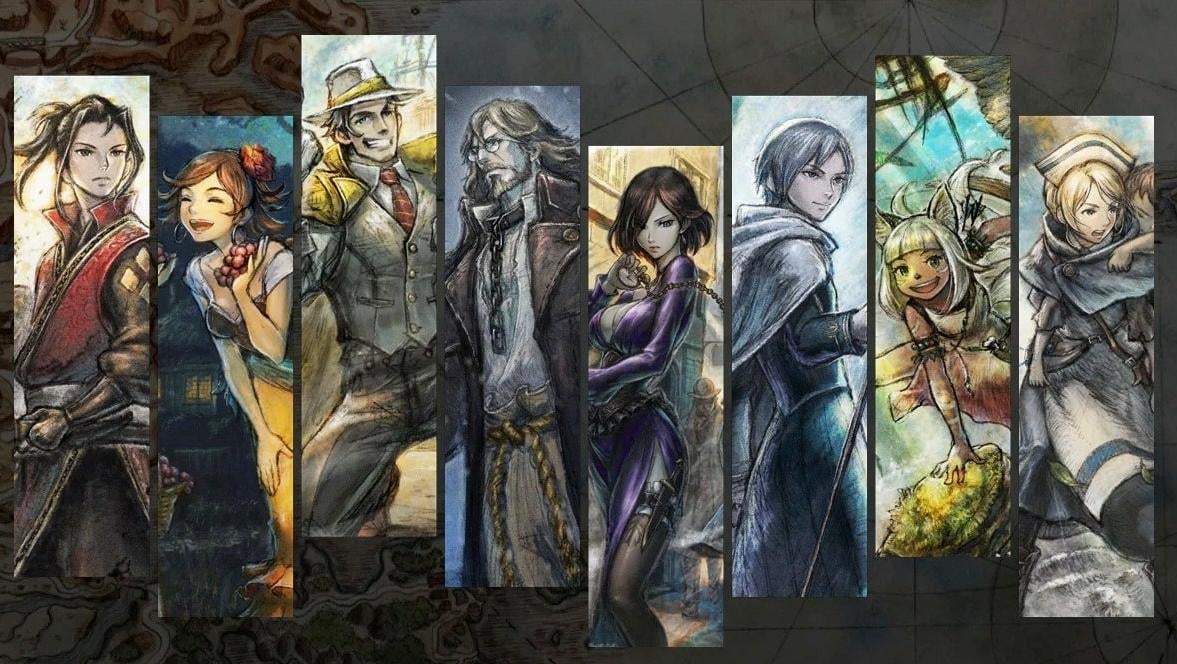
I’ve had a rough go of it in Octopath Traveler II’s first few hours. As someone who loves RPG parties most when they feel like real units of friends and found family, Octopath’s anthology-like storytelling wasn’t doing it for me. Its eight playable characters felt like islands I had to walk to and from, rather than a group I could watch bond. Now that I’ve collected more of these heroes and formed a party, I’m reflecting on the game’s early hours and all my conflicting feelings. I’ve come around on its structure and how it allows each member of its party a distinct origin, but am still searching for a collective meaning that ties all the characters together.
I started Octopath Traveler II—now available on Switch, PlayStation, and Windows—as Partitio, a merchant who helps build up a community in the town of Orerush, where miners have turned a plot of land into a prosperous home. As time passes, however, it becomes victim to a scheme by a landowner to accumulate all the wealth from what the people have built. The story goes from Partitio wholeheartedly advocating for the perks of capitalism to becoming so disillusioned that he leaves his town to fight against poverty. We love to see a man wake the fuck up and learn about how he has previously benefitted from a system that will only truly help the fat cats on top.
Each character gets their own origin story, and it acts as an introduction to their place in the world, why they choose to leave their homes, and what abilities make them stand out from the seven other heroes. Partitio has been my anchor because I started the game as him, but each character’s first chapter feels like it could be the beginning of a different game entirely.
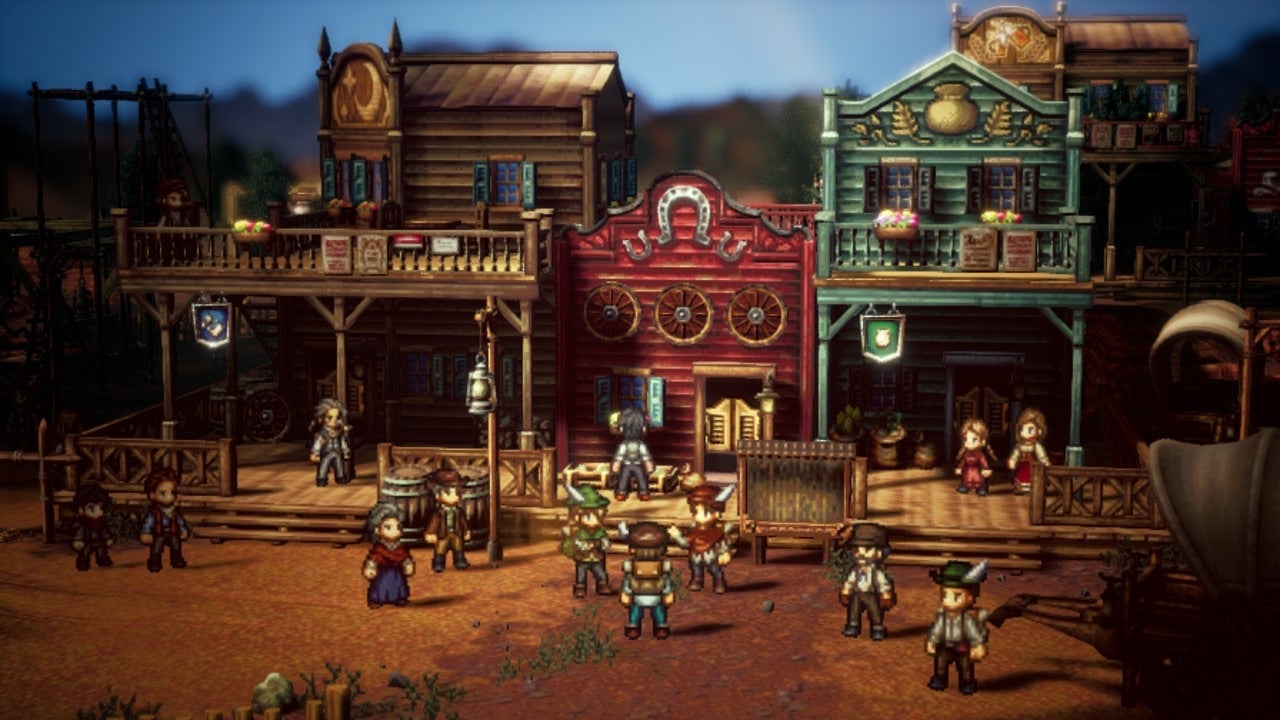
While I started this game in what felt like a western embroiled in anticapitalist commentary, Ochette’s opening delves into fantastical elements like forming magical connections with talking animals and exploring race relations between humans and her fellow beastlings. Castti, meanwhile, is an amnesiac apothecary, and her first chapter feels like a medical drama as she tries to save a town from a mysterious illness. While none of these characters start their journeys together, and their interpersonal relationships feel like an afterthought in the early hours, there’s something compelling to me about how this separation lets Octopath Traveler II delve into different kinds of themes and fiction genres.
Each character having their own original mechanics makes the distinct nature of each of these intro further apparent, such as Partitio being able to hire NPCs to help you in battle, or Castti being able to inquire with the locals for information. This keeps these early chapters fresh from a gameplay perspective, and has you thinking about each in ways you wouldn’t have thought about the others. With every new origin story, Octopath Traveler II completely subverted what I thought the game was about, eventually giving me eight characters to feel personally invested in. With each intro I played, I found a new center, even though I started my story as a merchant who learned being poor is bad.
My main point of friction for at least those first few hours was that the anthological structure meant that, despite journeying together, the cast of Octopath Traveler II didn’t actually seem to know about or care about each other. Each party member has their own disparate stories that I’ve been chipping away at, but those stories don’t involve the rest of the cast. It makes some sense, because you don’t have to recruit these characters when you meet them on your quests, and it’s just not reasonable to write around people who may or may not be present. But more than in other media, I go to RPGs in search of camaraderie and banter, and missing that has made it harder to feel invested in the game’s moment to moment, as I hardly feel like these eight travelers know each other even as I’m getting to know them myself.
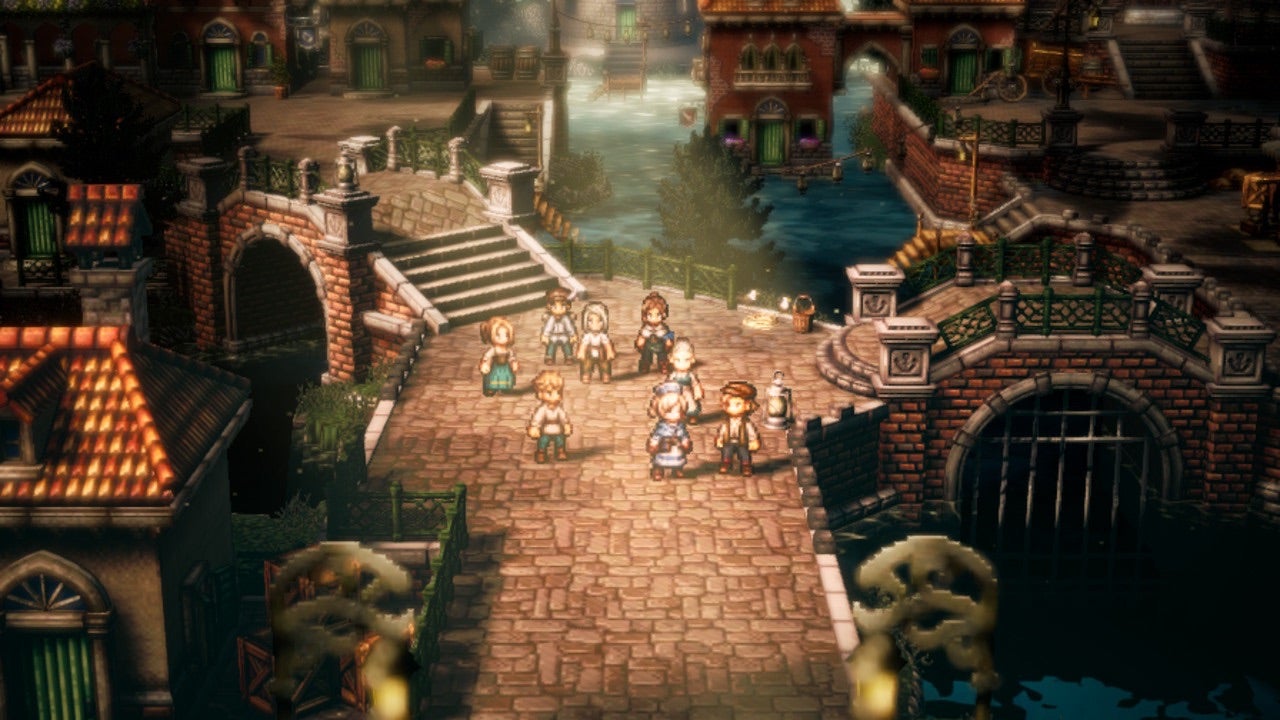
Thankfully, Octopath Traveler II has some semblance of relationship building thanks to the “crossed paths” feature, which is new to the sequel. These are brief, playable mini stories that feature different pairings of party members, which, to their credit, are pretty great so far. They’re not quite the epic team-building exercises—along the lines of Mass Effect 3’s Citadel DLC—that I’d prefer, but the pairings feel purposeful in how their writing contrasts the characters’ colliding worldviews, building upon their charming and captivating main stories. Pairing the charming and bubbly Partitio with the broody Osvald leads to a lot of delightful banter and a compelling side story; I just wish this dynamic was evident throughout the whole game.
I’m still making my way through Octopath Traveler II and despite focusing on eight characters, it can sometimes feel a little lonely. The solitude gives the game opportunities to really paint different pictures of its world and cast, but I do wish there were more moments when all these travelers felt like a unit. In a way, the game feels analogous to something like The Canterbury Tales, with a caravan of people from different walks of life regaling each other with their stories. I just hope that as I delve further into these stories, I’ll find more opportunities for these characters to connect in ways beyond just combining attacks on the battlefield.