Our culture suggests that this time of year is all about family, and while family can be a lovely thing, it also tends toward being very complicated. Recent years have seen the emergence of Dad Games, in which you play as a complicated father figure protecting his child/ward. This Dad Game dynamic has never appealed to me, as it fails to capture my own complex feelings about the father/child relationship.
I find I’m far more drawn to an older gaming archetype I like to call a Daddy Issues Game. Daddy Issues Games are not limited to any one genre; rather the only criteria is that, somewhere along your player character’s journey, they must for one reason or another give their papa a whoopin’. For me, Alucard’s experience fighting his father Dracula in Castlevania: Symphony of the Night reflects my feelings as a person who grew up despite their parents, not because of them.
I don’t know why video games are so focused on the father role. I don’t have all the answers. I’m just a simple woman who finds beating up virtual dads to be cathartic. Following is a list of a few key games in this underappreciated corpus.
(This article may contain dad-related spoilers.)
Bayonetta
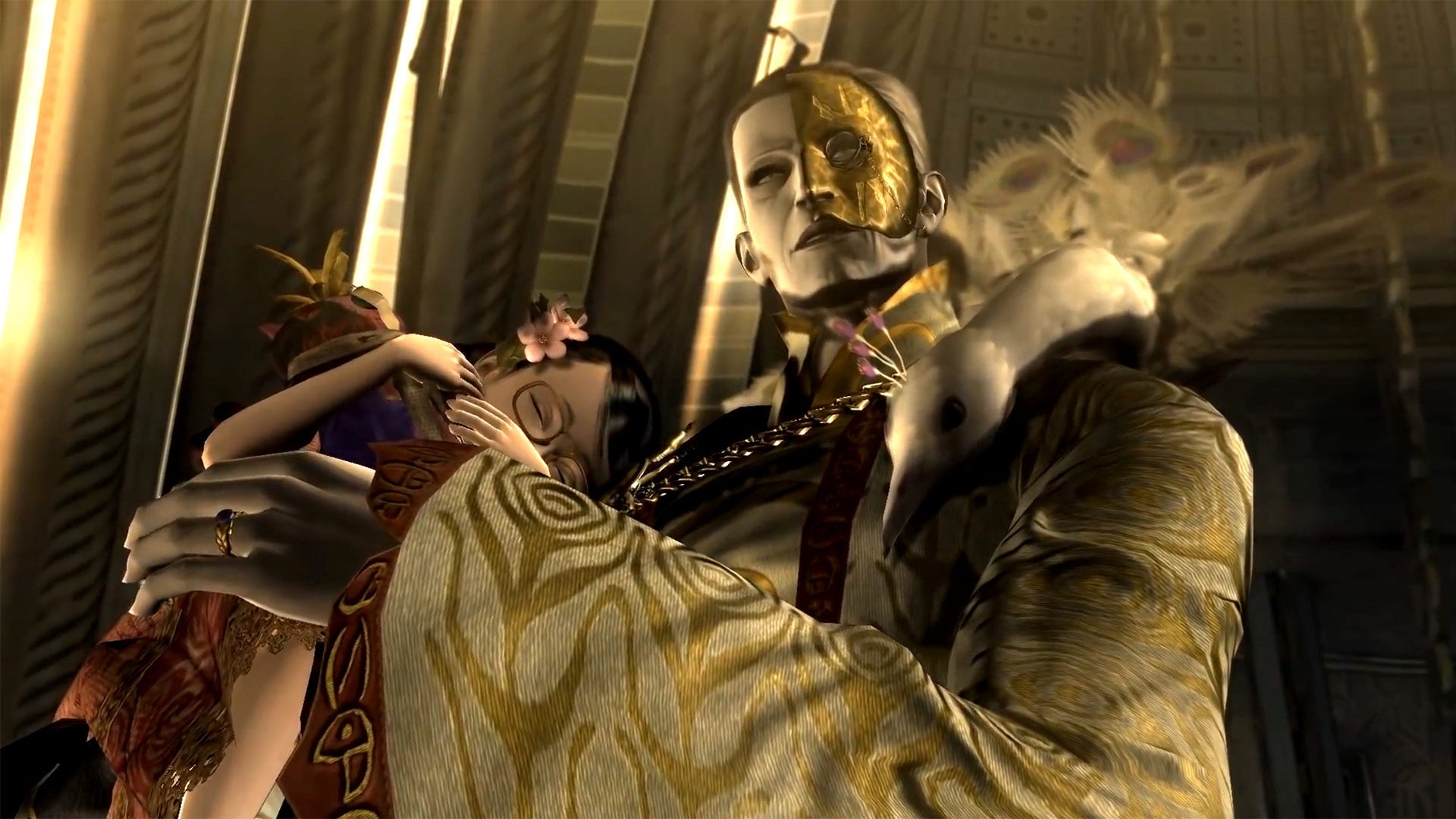
Bayonetta is better known for its iconic, innuendo-flinging protagonist than the narrative going-ons around her, but spoiler, the bad guy is her dad, and her dad sucks.
Bayonetta is the offspring of a Lumen Sage and an Umbra Witch, two clans of mystical practitioners working with the forces of light and dark, respectively. Balder, her father, is a creep who, despite representing light, manipulates countless events and commits two separate genocides in an attempt to resurrect his god. Plus, in an act that is so on the nose it comes around to being clever again, your absentee father brings Bayonetta’s past self into the future and leaves the child in her adult self’s care, making Bayonetta have to literally raise herself.
Though Bayonetta 2 retconned Balder’s nature—it wants us to believe he was actually a good guy all along, and merely possessed—Father Balder in Bayonetta is still the epitome of a (literal) holier-than-thou creep who’s ruined numerous lives, so there’s really no love lost when you have to blow his brains out with a lipstick bullet. Thus Bayonetta joins Soulcalibur’s Ivy Valentine in the very specific category of “violent hypsersexual dominatrix with a british accent who murders her neglectful evil douchebag of a father.”
Final Fantasy X
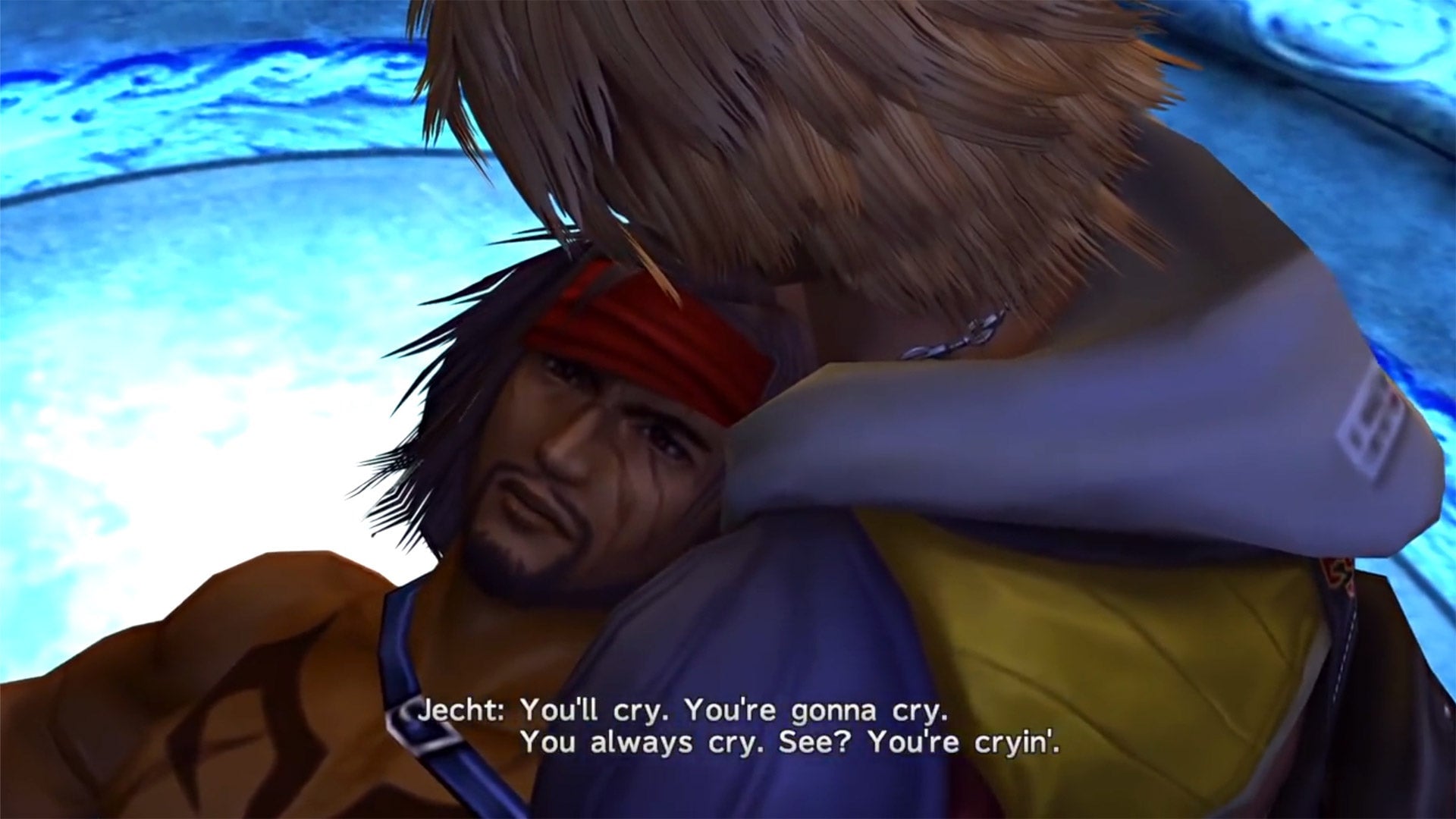
Final Fantasy X’s final boss is technically a simple fight against an evil beetle controlling a flying doom-whale that you can only lose if you are actively trying to fail, with the true final challenge being the preceding fight with Tidus’ father Jecht. Jecht isn’t evil, but he’s definitely a jerk.
Jecht was a world-class blitzball (floating underwater rugby-soccer) player turned drunken asshole to his son. Tidus had every right to resent his dad, and for much of FFX, a part of him that considers Jecht his arch-enemy. His father’s verbal jabs and neglect weigh heavy on Tidus to the point of fixation. He talks to the party of what he’ll do when he finally sees his dad again, ranging from clocking him one to dressing him down for being the abusive alcoholic he is. That is, right up until he learns that his father was unwillingly transformed into the aforementioned doom-whale. Now Tidus no longer wants to beat up his dad, Tidus has to beat up his dad.
Jecht did love Tidus, but struggled to express it until it was too late and he was a monster. Inside the belly of the beast, Tidus’ party squares off against what remains of his soon-to-be out-of-control father’s consciousness. Jecht tries to act like things are normal and make small talk, but Tidus holds tight to his resentment. The truth is that forgiving and understanding his father just makes having to fight him that much harder. Jecht doesn’t want to leave things on a bad note, but also recognizes the kind of father he was.
Moments before he transforms into a giant grotesque berserker were-dad, Jecht comments on how big Tidus has gotten since they last met, but his son maintains that Jecht is still bigger. Having spent his entire life living in his dad’s shadow, that’s still how Tidus remembers Jecht, as a looming, out-of-control monster of a man who couldn’t help but wreck his son’s life. Before Tidus can move forward and forgive or sympathize, he has to reckon with the destructive role Jecht’s played in his life.
The specter of your past isn’t an easy thing to face, but it’s a lot nicer when you have a devoted gaggle of superpowered friends to help you wail on the physical manifestation of your paternal trauma.
When the dust finally clears, the old man, lying there in his dying moments, teases Tidus and calls him a crybaby again. Goddamn it Jecht.
Wolfenstein II: The New Colossus
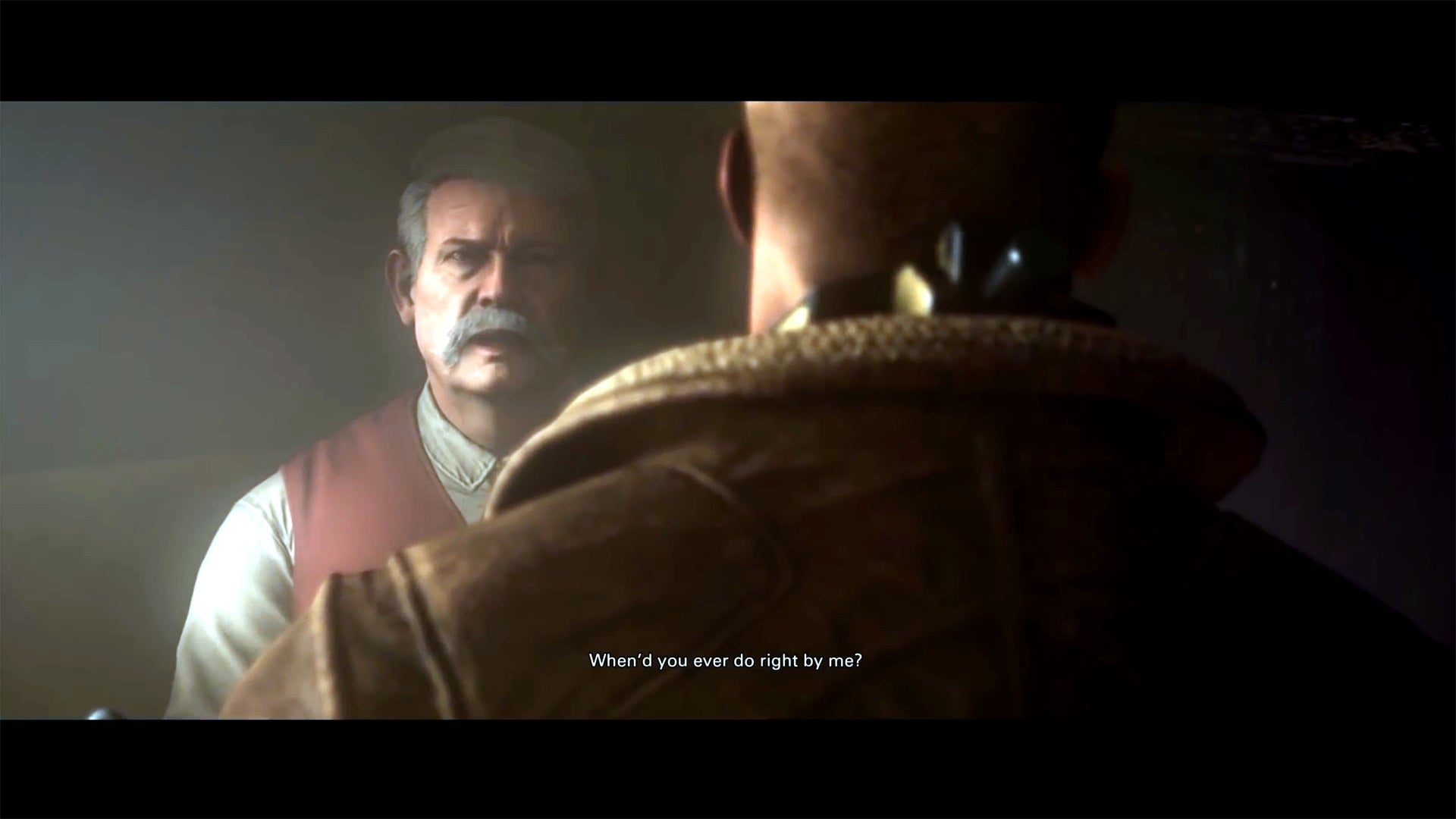
By the time you meet William “BJ” Blazkowicz’s father Rip in Wolfenstein II, you know who this man is. The New Colossus has repeatedly shown you the trauma Rip put young BJ through. You’ve seen him fling hateful racial epithets, physically abuse his wife and son, and force cruel psychological torture upon BJ in the name of “making him into a man.” So it comes as no surprise when you return to your childhood home to find the nazi sympathizer waiting to kill you with a shotgun to clear his name and appease the fascist regime.
The playable portion of BJ Blazkowicz’s fight with his father Rip doesn’t last more than a couple seconds. You cut his arm off with a hatchet before he can shoot you and then bury it in his chest. You could argue the fight between an aging man in a tie versus his towering son in a super-powered exoskeleton who regularly kills Nazis by the metric buttload isn’t even a reasonable match-up. But BJ is simply ending a fight his father started a long time ago.
Overall I find the Wolfenstein games’ tendency toward hyperviolence to be a bit much, but I can’t deny finding this father-son scene to be poignant. Rip Blazkowicz is unfortunately a barely exaggerated portrait of a very realistic kind of evil, the kind of narcissist who could happily justify supporting laws that would jeopardize the human rights of his loved ones if it served his ideology and interests. “White man’s gotta keep it Christian” he says as he explains how he gave up his Jewish wife to the Nazis and is ready to do the same to you. Cutting things off with some parents really isn’t worth a second thought sometimes.
Hades
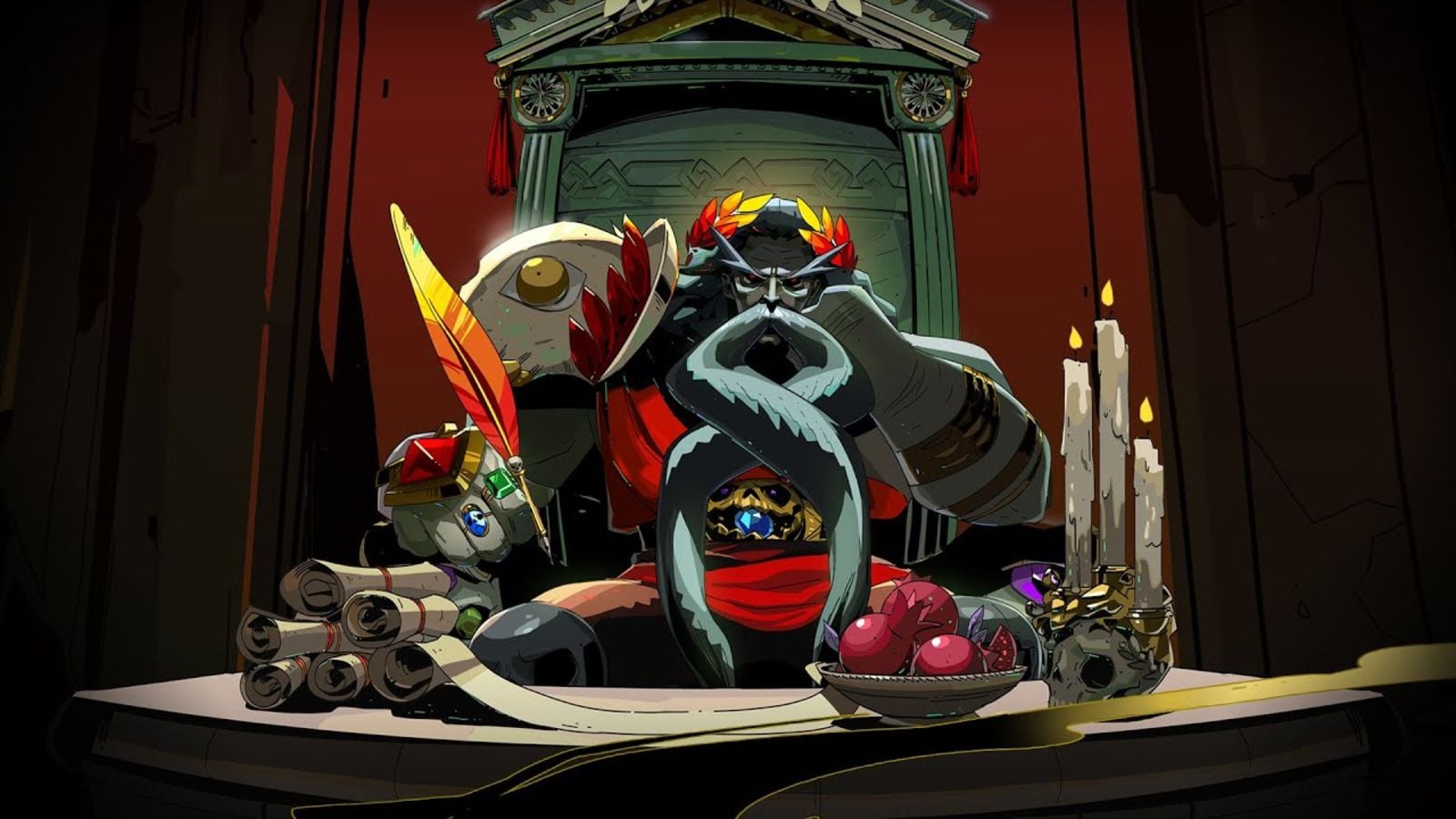
Hades is a game all about kicking your dad’s ass. As Zagreus, prince of the Underworld and son of the god of the dead, your goal is to leave/ruin your dad’s house (which is called Hades) and beat the snot out of your papa (who is also called Hades). To add insult to injury, you do it all by accepting help from the people he hates the most: his estranged Olympian family.
For roughly a month and a half, my main way to relieve stress was racing out of hell and beating up my pretend god-dad. During that span I beat up my dad 59 times. Sometimes I speared him. Other times, I arrowed him. I arrowed him a lot. Mostly, I punched him.
Hades is all about estrangement. Your father is unable to express any fondness or appreciation for you, so you distance yourself from him. But while Zagreus is the only person literally running away, everyone around him is emotionally avoidant. Your love interests, who you’ve known for centuries, take your desire to leave personally. Everyone is obfuscating their true emotions and desires. Hell isn’t just other people, it’s other people who don’t know how to properly communicate their feelings and needs.
But beyond that, Hades is also a game about bridging that distance and fostering intimacy. Zagreus can go through the entire game simply fucking up his dad’s shit and not talking to anyone, but it rewards you for fostering connections. You gain nectar as you run through your dad’s dungeon, which serves as the currency for deepening your bonds. It’s Zagreus’ love language.
Sometimes characters will give you something in exchange for nectar. Most times they won’t, but your bond with them deepens and you learn more about them. And sometimes there is something keeping characters from letting themselves get closer to you. As your bonds deepen, it becomes clear that while Zagreus’ relationship with his father is fraught and difficult to move on from, he can find other avenues by which to enrich his existence by emotionally investing in other people, who are more willing to be close to him.
Tekken
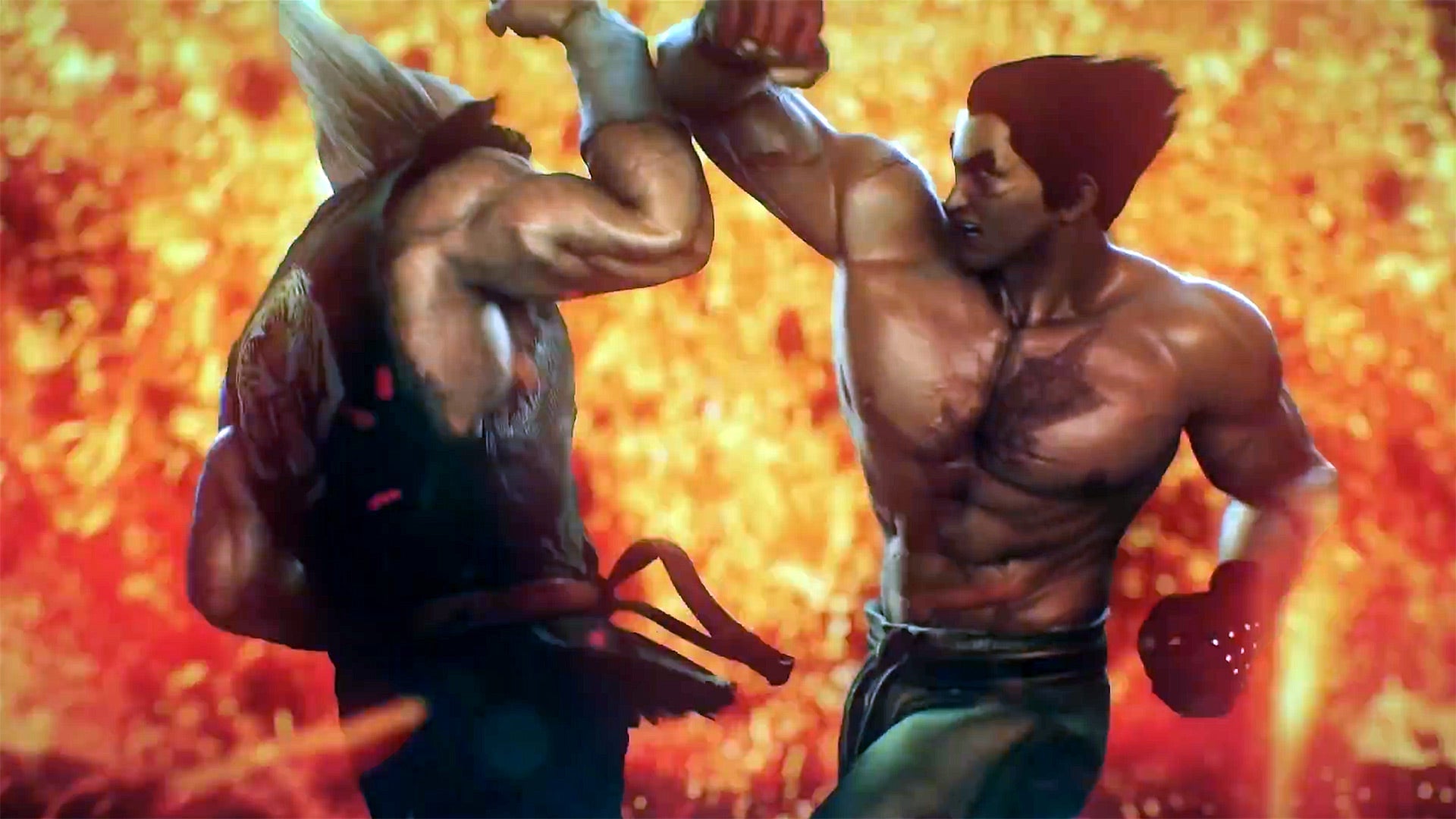
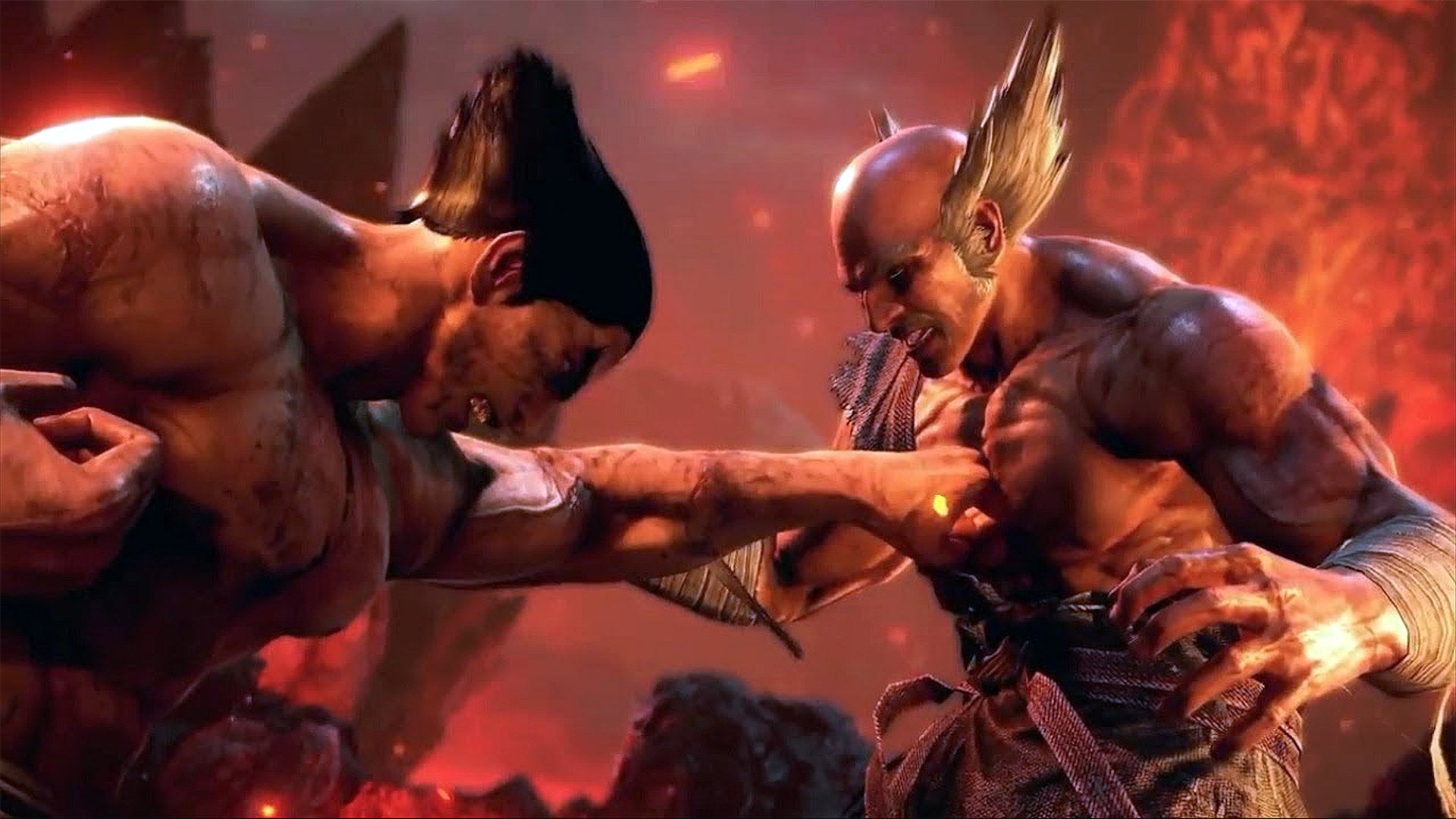
If Tekken’s Mishima family have three defining traits they are a mutual father-son hatred of burning intensity, electric punches, and a genetic predisposition toward being possessed by the actual devil.
The Mishima blood feud has long been at the center of Tekken, with the rapid dramatic escalation of a soap opera nearing cancellation. It all sprang from simple beginnings, with father Heihachi Mishima throwing his son Kazuya off a cliff, just to kinda see what happened. From there…
Kazuya beat up his dad in his own tournament and threw him off the same cliff (Tekken)
Kazuya became a laser-shooting demon and Heihachi beat him up and threw him into a volcano (Tekken 2)
Kazuya had a son named Jin who was nice but also devil-possessed who beat up his grandpa (Tekken 3) and dad (Tekken 4)
Heihachi’s dad Jinpachi (who was actually a very kind man) is alive and also demon-possessed but like, it’s a different demon than the other Mishimas? (Tekken 5)
Jin starts World War III so he can beat up a monster? (Tekken 6)
There is not one singular worst person in the Mishima family, but there is a worst dad and it’s Heihachi by a landslide. In the world of bad video game dads, there are evil gods, serial killers, and nazi sympathizers, and yet somehow I still just kind of feel like Heihachi Mishima is the worst. Unlike his offspring or his father, he has absolutely no supernatural excuse for why he is a bastard man. He just is one, and also he runs a company that makes military weapons. Beat up Heihachi Mishima any chance you get.
Metal Gear Solid 3: Snake Eater
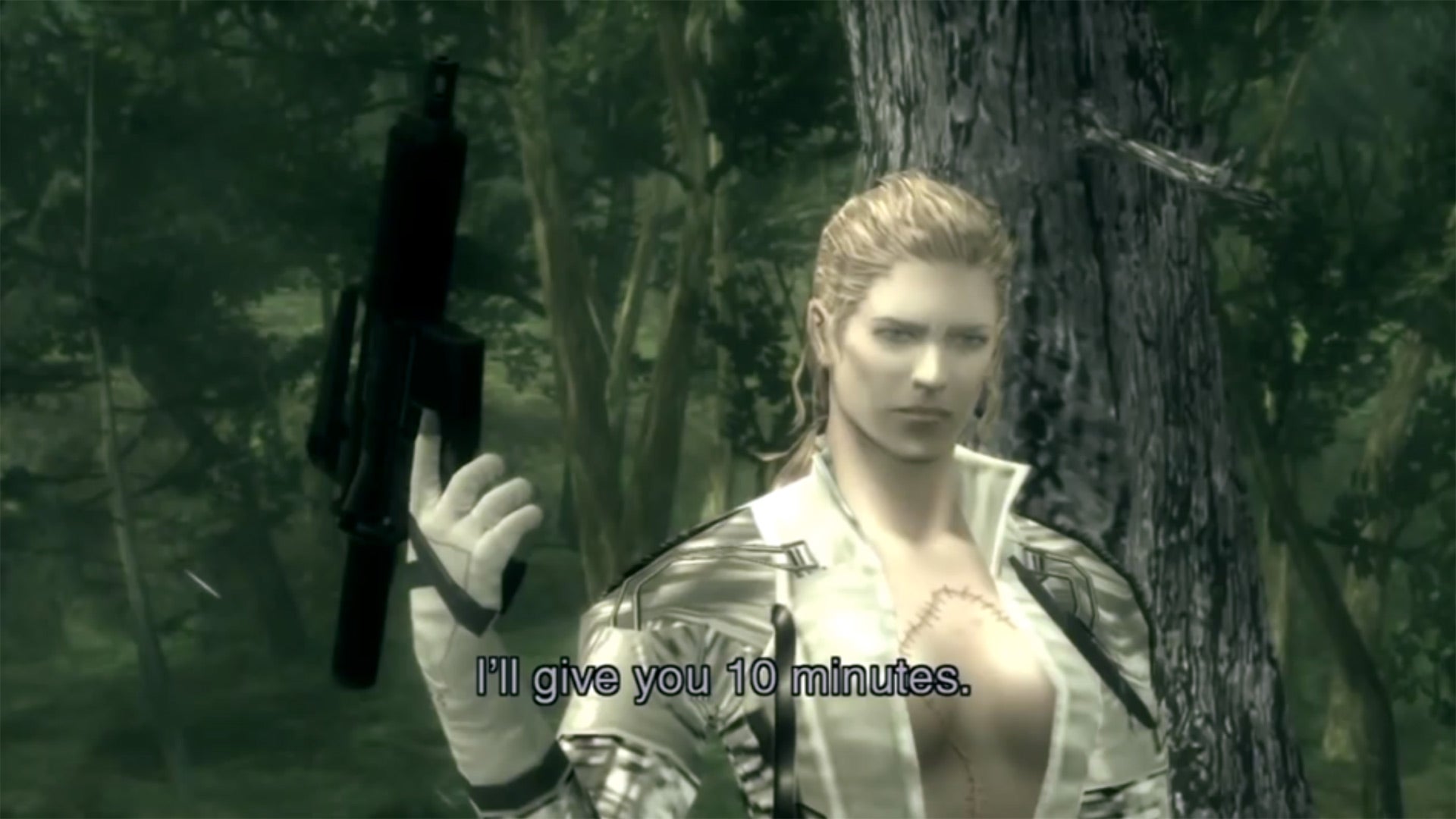
As the Metal Gear series became Solid, themes of parent/child relationships and legacy became less subtextual and more…textual. Metal Gear Solid revealed that Solid Snake was the clone of Big Boss, his former commander turned enemy, whose face he’d melted off in the prior game. In Metal Gear Solid 2, ninja twink Raiden has to stop his Doctor Octopus-esque dad and former President, Solidus Snake, culminating in the two sword-fighting to the death atop Federal Hall. But we’re not going to talk about either of those seminal moments in bad video game dad-dom. No, this is about Snake Eater
I know what you’re thinking. You’re wondering why Metal Gear Solid 3: Snake Eater makes the list when there are no fathers to beat up. But Snake Eater isn’t about beating up your father. It’s about killing your daddy. Yes, The Boss was a mother figure to Snake, but The Boss was also unequivocally Daddy.
The Boss was the ultimate soldier who trained Snake to be everything he was. But then she defected, and it broke Snake emotionally. His love for and loyalty to her transformed into a dependency on the idea of The Boss. Snake idolizes The Boss for what she represents and what she’s done, but fails to recognize her humanity. Before the two battle for the last time in a field of flowers, The Boss says she wants him to make it “the best 10 minutes of her life.” Throughout the duel, Boss compliments Snake’s growth and skill, showing pride in her disciple. It’s not that she wants to hurt her pupil, it’s that this thing simply has to end one way or another.
In killing the person he worshipped, Snake could finally realize her human flaws: She had devoted herself too deeply to serving her country’s interests and fulfilling her duty as a soldier, to the point of letting herself be branded a war criminal for doing as she was told. In the end, The Boss was trying to teach Snake the hazards of love and loyalty.
Snake Eater is about growing into your own person and finding your own path. And sometimes that means you have to kill your heroes (or daddies) or end intimate relationships (with your daddy). Sometimes you have to end things when they no longer nourish you, and as much as it hurts, it’s better if you’re the one who pulls the trigger.
Sekiro: Shadows Die Twice
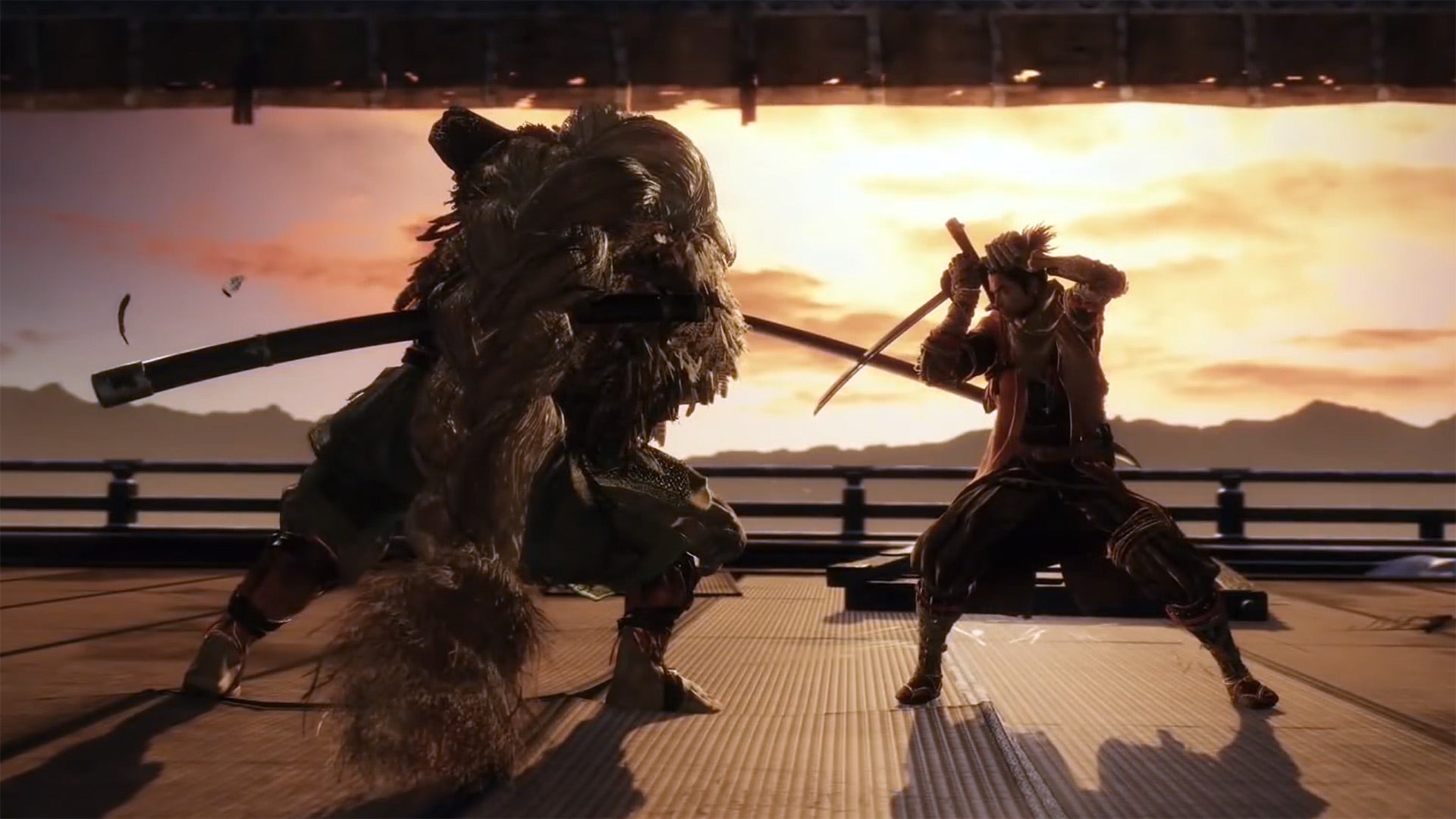
In Sekiro, you don’t actually have to fight your dad the Great Ninja Owl, but it’s better if you do.
Your character, Wolf, was just a youth wandering a battlefield when Owl found him, and made him the shinobi he is. The game doesn’t expand on your history beyond that. Upon adopting Wolf as a pupil, Owl makes him swear to devote his life to the laws of the Iron Code: Your father’s word is absolute, your master’s word is absolute, and you must protect your master at any cost. But then your father demands you betray your master.
Wolf’s master is an immortal child that can make others immortal, and Owl wants that power for himself, demanding you forsake your master who is, by all accounts, a sweet boy and a good lad. You can finish the game with Wolf being a grown man who blindly does what his daddy tells him no matter what. Or you can go against his wishes and beat his ass.
Being the ninja who trained you, Owl’s moveset is remarkably similar to yours, and he is bigger, faster, and has longer reach than you. But unlike most of Sekiro’s bosses, his defense while attacking is imperfect, so the key to defeating him is not patience, but to attack unrelentingly with every move he ever taught you to get all the way up in his shit. Owl knows he can’t actually overpower his son, so he attempts to cut an imposing fatherly figure. He talks about honor, but he’s willing to fight cheap and kill his son if it means he can live forever.
Whether they’ll admit it or not, some parents see their children as simply a means to extend their own legacy.
That’s a lot of beat-up dads! Tell me, what video game fathers do you enjoy givin’ the business to?
Chingy Nea is a writer, comedian, and critically acclaimed ex-girlfriend based out of Oakland and Los Angeles.