Something I kept thinking about when playing Shadow of Mordor to review was that the orcs in the game reminded me of professional wrestlers. At least, my conception of pro-wrestlers. I mean this as the warmest of possible compliments.
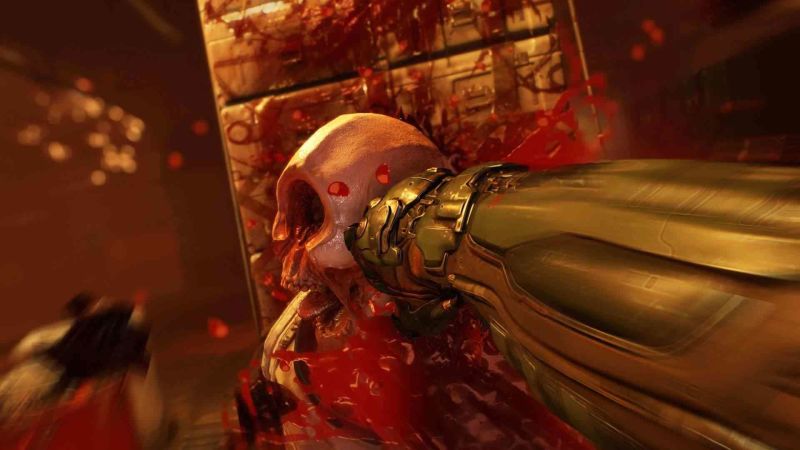
I was reminded of this yesterday when revisiting some footage and came across this very WWE-esque move one orc pulled on me. It’s a silly comparison to make on one level. But it can also be an important one for helping explain why I find Mordor’s particular brand of ultra-masculinity and ultra-violence charming. The biggest criticism I’ve heard from friends and fellow writers so far is one that stems from a sense of fatigue: players are tired of getting yet another game about stabbing things in the face, yet another story that puts you in the spectacularly unsurprising role of a stubbly white beefcake, yet another piece of gaming culture that seems like it fails to understand anything about the nuances of genuine human intimacy.
I won’t deny that Mordor can seem simple-minded in light of these sorts of criticisms. But dismissing the game out of hand for its reliance on well-worn material doesn’t sit well with me either. Here’s how I put it when chatting with another game critic on Twitter last night, who was voicing a lot of the same annoyances with Mordor that I’d heard from others:
@YannickLeJacq Hahaha, no, but the whole concept is so unappealing to me. I want to write letters to orcs and sell them furniture
— Woney For Nothing (@NonTrotski) September 30, 2014
https://twitter.com/embed/status/517089386673233920
Would Mordor be a better game if I could write letters to its orcs and sell them furniture? (Well, I guess I technically can send them death threats, which might count in the epistolary category). I don’t think so. It’s reliance on violence might strike some as oppressive. But I found it surprisingly refreshing, in its own way, because the game struck such an unusual tone. To circle back to the pro-wrestling connection: I think Mordor is self-serious and self-aware at the same time. Its violence can be frighteningly visceral at times, as can its more villainous and creepy-looking bad guys. But it always seems to know just when it should pull back and remind its players: Hey, this is a video game, don’t take it too seriously. Mordor managed to acknowledge its own hyperbole and excess in such a way that, as I said at the end of my review: “it invites you and its orcs to buy into its campy fiction together. That way, you can both have more fun.” Much in the same way that pro wrestling has somehow figured out a way to call itself a “sport” and “entertainment” in the same breath.
Don’t get me wrong: I think a Sims-style game set in the Lord of the Rings universe sounds like an incredible idea in its own right. But that’s the thing—in its own right. Does the absence of a hobbit-centric sim game (however glaring it may be for some) need to weigh on Shadow of Mordor? I don’t expect The Rock to star in somber period pieces directed by Joe Wright (thank god), and I don’t ding him for not doing so. Mordor’s particular focus on a boyish vision of fantastical violence might seem narrow. Broadening it, however, could’ve easily diluted its power.
I love The Sims 4. I also love Shadow of Mordor. I also love that they can both coexist so comfortably right next to each other—both in my head and my gaming PC.