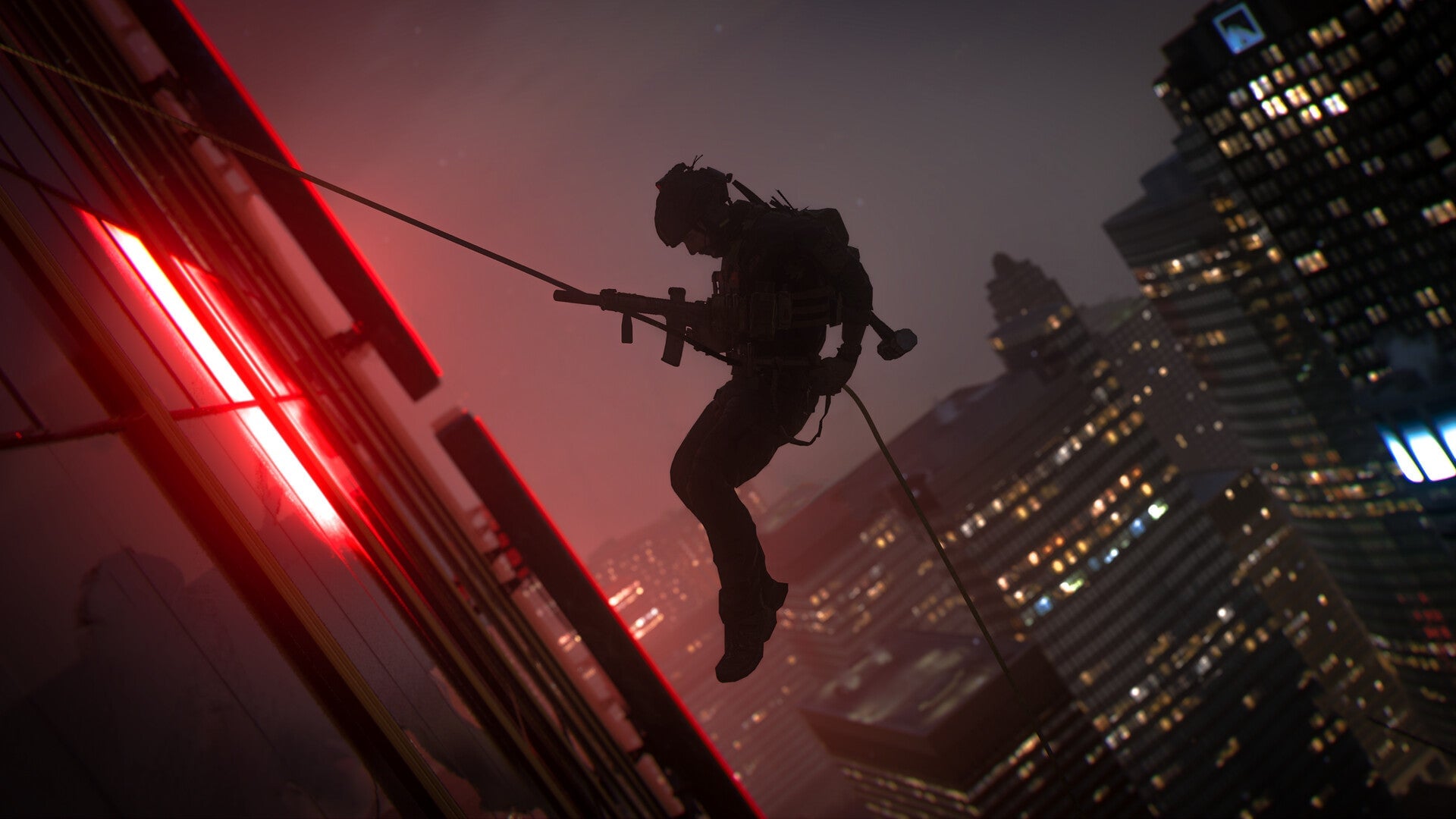
Whether it’s the news, television or the movies, Arabs have become synonymously linked with the word “terrorist.” And thanks to video games, we’ve become the target—literally.
Both my job and my personal experience give me a unique perspective on the situation. I was born and raised in Detroit, Michigan and moved to the Beirut, Lebanon about 8 years ago. I’ve been playing games for as long as I can remember and competing in tournaments for the last 3-4 years. Now I work for the leading gaming community in the Middle East, At7addak.com
The thing is, we’re not alone as targets: the Russians, Chinese, Vietnamese and Germans all join us, but Arabs have been in the limelight for the last few years.
In the limelight, but not as the heroes. We’ve all played as the U.S or any other paramilitary force and seen a game’s story try to humanize these characters with catchy nicknames or background histories. Think Ghost or Soap from Modern Warfare 2. This where the differences begin to take place. Americans will relate to the hero defending his country from the terrorists threatening your freedom. As an Arab, you’re “relating” to the guy who is going to destroy your city… and that’s all.
Let me describe a typical scene. Suddenly, an emotionally-detached bearded A.I armed with an AK-47, raggedy clothes and bare feet comes running out of nowhere and stands mindlessly still in the middle of the courtyard, shooting and yelling in “Arabic.” In most modern games like Call of Duty or Battlefield, the Arabic is actually Arabic. On the other hand, some games don’t even try. Check out the this image from Splinter Cell: Conviction
The street sign on the right is actually written in proper Arabic. The sign on the left, however, is just a bunch of squiggly lines. I can’t understand why only one sign got the proper treatment.
Other games use proper Arabic but space each letter apart like a separate word. Call of Duty correctly uses Arabic in the game’s audio but somehow messes up the written text. Arabic is read from right to left and almost all of the letters connect. For some odd reason, Infinity Ward decided to arrange the letters from left to right which I’m assuming caused the letters to space out.
Developers just don’t seem to go that extra mile for the enemy like they will for the heroes or even the guns in their games. Sure, details like getting the Arabic language right might only actually benefit Arab players. Maybe that’s why it’s not a priority.
We’re never actually properly introduced to the enemy, and so his appearance and overall character portray the stereotypical substitutes. Like in Medal of Honor: Warfighter. The brown and dusty gown, dark skin, thick beard, AK-47 and bare feet all come into play.
Obviously, this isn’t really the case. We’ve got our stoners, jocks, rockers, preppies—just like anywhere else. But we don’t get to see anything but the stereotypes, and perhaps it has to do with the conflict in the Middle East.
A lot of shooters aim for realism using current real world conflicts or inspirations. Medal of Honor and its cooperation with actual navy seal soldiers comes to mind. That’s fine, but a lot of times the “authenticity” is only on one side.
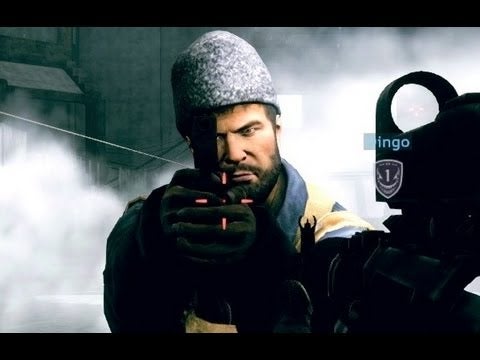
Even so, I notice small things. It’s not uncommon to see the A.I. in shooters do stupid things like stand in the middle of the fight, fire blindly, refuse to run away from grenades, and not take cover just long enough for the player to deliver justice in the form of a lead bullet—like in the video to the left. It’s strange for me to watch something like this. Granted, crappy AI in first person shooters isn’t anything new. But when we’re talking about terrorists that somehow run the world’s most dangerous organization who seem oblivious to modern combat strategies, it’s a littler harder to swallow.
And of course, we never ever hear about an Arab’s story in these games, nor their families or background. If we did, that would actually humanize them—and that probably wouldn’t be as fun. The less you can relate to guy at the other end of your rifle, the easier it is to shoot his head clean off.
These dissimilarities—including the poor Arabic I mentioned earlier—add to the disconnect between me and my digital counterpart. And they reinforce stereotypes about Arabs.
How does that personally make me feel? Indifferent, which is unsettling. If I were to theorize, all the negative portrayals in media have just numbed me out. The fact that I’ve grown so accustomed to the typical stereotypes like the beard and brown gown (whether it’s a movie, book, TV show or video game) worries me.
A shop in Lebanon.
I’ve got friends who voice their concern, and refuse to play certain titles like Medal of Honor: Warfighter and Call of Duty because of the stereotypes. I think they feel like we have little or no control of how we are perceived in the real world, that it’s out of our hands. Think about it, though: in fictional worlds in video games, somebody scripts these stereotypes and xenophobic for the pure sake of entertainment. I think that makes it even worse.
Take Medal of Honor: Warfighter for example: a game whose slogan is “We hunt terror.” The game was actually sold in the Middle East—stacked front and center at retailers on release date. It sold well, even. My guess is that most people have grown numb to the negative portrayals too, or they just don’t care. Despite the controversy, military shooters are always resting on top of the charts in the Middle East.
Normally, some games get banned and don’t make it across the pond. In Dubai for example, the censorship bureau plays every game before it hits the store and decides whether or not it can be sold. They tend to ban games that deal with controversial religious issues, excessive sexually explicit scenes to name a few—especially in games like, say, Saints Row The Third. It was probably the big purple dildo.
Another store in Lebanon.
Despite the efforts, these banned games still make it to the grey market, where release dates are broken and you don’t have to wait as long for your favorite titles—including banned ones. Gamers know exactly where to find banned games, though a downside of the grey market is that pre-order bonus content and DLC’s are tough to come by.
It’s not all bad. In the past year we’ve seen some big steps forward in localization. For the first time we saw titles dubbed fully in Arabic, like Need For Speed: Most Wanted and Epic Mickey 2. Although I personally still chose to play to play them in English, the mere fact that I can switch it back to Arabic is more than enough. Xbox Live has now officially recognized a few of the countries in the Middle East. Hideo Kojima has visited Dubai and Ubisoft now has an Abu Dhabi branch. It’s progress. All I can hope for is a future with games that shine us in a better light.
I don’t expect our portrayals in certain games to get better anytime soon though. As long as it’s happening in the real world, Arabs can expect similar treatment in shooters. There is always a target, I guess it’s just our turn now.
Hussein is 22 years old. He was born in Detroit, Michigan and he lives in Beirut, Lebanon. He is currently the eSports & Community Director at At7addak.com