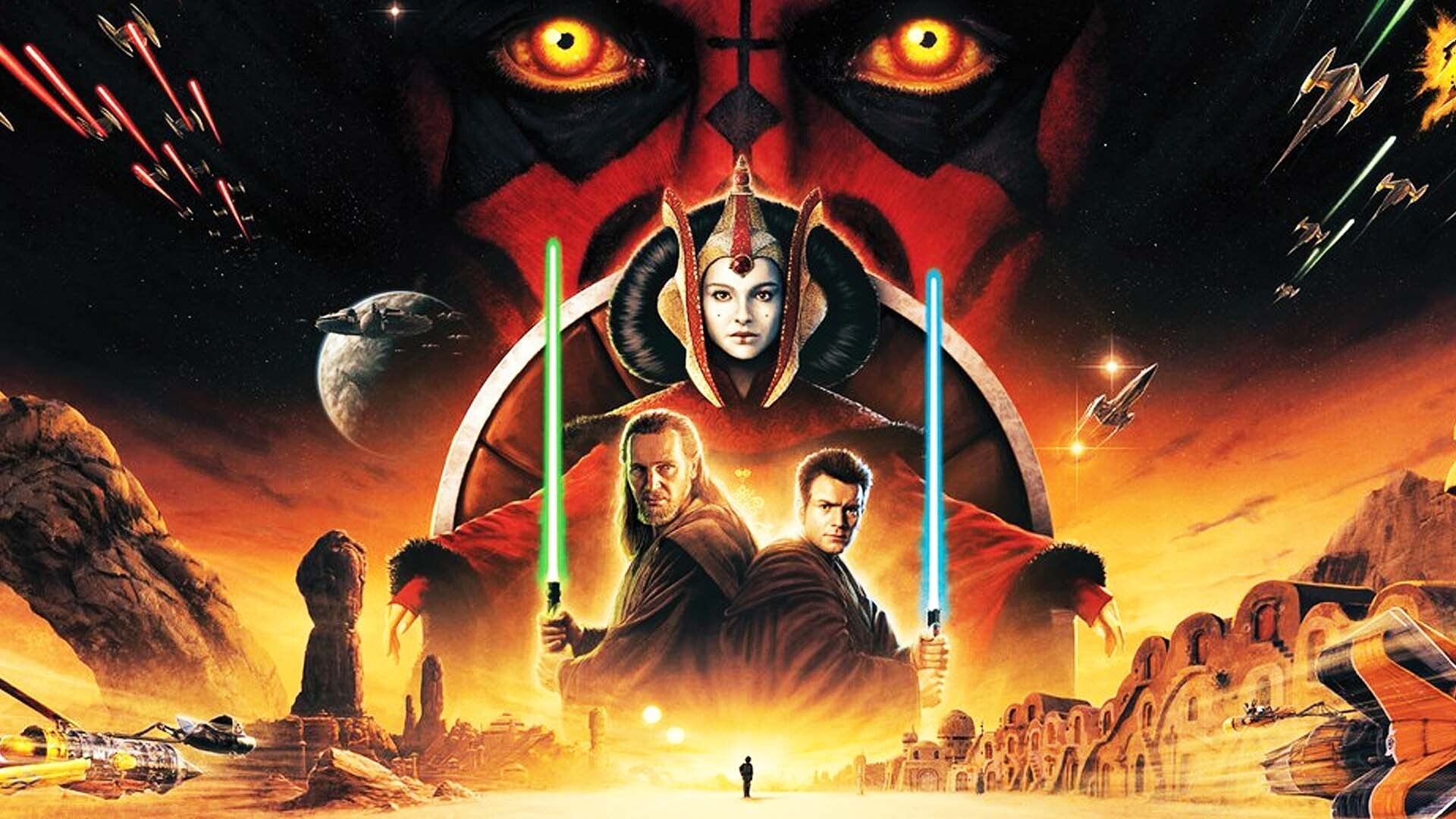
Star Wars Episode I: The Phantom Menace is historically significant for many reasons: it was the first Star Wars movie in nearly 16 years, the last Star Wars movie shot on film, and a polarizing, pulpy entry in the storied space fantasy franchise. It debuted on May 19, 1999, 25 years ago almost to the day, and earned over $1 billion at the box office, despite mostly mediocre reviews.
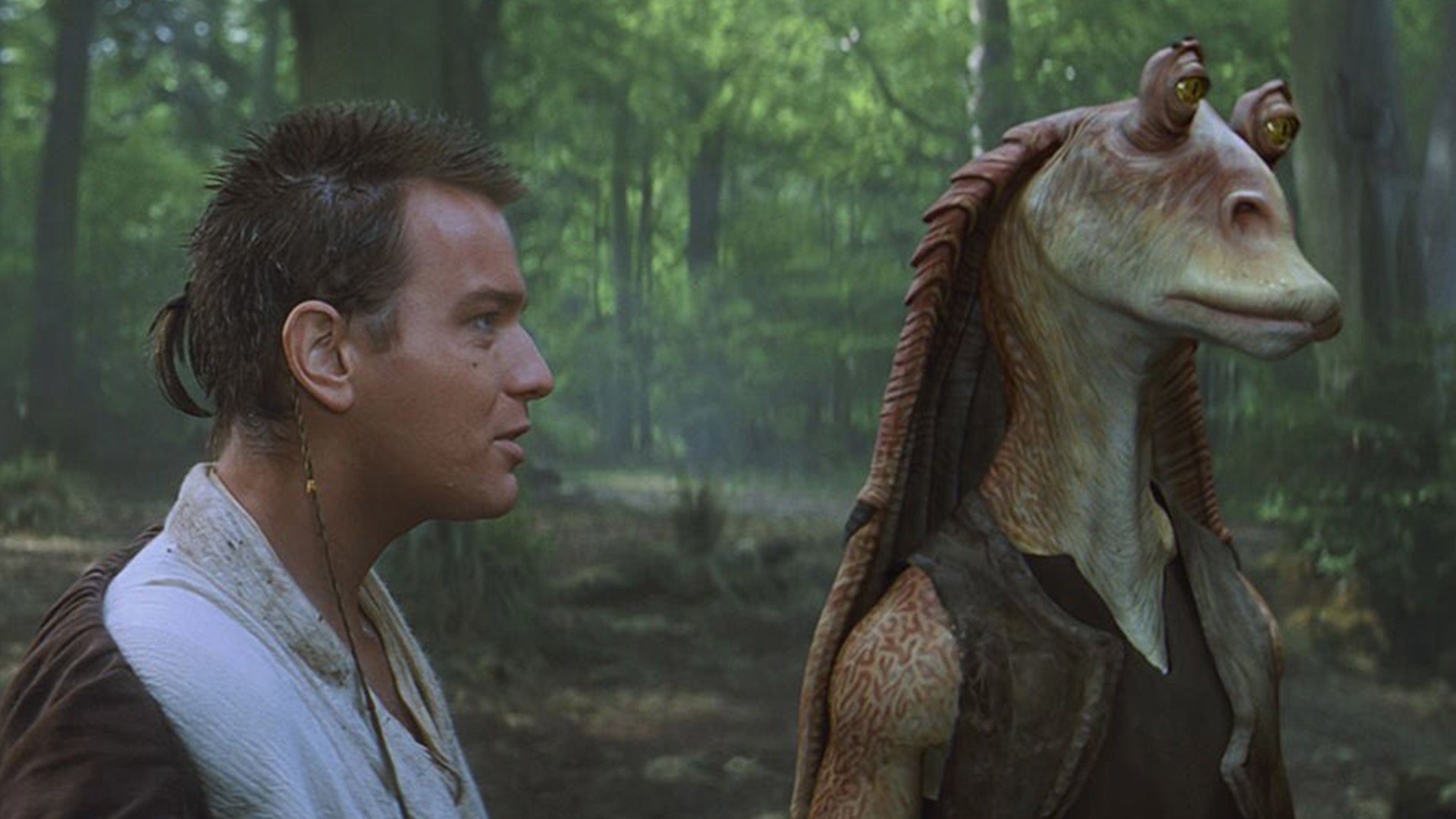
Its legacy is an interesting one: One of its characters, Jar-Jar Binks, was so detested that the actor who portrayed him, Ahmed Best, faced what he told The Hollywood Reporter was “the first textbook case of cyberbullying.” Several racially insensitive aliens featured in the film remain a mark on the series to this day. The dialogue is weak and often incredibly grating.
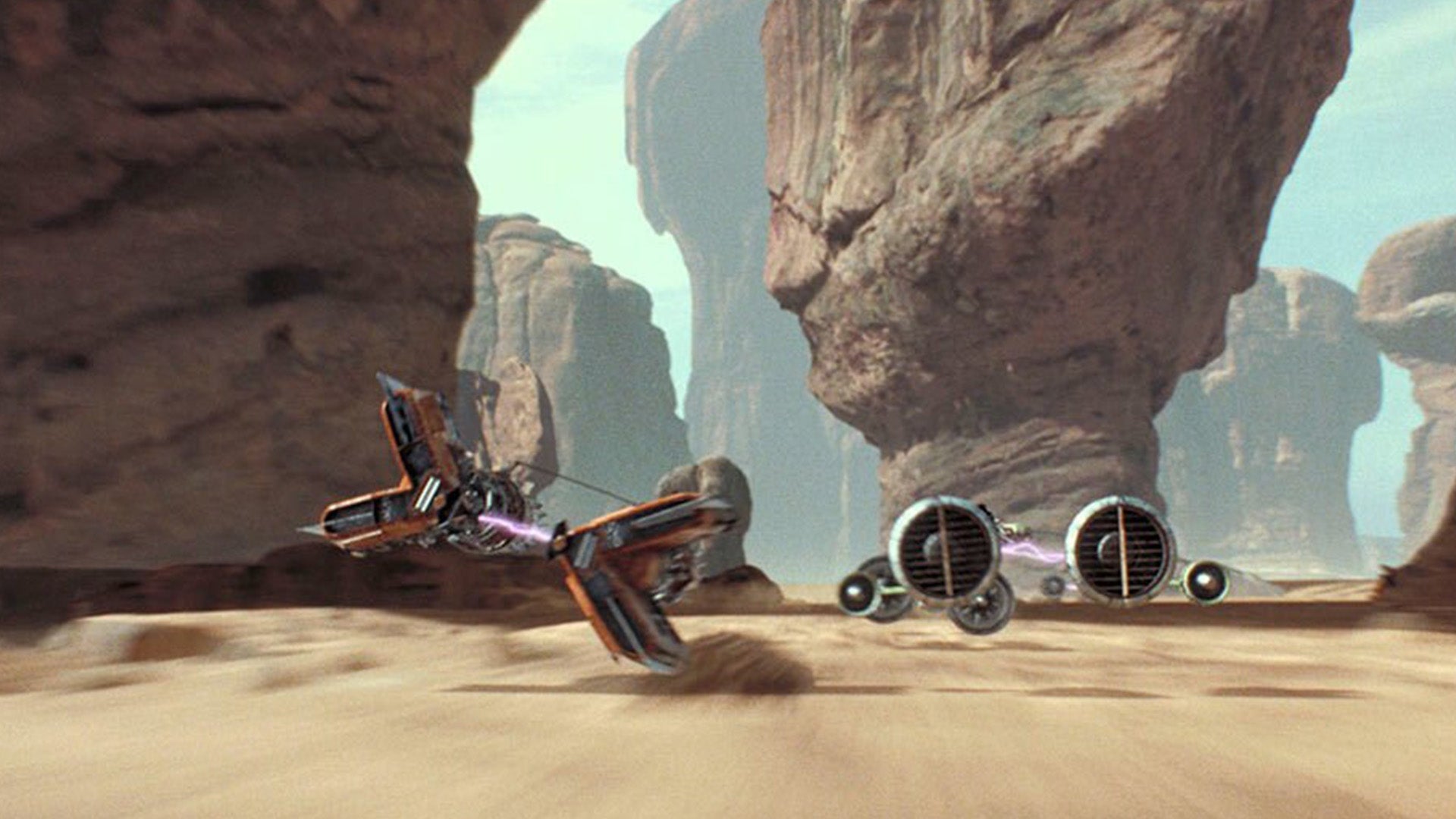
Yet its late-stage lightsaber battle is the stuff of legends, its production and costume design is intricate and beautiful, and the infamous podrace scene is exhilarating. It is a Star Wars movie full of contradictions, so when my partner asked if I wanted to go see The Phantom Menace at our local Alamo Drafthouse, I jumped at the chance.
The Phantom Menace’s flaws, 25 years later
I was nine years old when The Phantom Menace first released, and despite insisting upon being Natalie Portman’s Padme Amidala for Halloween that year, I never saw the film in theaters. At 34, this would be my first time seeing it on the big screen. As I settled into my chair, the opening text crawl burst onto the screen with John Williams’ iconic fanfare, and I felt my stomach flip with excitement.
Mere seconds into the opening scene, I wince at the Nemodians and their questionable accents (which have faced accusations of racism against Asians), the first face of many I’ll pull throughout the two-hour-and-eleven-minute runtime. I wince at Jar-Jar Binks’ characterization, at his cadence that reads like a bastardization and mocking of Black Caribbean accents, at the gloriously unfunny punchlines of which he is the subject. I wince at Watto and his antisemitic overtones
I wince at young Anakin Skywalker’s dynamic with Natalie Portman, and wonder why Lucas didn’t just cast Hayden Christensen, as it would have been so much easier to believe that an over-confident young gearhead from a sandy garbage planet could catch the eye of a queen if he had.
I wince at Shmi Skywalker’s revelation that Anakin was immaculately conceived, at the pseudo-science of “midichlorians,” at the CGI Yoda that stirred up memories of the original, horrifying Yoda puppet that Lucas replaced in later versions of the film.
I laugh uproariously at podracer Sebulba getting a massage from several alien women, muttering under my breath that he’s the only person who fucks in this mostly castrated movie.
During the massive third-act battle between the Gungans and the Separatist’s Droid army, I cringe at how much the bright-green grassy field and impossibly blue sky looks like a Halo 1 map. My partner later tells me it’s because we watched the DCP (Digital Cinema Package) version of the film, which de-noised the graininess of the original and toned down its warm palette, making the 25-year-old CGI look even worse.
The phantom good movie
But despite all that is cringe and problematic in The Phantom Menace, watching it in theaters instilled in me a newfound sense of respect for the film.
First, if you can ignore the DCP quality and look at the actual composition and set design, The Phantom Menace is a beautiful movie. The warm-hued globes of the Gungan city floating in the midnight-blue depths of an extraterrestrial ocean, the towering marble columns of Naboo’s Romanesque city, the bisexual sunset on Coruscant—there’s a style and a substance here that we don’t see in the sequel trilogy.
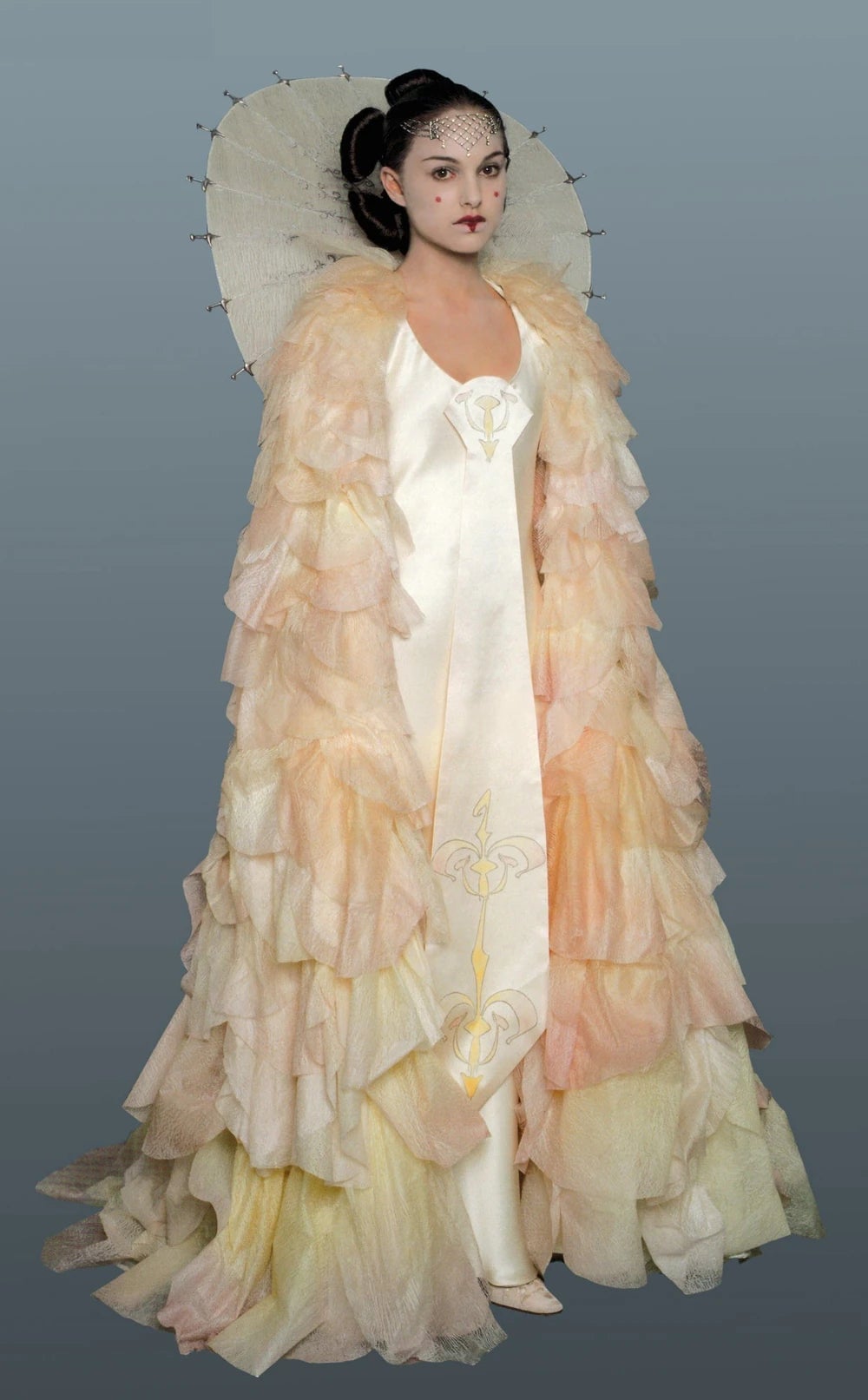
Witnessing Padme Amidala’s (and her decoy’s) costumes from Scottish designer Trisha Biggar blown up on a 26×11-foot screen was a nearly spiritual experience. The massive plume of her feathered headdress during the evacuation of Naboo, the sunrise ombre of the handmaidens’ gowns, the almost bio-luminescence of her white-pink parade gown—seeing them shimmer and flow and shine on the big screen took my breath away.
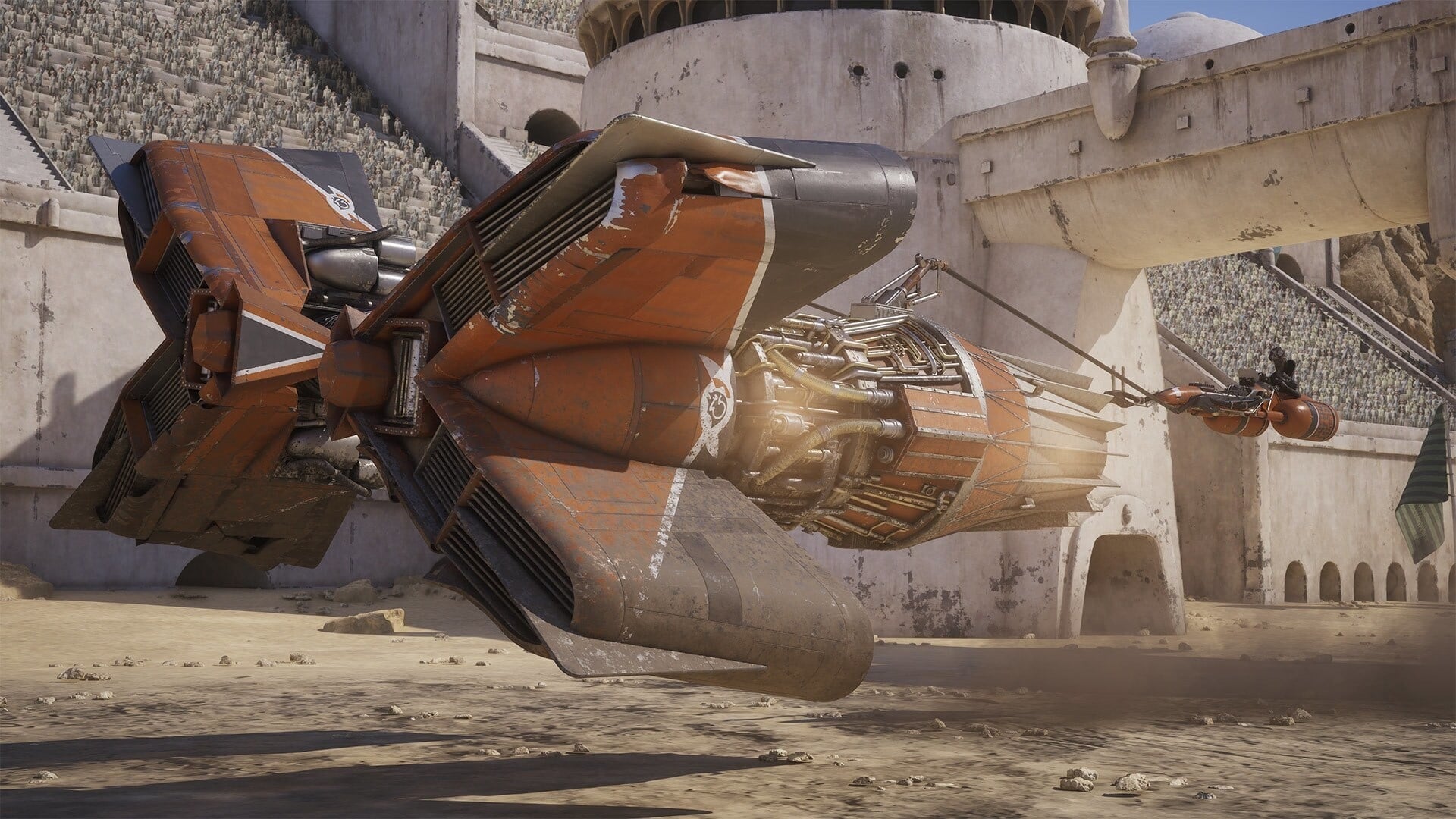
Second, when the film moves away from unfunny, childish humor and towards action sequences, it sings. The podrace scene, though mired by the CGI quality, gets my heart pounding even though I know every beat of it. The finale fight between Obi-Wan Kenobi, Qui-Gon Jinn, and Darth Maul is wildly impressive, from Ewan McGregor’s head fake to the anxiety-inducing wait as he is separated from Ray Park’s Maul by a timed force field. More of this, please.
And finally, it’s incredibly moving to retroactively watch The Phantom Menace knowing fully well the depths of the tragedy that is Anakin Skywalker. Though he’s so young (and can be very annoying thanks to Lucas’ inability to not write ham-fisted dialogue), the concern he has for his mother is devastating, especially when you know that he will never see her alive again. There were several instances where my partner and I stared sadly at each other after a line was uttered, or gripped our respective knees when the foreshadowing felt like a punch to the gut. This poor boy and the Jedi who led him astray.
The story of Anakin Skywalker is somewhat squandered by the prequels’ pacing issues and dialogue problems, but it is one of the most poignant tragedies in modern movies. Seeing its beginnings on the big screen was an incredible experience, and I came away with far more respect for the valiantly flawed Phantom Menace than I expected.
Now this is podracing.