4. Street Fighter III 3rd Strike: Fight for the Future (1999)
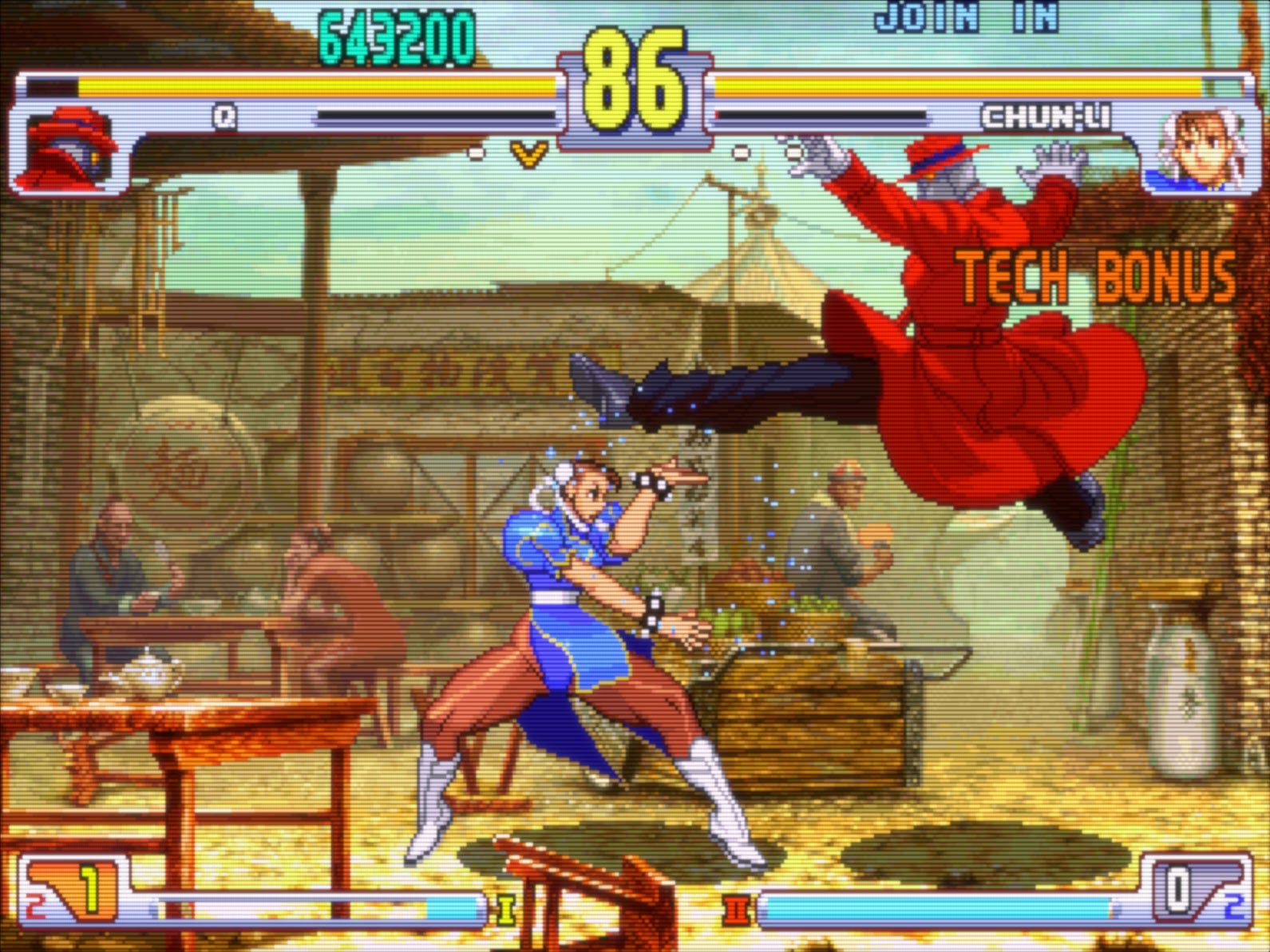
After Street Fighter III: New Generation and 2nd Impact failed to catch the zeitgeist, it took another year and a half for Street Fighter III 3rd Strike: Fight for the Future to give the threequel its final shape. Five more characters joined: three more weirdos, plus the beloved combo of returning star Chun-Li and new karate girl Makoto. Balance still sucked (says the long-suffering Q / Hugo player), and the new stages were uglier. A revamped parry system offered greater flexibility, throwing and universal overheads got rethought for the better, taunts actually became kinda important, and a fresh new hip-hop style permeated the presentation. Capcom finally had something!
Nope. Only the hardcore noticed. 2D arcade fighting was close to peaking if it hadn’t already, and the genre started its slow slide into the coming dark age. But ironically, it was this very lack of ongoing development over the next half-decade that finally let Third Strike start to build momentum among the fighting faithful, who continued playing and studying it like medieval monks transcribing ancient manuscripts in cloistered monasteries. And we all know how that culminated in 2004: with perhaps the most hype moment in competitive fighting game history
How much you like Third Strike depends on how down you are with parries, because they change everything. Traditional Street Fighter zoning gets radically deemphasized in favor of in-your-face offense, and sticking out errant buttons can lead to sudden, devastating punishment. Thinking ‘bout those parries 24/7 isn’t for everyone, nor is the highly stratified tier list.
But if you’re down with the weirdness—and these days, the game has legions of enthusiastic fans—Third Strike offers a unique flavor of high-intensity 2D fighting all its own. While it was too unusual and difficult to become a traditional commercial success, I think many will agree it was a creative and artistic one, and bold at the very least. — Alexandra Hall