In most games, the permanent death of a player character is a big deal, a matter of pomp, circumstance, and occasionally people arguing on forums for decades about how to get her back. In Niche, I watched the progenitor of my entire species drop dead after a few minutes of play. One second he was happy and healthy, witnessing the birth of his third child. The next, he was a pile of bones.
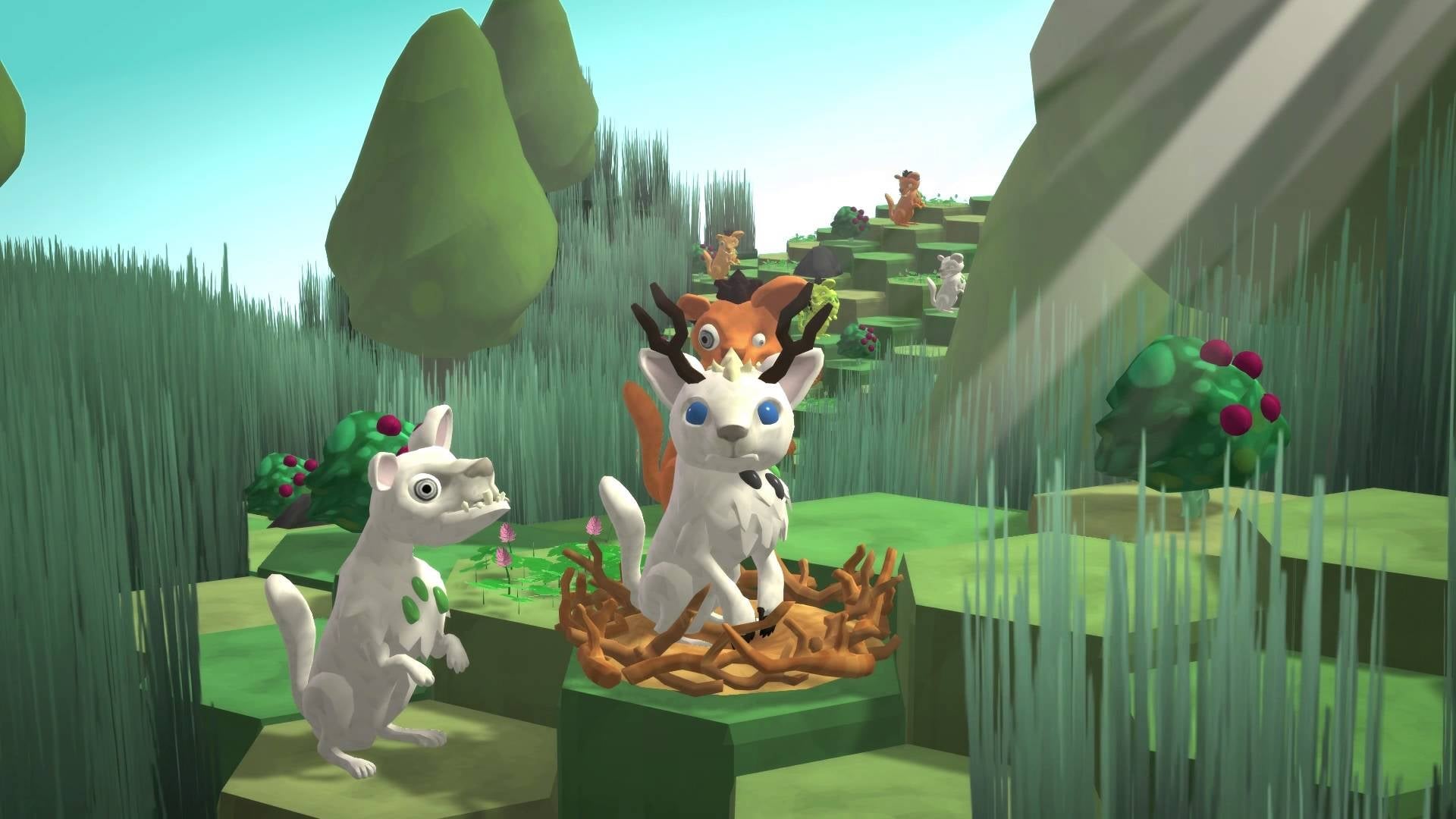
Niche, which just exited Early Access on Steam, bills itself as a turn-based “genetics survival game.” You control a species of procedurally generated animals that changes over time as the result of over 100 genes. For example, a couple of your creatures might give birth to a baby with a snout that’s extra good for smelling, or a large body that means it can better combat predators. Others might trip over a recessive gene that causes chronic blindness. You decide other aspects of what your species does. Maybe you want to set up shop on an island with plentiful resources, or perhaps you want to create a roving pack of explorers, inviting similar creatures to join your pack and hunting those that cross you. The only thing you don’t want to do is go extinct. Otherwise, it’s your call.
Watching my tribe go from a bunch of little dog things to a pack of much larger tiger-esque creatures with horns and stripes has been fascinating. I’ve only just started to monitor individual genes to evolve my creatures to get specific traits. Niche is rooted in real science, so while one creature might have, say, poison fangs you want its children to inherit, only one in four of its kids will be born with them if the gene’s recessive. You can evolve your tribe into hunters, gatherers, or weird-looking monsters with elephant snouts and duck feet, but you’ve gotta pay close attention to which genes you’re passing down the line when you have your creatures mate.
The game initially seems relatively simple, given that you mostly just move, collect food, mate, and occasionally fight, but there’s a ton going on underneath the hood. Creatures can start bleeding, or get sick, or catch parasites, or have some long-dormant genetic time bomb suddenly catch up with them. A common refrain in my two or so hours with the game has been “Why do they keep dying???”
Niche is at its best when you tell your own stories. When “Adam,” the first of my species, died, it made me deeply sad. I knew it was coming—Niche tells you how many days each of your creatures has left to live—so I made sure to position him next to his mate, because I thought it’d be a nice way to go out. But on my next turn, he was just dead, and nobody mourned or acted like anything had changed. I realized I’d wasted a couple precious turns he could’ve spent hunting or collecting nest materials. That’s when it dawned on me that there isn’t really time for sentimentality in Niche’s cute-dog-looking-creature-eat-cute-dog-looking-creature world.
That did not, however, stop me from staring in horror as one of the youngest members of my pack suddenly dropped dead on the next island we ventured to. Tall grass was everywhere, and some kind of hollow-eyed bear wolf used the lack of visibility to its advantage. Bloody vengeance, I decided, was the only possible recourse. I ended up losing another creature—a dog thing that had mutated cool horns, no less—in the ensuing scrap. Was it really worth it? I’m not sure. We didn’t go extinct, so I guess that’s a win.
Niche is definitely a game about making your own fun. It can be pretty aimless, especially in the early goings, so it’s up to you to decide what you want to do with your species beyond simply gathering food and not dying. I’m enjoying it so far, though. It’s relaxing. Well, mostly. Seeing tiny, cute creatures suddenly drop dead has a way of jolting you out of your reverie, but you get used to it.
You’re reading Steamed, Kotaku’s page dedicated to all things in and around Valve’s wildly popular PC gaming service. Games, culture, community creations, criticism, guides, videos—everything. If you’ve found anything cool/awful on Steam, send us a message to let us know.