Wolfenstein is a game I like very much, a game that in spite of its rough edges and occasional tonal missteps is so full of charm and character that you can’t help but put your arm around its shoulder and ruffle its hair every time you see it.
https://lastchance.cc/postcards-from-wolfenstein-1580464539%3C/a%3E%3C/p%3E
For a game about Space Nazis and Robot Nazis that might seem absurd, but hey, developers MachineGames (made up of former Starbreeze vets) have crammed some memorable characters into this game, along with some surprisingly good writing to go along with them.
WARNING: MILD SPOILERS FOLLOW
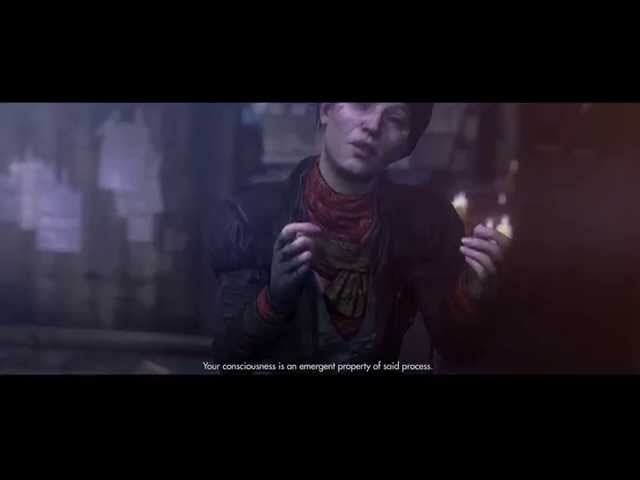
None have the impact of Tekla, though. A bizarre Russian lady with an obsession for numbers and routines, when you first meet her, as she skittles around the room speaking like a highly-strung robot, you think she might the game’s comic relief.
Nothing could be further from the truth.
Tekla is in turn the most tragic and heroic character in the game, a legacy built largely on this, her breakout scene, where she transforms instantly from bizarre sidekick into the star of the whole damn show.
https://www.youtube.com/watch?v=gGL2RergN0U
It’s a rant about life, death and consciousness that at first seems nutty and overwrought, but the longer it goes on, and the closer you listen, you realise that she’s not really talking about BJ’s life at all. She’s talking about Wolfenstein.
Wolfenstein is a stupid series. Its life as a 3D shooter began with Hitler in a mech suit and went downhill from there, bringing in everything from zombies to shambling skeletons. The last time we saw the game, in 2009, it had become a joke, one we thought we’d be spared from for years to come.
And yet, here we are only a few years later, and it’s back. Though the 2014 Wolfenstein is very different to the games that came before it. There’s no Castle Wolfenstein, there’s no supernatural element, there’s not even a Second World War (this game is set in 1960, after the Nazis have won).
It borrows characters and even some plotpoints from earlier games, but only as nods to the most die-hard fans, with zero prior knowledge of their deeds necessary; for everyone else, this is an all-new Wolfenstein. It’s got stealth. It’s got romance. It’s got space stations.
This leaves the game somewhere between a sequel and a reboot. Most people will see it as the latter. So how do you explain the continuation of certain events and characters while writing off so many others?
Easy. You write this cutscene. This game is called Wolfenstein, but the old Wolfenstein died when BJ went into a coma in 1946. This new game, with its new tone, emphasis on characters and design, emerged.
“The new consciousness is simply a new person”.
It even fits in with the pacing of the game. This new Wolfenstein opens with a barrage of explosions and terrible linear sequences, all set against the backdrop of a giant castle that’s full of nods to the original game. It’s 1946, and you’re thinking, great, this is going to be Call of Wolfenstein.
But that intro sequence ends with you being knocked out, and when you awake 14 years later, it’s to a new world and an entirely different video game.
Wouldn’t it be great if all continuity breaks could be explained away so easily?
NOTE: Tekla is only present in the game if you choose the Fergus timeline. If you choose the Wyatt timeline, she’s replaced by J.