
Video game piracy is seen by the industry as a dire problem, so much so that many PC games these days are burdened with digital rights management (or DRM) systems. They suck. Pirate heads are way better.
Today, DRM is a contentious issue in the world of PC gaming. Several high-profile titles in recent years, from Spore to BioShock to Assassin’s Creed have all lost customers and infuriated fans with the extreme measures by which they control access to a gamer’s content.
Twenty years ago, though, things weren’t so serious. One of the biggest publishers in the business could release one of the biggest games of all time, and all they relied on to stop people pirating it were…a bunch of cartoon pirate heads.
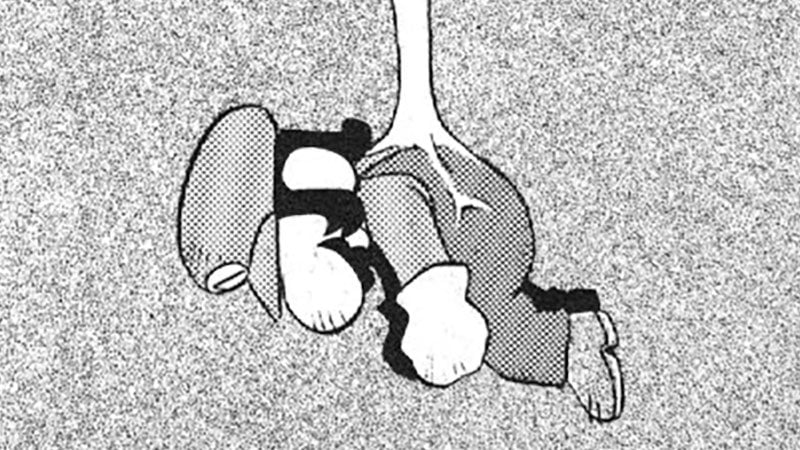
Earlier today, artist and writer Steve Purcell posted the above image on his personal blog. They’re original pieces of art for the copy protection scheme employed by classic PC adventure game The Secret Of Monkey Island. First released in 1990, Monkey Island was around in a day long before games were pirated on the internet, downloaded anonymously via BitTorrent sites.
No, in 1990, if you wanted to pirate a game, you had to copy the disks it came on and…that was it. It was so easy even a computer novice could do it, so rather than rely on expensive digital prisons to deter pirates, publishers had to get creative.
One of the most memorable of these ways was the “Dial-A-Pirate” wheel Purcell’s art was eventually used on. It worked like this: Monkey Island would prompt users to match a location with a date, as well as a wacky combination of pirate faces. All you had to do was rotate the wheel until the corresponding elements matched up and you had your answer.
It was funny, it was silly, and it was also pretty damn smart, as until that point – and for many years beyond – most publishers believed that simply prompting users for certain words from a game’s manual was sufficient to keep a game secure.
Owners of Origin’s old flight games would be well aware of this system; you’d be asked “what’s the third word in the second paragraph on page 17”, for example, and if you got it right, you could play the game. This method was usually a complete failure, as copied games exchanged on a playground or in an office would almost always be accompanied by a photocopy of the game’s manual, making this kind of protection redundant.
One alternative to this – and I remember hating a game I hated even more because of it – was Teenage Mutant Ninja Turtles on the Commodore 64. Its solution was to print a ton of short passwords on a single sheet of paper, but in a manner that was thought “photocopier proof” owing to its use of low-contrast colours. It was photocopy proof alright. It was also human eye-proof, being incredibly difficult to read, which thus made playing the game difficult to play. Well. More difficult.
https://lastchance.cc/whats-the-worst-christmas-game-you-ever-got-5717355%3C/a%3E%3C/p%3E
https://www.youtube.com/watch?v=OZF9nYRd4Ts
In the end, it didn’t work. I remember visiting many a friend’s house in the early 90s to find crude copies of the wheel, made by taking the original wheels apart, photocopying them seperately then sticking the copies together again like some crude, zombified version of the original. They may not have looked as pretty as the original, which was in colour, but they let people play the game, and that was all that counted.
The wheel was, in what’s probably a first (and last) for digital rights management, something of a “hit”, and made a popular return for Monkey Island’s sequel with the “Mix N Mojo” wheel, which rather than pirate heads and dates had users lining up voodoo ingredients.
Like I said above, the wheels ultimately didn’t work. No piece of copy protection ever has. Yet here we are, looking back fondly on Lucasart’s creative attempts, valuing them (and the publisher by extension) if not for their efforts at combating software piracy, then at least for their originality and humour.
Maybe contemporary PC powerhouses can learn a thing or two from that. I don’t think any of us will ever look back on more recent DRM measures with that kind of fondness, for the DRM or the company behind it.
Total Recall is a look back at the history of video games through their characters, franchises, developers and trends.