If you’re a regular Kotaku Melodic reader, you’re no stranger to the idea that despite many developers’ cinematic aspirations, video games have more in common with music than they do with film.
It’s an idea that I’ve been pushing at Kotaku for a while now, starting with my first article as a Kotaku columnist last year: “The rhythm of play,” the musical quality of even the most basic video games. Video games practically are music. It feels even truer now than it did then.
In the forward to The Sound Issue of Kill Screen magazine, then-Editor-in-Chief Chris Dahlen eloquently states the case for games as music:
All apologies to those who think videogames have grown more and more like the movies, but no matter how cinematic they become, the form with which they have the most in common is music. Both forms marry performance and production, gut and theory, and repetition and spontaneity. Neither one is complete until the work gets a player, and a classic will endure a million renditions, as the performers move from practice, to mastery, to reinvention. Music, like games, is also one of the most soul-cleansing, body-rocking, and mind-blowing creations of man. Life without either is unthinkable.
“Most importantly, in practice, both music and games are played- and can be played in very similar ways.”
Man, I couldn’t have put it better myself. (And I’ve tried!) The whole magazine issue is a fantastic collection of writing about games and music, and I swear I’m not just saying that because I wrote an article for it. If you’re into this stuff at all, I recommend ordering a copy
Over at his blog “Wombflash Forest,” composer David Kanaga has written a lengthy, fascinating post about finding the spiritual meaning in both games and music. Kanaga is a thoughtful musician and is also something of a philosopher—he’s responsible for the soundtrack to the overstimulation freakout PS3 game Dyad as well as the music for the supremely cool, chilled-out Proteus
https://lastchance.cc/dyad-is-part-mind-bending-racer-part-soaring-video-gam-5894035%3C/a%3E%3C/p%3E
The relationship between music and videogames is not a rhetorical one, it’s not just an analogy— the language describing it may be, but the various identities are a fact. Structurally, there’s little the two forms don’t have in common. This has design implications— rhythmically, formally, texturally, etc. Most importantly, in practice, both music and games are played— and can be played in very similar ways.
Musical instruments are games, as are compositions. They are possibility spaces with boundaries implicitly or explicitly inviting certain types of play.
Videogames are not competitions by necessity, they are play-spaces. Play is the subject and the source of meaning. How do we play? The kinds of meanings that exist in music are the same kinds of meanings that exist, fundamentally, (but lying latent), in games— they don’t point at anything but the experience itself, at the materials and interrelationships that form the binding structures of that process.
Well said. The relationship between games and music isn’t just a metaphorical one. Games are music, they have a real musical aspect to them. Leaving harmony aside, even the simplest games have a rhythm, as I outlined last year, and rhythm is a vital, often-misunderstood element of every video game. To quote myself (sorry):
When I close my eyes and think back to my favorite games of the past few years, I remember the way they feel: the heavy-metal crunch of God of War II, the gliding flow of Flower; the irrepressible bounce of New Super Mario Bros. DS and the impeccably timed slip and slide of Super Meat Boy. Each of those games had its own unique rhythm, an irresistible tempo that hooked me and kept me coming back.
And where those games succeeded, many others fail—hot messes like Star Wars: The Force Unleashed and 2008’s Alone in the Dark felt like playing a drum solo with a handful of wet napkins. Rhythm isn’t something that can easily be put into words, but it is often the thing that makes a good game truly wonderful—and a mediocre game unplayable.
Rhythm felt like a good starting place, but the comparison goes beyond rhythm. Harmony, or more simply “notes”, also have a place in the games-as-music conversation. I got a kick out of Julian Benson’s recent article at Rock, Paper Shotgun in which he “transcribes” Jon Blow’s intricate time-bending platformer Braid
At first blush, the article looks similar to the kinds of cool musical analyses that Dan Bruno sometimes does on his blog Cruise Elroy. But keep reading, and you’ll see that Benson is actually transcribing the game like it’s music, drawing on the work of minimalist composer Steve Reich to put Braid‘s shifting, backtracking flow into context, building a modified type of music notation in order to express the events on the screen.
He then pushes beyond Braid to other platformers, wondering if we could form a universal form of music-notation… for all games. (Granted, this seems like a stretch, but hey, it’s fun.) Benson describes speed runners—players who blast through levels in the most efficient way possible—as concert pianists, describing how notation would allow them to maximize their performances:
Notation gives speed runners two things: an ability to view an entire level with all its interlocking movements and a language with which they can share their routes. Much like a conductor is able to lay out an entire concert score, with all its different parts, and comprehend the whole, a speed runner can see a completely transcribed level, the movement of all its parts. With that information they can see and devise a route through all the obstacles, all on paper: they can show it to people, other speed runners: it can be consumed faster than video, it can be tweaked an altered by the speed runner community.
This all starts to dig a little bit too deep for me (and that’s saying something!) but who cares? The important thing is that no matter how hard Benson pushes it, the “analogy” holds up. In fact, as Kanaga says, it’s not an analogy at all—Benson is literally talking about a game while also talking about music. For all intents and purposes, they’re the same thing.
Want more? YOU DO? Okay, let’s keep going. Breaking games down along musical lines makes it much easier to look at them critically. I had been weary of the “Gameplay vs. Story” debate for a long while, until I had this epiphany: gameplay and story are exactly like music and lyrics
https://lastchance.cc/gameplay-and-story-are-exactly-like-music-and-lyrics-5885432%3C/a%3E%3C/p%3E
Of course, music has a significant head start over video games in terms of artistic evolution. But because of that, music can also give us a sense of some of the ways that video games might grow and mature. Back to Dahlen’s Kill Screen forward:
If you’re a fan of both , you may sense a certain sibling rivalry. Music is the older, hormonal one that breaks in through the window after a party; videogames are still sitting on the couch in their underoos. One form is new, while the other was embraced by all of our ancestors when they had to get down. Videogames give us fun, revelation, and satisfaction; music is rebellious, joyous, and sad, and it’s sexy, often very sexy, something that games have yet to learn to be.
As we’re seeing lately, games are spending more and more time up off the couch, wearing real pants, out and about. More games going off to parties, meeting new people, maybe talking to their friends about joining a battle of the bands. (Have we pushed the personification thing far enough here? Heh.)
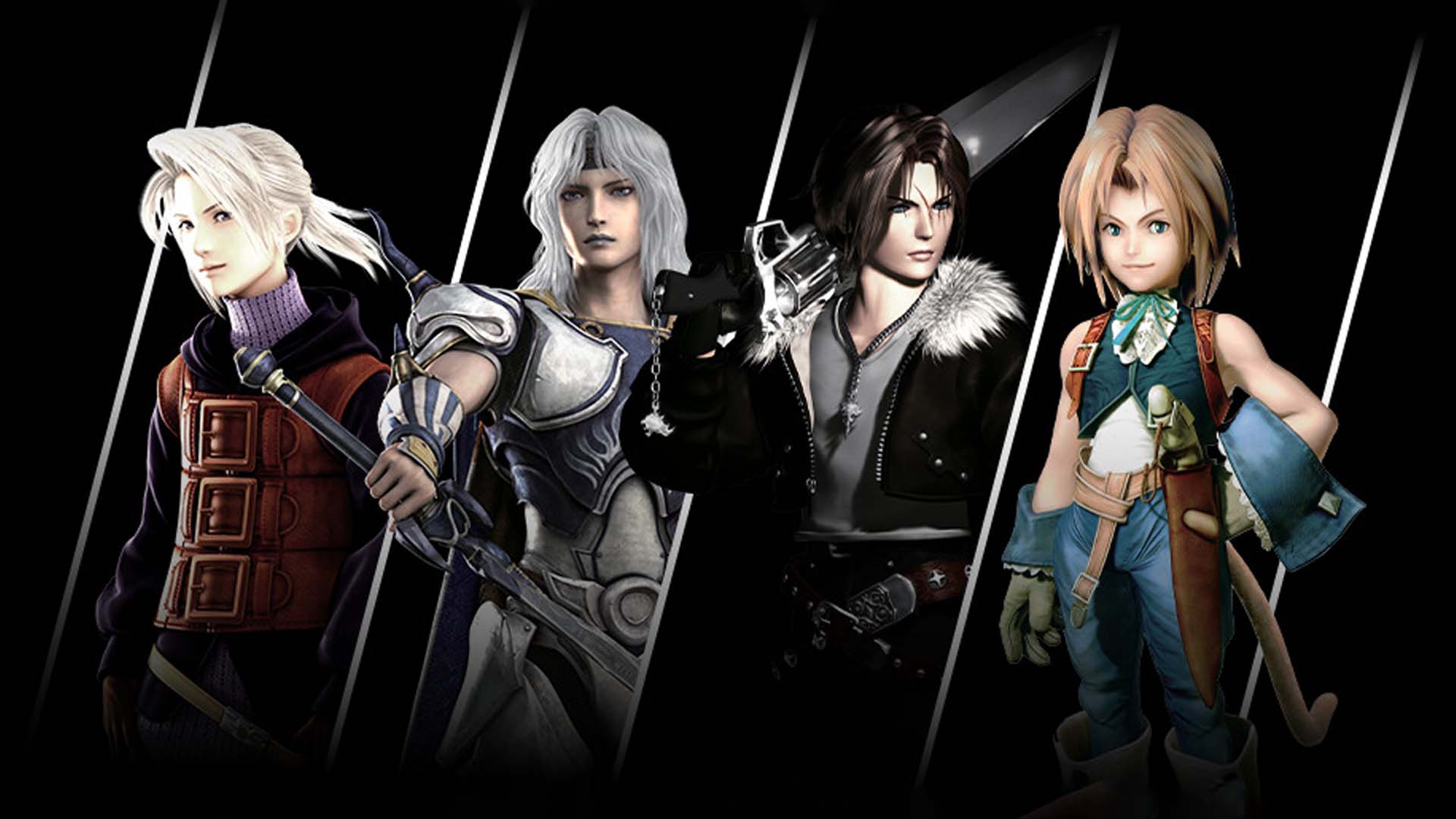
But enough of this criticism junk! Let’s talk about the games themselves. Specifically, the “New Music Games” that I’ve written about before. This year has seen so many games that deliberately use musical sensibilities and concepts to explore new territory. Beat Sneak Bandit was a rhythm game with a unique puzzle-bent – much like the upcoming Orgarhythm, which takes the same concept and merges it with real-time strategy. The enjoyably strange Theatrhythm looks to merge Final Fantasy‘s now-famous music into a fighting game (??) while Dyad, as I mentioned, merges music, visuals and momentum into an unforgettable psychedelic experience. Pippin Barr’s hilarious and surprisingly affecting “Epic Sax Guy” game was a remarkable simulation of musical rehearsal and performance while at the same time acting as a humorous exploration of a weird musical meme.
https://lastchance.cc/the-rise-of-the-new-music-games-5895659%3C/a%3E%3C/p%3E
The in-development FRACT aims to put players inside of a giant synthesizer, and Sound Shapes is easily one of the most interesting-looking upcoming music games of the year simply for how it merges musicality with level design. (It helps that the contributing musicians are all fabulous.)
https://lastchance.cc/this-game-puts-you-inside-a-gigantic-synthesizer-5887749%3C/a%3E%3C/p%3E
Harmonix, past purveyors of Rock Band‘s brand of guitar-controller music simulation, have begun to branch out by reaching back. Their superfun Dance Central games are still more or less what people think of when they think of “Music Games,” (not that this is a bad thing) but Rock Band Blitz looks to return to the studio’s Audiosurf roots, making each instrument in a band available to a single game controller.
Jon Blow’s upcoming The Witness looks so thoroughly, methodically designed that it feels like an exercise in symphonic game design. ThatGameCompany’s triumphant Journey is an undeniably musical experience, peerlessly melding soaring gameplay highs with composer Austin Wintory’s astonishing musical score.
https://lastchance.cc/jonathan-blows-the-witness-is-an-exercise-in-symphonic-5893336%3C/a%3E%3C/p%3E
In other words: It’s a good time to be into music and video games. Let’s rock.