Down the street from a Kroger shopping center and a Wal-Mart in Marietta, Georgia lies an arsenal. The Empire Swords shop looks unassuming enough from the outside, but once you step through the doors…
Swords, axes, staves, and daggers line the walls. Racks filled with cruel-looking implements of destruction stand before giant sets of armor. Every possible surface contains metal instruments that could kill in the right hands, from butterfly knives to broadswords taller than your average man.
The video game sword replica business is a multi-million dollar industry which has grown in great leaps and bounds over the past several years. From Prince of Persia to Mortal Kombat to Halo, new weapons come to market at an astounding rate, selling out nearly as quickly as the local sellers can import them. Leading the way is replica dealer Empire Swords.
An Empty Hand Craves A Sword
The sword has long been a pivotal aspect of human culture. Much more than a weapon of war, the sword has been used to represent triumph, defiance, loyalty, betrayal, and even love. As children we took up sticks, participating in mock battles between good and evil in our backyards, given courage by broken tree branches we imagined as gleaming weapons of old. Now, in this age where our weapons are represented on screen, our hands reach for plastic controllers instead of imaginary leather-wrapped hilts, and the sensation is nowhere near as satisfying as swinging real steel.
That’s where the video game weapon replica business comes in.
Up until several years ago, there really wasn’t that much of a market for video game replicas. Cutlery shops carried the odd assortment of martial arts weapons along with the rare recreated movie prop, while medieval weapons dominated the collector’s market, doing huge business at Renaissance Fairs and science fiction conventions.
Early video games simply didn’t warrant weapon replicas, as the weapons represented in such games were too crude to carry recognizable characteristics. Swords weren’t much more than straight lines, and there isn’t much of a collector’s market for accurately recreated straight lines. It wasn’t until the late 1990s that video game weapons really began to develop distinctive a character all of their own. There was a cloud on the horizon…a cloud with a very, very large sword on his back.
An Audience With The King of Swords
It crosses my mind upon entering Empire Swords that were a group of time-displaced Vikings find this shop, the Wal-Mart wouldn’t stand a chance. Then the shop’s owner comes out to welcome me, and I think, “Too late, the Vikings are already here.”
Perhaps he isn’t a Viking, but Empire Swords’ owner Scott Marlatt, with his long hair, high forehead, and steely gaze, looks every bit like he could step back through time and be perfectly comfortable living by the sword. In a way, that’s what he does.
Despite his anachronistic looks, Scott was an internet pioneer in the replica sword business, back when martial arts weapons were the order of the day. He says that in 1999, his eBay store was one of the twelve largest in the world, though eBay couldn’t hold his ambition for long. Soon Scott launched his first direct sales website, www.EmpireSwords.com, which soon gave way to www.KingofSwords.com. Over the past 10 years his store has been featured in Rolling Stone Magazine, the Discovery Channel, and The Learning Channel.
The Rise of the Video Game Replica
If anyone could be said to be an authority in the replica sword business, Scott is that person, and a few years ago he was there when the entire industry changed.
“Up until two, two and a half years ago, traditional sword sales were the katanas, medieval weaponry, standard military replicas and fantasy. Over the past couple of years we’ve gotten to where the most popular swords every day are anime, video game, and new movies.”
Within the course of a few years, video game and anime replicas have become somewhere between 30-40% of Scott’s business and that number is growing as quickly as new weapons can be made…and that’s pretty damn quick.
The majority of unlicensed video game weapon replicas come into the country from manufacturers located in China and Pakistan. The creators obtain a reference, which often times consists of screenshots from the video game they plan on replicating, and from the point they have a prototype it takes roughly 90 days before importers in the United States get their hands on the finished product. The process goes so quickly, that sometimes the manufacturers will create weapons based on early, unfinished screenshots or concept art, resulting in weapons that don’t quite match up with their in-game counterpart.
Others, like the Halo energy swords, sound great on paper but don’t quite meet expectations. “We were really excited when we heard it was coming, going as far as to promote it heavily on our site, and once it came in we were like…okay, that’s a toy.”
Sometimes an existing product coincidentally turns out looking like a video game weapon, as is the case with the Prince of Persia: The Two Thrones Daggertail Chain Whip, seen above. It comes packaged in a box that announces it as a “Professional Chain Whip”, which of course shouldn’t be confused with your more amateur chain whips. It’s obviously not the Daggertail, but it’s certainly close enough to sell to fans.
The Master Sword – Made In Pakistan
A favorite from my own personal collection, the Master Sword from the Legend of Zelda series is one of the most replicated video game weapons on the market today, with different versions crafted for different games from different companies.
This version, at least according to Empire Swords, is Link’s Sword version 2. It has a stainless steel blade, a cast metal handle, and an etched pseudo-Triforce towards the base, similar enough to be recognizeable without being too close to draw a lawsuit. It’s a bit wobbly, but shiny enough to see the reflection of my beard in when I attempted to take a close-up shot of the etching. It’s a nice enough rendition, I suppose. Certainly closer to being a Master Sword than I am to being Link.
The only real problem I have with my Master Sword is the fact that the pommel has a big “MADE IN PAKISTAN” sticker on it, that for some reason I can never bring myself to remove. After spending countless hours throughout countless games trying to get to the point where I was in possession of this sword’s virtual counterpart, and here it was in Pakistan the whole time.
Games Pushing Steel
Between the Empire Swords store and the Empire of Swords website, a wide variety of anime and video game properties are represented. You’ll find two different version of Bloodrayne’s arm blades, two different Halo energy swords, two different weapons from the Legacy of Kain series, and a smattering of Soul Calibur weapons, including Tira’s ring blade. There’s a lot to choose from, but certain properties sell better than others.
“The biggest properties? It’s going to be a fight between Bleach, Legend of Zelda, and Devil May Cry”, says Scott, slipping out from behind his desk to show me one of their latest offerings, the Vergil’s Yamato Sword from from Caocom’s Devil May Cry series. Using a Japanese PVC figure of Vergil as a reference, it’s one of the better replicas I’ve seen, detailed down to the custom scabbard.
Of course Scott’s answer might have been quite different a year and a half ago, before one gaming company put a stop to unauthorized weapon replicas using their properties.
Square Enix Deals A Mighty Blow
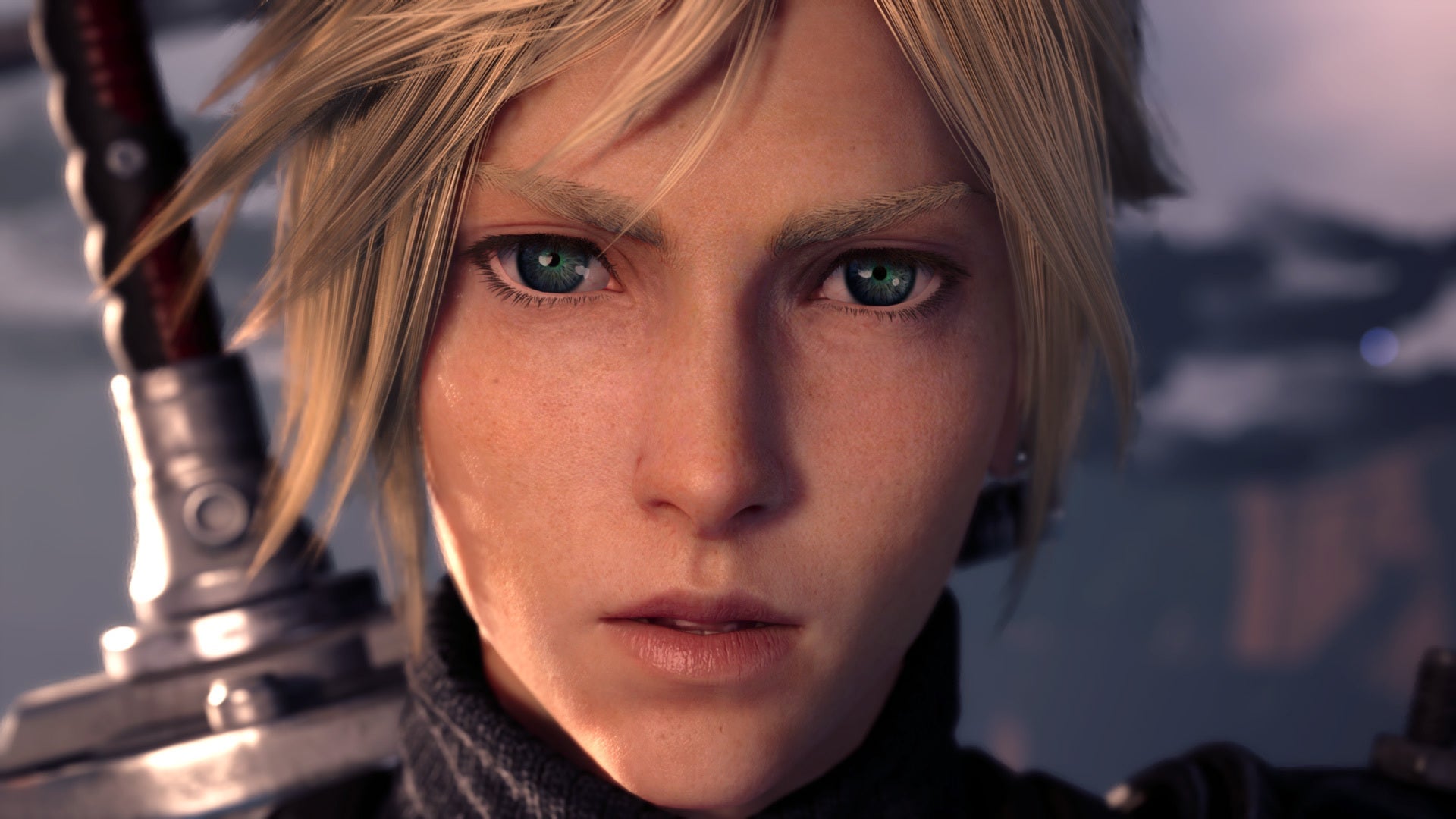
Before February of 2008, the Final Fantasy series dominated the video game replica industry. Ever since Cloud Strife appeared with the gigantic Buster Sword on his back in 1997’s Final Fantasy VII, fans had been clamoring for recreations of the iconic weapons from the series. Over the years, the Buster Sword has been reproduced in multiple forms, from a simple and cheap giant wooden version to the masterfully crafted amalgamation blade seen in the movie Final Fantasy VII: Advent’s Children. “The Buster was the number one selling sword in our entire history as a company,” says Marlatt.
Each new game in the series brought new iconic weapons. Seifer and Squall’s gunblades from Final Fantasy IX, Tidus’ giant fishhook sword from the 10th game in the series…even Sephiroth’s ridiculously large katana were all recreated, selling by the truckload to rabid fans around the globe. Business was so good that shops formed solely to sell Final Fantasy recreations.
Then Square Enix decided that enough was enough, filing a lawsuit in U.S. federal court to halt the import and sale of Final Fantasy replica weapons.
http://lastchance.cc/355518/square-enix-cuts-down-sword-pirates%3C/a%3E%3C/p%3E
“The fanbase were the most upset when we removed the weapons for sale. They were asking why…they were mad at Square Enix.” Marlatt went as far as to try to reach out to the company in order to reach some sort of agreement, but Square Enix wasn’t buying what he was trying to resell. “We contacted their corporate headquarters in California and Tokyo right when this happened, and they had no interest whatsoever in producing any sort of weapon replicas.”
In February 2009, Square Enix finally settled their federal lawsuit, and while resellers like Empire Swords came through unscathed, importers such as the Marietta, Georgia based TrueSwords.com were hit hard, with a substantial portion of the money awarded Square Enix in the lawsuit coming from the Atlanta-area.
Now a single Buster Sword sits behind a door in the back of Empire Swords, a reminder of the game series that changed the entire replica weapon industry.
In Before The Lock – The Final Buster Sword
Just before Square Enix dropped a legal bomb on the Final Fantasy replica weapon business, the most intricate version of Cloud Stryfe’s Buster Sword hit the market. Patterned loosely after Cloud’s multi-part Buster from the computer animated film Final Fantasy VII: Advent’s Children, this monstrosity consists of six different pieces that can be put together to form one giant weapon.
Separately, the major pieces only loosely fit the definition of a sword – lengths of sharpened metal with grips of varying degrees of practicality at the end. Put together they actually form a rather attractive weapon, though one far too heavy to actually swing, and it’s only a third of the size of the sword featured in the movie! That Cloud has some seriously strong arms.
Untapped Potential
The Square Enix lawsuit actually punctuates one of the oddest aspects of the video game weapon replica business. Despite millions of dollars being spent of relatively low-quality video game weapon recreations each year, hardly any of the products are officially sanctioned by game publishers. With the exception of non-functioning promotional weapons like the Gears of War 2 replica Lancer or the ultra-expensive World of Warcraft’s Frostmourne sword commissioned by Blizzard, most game companies shy away from officially stamping their name on huge pieces of pointy steel. Why?
https://lastchance.cc/get-your-gears-of-war-2-lancers-5034614%3C/a%3E%3C/p%3E
Is The Video Game Mightier Than The Sword?
The effect that video games have had on the replica weapon business is a testament to the growing influence that gaming has on our culture. Gamers’ love for their favorite franchises have transformed the replica marketplace, bringing new life and new customers to an industry that generally found inspiration in ages long passed. Just ask the King of Swords.
“Video Game & Anime sword replicas sales and production have continued to grow very rapidly over the past few years. It is quickly becoming one of the most sold and sought after series in the sword market. Who doesn’t want to hold their favorite heroes weapon in their ands, even if only to quietly display it on a shelf or wall? With new games, new series, new heroes, and new weapons constantly being released, I believe we’ll continue to see new generations of replicas offered in the years to come. It’s the fans that keep the games “alive” and the swords that won’t let them die!”