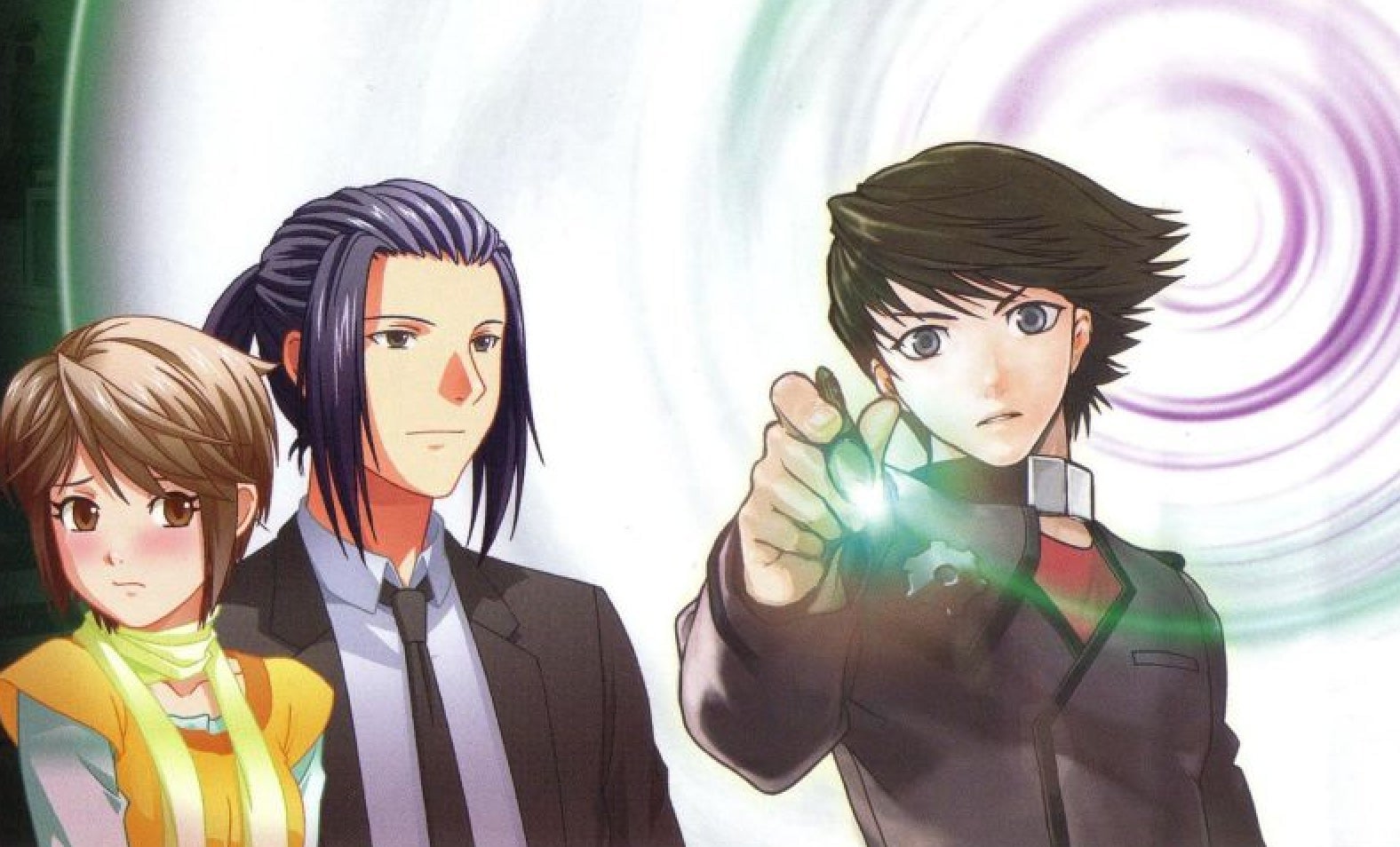
In Time Hollow, time travel is a painful, convoluted, and sloppy mess that makes history worse with every intervention. A spiritual successor to another game I enjoyed called Shadow of Memories, it actually took me a while to track down this obscure Nintendo DS visual novel that was published in 2008 from Konami. When I found out it was directed by Junko Kawano, one of the developers who helped create the Suikoden series, I made it a priority to play it.

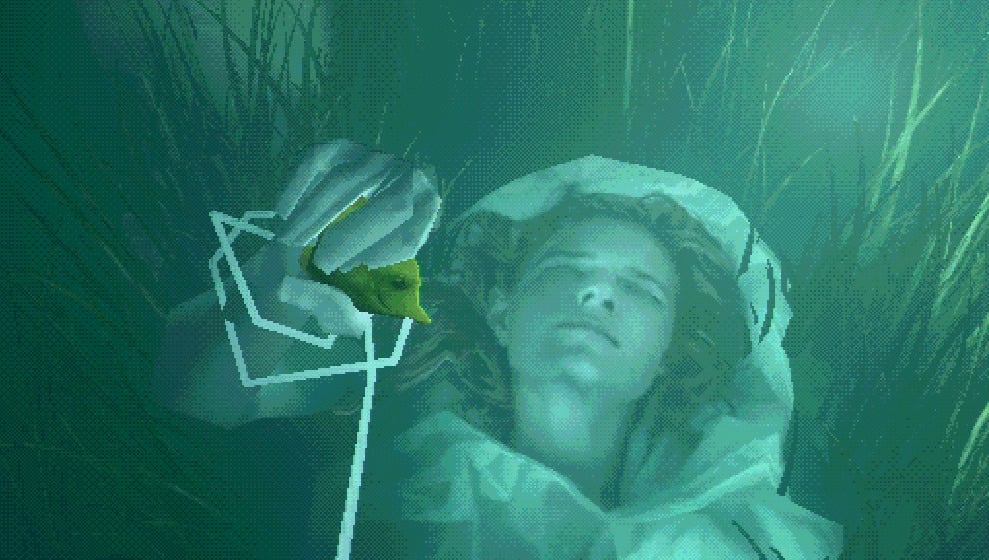
The game revolves around Ethan Kairos who seems like a normal high school kid. Then one morning, he wakes up and learns his parents died twelve years ago even though he’d just seen them the night before. Someone is splicing together their own version of history and Ethan is the only one who seems aware of how much things have changed. That’s because he’s in possession of a special item called the hollow pen, a family heirloom with the ability to change history. This pen is mightier than time itself as long as he knows where to draw the circles that let him jump to the past.
Ethan travels through multiple alternate worlds, making small shifts from saving the life of someone’s dog to preventing a friend from getting arrested after they attack someone. Sometimes, the circumstances that change a person’s life are so minute and trivial, it got me thinking how different our lives would be if, say, we hadn’t met that one person or missed a random encounter that had deeper ramifications. Time Hollow does a good job showing how circumstances are fickle and unpredictable; in one history, Ethan’s uncle Derek is a distant and cold authority figure. A couple strokes of the pen turn Derek into a warm-hearted guardian who’s also a successful cafe owner and tries his best to step in for the parents Ethan lost.
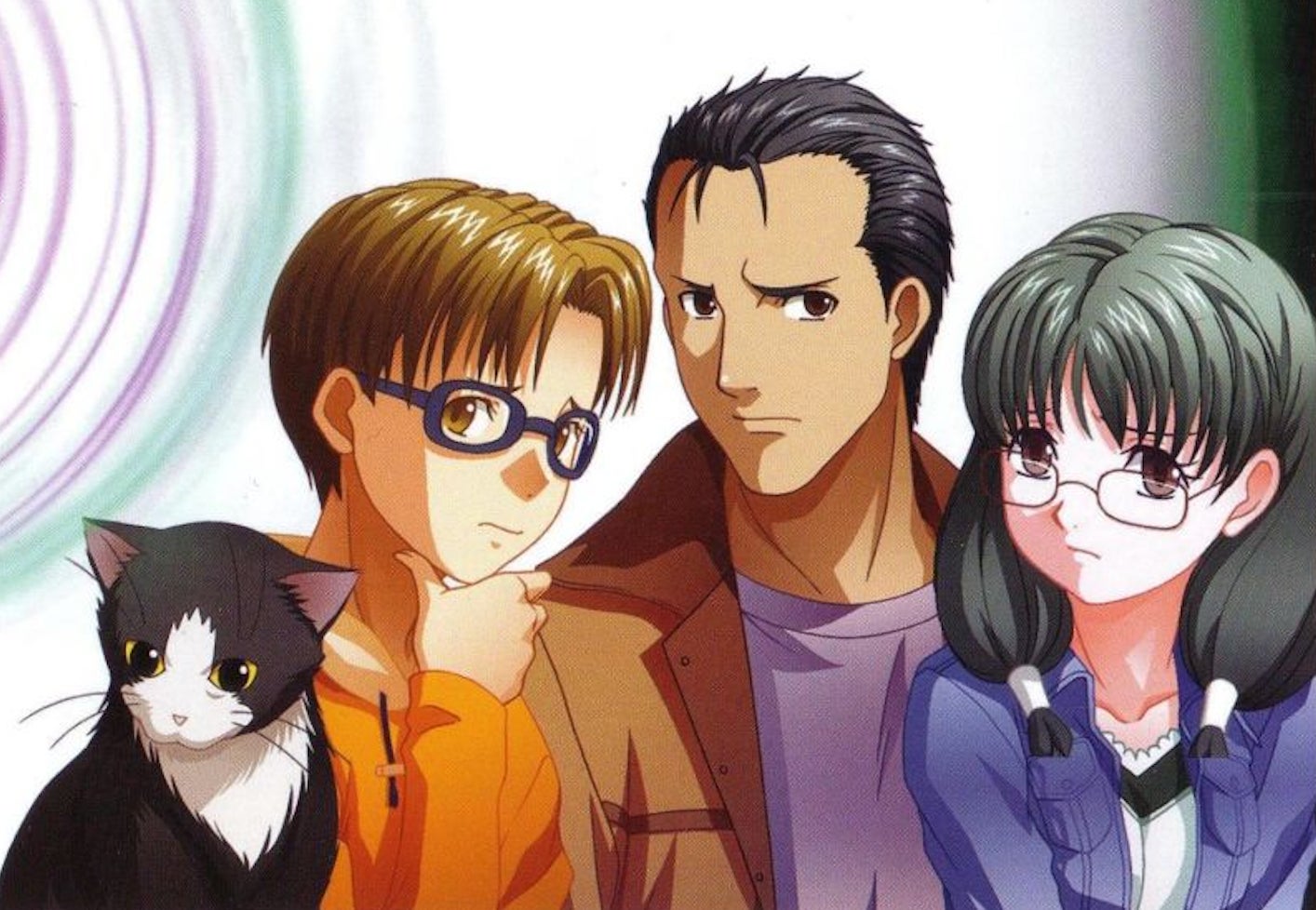
Time Hollow is most successful when it focuses on the whimsies and melodrama of time. It also doesn’t inundate players with text, skipping over much of the mundanity of his school routine (this isn’t like Persona, diving into classes and participating in day to day activities). The story focuses primarily on Ethan’s task as an editor for the manuscript of his friend’s lives. The flashbacks, which are frozen photos signifying important junctures, become a personal index on the revelations Ethan needs to uncover with each jump. When the story shifts gears and focuses on unraveling the machinations that killed his parents, it becomes a bit more convoluted and confusing. Ethan has a rival hollow pen user, Irving, who’s mucking things up, driven by a misguided sense of vengeance over his mother’s death. The actual resolution isn’t as satisfying as seeing how complex the gradients are that make up the tapestry of a person. The narrative vies between two seemingly contradictory concepts; the idea that a single moment can change a person’s life and the more fatalistic theme that the destiny of some can’t ever be altered no matter how hard you try.
Despite the serpentine threads in the story, this visual novel is linear in its vectored approach. The path winds all over the place, but there’s not much freedom when it comes to the choice of temporal diction. It’s also a very short jaunt, with the mysterious girl, Kori Twelves, somehow at the heart of the tangled puzzle. If every life were a labyrinth, she’s there to make sure things get even more cryptic, playing both the victim and savior whose role changes while also somehow remaining unaffected. If it sounds intrinsically self-contradictory, it’s because time travel stories are usually like that. The paradox is in changing the past and yet somehow remaining aware of the change when, theoretically, it no longer happened. Juggling the divergent timelines while trying to maintain a coherent arc is hard. Time Hollow probably won’t please connoisseurs of the time travel genre, but is entertaining enough to dispel any quibbles about plot inconsistencies (the game actually reminded me of the plot of a Star Trek: Voyager episode called “Year of Hell”). It’s buoyed by fantastic anime style art and generally likable characters. There isn’t much done to subvert the typical anime character tropes, but it’s okay as Time Hollow lets players grasp how strange time can be. The whole game ends on a loop with Ethan ensuring history literally repeats.
The game resonated for me on a personal level. I’m being a bit vague here for privacy reasons, but something traumatic happened to someone dear to me earlier this year. Seeing that person change after the event was shocking. The direct cause of it was something that seemed so minor, I wished I could have used something like the pen to quickly excise the cause. The way time and its events can cause hollows on an emotional and mental level has been stunning to witness. I keep thinking how different things would be if there had been a way to prevent the incident from ever having happened.
Time Hollow is wish fulfillment. In the end, everything somehow gets resolved or improved for the better. Real life isn’t so pat. Aside from historical revisionists, most of us are stuck with our decisions and their ensuing regrets. Even when we tell ourselves we won’t dwell on past choices, it’s hard not to. I wish there was a hollow pen to erase suffering. But there isn’t so all I can do is cope and try to exorcise my personal pain with the ink of everyday existence, hoping the next page gets a little bit better.