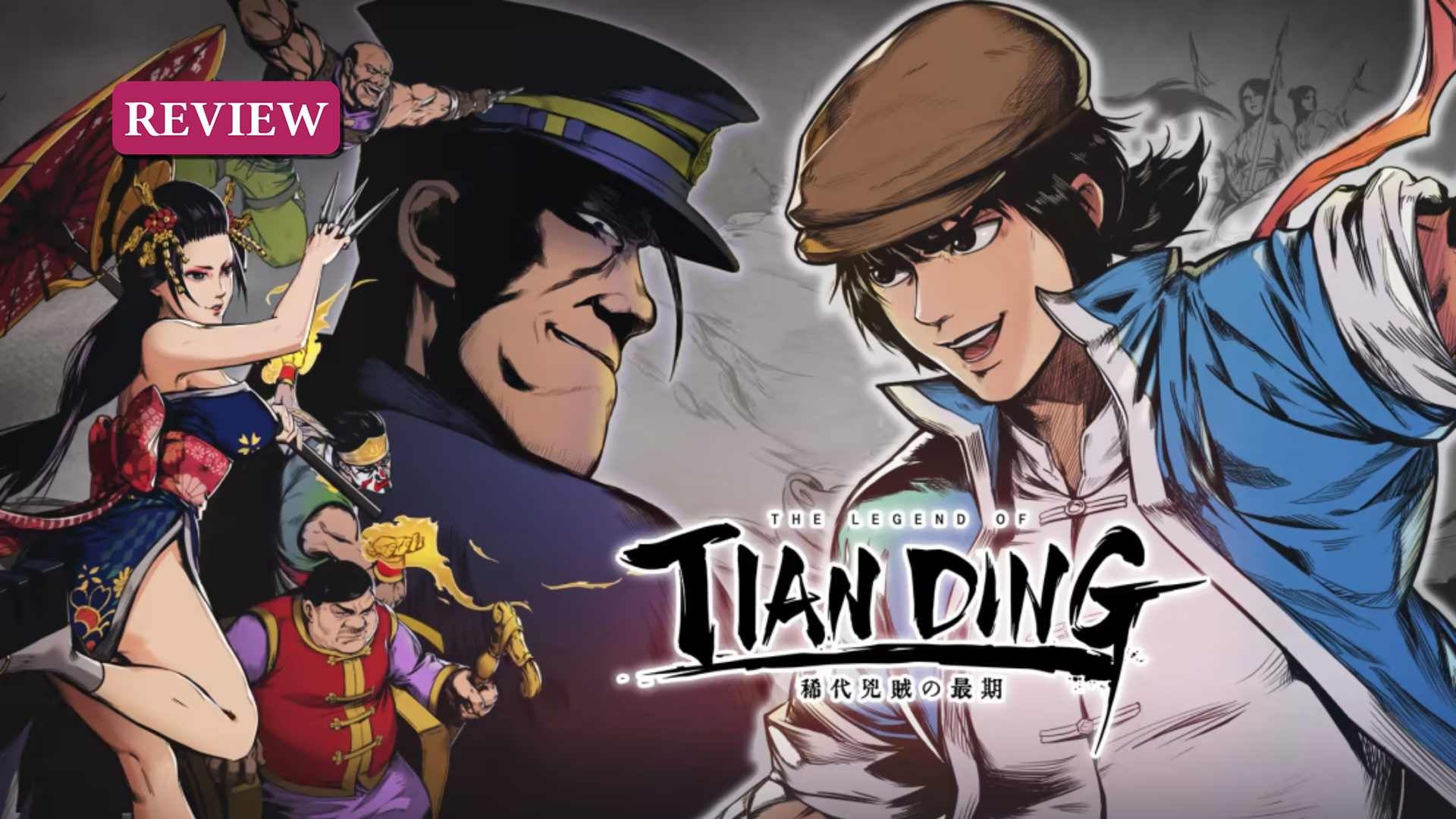
In my mind, The Legend of Tianding is a perfect gaming experience. Not because it can do everything, or that it allows the player to do anything. It’s perfect because it accomplishes all of its aesthetic and storytelling goals without overstaying its welcome. Despite offering only six story-driven chapters, its gritty depiction of colonial Taiwan feels lavish with mystery and possibilities. This surprised me, since the game doesn’t pull any punches about its oppressive setting.
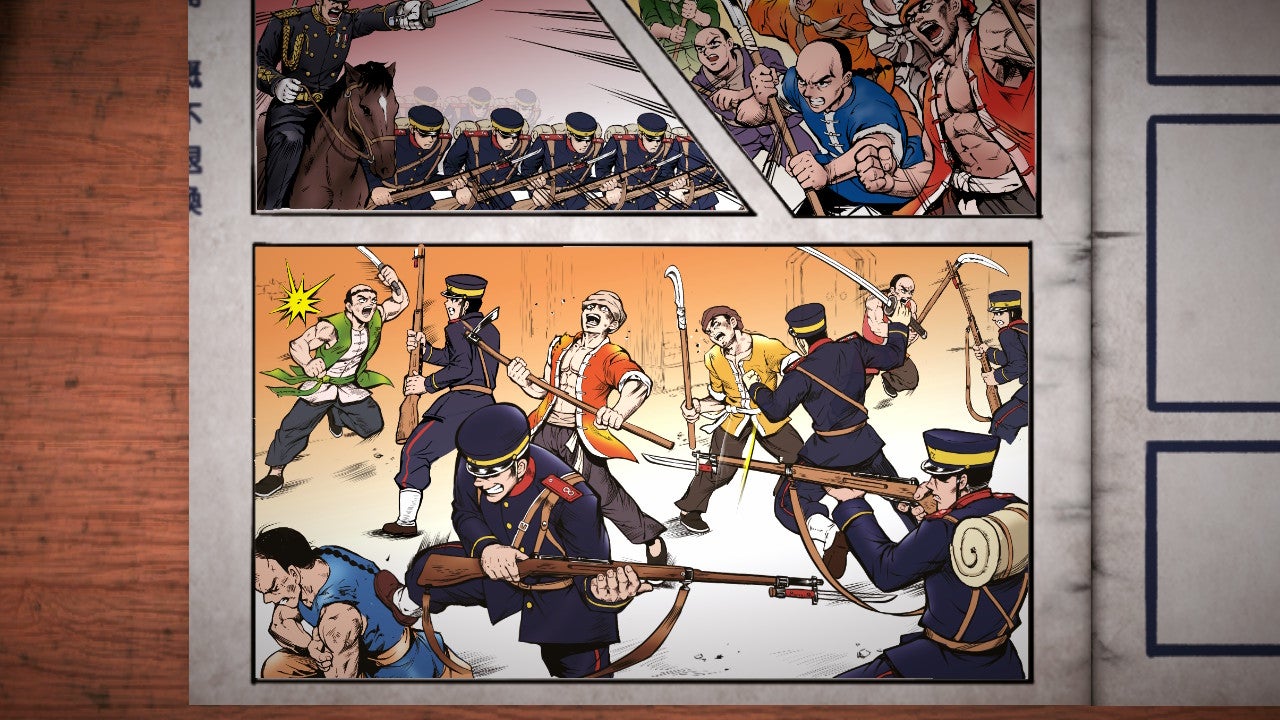
The Legend of Tianding is a narrative platformer that takes place in the bustling Taiwanese district of Dadaocheng circa 1909. Long before the events in the game, the Empire of Japan defeated the Qing in the Sino-Japanese War, giving Japan control over Taiwan. In Legend’s world, ordinary Taiwanese citizens toil endlessly to enrich their colonizers, overseen by relentlessly brutal police. Locals sell each other out in order to gain favor, and only collaborators who help the Japanese police exploit their own country can live comfortably.
In the midst of this cynical historical-fiction backdrop you play as Liao Tianding—based on the legendary real-life “Robin Hood” figure—who steals from the police to give back to the poor. He’s also so likeable that it should be illegal. Tianding is boyishly charming, outsmarting his cartoonishly evil pursuers with devious ploys, and he genuinely cares about bettering his people’s lives. Never once tempted by power or personal riches, the protagonist’s old-school heroism kept me invested in his tale, even if the fairly predictable plot beats didn’t lend themselves to.anticipation. When the police are beating elderly in the streets, I don’t want to deal with moral ambiguity. I just want to lay down the asskicking. And this game lets you kick a lot of colonizer ass. Most of the time, you’re beating down Japanese police. Sometimes, you’re fighting Taiwanese people who have chosen to ally with the colonial government.
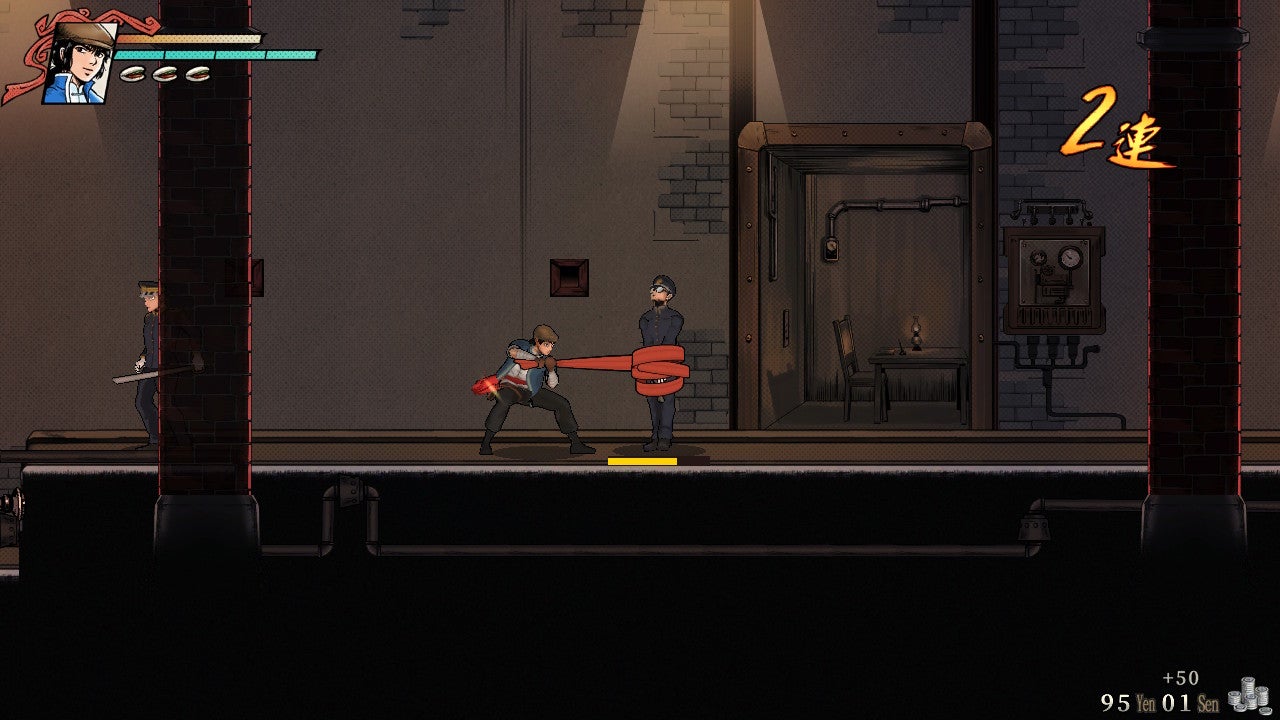
Legend is secretly a Kirby game that disguises itself as Streets of Rage. The cops that Tianding fights wield a variety of weapons, and you can command any of them during combat with a dedicated “steal” button—though not before whittling down their health with your knives. Whether it’s a bamboo staff, a pistol, a bazooka, or a grenade, all of these weapons have a durability value. So it’s a constant scramble to grab something new when your last weapon runs out. Sometimes, what you’re able to grab isn’t the ideal weapon for your specific situation. That’s tough luck—but you can always rely on Tianding’s default knives.
One of my small gripes is that the “steal” ability is very difficult to aim. While the stealing animation is stylish, it is also a couple of seconds long and can grab enemies that aren’t holding anything. So if I grabbed the wrong enemy, then I would have interrupted my combos for nothing, and I would have to re-position myself to steal from the guy that I was originally aiming for. While this is probably realistic to how a real skirmish would go, I prefer combat that feels fluid over the frustration of grabbing the wrong enemy twice in a row.
Otherwise, Legend is a tightly designed platformer that never leaves you guessing about your next move. At no point did I feel that the levels were overly long or padded. The game makes use of platforming hazards to add challenge to fights. Enemies can knock you into these hazards as easily as you can do the same to them. While it’s easy to lose track of Tianding in the sea of bodies, constant situational awareness is essential to surviving prolonged fights. Overall, I found the combat to be engaging despite a paucity of different enemy types. As long as I had something to steal, I could experiment with different playstyles. Some weapons had high penetration, a shield could deflect, and melee weapons often had high knockback potential. While certain charms allow Tianding to always steal specific weapons, I preferred to be kept on my toes.
I also like that the game doesn’t just tell you that Tianding is a popular folk hero but conveys that message with its gameplay. While you can use your stolen money to buy upgrades from shops, the bulk of them will come from giving alms to NPCs who beg in the street. They’ll give you talismans that slightly boost your performance in battle, which helps ground the feeling that you’re fighting evil cops on their behalf. Combat is fluid and fast-paced, but nothing is more satisfying than distributing the money at the end of a long level.
While your relationship to them is transactional, you’re never paying for any specific upgrade. All of them are completely random. Even if I favor using a specific weapon, I might get an upgrade that doesn’t fit my playstyle. This forced randomization lessens the direct benefit that I gain from helping out the needy. In contrast, I had customization options with my talismans. When I bought upgrades from merchants, I knew exactly what I was getting beforehand. My generosity yielded much less predictable results. I actually liked this approach to weapon upgrades as the exchange established reciprocity between Tianding and his beneficiaries, but the randomization prevented me from seeing the upgrades as my end goal.
I get nervous when a game tries to be too many things at once; mashups that muddle their creative visions tend to be utterly forgettable. Legend manages to strike the perfect balance between street brawler, platformer, and visual novel. If you love any of those things individually, it’s very easy to accidentally fall in love with the other aspects of the game.
I’m typically a complete monster when it comes to narrative game outcomes. I’ve killed off the elf clans in multiple Dragon Age games and let the protagonist’s entire family die in Assassin’s Creed: Odyssey. But when I realized I’d gotten LoT’s “bad” ending, I felt instantly compelled to play again to see how I could change Tianding’s fate. He’s a hero who I genuinely want to root for, a stark contrast to the murderous vigilantes who normally star in single-player action games.
The Legend of Tianding
-
Back of the box quote
Robin Hood, but an illegally charming Taiwanese freedom fighter
-
Type of game
Action platformer
-
Liked
Successful platformer, street brawler mashup, weapons were fun to steal and use, dynamic art style.
-
Disliked
Localization needs improvement, stealing mechanics aren’t very precise.
-
Developer
Creative Games Computer Graphics Corporation
-
Platforms
PC, Nintendo Switch
-
Release date
Nov 1, 2021
-
Played
Finished one playthrough in eight hours, and then completed the first chapter on a second playthrough.
Moreover, I could really feel the love that the designers had for Taiwan. Whenever I picked up a power-up, my collectibles tab updated with a little bit of history about Taiwanese popular culture. The various advertisements and alcoholic beverages directly inform players about Taiwan’s “low culture,” rather than just giving a top-down historical view of this tempestuous period of history.
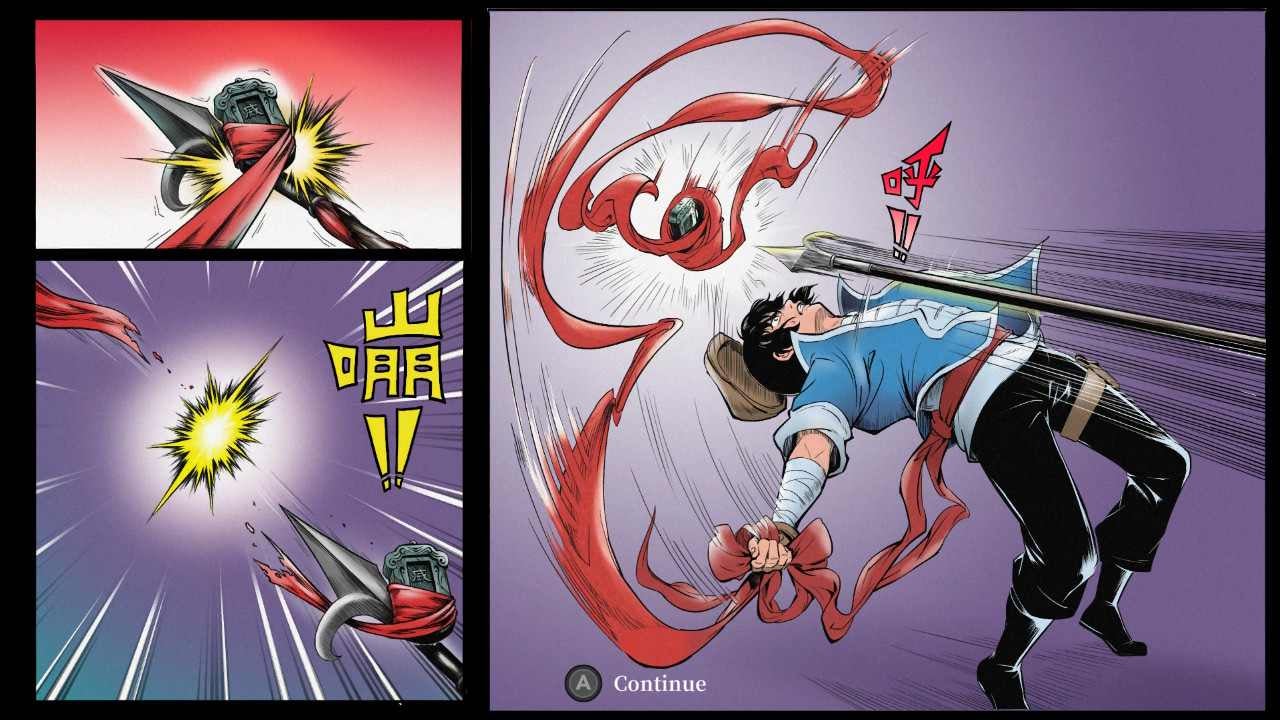
The game emphasizes his heroism by going all in on a gorgeous comic style. Every bit of the game is completely hand drawn, and though I hesitate to call the art style “manga.” The way It dramatically renders Tianding’s heroic exploits in bold, flat colors, with highly textured scenes that don’t rely too heavily on negative space, looks more like manhua I grew up reading in video game form. I’ve played plenty of games that use comic art as the superficial wallpaper over a video game—Borderlands is an obvious example—but Legend stubbornly refuses to compromise its identity as game or comic, which helps it stand out in a crowded field of 2D platformers.
Legend is mostly voiced in Taiwanese, with the exception of the police characters who speak in Japanese. Western audiences often experience Asian animation through a Japanese perspective, and its former colonies are often portrayed as inferior. Legend reverses this dynamic by showing the Japanese police as mostly corrupt, and Taiwanese as heroic and bold. Playing LoT, I quickly started to associate spoken Japanese and Japanese imagery with colonial oppression. Even with its exaggerated comic art, Legend is a highly effective narrative that showcases the immersive capabilities of indie games.
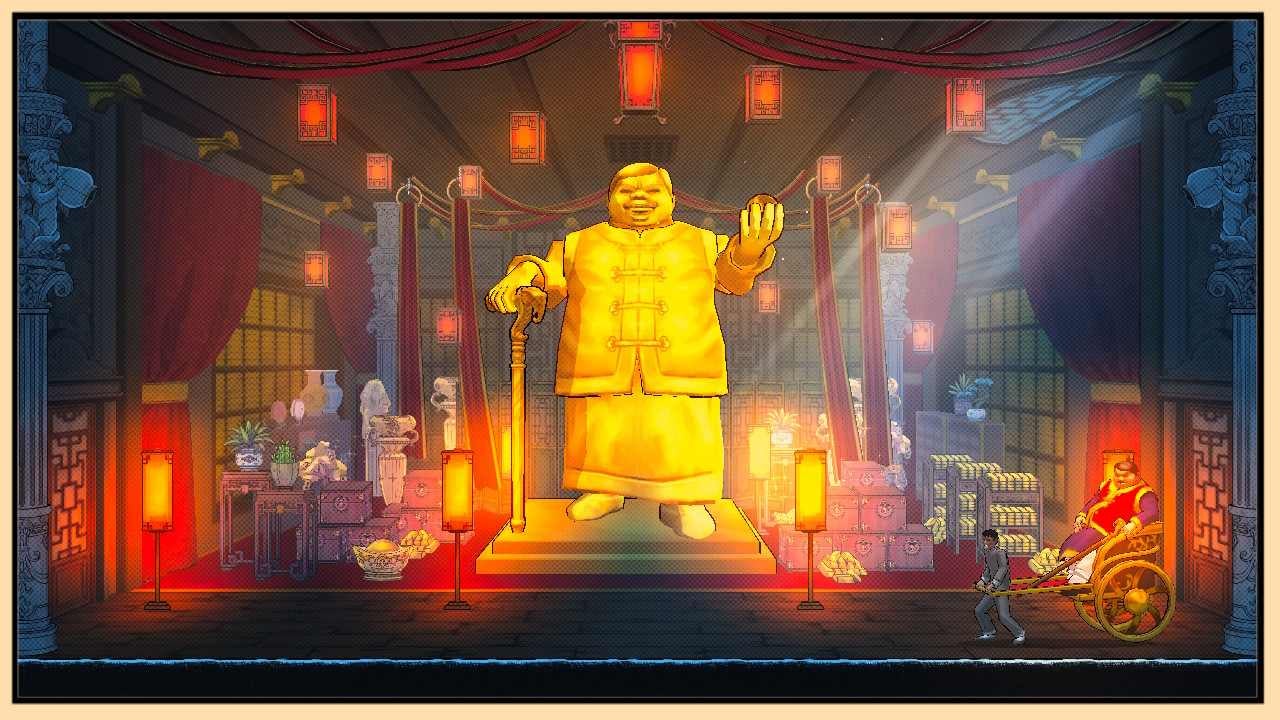
The game has a couple flaws in how it presents characters. The first boss is a greedy landlord whose weight becomes the constant topic of Tianding’s ridicule. Personally, I felt that his actual personality flaw was his rent-seeking ways. The localization also uses “Jap” as a shorthand for “Japanese.” While the word is unlikely to be problematic in Taiwanese, “Jap” is a racial slur that white Americans used to refer to Japanese Americans during World War II. A little more care in checking its unintended English meanings might have helped Legend avoid this bit of awkwardness.
The Legend of Tianding comes close to trying too many ideas at once, but still manages to mostly stick the landing. It feels slick to play, and still manages to impress artistically. LoT reinvents multiple established genres by threading a powerful story through all of its independent elements. Even now, I feel compelled to replay the game to seek its true ending.