Yesterday, a total overhaul remastering of the original Puzzle Quest was released, updating the 18-year-old match-3 RPG for modern machines, incorporating all its DLCs, adding new classes and missions, and offering a new generation a chance to figure out why people got so excited about it two decades ago. Since its original release, developer Infinity Plus 2 has created multiple spin-offs and sequels, mobile juggernaut Gems of War, and the somewhat less well-loved freemium Puzzle Quest 3, but it’s important to know that Puzzle Quest‘s origins go back much farther, all the way to the late 1980s, and a floppy disc that was thrown into a publisher’s trashcan. I spoke to Puzzle Quest lead developer Steve Fawkner to learn all about it.
When Puzzle Quest: Challenge of the Warlords came out in 2007, gaming was a very different place. This was before your entire PC gaming catalog was on Steam—heck, this was before BioShock was on Steam even, the first AAA game to pioneer such a digital release—and the existence of a digital download-only game was novel. It was a space well-occupied by the likes of PopCap, with smash hits such as Bejeweled, Bookworm, and Peggle, but it had yet to become The Next Big Thing. It was into this space that Puzzle Quest launched, a game explicitly inspired by Bejeweled, but developing the match-3 concept into a full-fledged RPG. And it was huge. But what tends to go forgotten, and mostly went unrealized even at the time, was that the “Warlords” in the game’s tagline isn’t just a bit of flavor—it’s a direct reference to Steve Fawkner’s previous gaming success story, the turn-based strategy RPG Warlords which launched in 1990.
In the trash, looking at the stars
“It was my eighth game at the time,” Australian developer Steve Fawkner told me over a video call. “I think my first game was ’83, about the tender age of 15. And it sold 32 copies.”
That game was called Quest for the Holy Grail, released on the Spectrum 48K, the cassette given out with a note (including his home address) asking anyone who enjoyed it to mail him five dollars. 32 people sent him cash, and the bug bit him hard. He continued making games that he distributed at shows or sent to his growing mailing list, until in 1989 Fawkner created Warlords for the Amiga, a game that combined role-playing with turn-based strategy, and decided that, with this, he had made something of more significance. However, publishers didn’t appear to agree, and Fawkner was turned down over and over, including by his last resort, Strategic Studies Group (SSG). The president at SSG was so unimpressed he tossed the disc in the trash.
It was only after the publishing boss saw his son playing it on his Amiga that he took more notice, and even then it was to say it “looks rubbish.” His son had fished the floppy out of the trash and installed it, and really enjoyed it. He convinced his father it was worth a look, the game got signed, and now, three sequels, a physical card game, and the spin-off Warlords: Battlecry series later, it’s fair to say the kid was vindicated.
I was pretty shocked when Fawkner then added, “You know, at this stage, I’m pretty much done with the strategy genre. I really haven’t played the strategy genre since.” Surely you’ve played Total War, I splutter, finding it impossible that someone so significant in an entire field of games would be able to just walk away. “I snack on them,” he concedes. He’ll buy everything, play a single game of it, “literally one game, and go, ‘That’s great! I really enjoyed that! But I’m just gonna move on now.'”
Instead, it’s puzzle games that have continued to beguile the developer (alongside “a lot of Diablo”) since the creation of Puzzle Quest. It was while playing Bejeweled late into the night when he was supposed to be working on Warlords: Battlecry 4 that Fawkner realized there was something special here, something he wanted to work on. Originally called Warlords: Champions, his combination of match-3 and a more traditional fantasy role-playing game was in development as early as 2004. A mock-up of the systems was put together in days, then the story (set in the world of Warlords) was written, and the full game came together in just months. Three years later, he still hadn’t found a publisher.
“I basically sold everything I could sell just to keep that development running for three years,” said Fawkner, so convinced was he that this game was something special. Eventually, Japanese publisher D3 took an interest, signed it up, and arranged for a DS port to be released alongside the PC version, with the finally released game being vastly more complex than the version quickly put together in 2004. “You give an old-school developer three years,” Fawkner laughs, “and that’s kind of what we pump out.” The lack of early interest among publishers in the end proved a massive benefit. “It actually worked in our favor, because we got to put so much into the game.”
Anti-Cheat Technology
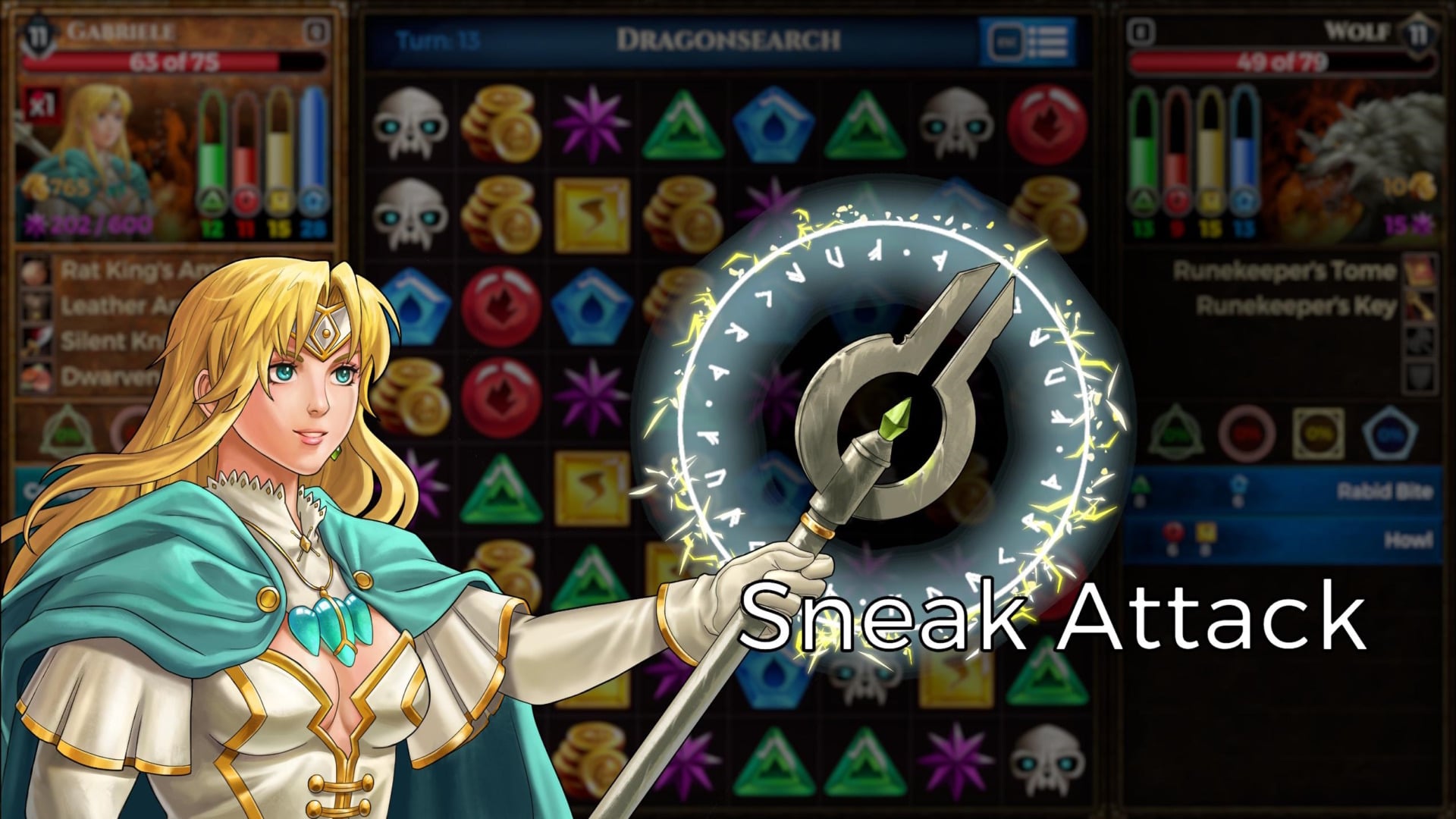
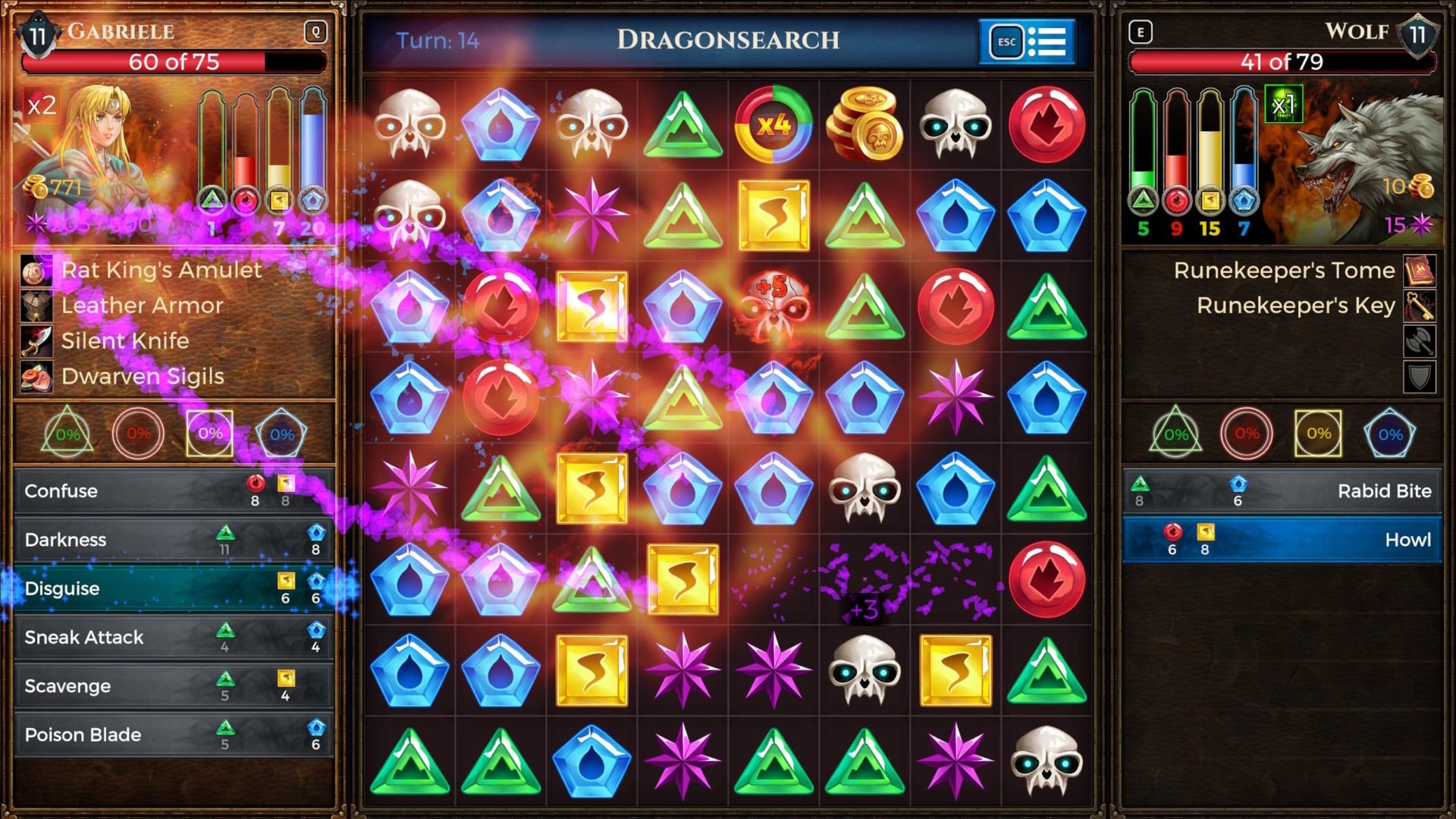
Puzzle Quest uses its Bejeweled-style grid of gems as a means of violence. Each color of gem represents a form of mana, and eliminating them from the grid adds to your character’s mana pools, eventually allowing an ever-growing collection of spells to be triggered. Some affect the contents of the grid, others directly attack your opponent, and many more do a combination of the two. The grids also contain skulls that also launch attacks when matched, as well as gold for spending in shops, and XP for leveling up your character. It’s the complete RPG package, but played out via the puzzle format PopCap made so famous. Which is to say, it takes one of the most engaging puzzle game formats and makes it the core of an enormous fantasy story complete with quests, companions, and a big ol’ map to explore.
Key to this success, and something that so many other games that have tried to mimic the success with other puzzling formats have missed, is that in Puzzle Quest, the enemy plays too. Instead of just hitting you with its own abilities, the CPU has to match gems as well, fill its own mana pools, and think about not leaving the grid in a shape that’s advantageous to you at the end of its turn. Which led to something most people remember about the game at the time: it always felt like it was cheating. It was not. In fact, it turns out it was doing the opposite.
“So here’s the thing,” says Fawkner. “We did some focus testing and people were saying it felt like it was cheating, and I’m like, we want to fix that.” Wanting to know what it was that felt like cheating, Fawkner’s team tracked some stats in the game, and it turned out it was all about what they call “lucky events.” When the grid would drop in skulls to attack, or set up a four-of-a-kind match, if it happened for the player it felt natural, but if it happened for the AI it felt like cheating. From their experiments, it turns out that players need to be lucky two to three times more often than the CPU before a game feels fair. So, after launch, the game was patched to lower the possible luck for the AI! If the grid was due to randomly drop in three gems of the same color or a row of skulls for the AI opponent, it would occasionally switch them out for a less useful combination, but never do this for the player. So for as much as people claimed the game was rigged against them, the complete opposite was true. This in fact went further, with the AI already programmed to make mistakes and sometimes miss opportunistic turns, because as Fawkner’s team had learned from creating the famously good Warlords AI, the more mistakes it made, the more human it felt.
From premium to freemium
20 years later, Puzzle Quest is still a big deal for Infinity Plus 2. People still buy the original (the excellent sequel, Puzzle Quest II, is no longer on sale), there are the licensed rights for games like Marvel Puzzle Quest and Magic: The Gathering – Puzzle Quest, and even the lackluster Puzzle Quest 3 chugs along well enough. Plus of course, there’s Gems of War.
Gems of War is a reinvention of Puzzle Quest as a free-to-play mobile game, complete with its own vast fantasy world, in which teams of four characters work together to use the grid to fire off their own abilities at AI enemies. But it’s also somewhat online, letting you sort of battle human opponents by competing against their bespoke teams controlled by the game’s AI, as well as join guilds, working toward goals, and always, always be grinding to unlock the next level or new character card. As such, with numerous in-game currencies and at least three different ongoing battle passes, Gems of War is a game that’s absolutely set up to milk its players for every penny. And yet, when I played it for a couple of months a few years back, I never felt inclined to buy a thing. I remember chatting with the much-missed and wonderful Kotaku writer Mike Fahey about this, and Fahey’s conspiratorial theory was that Infinity Plus 2 had deliberately designed the game to let people evade payments out of some objection to the whole freemium model. So I figured, heck, as a tribute to Mike, why not put this to Fawkner, no matter how awkward it might be.
“He’s not entirely wrong,” Fawkner replies.
“We wanted to make it as free as we possibly could,” the veteran developer explained. “There were certain foundations to that game. I went in saying, to do it right, I want to make sure there’s nothing in this game you can’t get if you work for it. And I want to make sure that when people are spending, they kind of feel good about the spend, like they really get something for it.” Wanting to avoid the worst of gacha games (although I should add, there are gacha elements where you certainly can spend money for a random chance pull), Fawkner says he believes their approach to the model is a big part of the game’s success. 11 years in, the game is still running and adding twice-weekly updates, so it’s clearly working out. “We’re doing really well,” Fawkner adds, “but it’s not and never will be a billion-dollar-a-year kind of game. I think we’re OK with that. Is there a level of frustration from our publishing partners that we weren’t greedy? Probably!”
With a son who has spent months playing Gems of War to a ludicrously high level, I’m not sure just how innocent the game is when it comes to in-game spending, given there are a lot of nags and pop-ups, and I’ve had to say no to a lot of requests to buy stuff! (And in the interests of full disclosure, after Fawkner and I chatted and he learned that my 10-year-old was over level 600, his development team demanded he send the boy an in-game “care package,” or a bunch of free shit. He’s the corrupted one, not me.)
That does bring us on to Puzzle Quest 3, another freemium game that many argue does not get the balance right. Its reviews on Steam have only just managed to scrape their way up to “Mixed” after two years of updates and changes, partly due to quite significant mechanical changes to how the game plays (you play three moves in a row, and can now move gems diagonally), and partly because of its brutal in-app purchases, which don’t sit well with players. “What we produced was not a game I’m ashamed of,” says Fawkner. “I’m very proud of it and shipped a game on time that was very playable and very pretty.” However, it was also created during the covid lockdowns, which were something that hit Australia especially hard. Months would go by during which you weren’t allowed to leave your house, and the team was scattered and scared. Fawkner told me that the office was only around the corner from his home, but getting there was sometimes impossible, with police on the streets requiring paperwork if you were caught outdoors.
“I don’t like to blame covid,” Fawkner adds, but says it was undeniably a factor. After release, and the very negative reception, the team “struggled” for a bit. “Could we make it into the game we originally envisaged?” He mentions how the reviews have improved since then, but it remains the case that there are still fewer than 1,000 of them, and the game never peaked beyond 221 concurrent players. “People let us know how they felt,” Fawkner says, “and the message was received loud and clear.”
And we’re back
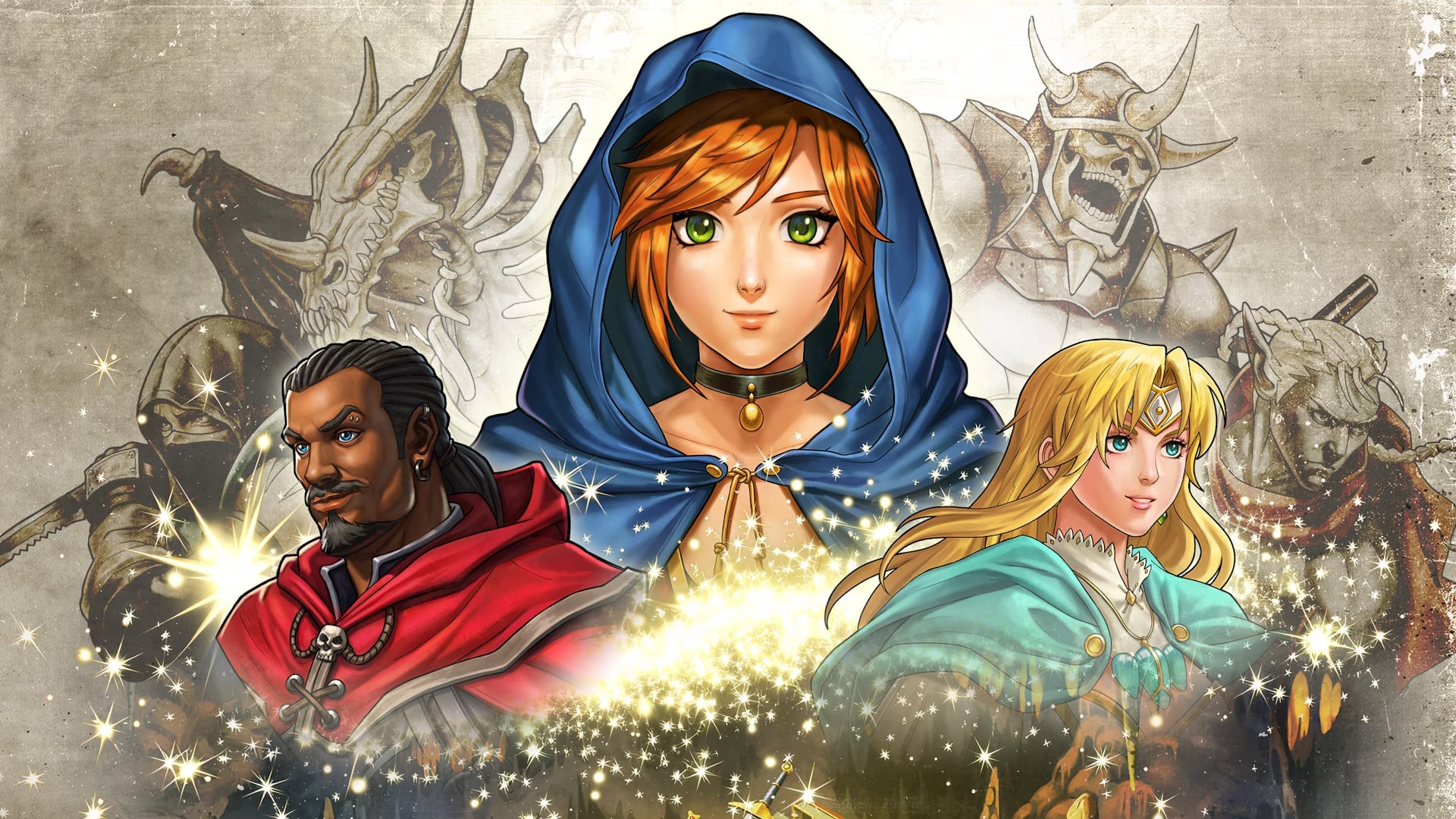
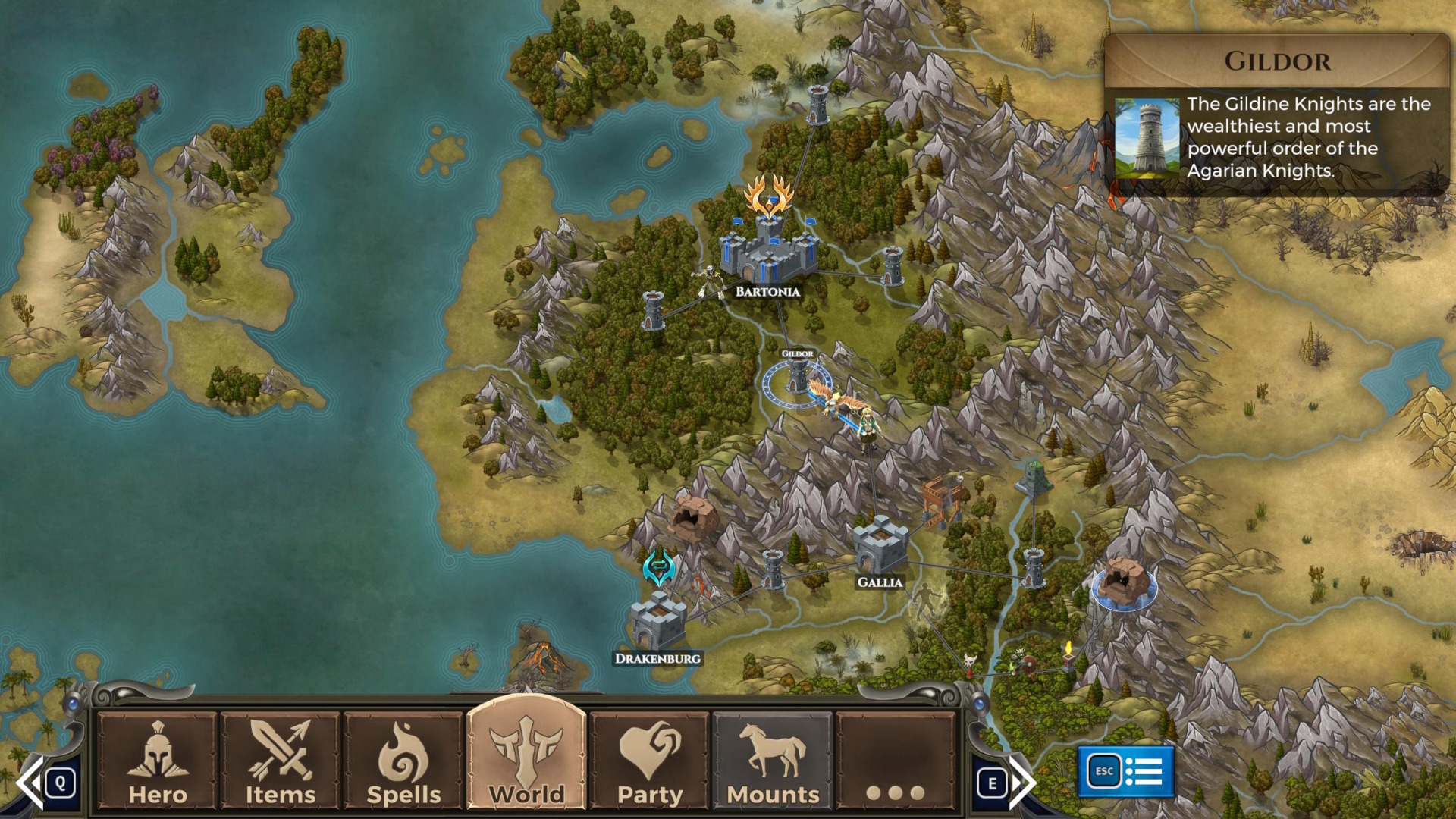
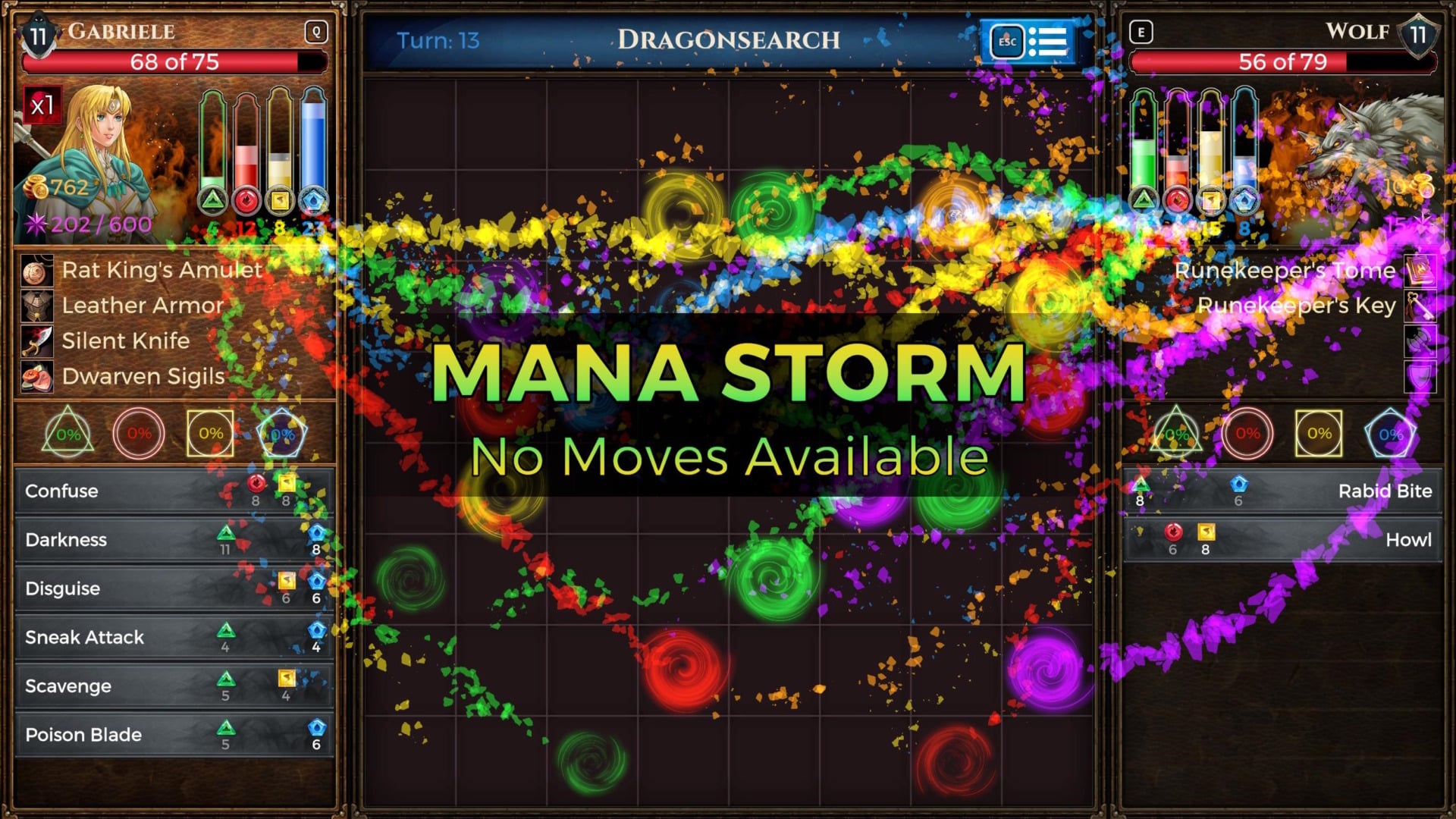
Thus a return to premium games. Puzzle Quest: Immortal Edition is a remake of the original game, somewhat based on the previous 2019 remake made for the Nintendo Switch, but built yet again, now containing the original Revenge of the Plague Lord DLC, the new content created for the Switch’s The Legend Returns version, and a whole new chapter of its own. It’s faithful to the original in almost all ways, save for a big change in how the game handles a grid with no turns. What was once a “Mana Drain,” in which both sides lost all their mana for no fault of their own. “It always felt bad, right?” asks Fawkner. “It’s like, ‘I’m being punished.’ So I said, what if we make it a storm? What if, when the board locks up, it just all explodes and the mana splits between you and the enemy? Now you’ve got an abundance of mana.”
I can report it works. The game looks great, even at ridiculous aspect ratios, and the replacement of Mana Drain is very welcome. Straight away I’ve found myself hooked on “just one more battle,” buoyed by the constant sense of both character and narrative progress, unlocking new quests and leveling up to use new spells…It’s all still there, just like in 2007, except now it’s much prettier. I cannot wait to see if it gets a release for my Android tablet, after which you may well not hear from me for a while. As it is, it’s running on my PC behind this window I’m typing into, tempting me back.
Infinity Plus 2 has hopes that if Puzzle Quest: Immortal Edition succeeds, they will be able to do the same for Puzzle Quest 2, and then: “What I’d really absolutely adore to do is take Puzzle Quest 3 and turn that into a premium version, move it back a little bit toward Puzzle Quest 1 mechanics. I think that would be a really interesting project.”
As for a possible Warlords V? Is Fawkner really so set to never return to the strategy? “I want to play it a little bit,” he says. “But I want to make it a lot.” Gosh. “I would love to have a team that’s making it here, me overseeing the making of it, adding some flavor. I think that would be an ideal outcome. So that could happen, you know? It’s a good old nostalgic franchise. What it probably needs is a couple of turn-based strategy games to go well, then it’s an easy pitch to the business department to say, ‘Hey, you know, we’ve got this strategy game sitting here. Lots of expertise, lots of nostalgia. You can do this.’ Lightning’s gotta strike the right place.”