The Ruined King: A League of Legends Story is, like many of Riot’s recent projects, an effort in translation. League of Legends remains one of the biggest games in the world, despite its rampant community toxicity and the tremendous time investment required from most players—but things like The Ruined King and Riot’s recent Netflix series Arcane allow people without a death wish to dive into Runeterra. The results are really promising.
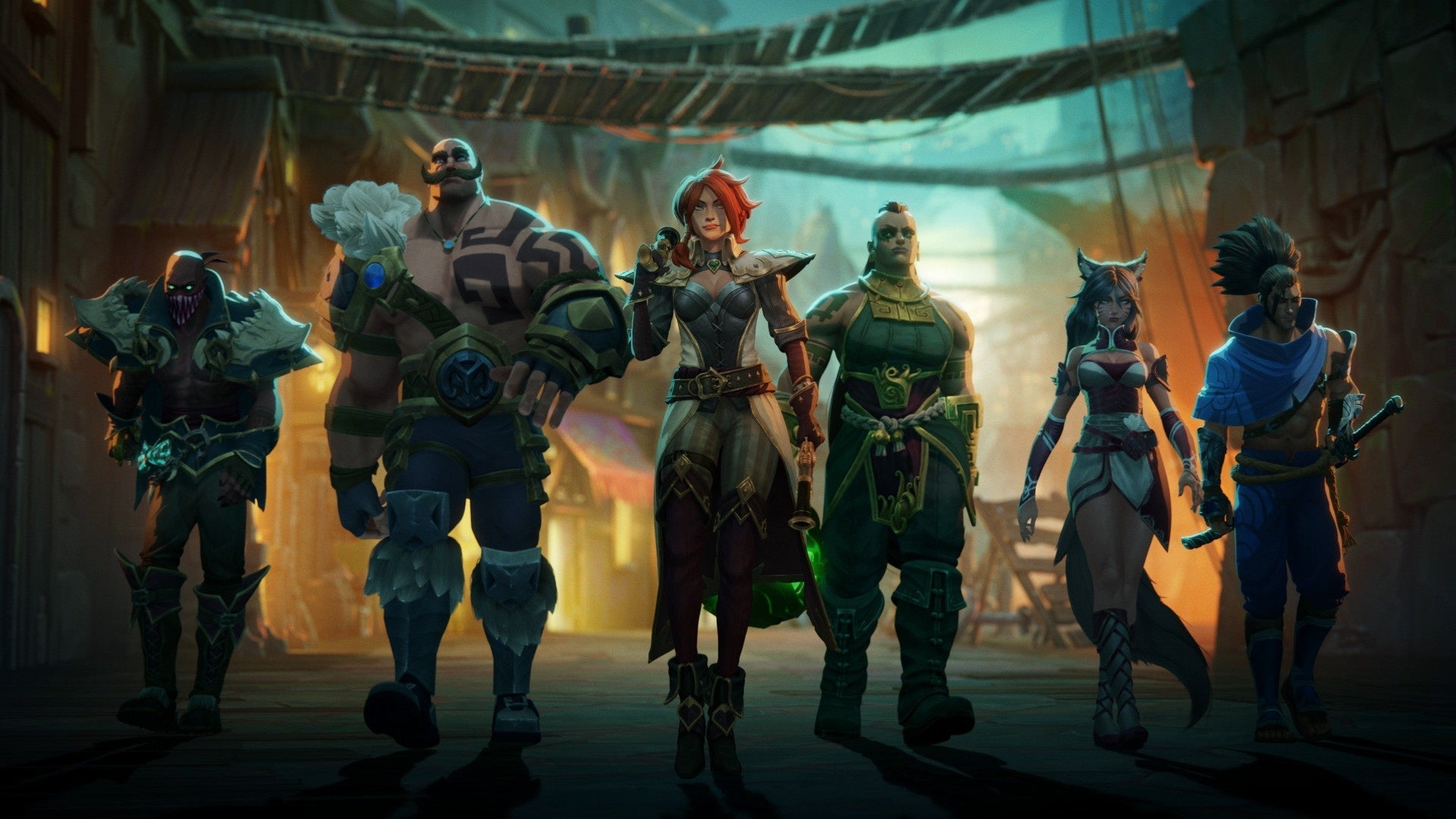
The Ruined King is a turn-based RPG for Xbox One/Series X/S, PS4/PS5, Switch, and PC, set in Bilgewater, a major location in League of Legends’ setting, Runeterra. The city is layered, wet, and hungry—to paraphrase Illaoi, one of the game’s main characters, it is a city built on desire in all of its many forms. You play as a handful of League’s Champions as they push back against the encroaching black mist and the titular Ruined King.
The Ruined King acts as a brilliant introduction to Bilgewater, and Runeterra by proxy, through its near unwavering focus. Not every character you’ll meet will be from Bilgewater—characters will talk about other parts of the world, but you’ll never go there yourself. But the game’s camera basically never leaves the city. This is a story about one place, which means that it’s an incredibly easy introduction for new players. Learning the rules and rhythms of a single city is far more approachable than having to learn the rules, customs, and cultures of an entire world.
And those rules and rhythms are worth learning. The game’s level and environmental design is incredibly detailed and there’s small things to find just about everywhere—from short side areas with simple puzzles and interesting narratives, to new equipment and gorgeous vistas. A mansion off the beaten path in the game’s first major dungeon, for example, treated me to a short story about a family of ghosts coming back together, before leaving the site of their haunting to travel the world.
There is also a tremendous amount of writing in The Ruined King, and the vast majority of it seems great. Scattered throughout Bilgewater and the Shadow Isles are journal entries, letters, and pieces of text that will slowly fill your inventory. I’ve found a series of letters between a priestess of Nagakabouros, a Buhru deity, and a recent convert. The letters detail the convert’s slow exposure to and corruption by a cult-ish sect of the faith. Every entry I’ve seen has been genuinely well written and I’m really excited to pore over them once I actually complete a few of the stories.
The majority of League’s storytelling has come from external materials—ranging from a comic series to the short stories frequently posted on the game’s website (Hell, even skin descriptions have no small amount of lore and writing attached to them). The Ruined King presents a new opportunity to showcase this type of work by putting it directly in front of players, and, in its opening 10 hours, the game is pulling it off.
In addition to its solid writing, The Ruined King has managed to translate League’s signature mechanics into a totally different genre, to varying degrees of efficacy. The game uses an active time battle system, reminiscent of some early Final Fantasy games. Each fight has a timeline, which lets you see who will act and when. Each character has a mix of instant abilities and lane abilities which have casting times and usually cost mana. Basic attacks generate temporary mana in the form of Overcharge, which allows you to cast your strongest abilities without wasting precious Mana.
Lane abilities also ask you to choose which lane you’ll be attacking in, which is another translation from League. Speed Lane attacks come out faster and deal less damage. Balance lane attacks have an even split between attack power and speed. Power Lane attacks hit hard, but take a while to set up. On its face, this system is pretty simple, but The Ruined King manages to make it exciting by attaching dozens of buffs, debuffs, and special effects to which Lane you happen to be in at any given moment. One early game enemy has the trait “Primed Mist Bomb,” which allows them to deal massive damage to the Champion that kills them. This ability can be disarmed by hitting that enemy with any Speed Lane attack.
In addition to lane specific traits and effects, The Ruined King also has AOE-esque buffs and debuffs baked into the timeline. These effects are a brilliant turn-based translation of League’s focus on positioning and skillshots. At the beginning of many battles you’ll get a Wildcard effect. The wildcard is a buff that is placed on the game’s timeline. If a character acts during that moment in the timeline, they’ll receive a buff.
Using different lanes to maneuver your characters into the right time zone to receive a buff adds an impressive amount of strategizing to otherwise basic combat encounters. For example, during a Crit Boost I’ll do everything I can to make sure Yasuo’s multi-hit crit damage attack fires at the right time—even if it means sacrificing base damage by shifting into the Speed Lane.
However, you can definitely become strong enough to forget about a lot of these mechanics—even on Hard difficulty (which I played on). Poison Clouds, an early game hazard, can absolutely shred your party if you aren’t careful, but you can focus down many enemies fast enough that it doesn’t always come into play.
The Ruined King also adds skillshots to its overworld, allowing you to attack enemies before a fight begins for some useful buffs. Illaoi’s skillshot deals minor damage to all enemies at the start of a battle, and summons an additional tentacle (her primary resource) to support her. These skillshots can feel really clunky and weightless at times, and there were definitely moments when I thought I landed a skillshot, only for an enemy to continue sprinting at me in the overworld.
Characters fall into distinctive roles, reminiscent of how they’d fit into a team comp if you were actually playing League. Yasuo is a DPS monster who relies on constantly critting the enemy for massive damage and narrowly dodging attacks. Illaoi is a mix between a Healer and a Brawler—tanking big hits and healing her fellow champions when things get dicey. Braum is a supportive tank, who alternates between taking hits and providing his allies with damage shields for what he can’t stand in front of. As more champions join your party, your team comps will become increasingly specialized.
The Ruined King seems to have done the near impossible—and has actually made League of Legends somewhat approachable to a normal person. By slowing things down and giving players time to make actual decisions and experiment with team comps, The Ruined King ends up teaching you a lot of skills that are legitimately useful in League itself. It does all of this while managing to stand on its own narratively and mechanically.
Riot’s first foray into a large-scale single-player game has been a shocking success, and I am genuinely surprised how much I like it.